
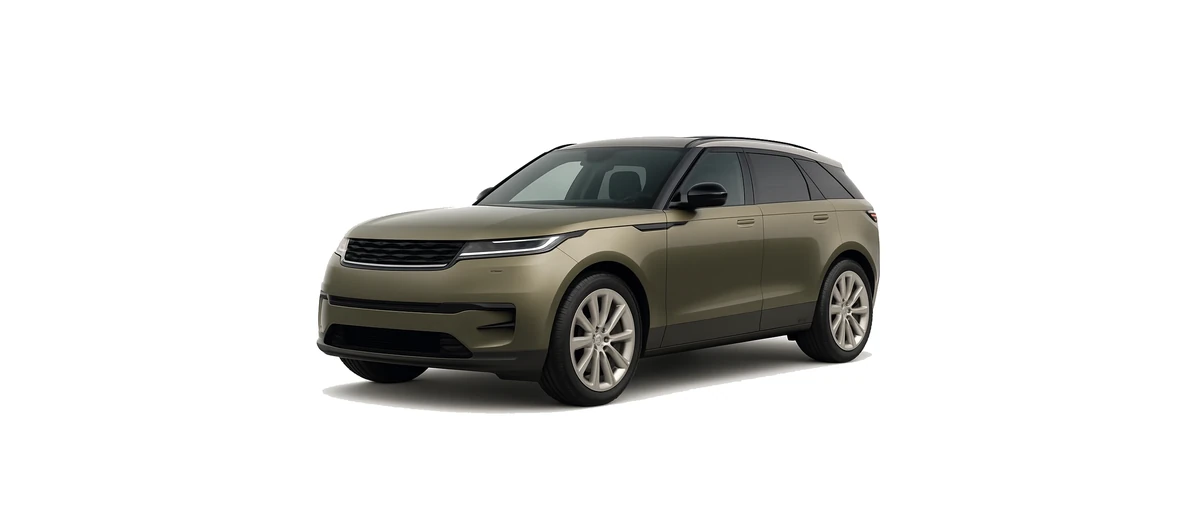
The Range Rover Velar P400e is a petrol plug-in hybrid SUV rather than a fully electric vehicle. That distinction matters when choosing charging equipment, planning charging stops and comparing running costs. The Velar P400e combines a 1,997 cc four-cylinder petrol engine with a 105 kW electric motor, all-wheel drive and automatic transmission, giving drivers the flexibility of electric driving for shorter journeys with petrol power available for longer trips.
Current UK Velar P400e models use a larger plug-in hybrid battery than earlier versions, and the car is also unusual among PHEVs because it supports DC rapid charging as well as normal AC charging. Even so, most owners will still get the best day-to-day value from a Type 2 cable and regular 7 kW home or destination charging. This guide explains what UK owners and used buyers need to know about charging the Range Rover Velar P400e.
View Range Rover Velar Charging Cables
Range Rover Velar Battery and Charging Specifications
The UK-market Range Rover Velar P400e is a plug-in hybrid, not a battery-electric Range Rover. It has a relatively small battery compared with a full EV, but large enough to cover many local journeys on electric power when charged regularly.
- Vehicle type: petrol plug-in electric hybrid SUV
- Current battery: 19.246 kWh gross / 15.39 kWh usable
- Earlier P400e battery: 17.1 kWh gross / 13.686 kWh usable
- AC charging: up to 7 kW
- Current AC charging time: about 2 hours 30 minutes from 0-100% on a 7 kW wallbox
- DC rapid charging: up to 35 kW on current UK data
- Current rapid charging time: 0-80% from about 30 minutes
- Charging connector: Type 2 AC / CCS Combo 2 DC
For cable selection, the key point is that AC charging uses the Type 2 connection. Untethered home chargers and many UK destination chargers require you to bring your own Type 2 charging cable. DC rapid chargers use a tethered CCS connector, so you do not need to carry a separate DC cable.
Battery Options
There is an important model-year split for the Range Rover Velar P400e. Current and facelift UK technical data lists a 19.246 kWh gross battery, with 15.39 kWh usable capacity. Range Rover media material often rounds this to 19.2 kWh.
Earlier Velar P400e models, including the original MY21-MY23 cars, used a smaller 17.1 kWh gross battery. Later WLTP data for that pack shows 13.686 kWh usable capacity. This means a used Velar P400e may not have the same electric range or charging time as a newer car.
If you are buying used, check the exact model year, technical data and charging information for the vehicle in front of you. Do not assume every Velar P400e has the current 19.2 kWh-class battery simply because the latest model does.
AC Charging Speed
The Range Rover Velar P400e supports AC charging at up to 7 kW. On the current 19.246 kWh battery, official UK data quotes a 0-100% charge time of around 2 hours 30 minutes using a 7 kW home charger or wallbox.
Earlier 17.1 kWh cars were quoted at around 1 hour 40 minutes to 80% and 2 hours 16 minutes to 100% on a 7 kW wallbox. In practice, charging times can vary slightly depending on the charger, ambient temperature, starting battery level and how the vehicle manages charging near full.
For most UK owners, 7 kW AC charging is the most practical setup. The battery is small enough that a full charge can usually be completed comfortably during an evening, overnight or within an off-peak electricity window. If you have an untethered wallbox, you will need a Type 2 charging cable. If your wallbox is tethered with a fixed Type 2 lead, you can plug that directly into the vehicle.
DC Rapid Charging Speed
The Velar P400e is relatively uncommon among plug-in hybrids because current UK information lists DC rapid charging capability. Range Rover data gives a peak DC charging rate of 35 kW for the current P400e, with official rapid charging from 0-80% in about 30 minutes.
This is useful on longer days when you want a quick electric top-up between journeys, but it should not be viewed in the same way as rapid charging a full battery-electric SUV. The Velar P400e has a much smaller usable battery than a BEV, so rapid charging is mainly a convenience feature rather than the main way most owners will charge.
When using DC rapid charging, the charger’s tethered CCS connector plugs into the full CCS inlet on the vehicle. Charging usually slows as the battery approaches a high state of charge, which is why official rapid charging figures are commonly quoted to 80% rather than 100%.
Range and Efficiency
Current UK technical data gives the Range Rover Velar P400e an electric range of up to 38.5-39.1 miles on the WLTP test cycle, depending on specification. Range Rover also quotes an expected real-world electric range of up to 30 miles for the current model.
That real-world figure is a useful planning guide. Electric range can vary with temperature, speed, driving style, wheel and tyre specification, payload, terrain and use of heating or air conditioning. Short urban and suburban trips are usually where a plug-in hybrid can make the best use of its electric range, especially if charged daily.
Earlier Velar P400e models with the 17.1 kWh battery were associated with a lower official electric range of around 33 miles WLTP. If your priority is maximising electric-only driving, the battery version is worth checking carefully when comparing used examples.
Charging at Home
Home charging is likely to be the easiest and most cost-effective way to run a Velar P400e as a plug-in hybrid. A 7 kW home wallbox suits the car well, because it can refill the current battery from empty to full in about 2 hours 30 minutes. That makes it straightforward to plug in after work, charge overnight, or use cheaper off-peak tariffs where available.
If you use an untethered home charger, choose a Type 2 to Type 2 charging cable suitable for the charger and vehicle. A tethered home charger with a fixed Type 2 lead does not require a separate cable at home, although many owners still carry a Type 2 cable for public destination charging.
A 3-pin charging cable is generally best suited as a backup or occasional charging solution, but can be used regularly if a qualified electrician has confirmed the socket and electrical installation are suitable for sustained EV charging. Standard domestic sockets were not designed with repeated high-load EV charging in mind, so professional electrical advice is important before relying on one.
Public Charging
For public AC charging, the Range Rover Velar P400e uses the same Type 2 connection as most modern UK plug-in vehicles. Many destination chargers at hotels, workplaces, supermarkets, leisure centres and public car parks are untethered, meaning you need your own Type 2 cable. Some units are tethered and have a lead attached.
Because the Velar’s AC charging rate is up to 7 kW, a higher-powered public AC post will not necessarily charge the car faster than that. For example, plugging into an 11 kW or 22 kW AC post does not mean the car will accept those higher AC speeds if its onboard charging capability is limited to 7 kW.
For rapid charging, look for CCS DC chargers. These have tethered cables, so there is no separate rapid charging cable to buy or carry. DC charging can be helpful if you are out for the day and want to regain much of the battery’s usable charge in a short stop, but for regular use a home wallbox or destination AC charging will usually be more convenient and better matched to the car’s PHEV battery size.
Vehicle-Specific Features
The most important Velar P400e charging feature is its CCS compatibility. Many plug-in hybrids are AC-only, but the current Velar P400e supports both Type 2 AC charging and CCS DC rapid charging. This gives owners more flexibility, especially if they want to maximise electric running during busy days with multiple trips.
It is also important to remember that not every Range Rover Velar is a plug-in hybrid. The wider Velar range has included petrol and diesel mild-hybrid models that do not plug in. Charging cables are relevant to the P400e plug-in hybrid, not to non-plug-in Velar variants.
No model-specific confirmation has been used here for features such as vehicle-to-load power export, vehicle-to-grid operation, battery preconditioning or a heat pump, so they should not be assumed when choosing charging equipment.
Charging Tips
- Charge little and often: a PHEV gives its best fuel-saving benefit when the battery is regularly topped up.
- Use 7 kW home charging where possible: it is well matched to the Velar P400e battery size and typical daily use.
- Carry a Type 2 cable: it is needed for many untethered home, workplace and destination chargers.
- Use DC rapid charging selectively: the 35 kW CCS capability is useful, but most owners will not need it for everyday charging.
- Check used-car battery size: early P400e models have the smaller 17.1 kWh battery, while current models use the larger 19.246 kWh pack.
- Do not chase 100% on rapid chargers: charging slows at higher battery levels, and official rapid figures are quoted to 80%.
Frequently Asked Questions
Is the Range Rover Velar P400e fully electric?
No. The Velar P400e is a petrol plug-in hybrid. It can drive on electric power for shorter journeys when charged, but it also has a petrol engine for longer trips and higher-load driving.
What charging cable does the Range Rover Velar P400e use?
For AC charging, the Velar P400e uses a Type 2 connection. A Type 2 to Type 2 cable is the usual choice for untethered UK home wallboxes and public destination chargers.
Can the Range Rover Velar P400e rapid charge?
Yes, current UK data lists CCS DC rapid charging at up to 35 kW, with 0-80% charging from about 30 minutes. DC rapid chargers have tethered CCS cables, so you do not need to bring your own DC cable.
How long does home charging take?
For the current 19.246 kWh Velar P400e battery, official data quotes around 2 hours 30 minutes from 0-100% on a 7 kW wallbox. Earlier 17.1 kWh cars have slightly different quoted times.
How far can the Velar P400e drive on electric power?
Current UK data gives up to 38.5-39.1 miles WLTP, with an expected real-world electric range of up to 30 miles. Actual range depends on conditions, driving style, speed, temperature and vehicle specification.
What This Means for Drivers
The Range Rover Velar P400e is at its best when treated as a plug-in hybrid that is charged regularly. If you can charge at home, a 7 kW wallbox and Type 2 cable setup can allow many local journeys to be completed using electric power. For occasional longer days, the petrol engine provides flexibility and the CCS rapid charging capability gives an extra option that many PHEVs do not offer.
The main buying and ownership point is to separate current/facelift P400e models from earlier cars. The latest UK technical data uses the larger 19.246 kWh gross battery with up to 39.1 miles WLTP range, while earlier P400e versions used a 17.1 kWh gross battery and had a lower official electric range. Matching your cable and charging expectations to the specific vehicle will help you get the best from it.
Looking for a Charging Cable for Range Rover Velar?
If you need a Type 2 charging cable for a Range Rover Velar P400e, We offer compatible options for home, workplace and public AC charging, with cable selection focused on the plug-in hybrid Velar rather than non-plug-in models.
View Range Rover Velar Charging Cables
Please note that this information is intended as a guide. Charging specifications may change due to model and year of manufacture. For precise information, always refer to your vehicle user manual.

