
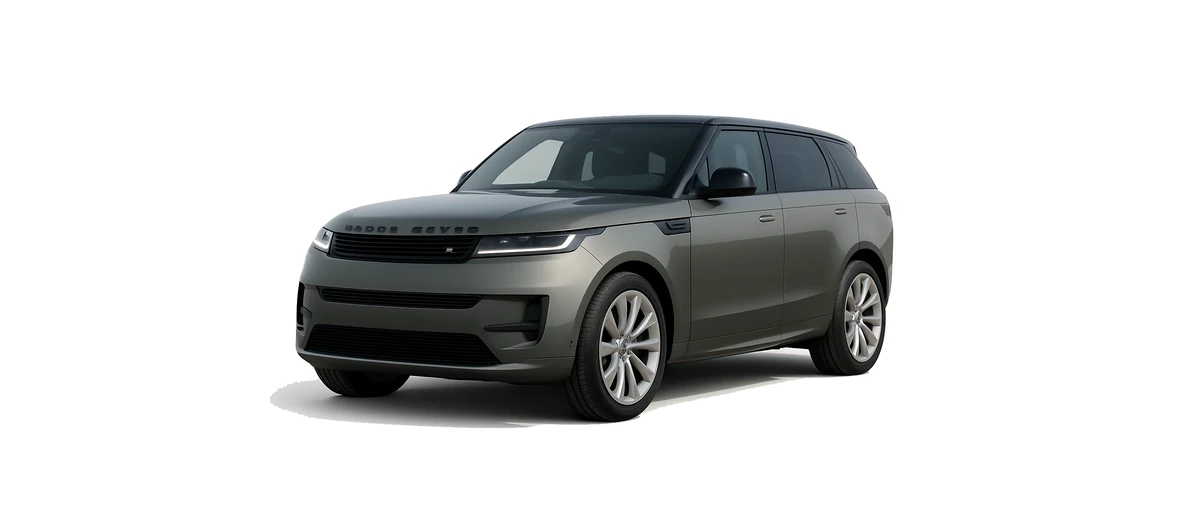
The Range Rover Sport plug-in hybrid is a luxury SUV with a charging story that depends heavily on which generation you own. Current UK-market L461 Range Rover Sport Electric Hybrid models, including the P460e and P550e, use a large plug-in hybrid battery and support both Type 2 AC charging and CCS DC rapid charging. Older L494 Range Rover Sport P400e models use a much smaller battery and should be treated as Type 2 AC-only unless your specific vehicle documentation confirms otherwise.
That generation split matters. A current P460e or P550e can cover many daily journeys on electric power if it is charged regularly, while the petrol engine remains available for longer trips and higher-demand driving. The earlier P400e is still useful as a plug-in hybrid, but its shorter electric range and different charging hardware mean owners should plan charging in a different way.
This guide explains what you need to know about Range Rover Sport home charging, public charging, cable selection and the key differences between current and previous plug-in hybrid models.
View Range Rover Sport Charging Cables
Range Rover Sport Battery and Charging Specifications
The Range Rover Sport covered here is a plug-in hybrid electric vehicle, not a fully electric car. Current UK L461 models combine a 3.0-litre inline-six petrol engine with plug-in hybrid drive. A separate fully electric Range Rover programme has been announced, but that is not the same as the Range Rover Sport PHEV models discussed in this charging guide.
| Model / generation | Battery | AC charging | DC rapid charging | Electric range context |
|---|---|---|---|---|
| Current L461 P460e / P550e PHEV | 38.2 kWh gross / 31.8 kWh usable | Type 2 AC, up to 7 kW | CCS, up to around 43 kW peak; about 40 minutes to 80% on suitable rapid charging | Official 2026 UK technical insert: 73 miles WLTP for P460e, 72 miles WLTP for P550e; expected real-world up to around 57 / 56 miles |
| Earlier L461 P440e / P510e PHEV | 38.2 kWh gross reported in UK reviews | Type 2 AC | Generally described as supporting rapid charging on L461 PHEV models, but check model-year documentation | Often quoted at around 70–76 miles WLTP depending on year, trim and source |
| Previous L494 P400e PHEV | 13.1 kWh gross | Type 2 AC | Do not assume DC rapid charging | Older figures were around 25–31 miles electric range depending on test cycle and source |
For cable choice, the most important point is simple: current L461 PHEV owners normally need a Type 2 charging cable for home wallboxes and public AC posts. DC rapid chargers use their own tethered CCS cable. Older P400e owners should focus on Type 2 AC charging and should not assume their vehicle can use a CCS rapid charger.
Battery Options
The current Range Rover Sport P460e and P550e plug-in hybrids use the same battery capacity in the latest official UK technical information: 38.2 kWh total, with 31.8 kWh usable. For a PHEV, this is a large battery, which is why current models can offer a much longer electric driving range than many older plug-in hybrid SUVs.
Earlier L461 models, commonly seen in reviews as P440e and P510e, are also associated with the 38.2 kWh battery pack. However, naming, range figures and market details can vary by model year, so it is sensible to confirm the exact vehicle badge and handbook before relying on a single figure.
The previous-generation L494 Range Rover Sport P400e is very different. It used a 13.1 kWh high-voltage battery, so its charging time, electric range and daily charging expectations are not directly comparable with the current P460e and P550e. If you are buying a cable for an older P400e, choose based on that vehicle’s Type 2 AC requirements rather than the current-generation CCS-capable specification.
AC Charging Speed
For current Range Rover Sport P460e and P550e models, the Type 2 AC part of the charging inlet supports up to 7 kW. Land Rover’s latest UK technical insert quotes around 5 hours to charge from empty to full using a 7 kW home charger or wallbox. In everyday use, many drivers will be topping up rather than charging from completely empty, so a normal overnight or off-peak session should be enough to restore most of the usable battery.
At public AC charge points, the car will still charge at up to its AC limit. A higher-rated public AC post will not make the vehicle exceed its onboard AC charging capability, but it can still be convenient when parking for several hours at a hotel, workplace, gym, retail park or town-centre car park.
The older L494 P400e was commonly quoted at around 2 hours 45 minutes on a wallbox, reflecting its much smaller battery. It can be easier to refill quickly, but it also offers a shorter electric-only range.
DC Rapid Charging Speed
One of the unusual advantages of the current L461 Range Rover Sport PHEV is that it supports DC rapid charging through a CCS Combo 2 inlet. Official UK information refers to use of 50 kW rapid chargers, a peak DC charging rate of around 43 kW, and a charge to 80% in about 40 minutes. When using a rapid charger, you use the charger’s tethered CCS cable rather than your own Type 2 cable.
Rapid charging is useful on longer days when you want to regain a meaningful amount of electric range during a stop. However, it is not always the most cost-effective or battery-friendly way to charge a PHEV. Range Rover’s own guidance notes that charging slows above 80% to protect battery life, so it usually makes sense to move on once the car has reached around that level, especially if other drivers are waiting.
For the previous-generation P400e, do not assume rapid charging capability. It should generally be treated as Type 2 AC-only unless your vehicle’s manual or charge-port hardware clearly confirms otherwise.
Range and Efficiency
The latest official UK 2026 technical insert lists electric WLTP range at 73 miles for the P460e and 72 miles for the P550e. The same source gives expected real-world electric range of up to around 57 miles for the P460e and 56 miles for the P550e. As with any plug-in vehicle, actual range will vary with speed, weather, route, tyre choice, load, driving style and use of heating or air conditioning.
For many UK drivers, the current Range Rover Sport PHEV has enough electric range to cover commutes, school runs and local journeys if it is charged consistently. The petrol engine remains important for long motorway trips, towing, remote routes and situations where electric charge has been depleted.
The older P400e is a different ownership proposition. Its electric range was quoted at around 25–31 miles depending on source and test cycle, so owners are more likely to use electric power for short local journeys rather than for a full day of mixed driving.
Charging at Home
For current P460e and P550e owners, a 7 kW home wallbox is the most practical default charging option. It matches the vehicle’s AC charging capability, gives an official empty-to-full time of about 5 hours, and makes it straightforward to charge overnight or during cheaper off-peak electricity periods if you have a suitable tariff.
A Type 2 to Type 2 cable is the normal cable for an untethered home wallbox. If your wallbox is tethered, the cable is permanently attached to the unit, so you may still want a separate Type 2 cable for public AC charging. For a large PHEV battery such as the current Range Rover Sport’s, having a dependable home routine is the difference between regularly driving on electric power and carrying around an under-used battery.
A domestic 3-pin charging cable is much slower. Official figures for current P460e and P550e models quote around 15 hours using a 2.3 kW domestic plug. A 3-pin charger is generally best suited as a backup or occasional charging solution, but can be used regularly if a qualified electrician has confirmed the socket and electrical installation are suitable for sustained EV charging.
Public Charging
For public AC charging, use a Type 2 cable. Many UK destination charge points are untethered, which means you need to bring your own cable. These posts are useful when the vehicle will be parked for a while, such as during work, shopping, leisure stops or hotel stays.
For current L461 PHEV rapid charging, use the CCS connector attached to the rapid charger. On CCS-equipped Range Rover Sport models, the inlet combines the Type 2 AC section with the lower DC pins. You may need to remove the lower CCS socket cover before connecting a rapid charger. Your own Type 2 cable is not used for DC rapid charging.
Because the Range Rover Sport PHEV is not a full battery-electric vehicle, public charging strategy should be practical rather than obsessive. AC charging is best when the car is parked anyway. Rapid charging is most useful when it allows you to complete more of a long journey electrically, but it may be better to leave rapid chargers to fully electric vehicles at busy sites if you do not genuinely need the top-up.
Vehicle-Specific Features
The key vehicle-specific feature for current Range Rover Sport PHEV charging is its CCS rapid charging capability. Many plug-in hybrids are AC-only, so the ability to rapid charge the current L461 model gives owners more flexibility than a typical PHEV, particularly on longer days or when home charging has not been possible.
The second important feature is the size of the current-generation battery. At 38.2 kWh gross and 31.8 kWh usable, it is large enough that charging behaviour feels closer to a small-battery EV than to an older short-range plug-in hybrid. That makes a proper wallbox and a good Type 2 cable more important than they might be on a smaller PHEV.
Finally, generation identification is essential. A P400e, P440e, P460e, P510e and P550e are not all the same from a charging perspective. Before buying a cable or planning around rapid charging, check the vehicle badge, model year, charge-port layout and owner documentation.
Charging Tips
- Match the cable to the car and charger: use Type 2 for AC charging; use the tethered CCS cable at a rapid charger on compatible current models.
- Charge little and often: regular home charging helps a PHEV deliver its best fuel-saving benefits.
- Use off-peak electricity where possible: current P460e and P550e models can comfortably recharge overnight on a 7 kW wallbox.
- Avoid unnecessary rapid charging above 80%: charging slows beyond this point, and stopping at around 80% is usually more efficient on a journey.
- Do not mix up generations: older P400e models have a much smaller battery and should be approached as Type 2 AC-only unless proven otherwise.
- Keep a public AC cable in the car: many UK destination chargers are untethered, so a Type 2 cable gives you more options.
Frequently Asked Questions
Is the Range Rover Sport PHEV fully electric?
No. The Range Rover Sport models covered here are plug-in hybrids. They can drive on electric power when charged, but they also have a petrol engine. The separate Range Rover Electric programme should not be confused with these PHEV charging requirements.
What charging cable does a Range Rover Sport PHEV use?
For AC charging, UK and European Range Rover Sport PHEV models use a Type 2 connection. A Type 2 to Type 2 cable is suitable for untethered home wallboxes and public AC charge points. Current L461 models with CCS rapid charging use the tethered cable attached to the DC rapid charger.
How long does a current Range Rover Sport P460e or P550e take to charge at home?
Official UK figures quote about 5 hours from empty to full using a 7 kW home charger or wallbox. Charging from a domestic 2.3 kW plug is quoted at around 15 hours.
Can all Range Rover Sport PHEVs use rapid chargers?
No. Current L461 plug-in hybrid models support CCS rapid charging, with official UK information quoting around 40 minutes to 80% on suitable rapid charging. The older L494 P400e should not be assumed to support DC rapid charging.
What is the electric range of the Range Rover Sport PHEV?
The latest official UK 2026 technical insert lists 73 miles WLTP for the P460e and 72 miles WLTP for the P550e, with expected real-world range up to around 57 and 56 miles respectively. Older P400e models have a much shorter electric range, commonly around 25–31 miles depending on source and test basis.
What This Means for Drivers
If you own a current Range Rover Sport P460e or P550e, the best charging setup is usually a 7 kW home wallbox plus a Type 2 cable for public AC charging. This supports the car’s large PHEV battery and makes regular electric driving realistic. CCS rapid charging is a useful bonus when you need it, but most charging will still be cheaper and more convenient at home or at destination AC posts.
If you own an older Range Rover Sport P400e, focus on simple Type 2 AC charging habits. Its smaller battery charges more quickly but provides less electric range, so short, regular top-ups are usually the most effective way to get value from the plug-in hybrid system.
Looking for a Charging Cable for Range Rover Sport?
We offer Range Rover Sport charging cables for PHEV owners who need a suitable Type 2 cable for home wallboxes and public AC charge points. Always confirm your exact model, generation and charging inlet before ordering, especially if you are choosing between an older P400e and a current L461 PHEV.
View Range Rover Sport Charging Cables
Please note that this information is intended as a guide. Charging specifications may change due to model and year of manufacture. For precise information, always refer to your vehicle user manual.

