
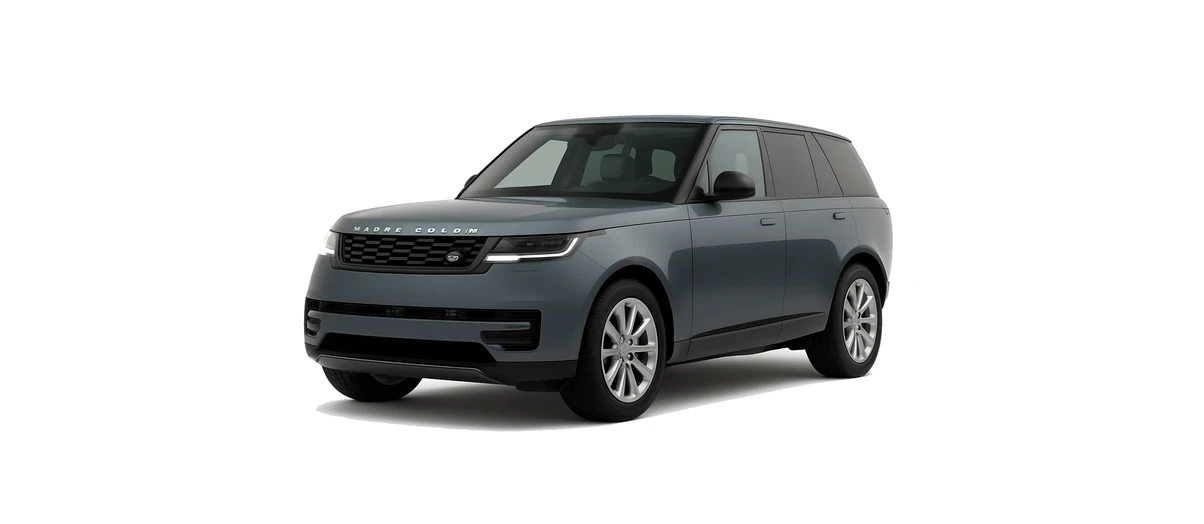
The Range Rover PHEV is a plug-in hybrid luxury SUV, combining petrol power with a rechargeable high-voltage battery for electric driving on shorter journeys. It is not the fully electric Range Rover Electric, which is a separate battery-electric model. For owners, the main charging question is not only how quickly it charges, but which generation of Range Rover PHEV you have.
That distinction matters. Current UK-market L460 Range Rover PHEV models, including P460e and P550e versions, use a much larger battery than the earlier L405 P400e and can support DC rapid charging on selected/current models. Older P400e models should generally be treated as Type 2 AC charging vehicles unless the vehicle’s inlet and documentation confirm otherwise. This guide explains the practical charging differences, how to choose the right cable, and how to get the best value from home and public charging.
View Range Rover PHEV Charging Cables
Range Rover PHEV Battery and Charging Specifications
The current fifth-generation L460 Range Rover PHEV is offered in the UK as plug-in hybrid variants such as the P460e and P550e, depending on body style and model year. It uses Jaguar Land Rover’s MLA-Flex architecture and has a large PHEV battery compared with many plug-in hybrids. UK technical data for the 2026 Range Rover PHEV lists a 38.2 kWh total battery capacity, with 31.8 kWh usable.
For charging, current L460 PHEV models use a Type 2 connector for AC charging and a CCS Combo 2 inlet where DC rapid charging is supported. The AC charging rate is listed at 7 kW, with a quoted 0-100% charge time of around 5 hours on a suitable home wallbox. For DC charging, JLR UK technical data refers to use of a 50 kW DC charger and quotes 40 minutes to 80%. This should not be read as a 10-80% figure, and real-world charging times can vary.
The older L405 Range Rover P400e is different. It used a much smaller high-voltage battery, described in older UK brochure information as 13 kWh, and had a 7 kW onboard AC charger. It is not safe to assume that an older P400e has CCS rapid charging; used-car owners should check the vehicle inlet, handbook or VIN-specific data before relying on rapid-charge compatibility.
Battery Options
For the current L460 P460e and P550e PHEV, the key battery figure is 38.2 kWh gross and 31.8 kWh usable. That is unusually large for a plug-in hybrid and is one reason the latest Range Rover PHEV can complete a meaningful amount of local driving on electric power when charged regularly.
For the earlier L405 P400e, the battery is much smaller at around 13 kWh according to older official information. This means the expected electric driving range, charge time and charging habits differ from the newer L460. If you are buying a cable for a used Range Rover PHEV, identify whether you have an L405 P400e or an L460 P460e/P550e before choosing equipment or assuming public rapid charging will be available.
AC Charging Speed
AC charging is the most important charging method for most Range Rover PHEV owners. Current L460 models support Type 2 AC charging at up to 7 kW, which is well matched to a typical UK single-phase home wallbox. JLR’s UK technical data lists a 0-100% AC charge time of around 5 hours for the current PHEV battery, making overnight and off-peak charging practical.
The earlier L405 P400e also used a 7 kW onboard charger, but because its battery was much smaller, its full charge time on a suitable wallbox was shorter, with older information quoting around 2.75 hours. In both cases, a Type 2-to-Type 2 cable is the relevant cable for untethered AC charge points at home, work or public destinations.
A 7 kW wallbox will not make the vehicle charge faster than its onboard AC limit, but it provides a convenient, repeatable and safer setup than relying on a domestic socket. If your wallbox is untethered, you will need your own Type 2 cable. If it is tethered, the cable is permanently attached to the charger.
DC Rapid Charging Speed
DC rapid charging is where the current L460 Range Rover PHEV stands out from many plug-in hybrids. Selected/current L460 PHEV models use a CCS Combo 2 inlet, with the lower DC pins used for rapid charging. UK technical data quotes use of a 50 kW DC charger and a charging time of 40 minutes to 80%.
In practice, DC rapid charging is most useful on longer journeys where you want to regain electric range during a stop. However, because the Range Rover PHEV still has a petrol engine, the biggest running-cost benefit normally comes from regular home, workplace or destination charging rather than frequent use of rapid chargers.
You do not need to buy a separate cable for DC rapid charging, because UK rapid and ultra-rapid chargers have their own tethered CCS cable. For older L405 P400e models, do not assume DC rapid charging is available. Many owners of older P400e vehicles should plan around Type 2 AC charging only unless the vehicle’s charging inlet clearly has CCS lower pins and the owner documentation confirms DC charging support.
Range and Efficiency
The current Range Rover PHEV is quoted by the manufacturer with up to 74 miles of electric range using eAER figures, while JLR also gives an expected real-world electric range of up to 56 miles. The exact figure depends on variant, wheel size, route, temperature, speed, driving style, accessory use and battery condition. It is best to treat 74 miles as an official headline figure rather than a guaranteed everyday result.
For many UK drivers, even the more cautious real-world estimate can cover a substantial amount of commuting, school runs and local journeys if the vehicle is plugged in regularly. The older L405 P400e has a much shorter electric range due to its smaller battery, so owners should expect a different pattern of petrol and electric use.
As with any PHEV, efficiency depends heavily on charging routine. A Range Rover PHEV that is charged most nights can complete many short journeys on electric power. The same vehicle used with an empty battery will behave more like a conventional petrol hybrid and will not deliver the same day-to-day fuel-saving potential.
Charging at Home
For current L460 P460e and P550e owners, a 7 kW home wallbox is the key charging setup. It allows the larger battery to be recharged in around 5 hours from empty to full, making it realistic to use cheaper overnight tariff windows where available. If your energy tariff has a dedicated off-peak EV period, the vehicle’s scheduling features or charger scheduling may help you charge at lower-cost times.
If you use an untethered wallbox, choose a Type 2-to-Type 2 charging cable. A 5 metre cable suits many driveways, but a longer cable can be more convenient if the charge point is on the opposite side of the parking bay, if you reverse in and drive out, or if the vehicle is shared between different parking positions. Always consider cable routing so it does not create a trip hazard.
A 3-pin domestic charger is generally best suited as a backup or occasional charging solution, but can be used regularly if a qualified electrician has confirmed the socket and electrical installation are suitable for sustained EV charging. This is especially important for a large-battery PHEV, because charging can run for several hours and places a continuous load on the circuit.
Public Charging
For public AC charging, the Range Rover PHEV uses Type 2 charging points. Many destination chargers at hotels, supermarkets, car parks, gyms and workplaces are untethered, so you will usually need to carry your own Type 2 cable. On a 7 kW AC post, the current L460 will charge at around its onboard AC limit; on higher-rated AC posts, it will still be limited by the vehicle’s onboard charger.
Current L460 PHEV models with CCS capability can also use suitable public DC rapid chargers. These chargers have a tethered CCS cable, so your own Type 2 cable is not used for DC sessions. Because rapid charging bays are often intended for battery-electric vehicles on longer journeys, it is courteous to move on once you have reached the charge level you need.
For older L405 P400e owners, public charging planning should focus on Type 2 AC points. Unless you have confirmed your exact vehicle supports CCS DC charging, do not plan a journey around rapid charging stops.
Vehicle-Specific Features
JLR guidance indicates that a Mode 3 Type 2 AC cable is included with relevant vehicles, while a domestic 3-pin Mode 2 cable may be optional. Used-car buyers should check what is physically supplied with the car, as cables can be missing, damaged or replaced over time.
Range Rover ownership services may allow charging status monitoring and timed charging via app features, subject to InControl, market availability and vehicle specification. This can be useful for checking whether the car is plugged in, monitoring progress and setting charging to run during an off-peak tariff window.
The most important vehicle-specific point remains generation identification. A current L460 P460e or P550e has the large 38.2 kWh gross battery and, on selected/current UK models, CCS DC charging capability. An older L405 P400e has a much smaller battery and should be approached as a Type 2 AC PHEV unless verified otherwise.
Charging Tips
- Charge little and often: A PHEV delivers its best savings when the battery is topped up regularly, especially before local journeys.
- Use a 7 kW wallbox where possible: It is the most practical everyday charging solution for current L460 models and works well for older P400e vehicles too.
- Carry a Type 2 cable: It is useful for untethered home wallboxes and many public AC charge points.
- Check your vehicle generation: Do not assume L460 charging specifications apply to an older L405 P400e.
- Use DC rapid charging selectively: On current models that support it, rapid charging is helpful on longer trips, but home and destination charging usually provide the best value.
- Plan cable length carefully: Choose a length that suits your parking layout without leaving excess cable across walkways.
Frequently Asked Questions
What charging cable does the Range Rover PHEV use?
For AC charging in the UK and Europe, the Range Rover PHEV uses a Type 2 connection. For untethered AC charge points, you need a Type 2-to-Type 2 cable. Current L460 models with DC capability use the CCS connector for rapid charging, but the rapid charger provides the cable.
How long does it take to charge a Range Rover PHEV at home?
Current L460 P460e and P550e models are quoted at around 5 hours from 0-100% on a 7 kW home charger. Older L405 P400e models have a smaller battery and were quoted at around 2.75 hours on a suitable 7 kW wallbox.
Can all Range Rover PHEV models use rapid chargers?
No. Current L460 Range Rover PHEV models are listed with CCS DC rapid charging capability, with JLR UK technical data quoting 40 minutes to 80% using a 50 kW DC charger. Older L405 P400e models should not be assumed to support DC rapid charging unless confirmed for that specific vehicle.
Is the Range Rover PHEV fully electric?
No. The Range Rover PHEV is a plug-in hybrid petrol-electric SUV. It can drive on electric power for shorter journeys when charged, but it also has a petrol engine. The fully electric Range Rover Electric is a separate model.
What size cable is best?
A 5 metre Type 2 cable is suitable for many home and public charging situations. A longer cable may be better if your charger is not close to the vehicle’s charging port, if you use different parking positions, or if you often charge at public bays with awkward layouts.
What This Means for Drivers
If you own a current L460 Range Rover PHEV, the best everyday setup is a 7 kW home wallbox and a suitable Type 2 cable for untethered AC charging. The large battery makes regular charging worthwhile, and the quoted 5-hour AC charge time means overnight or off-peak charging is straightforward for many households.
If you own an older L405 P400e, your charging needs are simpler but different. You still use Type 2 AC charging, but with a smaller battery and no assumption of DC rapid charging. Before buying charging accessories, confirm the exact model year, charging inlet and what cables came with the car.
For both generations, the biggest benefit comes from building charging into your routine. A Range Rover PHEV that is plugged in regularly can make far more use of its electric driving capability than one that is only charged occasionally.
Looking for a Charging Cable for Range Rover PHEV?
If you need a replacement or spare cable, choose a Type 2 cable suitable for your Range Rover PHEV and your charging setup, taking into account whether you use an untethered wallbox, public AC charging points, and the cable length that best suits your parking layout.
View Range Rover PHEV Charging Cables
Please note that this information is intended as a guide. Charging specifications may change due to model and year of manufacture. For precise information, always refer to your vehicle user manual.

