
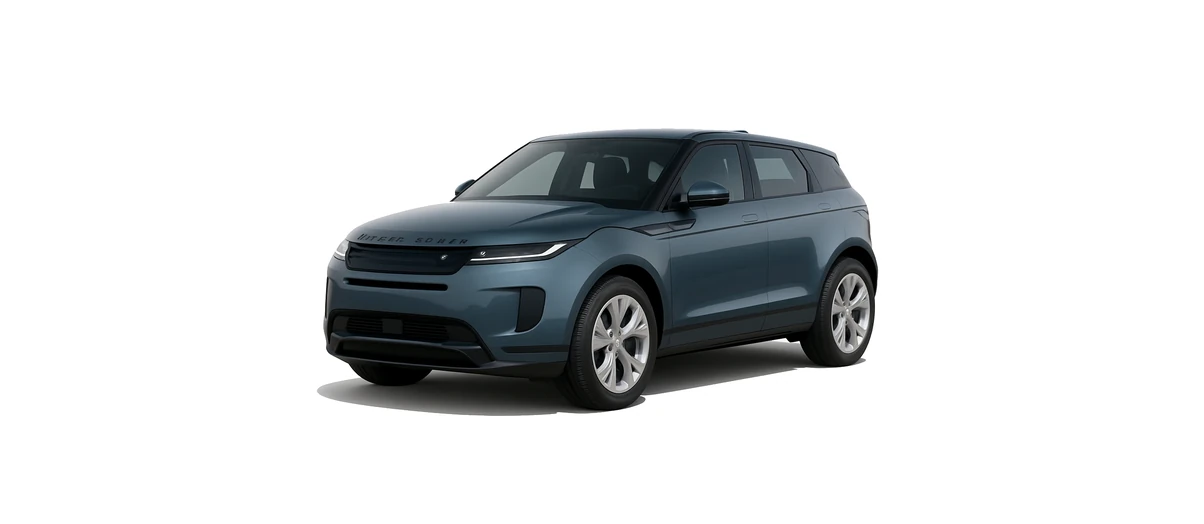
The Range Rover Evoque is available in the UK as a plug-in hybrid, but it is important to be clear about which version you own or are considering. Not every Evoque can be plugged in: the UK range has also included petrol and diesel mild-hybrid models. This guide focuses on the Range Rover Evoque PHEV, including the current P270e and earlier P300e plug-in hybrid models.
The Evoque PHEV is a compact SUV with a petrol engine, an electric motor and all-wheel drive. Unlike many plug-in hybrids, it can use both AC charging and DC rapid charging, which makes its charging setup more flexible than a typical PHEV. However, figures vary by model year, so it is worth separating current P270e data from older P300e information when choosing cables, planning charging stops or comparing used cars.
View Range Rover Evoque Charging Cables
Range Rover Evoque Battery and Charging Specifications
UK-market Range Rover Evoque plug-in hybrid models use a Type 2 connection for AC charging and a CCS Combo 2 connection for DC rapid charging. For home and most public AC charging, you will use the Type 2 inlet. For rapid charging, the CCS section of the same charge port is used with the tethered cable attached to the rapid charger.
Current UK information refers to the Evoque P270e Petrol Plug-in Hybrid. Earlier UK cars and many used examples are badged P300e. The general charging approach is similar, but the official DC charging power and some battery figures are not identical across model years.
- Vehicle type: petrol plug-in hybrid compact SUV
- Current UK PHEV badge: P270e
- Earlier UK PHEV badge: P300e
- AC charging connector: Type 2
- DC rapid charging connector: CCS Combo 2
- Current official AC charging rate: up to 7 kW
- Current official DC charging rate: up to 32 kW for P270e
Battery Options
The Evoque PHEV battery figures need careful wording because the official technical data has changed over time. Current MY26 UK technical information lists a battery capacity figure of 11.98 kWh under a “Total (Usable)” heading, without the same clear gross and usable split seen in some earlier documents. For that reason, it is best treated cautiously rather than presented as a confirmed gross capacity.
For MY25 P270e models, official UK data listed a 15 kWh total battery capacity with 12.17 kWh usable. Earlier MY23 P300e data listed 14.9 kWh total and 12.1 kWh usable. In practical ownership terms, these figures place the Evoque among plug-in hybrids designed for regular short electric journeys rather than long-distance electric-only travel.
If you are buying used, checking the exact model year and badge is worthwhile. A P300e owner’s handbook or technical sheet may show different charging power from a newer P270e, particularly for DC rapid charging.
AC Charging Speed
For daily charging, AC charging is the main method most Evoque PHEV owners will use. The current UK P270e is quoted with 7 kW AC charging and an official 0-100% charge time of around 2 hours 12 minutes from a suitable wallbox or AC charge point. Earlier P300e UK data also quoted a 7 kW AC charge time of around 2 hours 12 minutes.
This means a typical 7 kW home charger is a good practical match for the Evoque PHEV. The battery is small compared with a fully electric SUV, so a full recharge can usually be completed during the evening, overnight, or between journeys during the day.
On untethered home chargers and many public AC posts, you will need a Type 2 charging cable. The car does not take more than its onboard AC charging limit, so connecting to a higher-powered AC post will not necessarily make the Evoque charge faster than its own onboard charger allows.
DC Rapid Charging Speed
One of the more unusual features of the Range Rover Evoque PHEV is that it supports DC rapid charging. Many plug-in hybrids are AC-only, but the Evoque PHEV can use CCS rapid chargers where appropriate.
For the current UK P270e, official technical data quotes DC charging at up to 32 kW, with a 0-80% rapid charge taking around 30 minutes. Older P300e UK information quoted a 50 kW DC charger and a 0-80% charge time of around 30 minutes. Because those figures apply to different model years, it is best not to assume that a current P270e and an older P300e have the same maximum DC charging power.
Rapid charging can be useful if you want to restore electric range during a longer day of mixed driving. However, because the Evoque PHEV has a relatively small battery compared with a battery-electric vehicle, it is also worth being considerate at busy rapid charging sites. BEV drivers may be relying on those chargers to continue their journey, while an Evoque PHEV can continue on petrol if necessary.
Range and Efficiency
The current UK Range Rover Evoque PHEV is quoted with up to 37 miles of WLTP electric range. Range Rover’s own current UK information also gives an expected real-world electric range of up to 29 miles. That real-world figure is a more useful planning guide for everyday driving, especially in colder weather, at higher speeds or when using heating and other electrical systems.
As with any plug-in hybrid, the best efficiency comes from charging regularly. If your daily driving is within the electric range, the Evoque PHEV can cover many local trips using mostly electric power. If it is not plugged in often, it will behave more like a petrol hybrid carrying a larger battery, and fuel economy will be less impressive than the headline figures suggest.
Short commutes, school runs, local errands and town driving are the kinds of journeys where the Evoque PHEV’s electric range is most useful. Longer motorway trips will usually involve more petrol engine use, although starting with a full battery can still reduce fuel consumption over the first part of the journey.
Charging at Home
Home charging is the most convenient way to run an Evoque PHEV efficiently. A dedicated 7 kW home wallbox suits the car well, allowing the battery to be charged from empty to full in a little over two hours on current official figures. Many owners will not arrive home with an empty battery, so typical top-ups may be shorter.
If your home charger is tethered, it will already have a cable attached. If it is untethered, you will need a suitable Type 2 charging cable. A Type 2 cable is also useful for public AC charging, so many owners keep one in the boot for flexibility.
A 3-pin domestic charger is much slower, with current UK figures quoting around 6 hours 42 minutes for a 0-100% charge from a domestic 2.3 kW supply. A 3-pin charger is generally best suited as a backup or occasional charging solution, but can be used regularly if a qualified electrician has confirmed the socket and electrical installation are suitable for sustained EV charging.
For regular ownership, a properly installed wallbox is usually the safer, neater and more practical option. It can also make it easier to take advantage of off-peak electricity tariffs if your energy supplier offers them.
Public Charging
For public AC charging, the Range Rover Evoque PHEV uses a Type 2 cable. Many destination chargers at supermarkets, hotels, car parks and workplaces are untethered, so you provide your own cable. These are useful places to top up while the car is parked for an hour or two.
For rapid DC charging, you do not need your own cable because UK rapid chargers have tethered CCS cables. You simply connect the charger’s CCS plug to the Evoque’s charging port. The current P270e’s official maximum DC figure is 32 kW, so using a much higher-powered rapid charger will not make it charge at the rates expected of a full battery-electric car.
Public charging costs vary widely. AC destination charging may be cheaper than rapid charging, while rapid charging is mainly about convenience and speed. For a PHEV with a modest battery capacity, home charging will often be the most cost-effective way to run on electric power.
Vehicle-Specific Features
The key vehicle-specific charging feature of the Range Rover Evoque PHEV is its ability to use CCS DC rapid charging. This is not universal among plug-in hybrids, and it gives Evoque PHEV drivers another way to recover electric range during the day.
The current P270e combines a 1.5-litre three-cylinder petrol engine with an electric motor and all-wheel drive. Earlier P300e models used a similar plug-in hybrid layout, but with different official output and some different charging data. In both cases, the charging equipment you are most likely to use day to day is a Type 2 cable for AC charging.
Because the Evoque range includes non-plug-in models, always confirm that your vehicle is a PHEV before buying charging accessories. If the car is a diesel or petrol mild-hybrid Evoque, it does not use an external charging cable.
Charging Tips
- Charge little and often: the Evoque PHEV works best when its battery is regularly topped up for short electric journeys.
- Use a 7 kW wallbox where possible: it is well matched to the car’s AC charging capability.
- Carry a Type 2 cable: useful for untethered home chargers and public AC posts.
- Check your model year: current P270e and earlier P300e figures are similar in some areas but not identical, especially for DC charging power.
- Do not rely on WLTP range alone: the current official expected real-world electric range is up to 29 miles.
- Use rapid charging considerately: it is useful for quick top-ups, but BEV drivers may depend on rapid chargers for longer journeys.
Frequently Asked Questions
Is the Range Rover Evoque PHEV a fully electric car?
No. The Evoque PHEV is a plug-in hybrid, not a battery-electric vehicle. It can drive on electric power for shorter journeys, but it also has a petrol engine.
What charging cable does the Range Rover Evoque PHEV use?
For AC charging, UK and European Evoque PHEV models use a Type 2 connection. For DC rapid charging, they use a CCS Combo 2 connection with the rapid charger’s own tethered cable.
How long does the Range Rover Evoque PHEV take to charge at home?
Current UK P270e official figures quote around 2 hours 12 minutes from 0-100% using a 7 kW AC wallbox. A domestic 2.3 kW plug is quoted at around 6 hours 42 minutes.
Can the Range Rover Evoque PHEV use rapid chargers?
Yes, Evoque PHEV models support CCS DC rapid charging. Current UK P270e data quotes up to 32 kW DC and around 30 minutes for a 0-80% rapid charge. Earlier P300e UK data quoted 50 kW DC, also with a 0-80% time of around 30 minutes.
What electric range should I expect?
The current UK PHEV is quoted at up to 37 miles WLTP, with Range Rover’s expected real-world figure listed as up to 29 miles. Actual range will depend on route, speed, temperature, driving style and vehicle load.
What This Means for Drivers
The Range Rover Evoque PHEV is at its best when it is treated as a plug-in vehicle first and a petrol hybrid second. If you can charge at home, the battery can be replenished quickly enough for regular electric local driving. The ability to rapid charge adds flexibility, but most owners will still find a 7 kW wallbox and a Type 2 cable to be the core charging setup.
The main point is to match your charging expectations to your exact model. Current P270e figures should be used for new UK cars, while P300e figures remain relevant for many used examples. Avoid assuming that every Evoque has a plug, and avoid applying one battery or charging figure to every model year.
Looking for a Charging Cable for Range Rover Evoque?
We offer charging cables for the Range Rover Evoque PHEV, including Type 2 options for home and public AC charging.
View Range Rover Evoque Charging Cables
Please note that this information is intended as a guide. Charging specifications may change due to model and year of manufacture. For precise information, always refer to your vehicle user manual.

