
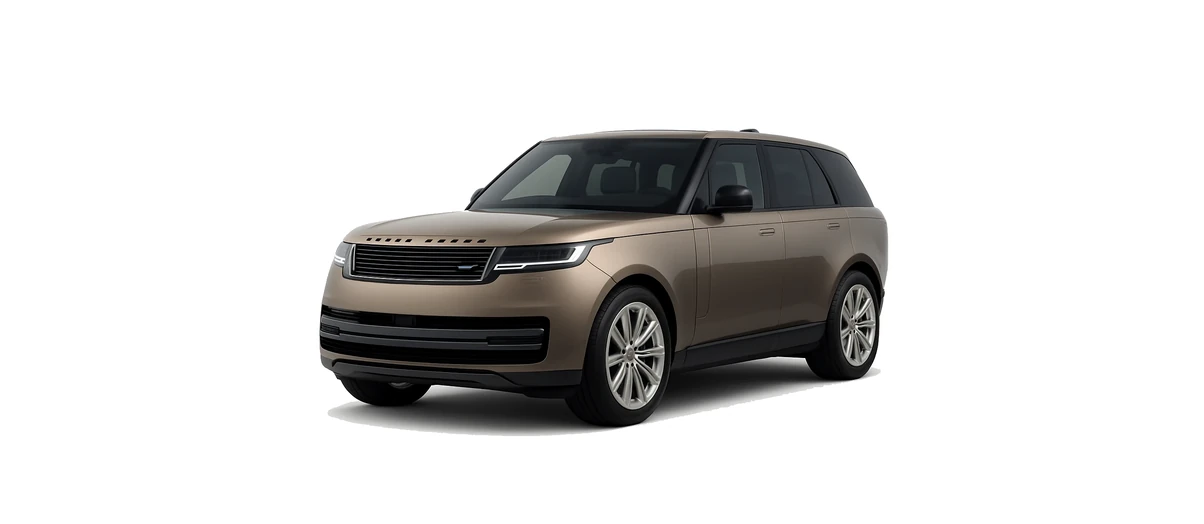
The Range Rover Electric is set to be the first fully electric Range Rover, bringing zero-tailpipe-emission driving to the full-size luxury SUV line-up. As of 10 June 2026, it remains a pre-production or upcoming model for the UK, with JLR stating that order books are due to open later in 2026. That means some customer specifications may still change before final homologated UK figures are published.
This guide is designed as a pre-order charging briefing for UK buyers and fleet operators. It explains what is currently confirmed, what should be treated as provisional, and how charging a very large 800V battery-electric Range Rover differs from charging the existing Range Rover Electric Hybrid plug-in hybrid model. The two vehicles should not be confused: the upcoming Range Rover Electric is a full BEV, while the current Electric Hybrid is a PHEV with different battery and charging figures.
View Range Rover Electric Charging Cables
Range Rover Electric Battery and Charging Specifications
JLR has confirmed that the Range Rover Electric uses a 117kWh, 800V battery with 344 prismatic cells in a double-stacked cell-to-pack layout. However, JLR has not yet published a final UK technical data sheet confirming whether that 117kWh figure is gross capacity, usable capacity, or how much of the battery will be available to the driver in production form.
For UK and European charging, the Range Rover Electric is expected to use the standard Type 2 and CCS arrangement. Type 2 is used for AC charging at home, work and many destination chargers. CCS is used for DC rapid and ultra-rapid public charging, such as motorway services and high-power charging hubs.
Official Range Rover UK material confirms CCS charging guidance for Range Rover electric vehicles and describes optional dual-sided AC charging, powered charging covers and illuminated charge ports. Professional review sources have reported 22kW AC charging, up to 350kW DC charging and a 10-80% rapid charge time of around 20 minutes, but these figures should be treated as pre-production or review-sourced until JLR publishes final UK customer specifications.
Battery Options
At the time of writing, the main confirmed battery information is the 117kWh 800V pack described by JLR during prototype testing. No final UK range of battery options has been confirmed. It is therefore sensible to avoid assuming that all versions, trims or markets will necessarily have identical charging specifications until the official UK technical data sheet is released.
The size of the pack is important for charging expectations. A battery of this scale can store substantially more energy than the pack in a typical small or medium electric car. That is useful for long-distance luxury SUV driving, towing or high-speed motorway use, but it also means a full charge from a low state of charge will take longer on a normal home charger.
AC Charging Speed
AC charging is the type of charging most owners use most often. It covers home wallboxes, workplace chargers, hotel chargers and many public destination posts. For the Range Rover Electric, official UK pages confirm dual-sided AC charging availability but do not yet state the final rated AC charging power in kW.
Electrifying has reported 22kW AC capability for the pre-production vehicle. If this is confirmed on UK cars, it would be a useful feature for drivers with access to three-phase AC charging. However, many UK homes have single-phase electricity supplies, where a typical dedicated home wallbox charges at around 7kW. On a battery of roughly this size, a 7kW charge from very low to full would be an overnight-and-more event rather than a short top-up.
For cable selection, a Type 2 charging cable will be the relevant AC cable format. If 22kW AC charging is confirmed and you expect to use three-phase public or workplace AC posts, a 32A three-phase Type 2 cable would be the most flexible choice. If you only use a single-phase home wallbox, charging speed will usually be limited by the wallbox and the property supply rather than the maximum capability of the car.
DC Rapid Charging Speed
DC rapid charging uses the larger CCS connector and is normally tethered, meaning the cable is attached to the charging unit. You do not usually need to carry your own cable for DC rapid or ultra-rapid charging.
Review sources have reported a peak DC charging rate of up to 350kW and a 10-80% charge time of around 20 minutes for the Range Rover Electric. These numbers are impressive, but they should be treated as provisional until final UK specifications are published. They will also depend on charger capability, battery state of charge, temperature, software and charging-curve behaviour.
The 800V architecture should help the vehicle make effective use of high-power DC chargers where available. In real journeys, however, the best approach is usually to rapid charge to around 80% and continue driving, because charging speeds typically slow significantly above 80% to protect the battery and manage heat.
Range and Efficiency
JLR has not yet published a final homologated UK WLTP range figure for the Range Rover Electric. Some review coverage has discussed estimates around the 300-mile mark, but these should not be treated as official customer figures at this stage.
Real-world range will depend on wheel size, speed, temperature, terrain, payload, accessories and driving style. As a large luxury SUV, the Range Rover Electric is likely to use more energy at sustained motorway speeds than a smaller, lower electric car. On the other hand, the large battery should give it a useful energy reserve for long-distance driving.
JLR has confirmed ThermAssist thermal-management technology, which is intended to reduce heating energy consumption and help preserve charging performance in cold conditions. Final consumer specifications and equipment wording should still be checked once the UK configurator and technical documents are published.
Charging at Home
For most owners, home charging will be the simplest and cheapest way to run the Range Rover Electric. A dedicated 7kW wallbox on a suitable single-phase UK supply will be the normal home setup for many drivers. Rather than waiting until the battery is nearly empty and then charging to 100%, most owners will find it easier to plug in regularly and replace the energy used during normal daily driving.
With a battery of this size, home charging should be thought of as steady replenishment. If you use 40 or 60 miles of range in a day, a home wallbox can usually replace that overnight comfortably. A full charge from a very low state of charge will take much longer, so planning is more important before long trips.
If you have access to a three-phase supply, a higher-powered AC charger may be possible, subject to the property, charger and final vehicle specification. This is more common in commercial premises than ordinary homes. A qualified installer should assess the supply, earthing arrangement, load management and any DNO requirements before installation.
A 3-pin charger is generally best suited as a backup or occasional charging solution, but can be used regularly if a qualified electrician has confirmed the socket and electrical installation are suitable for sustained EV charging. For a vehicle with a very large battery, a 3-pin plug will add energy slowly, so it should not be considered the main charging method for most Range Rover Electric owners.
Public Charging
Public charging for the Range Rover Electric will fall into two main categories: AC destination charging and DC rapid charging. AC destination chargers are useful when the car is parked for several hours, such as at hotels, offices, leisure venues or long-stay car parks. For these, you may need your own Type 2 cable if the charger is untethered.
DC rapid and ultra-rapid chargers are the best option for long journeys. These use CCS and normally have their own cable attached. To benefit from the highest reported charging rates, you would need a high-power charger capable of delivering very high output, and the car would need to be in the right state of charge and temperature window.
In practical terms, plan motorway stops around reliable high-power charging hubs rather than assuming every charger can deliver the same speed. A charger rated at 150kW, for example, cannot deliver 350kW even if the vehicle can accept more under ideal conditions.
Vehicle-Specific Features
The Range Rover Electric is built on JLR’s Modular Longitudinal Architecture, adapted for battery-electric use. JLR has confirmed an 800V electrical architecture, the 117kWh battery, prototype winter testing and UK production at Solihull, with batteries and electric drive units assembled at the Wolverhampton Electric Propulsion Manufacturing Centre.
Official Range Rover material also describes optional dual-sided AC charging, powered charging covers and illuminated charging ports. Dual-sided AC access may make parking and cable routing easier in some home or destination charging situations, although buyers should check how this is specified on the final UK model.
JLR has also confirmed single-pedal driving and a 900mm wading depth for the Range Rover Electric. These features are not cable specifications, but they underline that the vehicle is being developed as a full Range Rover rather than simply an urban electric SUV.
Charging Tips
- Check final UK specifications before ordering accessories. The vehicle is still pre-production, so confirm AC charging capacity and cable requirements against the final UK handbook or technical sheet.
- Choose Type 2 for AC charging. UK home, workplace and destination AC charging will use a Type 2 connection.
- Consider a 32A three-phase cable for flexibility. If 22kW AC charging is confirmed and you use three-phase posts, this will help you access the highest AC rates available to the car.
- Use CCS rapid chargers for long trips. DC rapid charging is the right choice for motorway stops and longer journeys.
- Aim for around 80% on rapid chargers. Charging beyond 80% is usually slower, so it is often quicker overall to continue your journey and charge again later if needed.
- Install a dedicated home wallbox where possible. It will be far more practical than relying on a 3-pin plug for such a large battery.
Frequently Asked Questions
Is the Range Rover Electric already on sale in the UK?
Not yet in full customer production. JLR has described it as an upcoming UK-built electric Range Rover, with order books expected to open later in 2026. Final UK customer specifications may still change.
What charging connector will the Range Rover Electric use?
For the UK and Europe, the expected arrangement is Type 2 for AC charging and CCS for DC rapid charging. This matches official Range Rover charging guidance for electric vehicles.
How fast will it charge at home?
Most UK homes with a dedicated single-phase wallbox charge at around 7kW. Reported 22kW AC capability would require suitable three-phase charging equipment and confirmation on final UK vehicles.
Will I need a cable for public charging?
For untethered AC public chargers, yes, you will normally use your own Type 2 cable. For DC rapid and ultra-rapid CCS chargers, the cable is normally attached to the charger.
What is the official range?
JLR has not yet published a final homologated UK WLTP range figure for the Range Rover Electric, so any range estimates should be treated cautiously until the official technical data is available.
What This Means for Drivers
The Range Rover Electric should be approached as a large-battery luxury BEV with strong long-distance charging potential, not as a plug-in hybrid. The confirmed 117kWh 800V battery and CCS charging support point towards serious electric touring capability, while the final charging figures still need official UK confirmation.
For most drivers, the best ownership pattern will be simple: use a dedicated home wallbox for regular charging, carry a suitable Type 2 cable for AC destination charging, and use CCS rapid chargers on longer trips. Because the battery is large, daily top-ups will usually be more convenient than deep discharge and full recharge cycles.
Looking for a Charging Cable for Range Rover Electric?
We offer Type 2 charging cables suitable for UK home, workplace and destination charging, including options to help prepare for the upcoming Range Rover Electric once final UK specifications are confirmed.
View Range Rover Electric Charging Cables
Please note that this information is intended as a guide. Charging specifications may change due to model and year of manufacture. For precise information, always refer to your vehicle user manual.

