
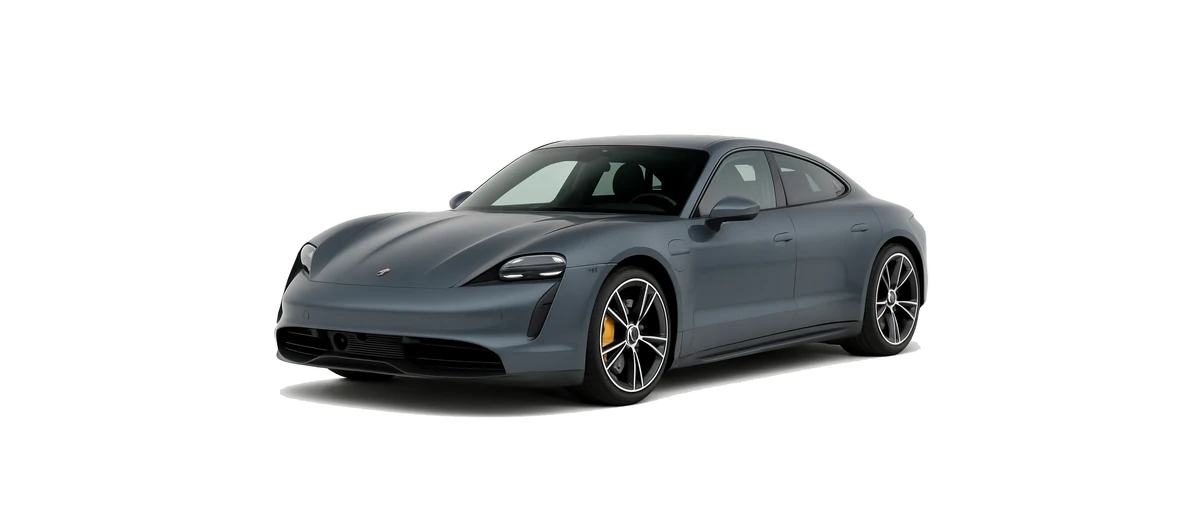
The Porsche Taycan is a fully electric performance car sold in the UK as a sport saloon, Sport Turismo and Cross Turismo. It is not a plug-in hybrid or range-extender; every Taycan is a battery-electric vehicle, using Type 2 AC charging and CCS rapid charging. Where Taycan charging can become confusing is model year: the updated cars introduced from 2024 onwards use larger batteries and higher peak rapid-charging capability than earlier 2020 to early-2024 cars.
This guide explains what UK Taycan drivers need to know about charging at home, using public AC chargers, planning rapid-charging stops and choosing the right cable. The key point is to identify which Taycan you have: a current facelift model with the newer 89 kWh or 105 kWh battery options, or an earlier car with the previous 79.2 kWh or 93.4 kWh packs.
View Porsche Taycan Charging Cables
Porsche Taycan Battery and Charging Specifications
UK and European Taycan specifications vary by body style, trim, wheel size, battery pack and model year, so there is no single set of figures that applies to every Taycan. Current Porsche UK material lists the Taycan as part of the 2026 electric model range, while the major technical update arrived for the 2024-on facelifted cars.
For AC charging, current Taycan models have a standard 11 kW on-board charger. The UK/EU AC connector is Type 2. For DC rapid charging, the car uses CCS Combo 2. The Taycan’s front-side charging flaps provide access to the AC inlet and the combined CCS rapid-charging inlet, depending on the side and equipment fitted.
The Taycan is built around an 800-volt electrical architecture, which is one of the reasons it can charge very quickly on the right public rapid charger. However, peak DC charging figures only apply when the vehicle, battery state of charge, battery temperature and charger are all suitable.
Battery Options
Current facelifted Taycans are associated with two main battery sizes. Some versions use the current Performance Battery, listed at around 89 kWh gross and 82.3 kWh usable. Performance Battery Plus cars use a larger pack, with Porsche technical data listing 105 kWh gross and 97 kWh net capacity.
Used Taycans need extra care when checking specifications. Earlier pre-facelift cars used smaller packs: a 79.2 kWh gross battery with around 71.0 kWh usable capacity, or the earlier Performance Battery Plus at 93.4 kWh gross and around 83.7 kWh usable. These figures should not be mixed with the newer 89 kWh and 105 kWh facelift batteries.
If you are buying a used Taycan, check the VIN, build sheet or Porsche specification record before relying on charging times or battery-size claims. This is particularly important because some cars may also have optional AC charging equipment that differs from the current standard setup.
AC Charging Speed
The current Taycan’s standard AC charging capability is 11 kW via Type 2. In practical UK use, this needs context. Most domestic properties have a single-phase electricity supply, so a typical home wallbox will charge at up to 7.4 kW, not 11 kW. The car can accept more on AC, but the house supply and charge point normally set the limit.
To use the full 11 kW AC capability, you generally need a three-phase supply and a suitable three-phase charge point. This is more common at workplaces, commercial sites and some public AC destinations than at ordinary UK homes. Some Taycans have also been available with higher-output AC charging options, such as 22 kW in certain specifications, but that should be confirmed by the individual vehicle’s VIN or build record rather than assumed.
For cable selection, a Type 2 charging cable is the correct cable for untethered home wallboxes and public AC charging posts. If you want to make best use of three-phase AC posts where available, choose a three-phase Type 2 cable with an appropriate current rating. A single-phase cable will still charge the car, but it will not allow the same AC performance on a three-phase post.
DC Rapid Charging Speed
DC rapid charging is where the Taycan’s 800-volt system is most noticeable. Porsche states that current Performance Battery Plus cars can charge at up to 320 kW under ideal conditions, and quotes a 10-80% DC charging time of around 18 minutes when using a suitable high-power 800 V CCS charger with the battery at the right temperature.
That 18-minute figure should be treated as an optimum-condition benchmark rather than an everyday guarantee. Lower-powered CCS chargers will work, but they cannot provide the headline speed. Cold battery temperatures, a very high or very low state of charge, charger sharing, site limits and battery-management decisions can also reduce the actual charging rate.
Older Taycans and some battery versions have lower rapid-charging assumptions than the current Performance Battery Plus cars, so avoid applying the latest 320 kW figure to every Taycan. On long journeys, the most practical approach is to plan around 10-80% rapid-charging stops, as charging above 80% usually slows significantly.
Range and Efficiency
Porsche UK lists up to 421 miles WLTP for the current Taycan Sport Saloon range, but range varies widely across the Taycan family. Turbo GT models, Sport Turismo and Cross Turismo versions, wheel and tyre choices, performance trims and older model years can all produce different official figures.
Real-world range will also vary with speed, weather, driving style, terrain and use of heating or air conditioning. A cautious real-world estimate for a current Taycan can be around 305 miles in favourable mixed driving, but high-speed motorway use and winter conditions may reduce that. Conversely, gentle urban and A-road driving can be more efficient.
For ownership planning, it is usually better to think in terms of your regular daily mileage and your home or workplace charging access rather than relying only on the maximum WLTP number. Many drivers will not need to charge from empty to full each day; regular smaller top-ups are normally easier on an EV routine.
Charging at Home
For most UK Taycan owners, the best everyday setup is a dedicated Type 2 home wallbox. A tethered wallbox has the cable permanently attached, which is convenient if you mainly charge at home. An untethered wallbox uses your own Type 2 cable, which can be useful if you also want to carry that cable for public AC charging.
On a typical single-phase 7.4 kW home charger, a Taycan will charge below its 11 kW AC maximum. Depending on battery size and starting charge level, a substantial charge may take a long overnight period. With a three-phase supply and suitable equipment, the 11 kW AC charger can reduce AC charging time, but this is not the standard domestic arrangement for most UK properties.
A 3-pin charger is generally best suited as a backup or occasional charging solution, but can be used regularly if a qualified electrician has confirmed the socket and electrical installation are suitable for sustained EV charging. Because the Taycan has a large battery, a domestic 3-pin socket will be slow and is not the most convenient everyday charging method for most owners.
Home charging is also useful for battery preconditioning and departure planning. If you set your desired departure time and charging target, the car can be ready when needed while reducing the need to rely on public charging for routine driving.
Public Charging
Public AC charging uses the same Type 2 standard as home charging. Untethered AC posts require you to bring your own Type 2 cable. These chargers are useful at hotels, workplaces, town centres and longer parking sessions, but they are not the quickest way to add range during a motorway journey.
For rapid and ultra-rapid charging, use CCS chargers. DC rapid chargers have their own tethered CCS cable, so you do not use your own Type 2 cable for rapid charging. To make best use of current Performance Battery Plus Taycans, look for ultra-rapid CCS chargers rated above 300 kW and capable of supporting high-voltage vehicles. Lower-rated 50 kW, 100 kW or 150 kW CCS chargers will still charge the car, but the stop will be longer.
The Taycan’s built-in navigation and Porsche Charging Planner can help identify charging stops and prepare the battery. Using the car’s route planner before reaching a rapid charger is important because battery preconditioning can improve charging performance, especially in cold weather.
Vehicle-Specific Features
The Taycan’s most important charging feature is its 800-volt electrical architecture, which supports high-power DC charging when the correct charger is available. Current Performance Battery Plus versions can reach up to 320 kW in suitable conditions, while Porsche quotes 10-80% charging in 18 minutes under optimal circumstances.
The updated Taycan also has a standard heat pump according to Porsche UK, which can help manage cabin heating more efficiently than relying solely on resistive heating. Battery preconditioning is also supported through the vehicle’s systems and Charging Planner, helping the car reach a more favourable battery temperature before a rapid-charging stop.
Vehicle-to-load, vehicle-to-home and vehicle-to-grid capability should not be assumed for UK Taycan owners. The referenced Taycan data lists V2L, V2H and V2G as not supported, so the Taycan should be treated primarily as a high-performance EV rather than a mobile power supply.
Charging Tips
- Identify your exact Taycan model year and battery pack before comparing charging figures.
- Use a dedicated Type 2 wallbox for regular home charging where possible.
- Remember that most UK homes charge at up to 7.4 kW even though the current Taycan’s AC charger is rated at 11 kW.
- Choose a Type 2 cable for public AC charging; CCS rapid chargers use their own tethered cable.
- Use the Porsche Charging Planner before rapid charging so the battery can precondition.
- Plan long trips around 10-80% rapid-charging stops rather than charging to 100% each time.
- For used cars, check whether any higher-output AC charging option is actually fitted.
Frequently Asked Questions
What charging cable does the Porsche Taycan use?
The Porsche Taycan uses a Type 2 cable for AC charging at home or on public AC posts. For DC rapid charging, it uses CCS Combo 2, and the rapid charger provides the tethered CCS cable.
Can the Porsche Taycan charge at 11 kW at home?
The current Taycan has an 11 kW AC on-board charger, but most UK homes are single-phase and will normally charge at up to 7.4 kW with a typical wallbox. Charging at 11 kW usually requires a suitable three-phase supply and charge point.
Does every Porsche Taycan charge at 320 kW?
No. The 320 kW figure is associated with current Performance Battery Plus cars and requires ideal conditions on a suitable high-power 800 V CCS charger. Older Taycans and some battery versions have lower peak rapid-charging capability.
How long does rapid charging take?
Porsche quotes around 18 minutes for 10-80% DC charging on current Performance Battery Plus cars under optimal conditions. In everyday use, the result depends on charger power, battery temperature, state of charge and the specific Taycan version.
What This Means for Drivers
The Taycan is one of the fastest-charging electric cars when the right model, battery and charger align, but UK owners should separate the headline rapid-charging figures from day-to-day charging reality. At home, most drivers will use a 7.4 kW Type 2 wallbox. On the road, CCS ultra-rapid charging, route planning and battery preconditioning are the keys to shorter stops.
If you drive a current facelifted Taycan, the newer batteries and improved DC capability make long-distance charging especially strong. If you drive an earlier used Taycan, it can still be an excellent long-distance EV, but battery size, AC charger specification and rapid-charging capability should be checked carefully before relying on current-model figures.
Looking for a Charging Cable for Porsche Taycan?
If you need a Type 2 cable for home or public AC charging, choose one that matches how you use your Taycan, including whether you want single-phase convenience or a three-phase cable for suitable 11 kW AC charging locations. We offer Porsche Taycan charging cables for UK drivers.
View Porsche Taycan Charging Cables
Please note that this information is intended as a guide. Charging specifications may change due to model and year of manufacture. For precise information, always refer to your vehicle user manual.

