
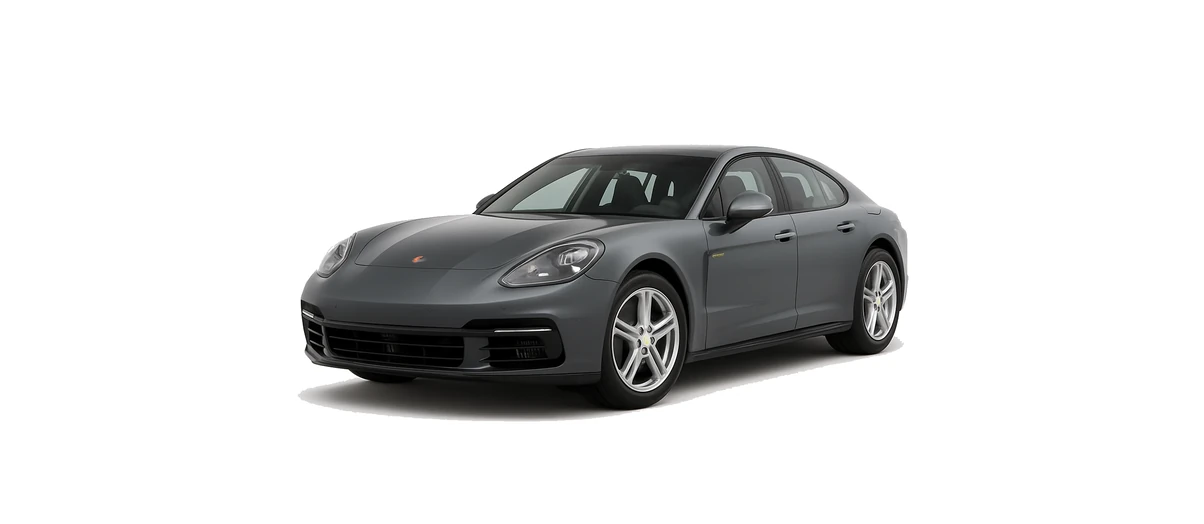
The Porsche Panamera 4 E-Hybrid is a plug-in hybrid luxury sports saloon and grand tourer, not a fully electric vehicle. That distinction matters when planning charging: you still have a petrol engine for long journeys, but regular charging is what allows the car to deliver meaningful electric-only driving, lower short-trip fuel use and the smooth low-speed running that makes a plug-in hybrid appealing.
For the current UK-market third-generation Panamera 4 E-Hybrid, Porsche quotes a 25.9 kWh battery capacity, an 11 kW AC on-board charger and a WLTP electric range of around 50 to 60 miles, depending on specification. However, used Panamera 4 E-Hybrid models vary significantly. Earlier second-generation cars used smaller 14.1 kWh or 17.9 kWh batteries, and some older cars charge much more slowly than the latest model. This guide separates the main model years so you can choose the right Type 2 charging cable and set realistic home and public charging expectations.
View Porsche Panamera 4 E-Hybrid Charging Cables
Porsche Panamera 4 E-Hybrid Battery and Charging Specifications
The current Panamera 4 E-Hybrid uses a plug-in hybrid drivetrain combining a 2.9-litre twin-turbo V6 petrol engine with an electric motor integrated into the transmission. Official Porsche technical data describes it as a parallel full hybrid with plug-in technology. In practical terms, it can drive on electric power for local journeys when charged, blend petrol and electric power for performance, and continue as a petrol hybrid when the battery’s usable charge is depleted.
For current UK and EU-context cars introduced for model year 2024/2025, the key charging figures are:
- Battery capacity: 25.9 kWh gross / 21.8 kWh net according to Porsche technical data.
- AC charging capability: up to 11 kW using the on-board AC charger.
- Quoted AC charging time: approximately 2 hours 39 minutes from 0-100% at 11 kW.
- Charging connection: Type 2 AC in the UK/EU context.
- Official electric range: Porsche Great Britain quotes a WLTP electric range of around 50-60 miles for the current Panamera 4 E-Hybrid model range.
These figures should not be applied automatically to older used examples. The Panamera 4 E-Hybrid name has been used across more than one generation, and the battery and charging hardware changed over time.
Battery Options
If you are buying, running or choosing a cable for a used Panamera 4 E-Hybrid, the model year is important. The main UK-relevant battery generations are:
- Current third-generation Panamera 4 E-Hybrid, from around 2024/2025: 25.9 kWh gross / 21.8 kWh net battery. This is the current Porsche Great Britain model and has the longest electric range of the Panamera 4 E-Hybrid versions covered here.
- Facelift second-generation Panamera 4 E-Hybrid, approximately 2021-2023: Porsche increased the high-voltage battery capacity to 17.9 kWh for the revised Panamera E-Hybrid line. Exact equipment should still be confirmed from the vehicle specification or VIN.
- Early second-generation Panamera 4 E-Hybrid, approximately 2017-2020: Porsche launch information listed a 14.1 kWh battery. These cars have a lower electric range than the latest model and may have slower AC charging hardware.
This model-year split is the most common source of confusion. A charging time or electric range quoted for a brand-new Panamera 4 E-Hybrid will not necessarily describe a 2017, 2019 or 2022 used example.
AC Charging Speed
The current Panamera 4 E-Hybrid supports up to 11 kW AC charging, which is useful for a plug-in hybrid with a comparatively large battery. Porsche quotes around 2 hours 39 minutes for a full 0-100% AC charge when the car is connected to a suitable 11 kW AC supply.
In the UK, most domestic home chargers are single-phase units rated at around 7 kW or 7.4 kW. On this type of wallbox, the current Panamera 4 E-Hybrid will not receive its full 11 kW maximum, because the home supply is the limiting factor. Charging will still be perfectly practical overnight or between trips, but it will take longer than the 11 kW figure.
To use the current car’s fastest AC capability, you generally need an 11 kW-capable three-phase AC charger and a property or workplace with three-phase electrical supply. This is more common at commercial premises than at typical UK homes, although some domestic properties do have three-phase supply.
Older Panamera 4 E-Hybrid models need extra care. Early 2017-2020 cars may have 3.6 kW AC charging as standard, with 7.2 kW optional in some markets. That means they may charge much more slowly than the latest model, even if plugged into a higher-powered post. Before buying a cable or estimating charge times for a used car, check the vehicle’s build sheet, handbook, Porsche specification data or VIN-specific information.
DC Rapid Charging Speed
Reliable Porsche data for the Panamera 4 E-Hybrid focuses on AC charging. No confirmed CCS/DC rapid-charging specification or 10-80% rapid-charge time is available from the sources used for this guide. For that reason, the safest assumption for UK cable planning is that the Panamera 4 E-Hybrid is an AC-charging plug-in hybrid using a Type 2 connection, unless a VIN-specific owner’s manual or Porsche documentation for your exact car states otherwise.
This is not unusual for plug-in hybrids. They usually have smaller batteries than full battery-electric vehicles and are designed to be charged at home, at work or on destination AC chargers rather than at motorway rapid chargers. For longer journeys, the Panamera 4 E-Hybrid can continue using its petrol engine, so public rapid charging is not central to its ownership experience in the way it is for a battery-electric car.
Range and Efficiency
The current UK-market Panamera 4 E-Hybrid has a Porsche-quoted WLTP electric range of around 50-60 miles, depending on model and specification. Official EU technical data also supports an electric-range figure in this general area. This is a strong electric range for a performance plug-in hybrid and should be enough for many local journeys if the car is charged regularly.
Real-world electric range will vary. Cold weather, high motorway speeds, wheel and tyre choice, cabin heating, driving style, passenger load and terrain can all reduce the distance covered on electric power. Conversely, urban and suburban driving at moderate speeds is often where a plug-in hybrid can make best use of its electric motor.
Older Panamera 4 E-Hybrid versions have smaller batteries, so owners should expect a shorter electric driving range than the current 25.9 kWh car. If you are comparing used cars, do not rely only on the badge: a facelift 17.9 kWh car and an early 14.1 kWh car will not behave like the latest model for electric range or charging time.
Charging at Home
For most UK owners, home charging will be the simplest and most cost-effective way to run a Panamera 4 E-Hybrid as intended. Plugging in overnight or after daily use keeps the battery ready for short electric journeys and lets the hybrid system make best use of the stored energy.
A dedicated 7 kW or 7.4 kW home wallbox is a practical match for most UK homes. It will not deliver the current Panamera 4 E-Hybrid’s full 11 kW maximum, but it should still comfortably recharge the battery during a typical overnight parking period. If your property has three-phase supply and a suitable 11 kW AC charger, the current car can charge closer to Porsche’s quoted fastest AC time.
If your wallbox is untethered, you will need a Type 2 charging cable. For the current 11 kW car, a Type 2 to Type 2 cable rated for 32A three-phase use is a sensible choice because it supports the car’s maximum AC capability where available and also works on many lower-powered AC posts. If you only ever use a tethered home charger, you may not need a separate cable at home, but it is still useful for public AC destination chargers that require drivers to bring their own lead.
A 3-pin charger is generally best suited as a backup or occasional charging solution, but can be used regularly if a qualified electrician has confirmed the socket and electrical installation are suitable for sustained EV charging. For a car with a larger plug-in hybrid battery like the current Panamera 4 E-Hybrid, a dedicated wallbox is usually more convenient and safer for routine charging.
Public Charging
Public charging for the Panamera 4 E-Hybrid is mainly about AC destination charging rather than rapid charging. Useful locations include workplaces, hotels, town-centre car parks, restaurants, leisure facilities and longer-stay public car parks. These are places where the car may be parked for long enough to add a meaningful amount of electric range.
Many UK public AC posts are untethered, so you connect using your own Type 2 cable. The post may be rated at 7 kW, 11 kW or 22 kW, but the actual charging speed is limited by the car’s on-board charger and the electrical supply. A current Panamera 4 E-Hybrid can use up to 11 kW AC when the conditions support it. An older car with a 3.6 kW or 7.2 kW on-board charger will be limited to that lower rate even if the post itself can supply more.
Because the Panamera 4 E-Hybrid has a petrol engine, public charging is not usually essential for completing a long journey. Its main value is arriving with enough battery to drive through urban areas electrically, reduce fuel use on short trips and make better use of the plug-in hybrid system during the day.
Vehicle-Specific Features
The current Panamera 4 E-Hybrid is a performance-focused plug-in hybrid rather than a conventional economy PHEV. Official EU technical data lists combined output at 346 kW / 470 PS and combined torque at 650 Nm. Porsche also lists an electric-only top speed of 140 km/h. The high-voltage lithium-ion traction battery is temperature-controlled, which helps the battery operate within an appropriate range during use and charging.
Earlier Panamera E-Hybrid documentation also highlights hybrid-specific driving modes and charging-timer functions, although exact menus and features can vary by model year and market. Owners of used cars should check the vehicle’s infotainment system and handbook for the exact charging settings available on their car.
No confirmed information from the research data supports claiming vehicle-to-load, vehicle-to-grid, vehicle-to-home, a heat pump or battery preconditioning as features for this model. If those functions matter to you, verify them against Porsche documentation for the exact vehicle.
Charging Tips
- Charge little and often: A plug-in hybrid gives its best results when charged regularly, especially before short local journeys.
- Check your model year: Current 25.9 kWh cars, 17.9 kWh facelift cars and early 14.1 kWh cars have different expectations for range and charging speed.
- Choose the right Type 2 cable: For the current 11 kW model, a 32A three-phase Type 2 cable gives the broadest AC compatibility.
- Do not assume 11 kW at home: Most UK domestic wallboxes are single-phase around 7 kW unless the property has three-phase supply.
- Use scheduled charging where available: Charging timers can help align charging with off-peak electricity tariffs, if supported by your vehicle and charger.
- Keep a cable in the car: A public AC charge during a long parking stop can restore useful electric range for the next part of the day.
Frequently Asked Questions
Is the Porsche Panamera 4 E-Hybrid fully electric?
No. It is a petrol plug-in hybrid. It can drive on electric power when charged, but it also has a petrol engine and is not a battery-electric vehicle.
What charging cable does the Porsche Panamera 4 E-Hybrid use?
For UK and EU AC charging, the Panamera 4 E-Hybrid is treated as using a Type 2 connection. A Type 2 to Type 2 cable is the normal choice for untethered home wallboxes and public AC charging posts.
Can the current Panamera 4 E-Hybrid charge at 11 kW?
Yes, Porsche lists an 11 kW AC on-board charger for the current model. To achieve this, you need a suitable three-phase AC supply and charger. On a typical UK single-phase home wallbox, charging will usually be limited to around 7 kW or 7.4 kW.
Do older Panamera 4 E-Hybrid models charge at the same speed?
Not necessarily. Earlier 2017-2020 cars may have a 3.6 kW on-board charger as standard or 7.2 kW optional in some markets. Facelift models also differ in battery capacity. Always confirm the exact car’s specification.
Does the Panamera 4 E-Hybrid support DC rapid charging?
No verified DC rapid-charging figure is available from the Porsche data used here. For cable planning, treat the car as an AC-charging plug-in hybrid unless documentation for your exact vehicle confirms otherwise.
What This Means for Drivers
The Porsche Panamera 4 E-Hybrid is best approached as a high-performance plug-in hybrid that rewards regular charging. The latest 25.9 kWh model has a much stronger electric range and faster AC charging capability than earlier examples, but UK home charging will often be limited by the domestic supply rather than the car. For most owners, a Type 2 cable, a reliable home wallbox and a clear understanding of the car’s model year are the key pieces of the charging puzzle.
Looking for a Charging Cable for Porsche Panamera 4 E-Hybrid?
We offer Type 2 charging cables suitable for Porsche Panamera 4 E-Hybrid owners using home wallboxes, workplace chargers and public AC posts; before ordering for a used vehicle, check your model year and on-board charger rating so the cable matches how your car can actually charge.
View Porsche Panamera 4 E-Hybrid Charging Cables
Please note that this information is intended as a guide. Charging specifications may change due to model and year of manufacture. For precise information, always refer to your vehicle user manual.

