
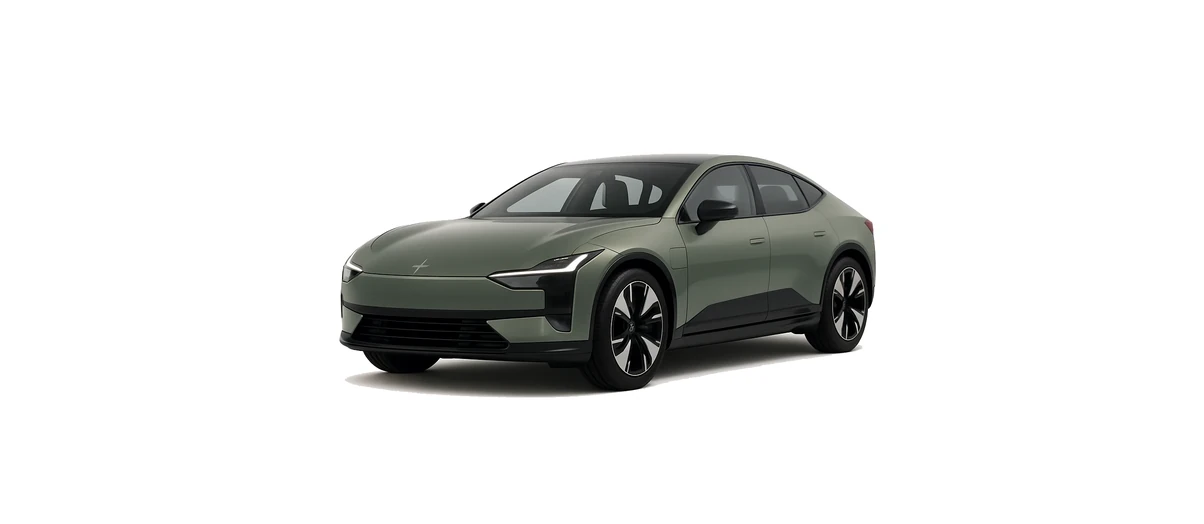
The Polestar 4 is a fully electric SUV coupé with a large 100 kWh battery, strong long-distance range and a useful mix of AC and DC charging capability. In the UK, the current Polestar 4 line-up includes Long range Single motor and Long range Dual motor versions, both using a Type 2 connection for AC charging and a CCS Combo 2 connection for DC rapid charging.
One of the most important charging details for UK drivers is the difference between the Polestar 4’s standard 11 kW AC charging and the 22 kW AC charging available with the Plus pack. On paper, 22 kW AC is very quick for destination charging, but many UK homes are limited by single-phase electricity supplies and 7.4 kW wallboxes. This guide explains what the figures mean in day-to-day ownership, which cable you need, and how to get the best results from home, workplace and motorway charging.
View Polestar 4 Charging Cables
Polestar 4 Battery and Charging Specifications
Current UK Polestar specifications list the Polestar 4 with a 100 kWh lithium-ion battery pack. EV Database UK lists this as 100 kWh total capacity with around 94 kWh usable capacity. Both the Long range Single motor and Long range Dual motor versions use this same broad battery size, although range and efficiency differ slightly depending on drivetrain, wheels, options, temperature and driving style.
For UK and European charging, the Polestar 4 uses a Type 2 socket for AC charging and CCS Combo 2 for DC rapid charging. In practice, that means you use a Type 2-to-Type 2 cable at untethered AC charge points, while high-power DC rapid chargers have their own tethered CCS cable attached to the charger.
- Vehicle type: Battery electric SUV coupé / fastback-style SUV
- UK charging port: Type 2 for AC, CCS Combo 2 for DC
- Battery capacity: 100 kWh gross; approximately 94 kWh usable according to EV Database UK
- AC charging: 11 kW standard; 22 kW with Plus pack
- DC rapid charging: Up to 200 kW under suitable conditions
- Official DC charging time: 10-80% in around 30 minutes, where charger output and battery conditions allow
Battery Options
The current UK Polestar 4 range is centred around a large long-range battery rather than multiple battery sizes. The Long range Single motor and Long range Dual motor versions are both listed with a 100 kWh battery pack. Polestar describes the pack as a 400 V lithium-ion battery with cell-to-pack construction.
The Long range Single motor is the efficiency-focused version and currently has the highest UK WLTP range target, at up to 385 miles. The Long range Dual motor prioritises performance and all-wheel drive, with a current UK WLTP target of up to 367 miles. These are official test figures, so real-world range will vary depending on speed, weather, driving style, route and the vehicle’s configuration.
AC Charging Speed
AC charging is the type of charging most owners use at home, at work and at many public destination chargers. The Polestar 4 has a useful AC charging set-up, but it is important to separate the car’s capability from the charge point’s capability.
Current UK specifications list 11 kW AC charging as standard. With the Plus pack, AC charging increases to 22 kW. Polestar’s official figures give a 0-100% AC charging time of around 11 hours at 11 kW, or around 5.5 hours at 22 kW with the Plus pack.
For many UK owners, however, the most common home wallbox will be 7.4 kW on a single-phase supply. Even if your Polestar 4 can accept 11 kW or 22 kW AC, a 7.4 kW wallbox will charge at up to 7.4 kW because the charger and property supply are the limiting factors. To use 11 kW or 22 kW AC at home, you would normally need a suitable three-phase electricity supply, compatible wallbox and correct installation.
At public AC charge points, 11 kW and 22 kW posts are more common in some locations such as hotels, business parks, town centres and longer-stay car parks. If your car has standard 11 kW AC charging, it will not take the full 22 kW from a 22 kW post. If it has the Plus pack with 22 kW AC, it can make better use of those faster AC posts where the charger and conditions support it.
DC Rapid Charging Speed
For longer journeys, the Polestar 4 can use CCS DC rapid chargers. Polestar lists a maximum DC charging rate of up to 200 kW and an official 10-80% charging time of around 30 minutes under suitable conditions. This makes the car well suited to motorway and trunk-road rapid charging when paired with a high-output charger.
As with all EVs, the maximum charging rate is not held for the full session. The car charges fastest when the battery is at a lower state of charge and within the right temperature window. Charging speed then tapers as the battery fills, especially above 80%. For most long-distance journeys, the most efficient rapid-charging strategy is to arrive with a relatively low but comfortable battery level, charge to around 80%, and continue your journey rather than waiting for the final 20%.
To help achieve the best rapid-charging performance, use the built-in navigation or Google Maps to route to the actual DC rapid charger you plan to use. Polestar states that battery preconditioning can begin automatically when a DC fast-charging station is set as the destination. In very cold conditions, the manual notes that preconditioning may need more than 40 minutes, so setting the charger as your destination early can make a noticeable difference.
Range and Efficiency
The Polestar 4 Long range Single motor currently has a UK WLTP range target of up to 385 miles, while the Long range Dual motor is listed at up to 367 miles. These figures are useful for comparing vehicles, but real-world range is usually lower than WLTP, particularly in winter or at sustained motorway speeds.
EV Database UK estimates real-world range at roughly 305 miles for the Long range Single motor and around 300 miles for the Long range Dual motor. These estimates are not official guarantees, but they are a helpful planning guide for mixed driving conditions.
Efficiency will be affected by factors such as outside temperature, tyre choice, wheel size, roof load, passenger weight, driving speed and climate control use. The Polestar 4 does include a heat pump as standard, which can help improve efficiency in colder conditions compared with relying solely on resistive heating.
Charging at Home
For most Polestar 4 owners, home charging will be the cheapest and most convenient way to run the car. Plugging in overnight means you can start each day with the level of charge you need, while taking advantage of suitable off-peak electricity tariffs where available.
A typical UK 7.4 kW single-phase wallbox will not match the Polestar 4’s maximum AC capability, but it is still highly practical. With a large battery, a full 0-100% charge will take longer than with a smaller EV, but most daily charging is not from empty. For example, adding 20%, 30% or 40% overnight is usually more relevant than filling the entire pack from zero.
If you have access to three-phase power at home or at a workplace, the Polestar 4’s 11 kW standard AC charging, or 22 kW AC charging with the Plus pack, becomes more significant. At 11 kW, Polestar lists a full charge at around 11 hours. At 22 kW with the Plus pack, the official 0-100% time is around 5.5 hours. This can be especially useful for high-mileage drivers, shared vehicles or workplace charging schedules.
A 3-pin domestic charger is generally best suited as a backup or occasional charging solution, but can be used regularly if a qualified electrician has confirmed the socket and electrical installation are suitable for sustained EV charging. Because the Polestar 4 has a large battery, a 3-pin plug will be slow and is not the most practical primary charging method for most owners.
Public Charging
Public charging for the Polestar 4 falls into two main categories: AC destination charging and DC rapid charging. AC destination charging is useful when the car will be parked for several hours, such as during work, shopping, dining or an overnight hotel stay. For these chargers, you will often need your own Type 2-to-Type 2 cable.
DC rapid charging is intended for shorter stops during longer journeys. These chargers use a tethered CCS connector, so you do not need to use your own cable. Look for chargers capable of delivering 150 kW to 200 kW or more if you want to make the most of the Polestar 4’s peak DC charging capability, though the actual rate will depend on the charger, battery temperature, state of charge and site conditions.
Polestar also lists Plug & Charge compatibility based on ISO 15118, subject to compatible charging points and the required app or account setup. Where supported, this can make charging simpler by allowing the car and charger to handle authentication automatically, rather than relying on a separate card or app each time.
Vehicle-Specific Features
The Polestar 4 is unusual in several ways, including its rear-windowless design. Instead of a conventional rear window, it uses a roof-mounted rear camera and digital rear-view mirror. While this does not directly change charging, it reflects the car’s technology-led approach and is part of what makes the model distinctive among electric SUVs.
From a charging perspective, the most relevant vehicle-specific features are the standard heat pump, standard battery preconditioning and the split AC charging capability. The 11 kW standard AC charger is already useful for three-phase public or workplace charging, while the 22 kW Plus pack capability can be a real advantage for drivers who regularly use 22 kW AC posts.
The key point is that 22 kW AC should not be assumed on every Polestar 4. If you are buying, leasing or ordering one, check the exact specification and whether the Plus pack is included.
Charging Tips
- Use a Type 2 cable for AC charging: Untethered home wallboxes and public AC posts normally require a Type 2-to-Type 2 cable.
- Do not expect 22 kW at every charger: The car, charge point and electricity supply all need to support the higher rate.
- Plan rapid stops around 10-80%: Charging above 80% is slower and is usually best saved for journeys where you genuinely need the extra range.
- Navigate to the rapid charger: Set the actual DC fast charger as your destination so battery preconditioning can work before arrival.
- Check your home supply: A 7.4 kW wallbox is common in the UK; 11 kW and 22 kW home charging usually require suitable three-phase equipment.
- Charge to suit your routine: For daily use, many owners do not need 100% every day. Keep higher charge levels for longer trips where the extra range is useful.
Frequently Asked Questions
What charging cable does the Polestar 4 use in the UK?
The Polestar 4 uses a Type 2 connection for AC charging in the UK and Europe. For untethered AC chargers, you need a Type 2-to-Type 2 charging cable. DC rapid chargers use a tethered CCS Combo 2 connector attached to the charger.
Does every Polestar 4 charge at 22 kW AC?
No. Current UK specifications list 11 kW AC charging as standard and 22 kW AC charging with the Plus pack. Check the exact vehicle specification before assuming 22 kW AC capability.
How long does the Polestar 4 take to charge at home?
Polestar lists 0-100% AC charging at around 11 hours using 11 kW, or around 5.5 hours using 22 kW with the Plus pack. On a common UK 7.4 kW home wallbox, a full charge will take longer, although most owners usually top up rather than charge from empty.
How fast can the Polestar 4 rapid charge?
The Polestar 4 can rapid charge at up to 200 kW DC where conditions allow. Polestar lists a 10-80% time of around 30 minutes, but real-world results depend on charger output, battery temperature, starting state of charge and preconditioning.
Should I charge the Polestar 4 to 100% on a rapid charger?
Usually not unless you need the extra range. Rapid charging slows significantly as the battery approaches full, so 10-80% is normally the most time-efficient charging window on long journeys.
What This Means for Drivers
The Polestar 4 is a strong long-distance EV, but understanding its charging specification is important. Its 200 kW DC capability makes it suitable for rapid motorway charging, while its AC performance depends on the version and equipment fitted. Standard 11 kW AC is useful, but the 22 kW capability belongs to cars with the Plus pack and will only be useful where the charging supply can support it.
For many UK drivers, the everyday reality will be a 7.4 kW home wallbox, a Type 2 cable for public AC posts and CCS rapid charging for longer trips. If you regularly use three-phase workplace or destination charging, the Polestar 4’s higher AC charging options become especially valuable.
Looking for a Charging Cable for Polestar 4?
We offer Polestar 4 charging cables for UK Type 2 AC charging, suitable for compatible home wallboxes and untethered public charge points. Choose a cable that matches your charging needs, charge point capability and vehicle specification.
View Polestar 4 Charging Cables
Please note that this information is intended as a guide. Charging specifications may change due to model and year of manufacture. For precise information, always refer to your vehicle user manual.

