
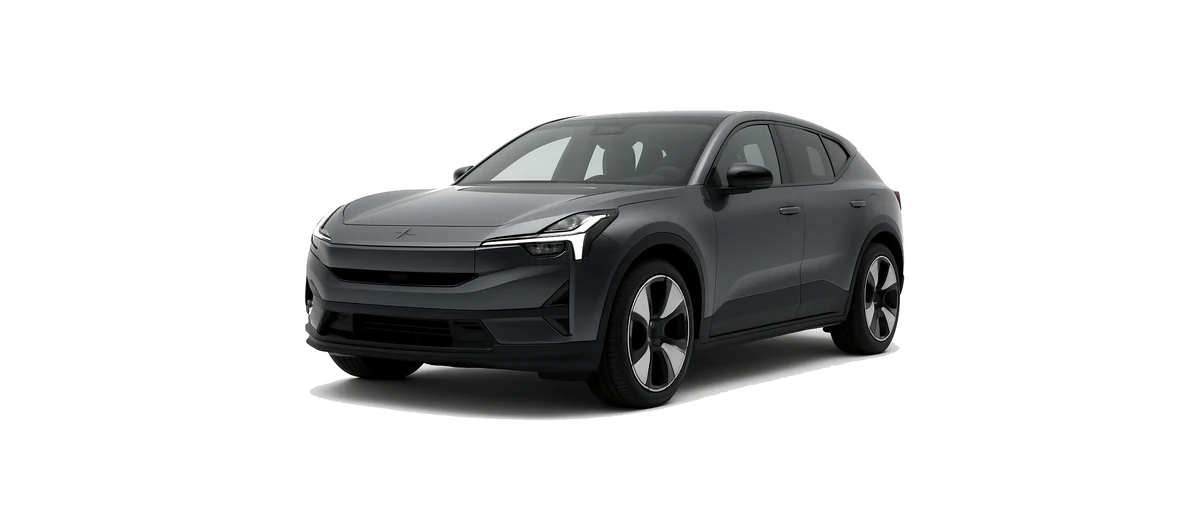
The Polestar 3 is a large premium battery-electric SUV, and the current UK range brings an important charging update. Polestar lists the current MY26 line-up as Rear motor, Dual motor and Performance, with 800 V battery architecture and fast CCS charging capability on suitable ultra-rapid chargers. That is a major distinction from earlier MY23-25 Long Range versions, which used a 400 V system and a different battery pack.
For UK owners, the headline rapid-charging figures are only part of the story. Most day-to-day charging will still happen at home or at destination chargers, where the Polestar 3 uses Type 2 AC charging and is limited by its onboard AC charger. In practical terms, many UK homes will be working around a 7.4 kW single-phase wallbox rather than the car’s maximum 11 kW AC capability.
View Polestar 3 Charging Cables
Polestar 3 Battery and Charging Specifications
The Polestar 3 is a BEV only; it is not a plug-in hybrid or a range-extender vehicle. UK current models use a Type 2 connector for AC charging and a CCS Combo 2 connector for DC rapid charging. EV Database UK places the charging port on the left rear of the vehicle.
Current MY26 cars are listed with up to 11 kW AC charging and very high DC charging potential when connected to the right equipment. The Rear motor version is listed at up to 310 kW DC, while the Dual motor and Performance versions are listed at up to 350 kW DC on suitable 800 V-capable high-power chargers. Polestar quotes a 10-80% rapid charge time of about 22 minutes for current cars in the right conditions.
It is important not to apply one set of figures to every Polestar 3. Earlier MY23-25 Long Range versions used a 400 V architecture and a larger 111 kWh gross battery pack, so used-car buyers should check the exact model year and variant before comparing charging performance.
Battery Options
The current UK MY26 Polestar 3 range is split between two main battery sizes. The Rear motor version uses a 92 kWh gross battery, with EV Database UK listing around 88 kWh usable. The Dual motor and Performance versions use a 106 kWh gross battery, with around 102 kWh usable listed by EV Database UK.
For comparison, earlier MY23-25 Long Range Single, Dual and Performance variants used a 111 kWh gross battery, with around 107 kWh usable. These older versions are a separate specification set and should not be confused with the current 800 V MY26 cars.
In everyday use, the usable battery figure is the more relevant number because it reflects the energy available for driving. The gross figure is useful for comparing manufacturer specifications, but range, charging times and running costs are usually better estimated from usable capacity and real-world efficiency.
AC Charging Speed
The Polestar 3’s maximum AC charging rate is 11 kW via Type 2. To reach 11 kW, you normally need access to a three-phase AC supply and a compatible 11 kW charge point. The car will not charge faster on AC simply because it is plugged into a 22 kW three-phase post; the onboard AC charger is the limiting factor.
For most UK homes, the more realistic benchmark is a 7.4 kW single-phase wallbox. At this rate, EV Database estimates a full charge from low to full at around 14 hours for the current Rear motor model and about 16 hours 15 minutes for the current Dual motor model. Earlier 111 kWh versions are estimated at around 17 hours at 7.4 kW.
In practice, most owners will not regularly charge from empty to full. A more typical overnight top-up, such as 30-80%, will be much shorter and is usually easy to manage with a home wallbox. If you have access to three-phase charging at work or on a public AC post, the 11 kW capability can be useful for faster daytime top-ups.
DC Rapid Charging Speed
DC rapid charging is where the current MY26 Polestar 3’s 800 V hardware matters most. On a suitable high-power CCS charger, the Rear motor version is listed at up to 310 kW, while the Dual motor and Performance versions are listed at up to 350 kW. Polestar quotes around 22 minutes for a 10-80% charge under favourable conditions.
However, not every rapid charger will deliver those headline speeds. Polestar UK also lists a 120 kW limit when using 400 V DC charging hardware, so an 800 V-compatible ultra-rapid charger is the best choice if you want the fastest possible stop. Charger power, battery temperature, state of charge, site load and the car’s charging curve will all influence the actual rate you see.
For long journeys, the most efficient strategy is usually to arrive at a rapid charger with a lower state of charge and stop charging at around 80%. Above 80%, the charging rate normally slows significantly to protect the battery and manage heat, so pushing on to 90-100% is often slower than making another shorter stop later.
Range and Efficiency
Polestar UK lists WLTP range figures of up to 402 miles for the current Dual motor version, with other current variants listed differently. WLTP figures are useful for comparing vehicles on a standard test cycle, but real-world range depends on speed, temperature, wheel and tyre choice, payload, elevation, road conditions and driving style.
EV Database UK estimates real-world range at around 310 miles for current Polestar 3 variants in mixed use. In winter motorway driving, expect less than the WLTP figure; in mild weather and slower mixed driving, the car may get closer to its official rating.
The Polestar 3 is equipped with a heat pump according to Polestar UK and EV Database UK. A heat pump can help improve cabin-heating efficiency in cooler conditions compared with relying purely on resistive heating, although its real benefit varies with temperature and journey type.
Charging at Home
For most UK Polestar 3 drivers, a dedicated 7.4 kW home wallbox will be the most convenient charging option. It allows the car to be charged overnight, makes use of off-peak electricity tariffs where available, and avoids relying on public charging for routine use.
The Polestar 3 uses a Type 2 AC connection, so a tethered Type 2 wallbox or an untethered wallbox with a suitable Type 2 cable is appropriate. If you have an untethered home unit, a good-quality Type 2 cable should be kept accessible and rated for the charging you expect to use. A single-phase 32 A Type 2 cable suits typical 7.4 kW UK charging, while a three-phase cable is useful if you regularly use 11 kW AC posts away from home.
A 3-pin charger is generally best suited as a backup or occasional charging solution, but can be used regularly if a qualified electrician has confirmed the socket and electrical installation are suitable for sustained EV charging. Because the Polestar 3 has a large battery, a domestic 3-pin socket will add range slowly and is not the ideal main charging method for most owners.
Public Charging
Public charging falls into two main categories: AC destination charging and DC rapid charging. AC posts are common at hotels, car parks, workplaces and some supermarkets. Many are untethered, so you will need to bring your own Type 2 charging cable. The Polestar 3 can use these posts, but AC charging will be capped by the car’s 11 kW onboard charger.
DC rapid and ultra-rapid chargers use tethered CCS cables, so you do not need to bring your own DC cable. These are the chargers to use for motorway journeys and faster en-route stops. For current MY26 Polestar 3 models, look for high-power CCS chargers that support 800 V charging if you want the best chance of seeing very high charging speeds.
Current cars are also listed with Plug & Charge / ISO 15118 support, which can make compatible public charging easier by allowing the car and charger to authenticate automatically. Availability depends on the charging network, account setup and charger compatibility, so it is still sensible to have the relevant apps, RFID cards or contactless payment options available.
Vehicle-Specific Features
The key vehicle-specific charging feature on the current Polestar 3 is the move to 800 V architecture. This is what enables the high peak charging rates on suitable ultra-rapid chargers. The practical benefit is shorter long-distance stops, provided you choose the right charger and the battery is in the right temperature window.
Battery preconditioning is listed by EV Database UK as possible and automatic using navigation. For best results, route to a rapid charger through the car’s navigation system before arrival. This gives the vehicle the opportunity to prepare the battery for faster charging, particularly in cold weather.
Used buyers should be especially careful with specification checks. Earlier MY23-25 Polestar 3 Long Range cars used a 400 V architecture and a 111 kWh gross battery. Their charging behaviour and maximum DC charging figures differ from the current MY26 800 V cars, so do not assume a used example will match the latest published charging performance.
Charging Tips
- Use 7.4 kW as the home benchmark: most UK homes are single-phase, so this is a more realistic figure than the car’s 11 kW AC maximum.
- Choose 800 V-compatible rapid chargers: for the fastest motorway charging in a current MY26 car, use a high-power CCS charger that can support the car’s voltage and power requirements.
- Precondition before rapid charging: use the navigation system to route to the charger so the battery can prepare itself where supported.
- Use the 10-80% window on journeys: this is usually the quickest and most efficient rapid-charging range.
- Carry the right Type 2 cable: many public AC posts are untethered, so your own cable is essential for destination charging.
- Check used-car specifications: older MY23-25 cars are not the same as current MY26 800 V models.
Frequently Asked Questions
What charging cable does the Polestar 3 use?
The Polestar 3 uses a Type 2 connector for AC charging and CCS Combo 2 for DC rapid charging. For home and public AC charging, a Type 2 cable is the correct choice when the charger is untethered.
Can the Polestar 3 charge at 22 kW AC?
No. The Polestar 3’s maximum AC charging rate is 11 kW. It can be connected to a 22 kW three-phase AC post, but the car will only draw up to its onboard charger limit.
How fast will the Polestar 3 charge at home?
On a typical UK 7.4 kW single-phase wallbox, current models are estimated to take roughly 14 to 16 hours from very low to full, depending on the battery version. Normal overnight top-ups are usually much shorter.
Does every Polestar 3 charge at 350 kW?
No. Current MY26 Dual motor and Performance versions are listed at up to 350 kW DC on suitable chargers, while the current Rear motor is listed at up to 310 kW. Earlier 400 V versions have different rapid-charging specifications.
Should I charge to 100% every day?
For everyday use, many EV drivers set a lower charge limit and reserve 100% for longer trips. Always follow Polestar’s in-car guidance and owner documentation for battery care and charging limits.
What This Means for Drivers
The Polestar 3 is capable of very fast rapid charging in current MY26 form, but the best experience depends on understanding the difference between AC home charging, public AC destination charging and high-power DC charging. At home, expect a 7.4 kW wallbox to be the practical UK standard. On the road, the fastest charging will come from 800 V-compatible CCS ultra-rapid chargers, ideally with battery preconditioning used before arrival.
The main caution is model-year accuracy. Current 800 V Polestar 3 models and earlier 400 V Long Range versions should be treated separately when comparing battery size, charging power and long-distance charging performance.
Looking for a Charging Cable for Polestar 3?
If you need a compatible Type 2 cable for home wallbox use or untethered public AC charging, We offer Polestar 3 charging cables suited to UK charging setups.
View Polestar 3 Charging Cables
Please note that this information is intended as a guide. Charging specifications may change due to model and year of manufacture. For precise information, always refer to your vehicle user manual.

