
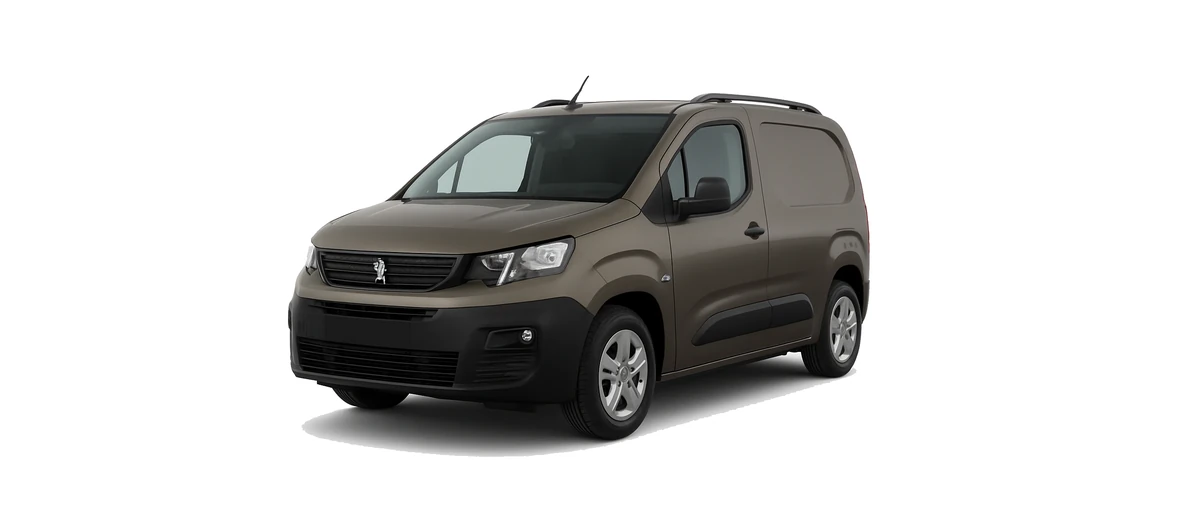
The older Peugeot Partner Electric is a practical used electric van, and the related Partner Tepee Electric passenger model used the same basic electric drivetrain. However, it is also a vehicle where charging-cable confusion is common. This guide is for the earlier Type 1 and CHAdeMO generation sold before the newer Peugeot e-Partner arrived. It does not apply to the later 50 kWh e-Partner with Type 2 AC and CCS rapid charging.
For used buyers and current owners, the most important points are simple: this is a pure battery-electric vehicle, it charges on AC through a Type 1 inlet, and rapid charging, where fitted, uses CHAdeMO rather than CCS. A normal UK 7 kW wallbox is still useful, but the vehicle’s onboard AC charger limits the charging rate to around 3.7 kW. That means home charging is usually an overnight routine rather than a quick top-up.
View Peugeot Partner Electric (Models Up To 2019) Charging Cables
Peugeot Partner Electric (Models Up To 2019) Battery and Charging Specifications
The pre-2019 Peugeot Partner Electric was based on the older PSA Partner/Berlingo small-van platform. It used a 22.5 kWh lithium-ion battery, split into two underfloor packs, and an electric motor rated at around 49 kW / 67 hp. The battery layout helped preserve the useful load space that made the Partner popular as a compact van.
For charging, the key specification is the connector type. The older Partner Electric uses a Type 1 AC inlet, also known as SAE J1772 or Yazaki. For rapid charging, many UK vans are described with a separate CHAdeMO DC rapid charging inlet. Some European information lists rapid charging as optional for the Partner Tepee Electric, so owners should visually confirm the rear rapid-charge port before relying on CHAdeMO access for journeys.
- Vehicle type: pure battery-electric vehicle, not a plug-in hybrid
- Battery: 22.5 kWh gross, with usable capacity estimated at around 20.5 kWh for the Tepee Electric
- AC charging connector: Type 1
- AC charging rate: up to around 3.7 kW
- DC rapid charging: CHAdeMO where fitted
- Rapid charging time: about 10-80% in roughly 30 minutes in suitable conditions
Battery Options
Unlike newer electric vans, the older Partner Electric did not have a large choice of battery sizes. The core battery specification for this generation is 22.5 kWh gross. This applies to the Partner Electric van and the Partner Tepee Electric passenger/leisure version using the older drivetrain.
It is important not to mix this up with the later Peugeot e-Partner. The newer model, launched from 2021, uses very different charging hardware and a much larger battery pack. If you are buying a cable for an older Partner Electric, do not assume that accessories or advice for the newer e-Partner will fit.
AC Charging Speed
On AC power, the older Peugeot Partner Electric charges at up to around 3.7 kW. This is controlled by the vehicle’s onboard charger, not just by the charge point. In practice, even if you plug into a 7 kW home wallbox or a 7 kW public post, the van will only draw around 3.7 kW.
Typical full charging times vary slightly depending on the supply and state of charge. EV Database lists about 6 hours 45 minutes from empty to full, while period Peugeot and UK review material commonly quotes roughly 7.5 to 8 hours on a wallbox or suitable dedicated supply. For most owners, that means a full recharge is straightforward overnight, but slow compared with modern electric vans.
For UK untethered home chargers and many public AC posts, the correct cable is normally a Type 2-to-Type 1 charging cable. The Type 2 end connects to the charge point, and the Type 1 end connects to the vehicle. A Type 2-to-Type 2 cable is for newer EVs and will not fit the older Partner Electric’s AC inlet.
DC Rapid Charging Speed
Where fitted, DC rapid charging is handled by CHAdeMO. This is a different connector from CCS, and it uses the tethered cable attached to a compatible rapid charger. You do not need to buy a portable CHAdeMO cable for public rapid charging, and a CCS cable or adapter is not the correct solution for this vehicle.
Official material for the Partner/Partner Tepee Electric refers to charging to around 80% in approximately 30 minutes on rapid charging equipment. EV Database lists DC charging at up to around 40 kW, with a similar 10-80% time estimate. In real use, the exact speed will depend on charger output, battery temperature, state of charge and the condition of the vehicle.
The main modern drawback is availability. CHAdeMO rapid chargers still exist in the UK, but the public network has increasingly shifted towards CCS for newer electric cars and vans. If you rely on rapid charging, check live charger maps carefully and confirm that a working CHAdeMO connector is available on your route.
Range and Efficiency
Period Peugeot material often quoted around 105-106 miles, or 170 km, for the older Partner Electric. That figure was based mainly on the older NEDC test cycle and should not be treated like a modern WLTP range figure. EV Database lists a WLTP re-rating for the Partner Tepee Electric of about 106 km, or roughly 66 miles.
For day-to-day planning, a realistic figure of around 60-70 miles is more sensible for many drivers. Range can fall in winter, at motorway speeds, with a heavy payload, when using cabin heating, or on hilly routes. For local delivery rounds, trades and urban driving, the older Partner Electric can still make sense, but it is not a long-distance electric van by modern standards.
Charging at Home
Home charging is usually the easiest way to run an older Peugeot Partner Electric. Because the battery is relatively small and the AC charging rate is around 3.7 kW, an overnight charge can comfortably restore the battery for the next day’s local use.
A dedicated home wallbox is generally the best regular charging option. If the wallbox is untethered, you will normally need a Type 2-to-Type 1 cable. If it is tethered with a Type 2 plug, it will not connect directly to the older Partner Electric unless the unit has the correct Type 1 tether, which is less common on newer installations.
A 3-pin charger is generally best suited as a backup or occasional charging solution, but can be used regularly if a qualified electrician has confirmed the socket and electrical installation are suitable for sustained EV charging. This is especially important for older properties, garages, workshops or outdoor sockets, where prolonged high-load use can expose wiring or socket issues.
Public Charging
For public AC charging, the older Partner Electric again requires a Type 2-to-Type 1 cable on most untethered posts. The charge point may be rated at 7 kW, 11 kW or 22 kW, but the vehicle will still charge at its own AC limit of around 3.7 kW. This makes AC public charging useful for longer stops, work parking or destination charging, rather than quick en-route refuelling.
For rapid charging, look for CHAdeMO rather than CCS. Many rapid chargers have several connectors on the same unit, but newer installations may be CCS-only. Before setting off, check that the charger has a CHAdeMO cable, that it is not already occupied, and that the network app is showing it as operational.
Used buyers should also check the vehicle itself. The Type 1 AC inlet and CHAdeMO rapid inlet are in different locations on this generation, with official material describing separate front/right and rear/left charging flap locations. If the vehicle does not have the CHAdeMO port, you should plan around AC charging only.
Vehicle-Specific Features
The defining feature of this generation is its older charging layout. It belongs to a period when Type 1 AC and CHAdeMO rapid charging were common on several Japanese and PSA-group electric vehicles. That makes cable selection different from most modern European EVs, which usually use Type 2 for AC and CCS for DC rapid charging.
The Partner Electric is also a discontinued model. Its value on the used market often comes from practicality, low running costs and simple urban range requirements rather than cutting-edge charging performance. If your daily mileage is predictable and you can charge at base, the modest battery capacity may be manageable. If you regularly travel beyond local routes, the limited range and declining CHAdeMO coverage need more careful planning.
Charging Tips
- Buy the right AC cable: for most UK untethered chargers, choose Type 2-to-Type 1, not Type 2-to-Type 2.
- Do not apply newer e-Partner advice: the later model uses Type 2 and CCS hardware, which is different from this older generation.
- Check the rapid port: confirm that your vehicle has a CHAdeMO inlet before relying on rapid charging.
- Plan conservative range: use around 60-70 miles as a practical planning figure rather than the older 105-106 mile NEDC claim.
- Use AC charging for routine use: a 7 kW wallbox is fine, but the van will only draw about 3.7 kW.
- Check CHAdeMO availability: public rapid charging access is more limited than it was, especially away from main routes.
Frequently Asked Questions
Is the older Peugeot Partner Electric a plug-in hybrid?
No. The Partner Electric and Partner Tepee Electric covered here are pure battery-electric vehicles. Petrol and diesel Partner models also existed, but this charging guide is specifically for the electric Type 1/CHAdeMO generation.
What charging cable do I need for a Peugeot Partner Electric up to 2019?
For most UK untethered home and public AC charge points, you need a Type 2-to-Type 1 cable. The charge point end is Type 2 and the vehicle end is Type 1.
Can I use a Type 2-to-Type 2 cable?
No, not for the older Partner Electric’s AC inlet. Type 2-to-Type 2 cables are used by newer EVs, including the later Peugeot e-Partner, but the older model uses Type 1 for AC charging.
Does this model use CCS rapid charging?
No. The older Partner Electric generation uses CHAdeMO rapid charging where fitted. CCS applies to many newer EVs, including the later e-Partner, but not this older Type 1 category.
How long does it take to charge at home?
On a suitable wallbox, a full charge is typically an overnight job, with published estimates ranging from about 6 hours 45 minutes to around 8 hours depending on the source and charging conditions.
What range should I expect?
The old 105-106 mile figure was mainly an NEDC rating. For real-world planning, around 60-70 miles is a more cautious expectation, with lower figures possible in cold weather, at higher speeds or with payload.
What This Means for Drivers
The Peugeot Partner Electric up to 2019 can still be a useful local electric van, but it needs to be understood on its own terms. It has a small battery by modern standards, modest 3.7 kW AC charging and, where fitted, CHAdeMO rapid charging rather than CCS. It is best suited to predictable daily mileage, overnight charging and drivers who can work within a realistic 60-70 mile planning range.
The biggest ownership mistake is buying charging equipment for the wrong generation. If your Partner has a Type 1 AC inlet, you need Type 1-compatible charging accessories. If it is the later e-Partner with Type 2 and CCS, it belongs to a different charging category entirely.
Looking for a Charging Cable for Peugeot Partner Electric (Models Up To 2019)?
If you are choosing a replacement or spare cable, We can help you find the correct Type 2-to-Type 1 cable for the older Peugeot Partner Electric generation.
View Peugeot Partner Electric (Models Up To 2019) Charging Cables
Please note that this information is intended as a guide. Charging specifications may change due to model and year of manufacture. For precise information, always refer to your vehicle user manual.

