
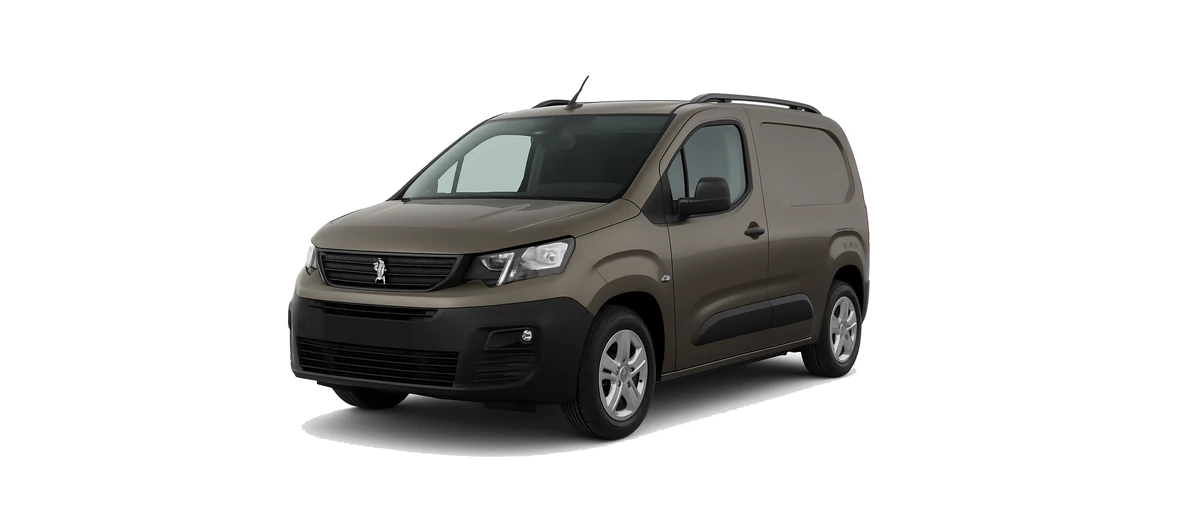
The Peugeot e-Partner is a battery-electric small van designed for businesses, fleets and drivers who need compact van practicality without tailpipe emissions. In the UK, it is important to be model-year aware: current Peugeot E-Partner models are listed with a 52kWh battery and an official WLTP range of up to 213 miles, while many earlier used e-Partner vans are associated with a 50kWh battery and official range figures closer to 170/171 miles.
For charging, the main message is straightforward. UK and European Peugeot e-Partner vans use a Type 2 connection for AC charging and CCS for DC rapid charging. That means the charging cable you need for home wallboxes and most untethered public AC posts is a Type 2 cable, while rapid chargers use their own tethered CCS connector. The details that vary are range, charging time and whether a particular van has the standard 7.4kW AC capability or, on some specifications, an 11kW three-phase onboard charger.
View Peugeot e-Partner Charging Cables
Peugeot e-Partner Battery and Charging Specifications
The current UK Peugeot E-Partner range is listed as a fully electric van, separate from diesel Partner variants. Peugeot’s current UK information refers to 52kWh E-Partner models, including Professional Plus and Asphalt versions, with a single-phase 7.4kW onboard AC charger and up to 100kW DC rapid charging.
Earlier UK e-Partner documentation and many used-van reviews refer to a 50kWh battery and a lower WLTP range. This is why two owners can both have a Peugeot e-Partner yet see different quoted range figures. The charging connector remains broadly the same, but the battery size, official range and onboard AC charging specification can differ by age and trim.
- Vehicle type: Battery-electric small van / panel van, with XL and crew van versions in the UK range.
- AC charging connector: Type 2.
- DC rapid charging connector: CCS.
- Current UK AC charging: 7.4kW single-phase, with Peugeot quoting about 7 hours 30 minutes for 0-100% charging.
- DC rapid charging: Up to around 100kW, with around 30 minutes commonly quoted for charging to approximately 80% under suitable conditions.
Battery Options
The main distinction for owners is whether they have a newer/current 52kWh E-Partner or an earlier 50kWh e-Partner. Current Peugeot UK pages list 52kWh E-Partner models and show a WLTP equivalent all-electric range band of approximately 179.6 to 213 miles, depending on version and conditions. A third-party fleet data source lists a usable capacity of around 50.7kWh for the current 52kWh model, but Peugeot’s own UK retail page does not make the usable figure as prominent, so it is best treated as an estimate rather than the headline manufacturer figure.
Earlier e-Partner vans, common on the used market, are widely listed with a 50kWh battery and official range figures around 170/171 miles WLTP. If you are buying used, running a mixed fleet or replacing a cable for an existing van, check the vehicle’s registration, VIN, handbook or original order specification rather than relying on a single online range figure.
AC Charging Speed
For most UK home, workplace and depot charging, the Peugeot e-Partner should be planned around 7.4kW AC charging. This is the typical output of a single-phase home wallbox and aligns with Peugeot’s current UK charging information. On a 7.4kW charger, Peugeot quotes roughly 7 hours 30 minutes for a full 0-100% charge on the current E-Partner, making overnight charging a practical routine for many van users.
Some older Peugeot and Stellantis material refers to an optional 11kW three-phase onboard charger. This can reduce AC charging time when connected to a compatible three-phase charge point, but it should not be assumed for every e-Partner. If you regularly use 11kW or 22kW public AC posts, your actual charging speed will be limited by the van’s onboard AC charger. A van with a 7.4kW onboard charger will not draw 11kW simply because the post can supply it.
DC Rapid Charging Speed
For longer working days, inter-city trips or unexpected route changes, the Peugeot e-Partner can use CCS DC rapid chargers. The maximum DC charging rate is quoted at up to around 100kW, with Peugeot and Stellantis sources commonly giving a charge to about 80% in around 30 minutes, provided the charger, battery state and conditions are suitable.
As with all EVs, the fastest charging rate is not held from empty to full. Charging usually slows as the battery fills, especially above roughly 80%. For time-efficient rapid charging, it is often better to stop for a shorter top-up and continue the journey than to wait for the final percentage points. For van drivers, this can fit naturally into a delivery break, depot turnaround or lunch stop.
Range and Efficiency
The current Peugeot E-Partner is listed by Peugeot UK with a WLTP range band of around 179.6 to 213 miles, with the highest figure applying to the most favourable configuration and test conditions. Earlier 50kWh e-Partner models are more commonly quoted at about 170/171 miles WLTP. These official figures are useful for comparison, but day-to-day range depends heavily on payload, speed, weather, route type and driving style.
Van use can be more variable than passenger-car use. A lightly loaded e-Partner on urban delivery routes may be very efficient, especially where regenerative braking can recover energy during stop-start driving. A heavily loaded van on cold motorway journeys will use more energy. Roof racks, ladders, racking systems and repeated high-speed driving can all reduce range compared with the official test figure.
For business planning, it is sensible to compare the van’s regular daily mileage with a realistic margin rather than using the best-case WLTP number. If your route is 80-120 miles with depot charging overnight, the e-Partner can be easy to integrate. If your day regularly approaches the upper end of the official range, you should plan rapid-charging options or workplace charging opportunities along the route.
Charging at Home
A dedicated home or depot wallbox is usually the most convenient way to charge a Peugeot e-Partner. With a 7.4kW single-phase charge point, the van can typically be charged overnight, meaning it starts the day with a full battery and minimal disruption to working time. For owner-drivers and small businesses, this can be one of the biggest practical advantages of running an electric van.
To use untethered home wallboxes and many public AC charge points, you will need a Type 2 charging cable. A 32A Type 2 cable is the usual match for 7.4kW single-phase charging. If your van is confirmed to have 11kW three-phase AC capability and you use three-phase charge points, a three-phase Type 2 cable may be appropriate. If the van only has the 7.4kW onboard charger, a three-phase cable can still work on many AC posts, but it will not make the van charge faster than the onboard charger allows.
A 3-pin charger is generally best suited as a backup or occasional charging solution, but can be used regularly if a qualified electrician has confirmed the socket and electrical installation are suitable for sustained EV charging. For a working van, a domestic 3-pin socket is usually much slower than a wallbox, so it is not ideal as the main charging method unless daily mileage is very low and the electrical installation has been checked.
Public Charging
Public charging for the Peugeot e-Partner falls into two main categories: AC destination charging and DC rapid charging. AC posts are common in town centres, car parks, hotels, workplaces and some depots. They usually require your own Type 2 cable unless the unit is tethered. The charging speed will depend on the post and your van’s onboard charger, with 7.4kW being the key planning figure for many UK e-Partner models.
DC rapid chargers are different. They have tethered CCS cables, so you do not use your own Type 2 cable. These are the chargers to look for when you need a meaningful top-up during the working day. The e-Partner’s quoted 100kW DC capability is particularly useful for a small electric van, although real charging speed will vary with battery temperature, state of charge and charger availability.
If your e-Partner is used for business, it is worth mapping reliable rapid chargers near regular routes, customer sites and depots. Drivers should also know whether they need RFID cards, contactless payment or network apps. For fleets, a simple charging policy can prevent wasted time and reduce the risk of drivers arriving at a slow AC post when they actually need a rapid CCS charger.
Vehicle-Specific Features
The Peugeot e-Partner is part of the Stellantis small electric van family and is closely related to models such as the Citroën ë-Berlingo Van, Vauxhall Combo Electric, Fiat E-Doblò and Toyota Proace City Electric. This shared platform helps explain the familiar Type 2 and CCS charging arrangement used across many UK and European electric vans.
Current UK E-Partner versions include M/Standard and XL/Long panel van formats, plus a five-seat Crew Van XL option. These body styles can affect payload, use case and efficiency, so it is worth checking the exact version when comparing range figures. Peugeot also lists a Mode 3 Type 2 charging cable within current trim equipment, but owners should still confirm what is supplied with their specific van, particularly when buying used.
Some owner-use features, such as scheduled charging and cabin pre-heating while plugged in where available, can be valuable in day-to-day van operation. Scheduling charging can help make use of cheaper overnight tariffs, while warming the cab before departure can improve comfort on winter mornings without relying solely on battery energy once on the road.
Charging Tips
- Identify your battery version: Check whether your van is an earlier 50kWh e-Partner or a newer/current 52kWh E-Partner before relying on range figures.
- Plan around 7.4kW unless confirmed otherwise: Do not assume 11kW AC charging unless your specific van’s specification confirms it.
- Use Type 2 for AC charging: Home wallboxes and many public AC posts use a Type 2 cable.
- Use CCS for rapid charging: Rapid chargers have tethered CCS connectors and are best for quick route top-ups.
- Avoid charging to 100% on rapid chargers unless needed: Charging slows at higher states of charge, so stopping around 80% is often more time-efficient.
- Account for payload and weather: Heavy loads, cold temperatures and motorway speeds can reduce range.
- Charge overnight where possible: For regular van use, returning to base with enough time for a full overnight charge is usually the simplest routine.
Frequently Asked Questions
What charging cable does the Peugeot e-Partner use?
The Peugeot e-Partner uses a Type 2 cable for AC charging at home, work and untethered public charge points. For DC rapid charging, it uses the CCS connector attached to the rapid charger.
Does every Peugeot e-Partner charge at 11kW AC?
No. Current Peugeot UK information prominently lists a 7.4kW single-phase onboard charger. Some older or specific versions may have had 11kW three-phase charging listed as an option, but this should be checked against the individual van’s specification.
How long does it take to charge the Peugeot e-Partner at home?
On a 7.4kW wallbox, Peugeot quotes around 7 hours 30 minutes for a 0-100% charge on current E-Partner models. In everyday use, charging from a partial battery will usually take less time.
Can the Peugeot e-Partner use rapid chargers?
Yes. The Peugeot e-Partner supports CCS DC rapid charging at up to around 100kW, with around 30 minutes commonly quoted for charging to approximately 80% in suitable conditions.
What is the range of the Peugeot e-Partner?
Current UK 52kWh E-Partner models are listed by Peugeot with a WLTP range band up to 213 miles, while earlier 50kWh e-Partner models are commonly quoted at around 170/171 miles WLTP. Real range depends on load, route, speed and weather.
What This Means for Drivers
The Peugeot e-Partner is relatively simple to charge once you know which version you have. For most UK owners, a 7.4kW wallbox and a suitable Type 2 cable will cover routine overnight charging, while CCS rapid charging provides flexibility for longer days. The key is not to rely on one universal specification: newer 52kWh vans and earlier 50kWh models have different official range figures, and 11kW AC charging is not guaranteed across all vehicles.
If the van is used for business, build charging into the operating routine. Start each day with a planned battery level, make use of overnight charging, and identify rapid chargers that fit real routes rather than relying on last-minute searches. With sensible planning, the e-Partner can work well as a compact electric van for urban, suburban and mixed local use.
Looking for a Charging Cable for Peugeot e-Partner?
We offer Peugeot e-Partner charging cables for UK home, workplace and public AC charging, including Type 2 options suitable for typical 7.4kW wallbox use and vans with confirmed three-phase AC requirements.
View Peugeot e-Partner Charging Cables
Please note that this information is intended as a guide. Charging specifications may change due to model and year of manufacture. For precise information, always refer to your vehicle user manual.

