
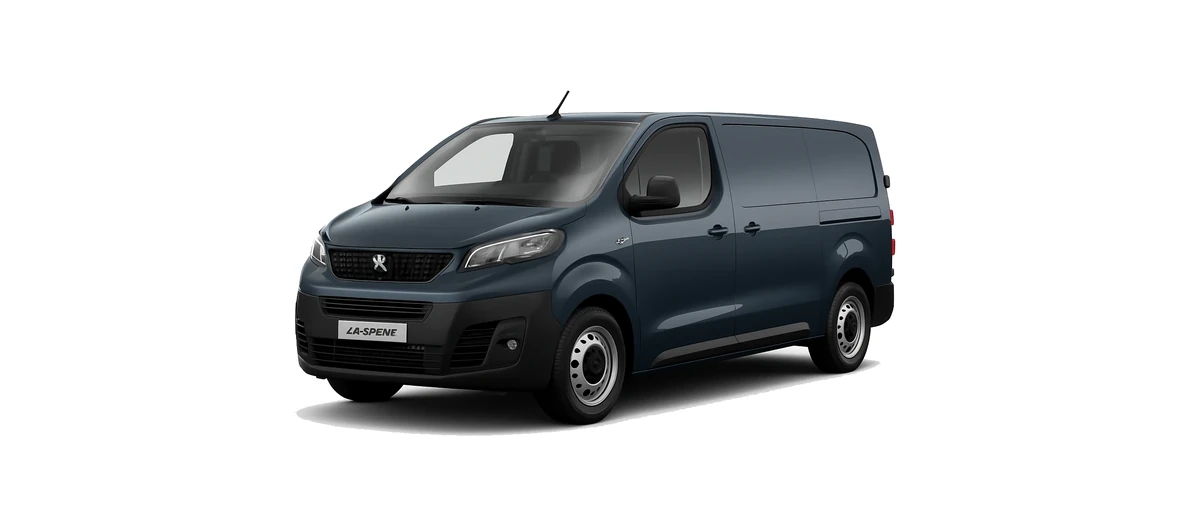
The Peugeot e-Expert is the fully electric version of Peugeot’s medium Expert van, aimed at businesses and drivers who need a practical panel van without relying on diesel for daily work. In the UK, current new E-Expert models are centred around a 75 kWh battery and a 100 kW electric motor, while older used examples may have either a 50 kWh or 75 kWh battery depending on model year and specification.
For charging, the most important points are straightforward: the e-Expert uses a Type 2 connection for AC charging and a CCS connection for rapid DC charging. A 7.4 kW single-phase on-board charger is the key figure to plan around for most home and depot installations, although some older or specific vehicles may have optional or variant-dependent 11 kW AC capability. If you are buying used, it is worth checking the exact van rather than assuming every e-Expert charges at the same rate.
View Peugeot e-Expert Charging Cables
Peugeot e-Expert Battery and Charging Specifications
The current UK Peugeot E-Expert is advertised with a 75 kWh battery, a 100 kW / 136 hp electric motor and up to 230 miles of WLTP range, depending on version and conditions. It is a battery electric vehicle, not a plug-in hybrid, so all driving energy comes from the battery and all routine refuelling is done by plugging in.
The charging inlet combines Type 2 AC and CCS DC charging. In practical terms, this means you use a Type 2-to-Type 2 cable for untethered home, workplace and public AC charge points, while rapid and ultra-rapid chargers use their own tethered CCS cable. The charging port is positioned around the front wing/front quarter panel area, although exact descriptions vary slightly between sources.
- Vehicle type: Battery electric medium van
- Current UK battery: 75 kWh gross capacity
- Earlier used battery option: 50 kWh gross capacity on some pre-facelift/older vans
- AC charging connection: Type 2
- DC rapid charging connection: CCS
- Standard AC charging: 7.4 kW single-phase on current UK offer information
- DC rapid charging: up to around 100 kW in suitable conditions
Battery Options
For current new UK buyers, the safest assumption is that the Peugeot E-Expert is offered with the 75 kWh battery. Peugeot’s current UK information highlights the 75 kWh version with up to 230 miles of WLTP range, depending on body length, trim and test conditions.
Used buyers need to be more careful. Older UK Peugeot e-Expert material and price/specification documents listed both 50 kWh and 75 kWh versions. The 50 kWh battery was useful for shorter urban and regional routes, while the 75 kWh version gave more flexibility for longer daily duty cycles. Because model-year changes and trim availability can affect what is fitted, do not rely only on the advert title. Check the V5, original order sheet, VIN/build information, dealer records or the vehicle’s displayed charging and range data where possible.
The difference matters for van operators. A 50 kWh e-Expert may be perfectly suitable for predictable local routes, but it will need more frequent charging on longer days. A 75 kWh van is better suited to mixed local and regional work, especially where the van returns to base overnight.
AC Charging Speed
AC charging is the main charging method for most Peugeot e-Expert owners. Current Peugeot UK offer text lists a single-phase 7.4 kW on-board charger, which matches a typical UK 7.4 kW home or depot wallbox. On a 75 kWh van, older Peugeot material suggests a full charge at 7.4 kW is in the region of 11 to 11.5 hours, although actual time depends on starting battery percentage, temperature, charging losses and the charger’s available power.
Some older documents mention an 11 kW three-phase charger as optional, and some listings may reference 11 kW in the derivative name. However, it should not be treated as standard across all e-Expert vans. If you regularly use three-phase workplace or public AC posts, check your specific van’s build specification or observe the actual charge rate at an 11 kW or 22 kW AC charger. If the van only has a 7.4 kW on-board charger, it will not draw 11 kW simply because the charge point can supply it.
For cable selection, a Type 2-to-Type 2 cable is the correct AC cable type. Many business users prefer a robust cable kept in the van for public and workplace AC charging, while a tethered wallbox at base can reduce daily handling.
DC Rapid Charging Speed
For longer routes or quick top-ups during the working day, the e-Expert can use CCS rapid chargers. Peugeot quotes rapid charging to 80% in around 45 minutes under suitable conditions, and the van’s DC charging capability is up to about 100 kW. If you plug into a 150 kW or 350 kW ultra-rapid charger, the van will still limit charging to its own maximum rather than taking the charger’s full rated output.
Rapid charging speed is not fixed for the whole session. It usually starts higher when the battery is at a lower state of charge and then tapers as the battery fills. Cold weather, a very high starting battery percentage, charger congestion or battery temperature can reduce the rate. For this reason, route planning is often more efficient if you rapid charge from a lower percentage to around 70-80%, rather than waiting for the final few percent unless you genuinely need the range.
Range and Efficiency
The headline WLTP range for current UK 75 kWh Peugeot E-Expert models is up to 230 miles. WLTP is useful for comparison, but vans are especially sensitive to real-world conditions. Payload, roof racks, motorway speed, cold weather, heating use, tyres, driving style and stop-start delivery work can all affect range.
A cautious real-world planning figure for a 75 kWh e-Expert may be around the mid-100-mile region in mixed conditions, with research data indicating approximately 165 miles as a practical estimate. Some drivers will achieve more in mild weather and efficient urban use; others will see less if the van is heavily loaded, driven at motorway speeds or used in winter.
Older 50 kWh vans have lower range and should be assessed against the intended daily route. For a depot fleet, the best approach is to map actual mileage, payload and dwell time. If the van returns to base every evening and covers a predictable route, AC overnight charging can be very straightforward. If the route varies widely, rapid charging access becomes more important.
Charging at Home
For owner-drivers and small businesses, a 7.4 kW home wallbox is usually the most practical charging solution. It matches the standard AC charging capability listed for current UK E-Expert models and can add a substantial amount of range overnight. If your electricity tariff offers cheaper off-peak rates, scheduled charging can reduce running costs compared with daytime charging or public rapid charging.
Before installing a home charger for a van, consider parking position, cable length, charger location and whether the cable can reach the charging port without being stretched or creating a trip hazard. Because the e-Expert’s port is around the front wing/front quarter area, charger placement at the front or side of the parking bay may be more convenient than a rear-mounted location.
A 3-pin charger is generally best suited as a backup or occasional charging solution, but can be used regularly if a qualified electrician has confirmed the socket and electrical installation are suitable for sustained EV charging. For a working van with a large battery, a dedicated wallbox is normally far more convenient, faster and better suited to routine use.
Public Charging
Public charging for the Peugeot e-Expert falls into two main categories: AC destination charging and DC rapid charging. AC posts are common in car parks, workplaces, hotels and town centres. They are useful when the van will be parked for several hours, but the charging rate will be limited by the van’s on-board AC charger. For most e-Expert drivers, that means planning around 7.4 kW unless the specific van has confirmed 11 kW AC capability.
DC rapid charging is better for time-sensitive use. On a route with multiple jobs, a short rapid charge during a driver break can add useful range. Because the e-Expert uses CCS, most UK rapid charging hubs are compatible, provided the bay can physically accommodate a van. Operators should consider bay size, height restrictions, charger reliability and whether charging sites are convenient for typical routes.
Vehicle-Specific Features
The Peugeot e-Expert is designed as a practical electric work van rather than a lifestyle EV. Current UK information refers to up to 6.6 m3 of usable volume, up to 1,210 kg payload and up to 4,026 mm usable length with Moduwork, depending on configuration. These figures vary by body length and version, so check the exact model if payload or load length is critical.
Older Peugeot material also references Eco, Normal and Power driving modes. For charging and range planning, Eco can help reduce consumption on urban routes, while Power may be useful when the van is heavily loaded or needs stronger performance. Peugeot material has also referred to MyPeugeot app functions such as remote charge management and climate pre-set on relevant models, which can be useful for scheduling charging around off-peak electricity periods and preparing the cabin before departure.
Charging Tips
- Match the charger to the van: a 7.4 kW wallbox is the default practical choice for most UK e-Expert charging at home or depot.
- Check 11 kW carefully: do not assume a used e-Expert has 11 kW AC charging. Verify the exact vehicle specification.
- Use CCS for rapid charging: rapid chargers have tethered CCS cables, so you do not need to bring your own DC cable.
- Keep a Type 2 cable in the van: it is useful for untethered public AC posts and many workplace chargers.
- Plan around payload and weather: a loaded van in winter may need a more conservative range plan than the WLTP figure suggests.
- Avoid relying on 100% rapid charges: charging typically slows near the top of the battery, so shorter stops to around 80% are often more efficient.
Frequently Asked Questions
What charging cable does the Peugeot e-Expert use?
For AC charging, the Peugeot e-Expert uses a Type 2 connection. A Type 2-to-Type 2 cable is suitable for untethered home, workplace and public AC charge points. For DC rapid charging, the van uses CCS and the rapid charger provides the tethered cable.
Is the Peugeot e-Expert a plug-in hybrid?
No. The Peugeot e-Expert is a battery electric van. Diesel Peugeot Expert models exist separately, but the e-Expert itself is fully electric and requires mains electricity for charging.
Can the Peugeot e-Expert charge at 11 kW AC?
Some older material lists 11 kW three-phase AC charging as optional or variant-dependent, but 7.4 kW single-phase charging is the safest standard assumption for many UK vans. Check the derivative, options list, VIN/build sheet or the charge rate shown when connected to an 11 kW or 22 kW AC post.
How fast can the Peugeot e-Expert rapid charge?
The e-Expert can rapid charge using CCS at up to around 100 kW in suitable conditions. Peugeot quotes up to about 45 minutes to reach 80% on current information, but real charging speed depends on battery temperature, charger performance and starting state of charge.
Which battery does a used Peugeot e-Expert have?
It depends on model year and specification. Current UK models are focused on the 75 kWh battery, while older used vans may have a 50 kWh or 75 kWh battery. Always confirm the exact vehicle before buying or planning depot charging.
What This Means for Drivers
For most Peugeot e-Expert drivers, the ideal charging routine is simple: charge at home or depot overnight using a 7.4 kW wallbox, keep a Type 2 cable available for public AC charging, and use CCS rapid charging when the working day or route demands it. Fleet operators should pay particular attention to battery size and AC charging capability when mixing older and newer vans, because a 50 kWh used example and a current 75 kWh van will not suit the same duty cycle in the same way.
The e-Expert makes most sense when charging is planned around the vehicle’s working pattern. Predictable local routes, overnight dwell time and access to reliable workplace charging are ideal. For longer regional routes, rapid charging access and realistic range planning become more important.
Looking for a Charging Cable for Peugeot e-Expert?
If you need an AC charging cable for home, workplace or public charging, choose a Type 2 cable suitable for the Peugeot e-Expert and your charging setup.
View Peugeot e-Expert Charging Cables
Please note that this information is intended as a guide. Charging specifications may change due to model and year of manufacture. For precise information, always refer to your vehicle user manual.

