
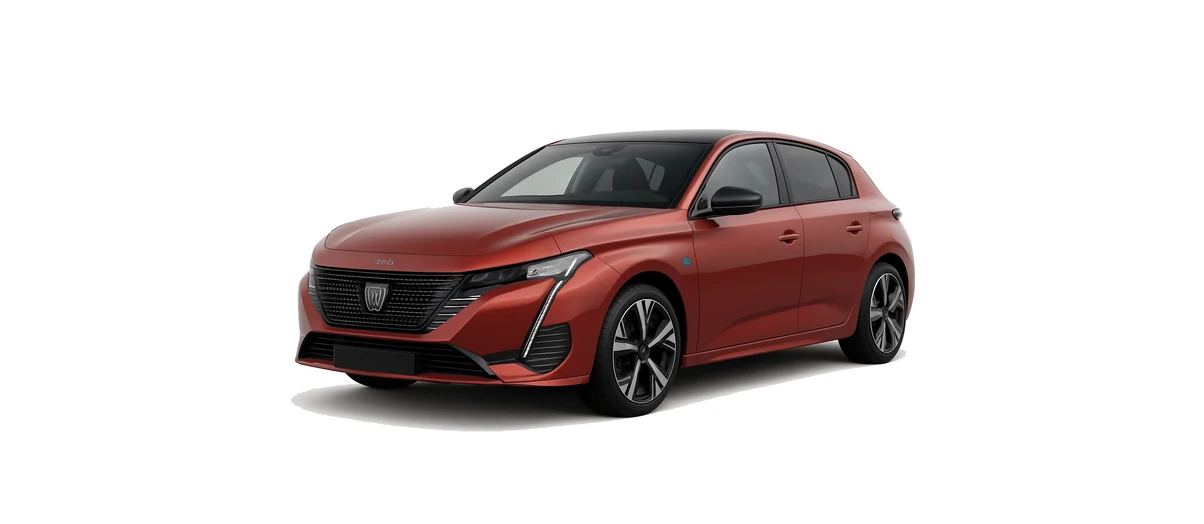
The Peugeot e-308 is the fully electric version of the 308 hatchback, combining familiar family-car practicality with Type 2 AC charging and CCS rapid charging. It is important not to confuse it with the wider Peugeot 308 range, which also includes plug-in hybrid, mild-hybrid and petrol options with different charging hardware and battery sizes.
For current UK cars, the updated MY26 Peugeot e-308 brings a larger usable battery than the earlier MY23-25 model, plus useful electric features such as battery preconditioning, Plug & Charge, an 80% AC charge-limitation function and Vehicle-to-Load capability on current electric trims when used with the appropriate accessory adapter. However, for most UK owners, day-to-day charging will still be shaped by a typical 7.4 kW single-phase home wallbox rather than the headline 11 kW AC onboard charger figure.
View Peugeot e-308 Charging Cables
Peugeot e-308 Battery and Charging Specifications
The current UK Peugeot e-308 55 kWh hatchback uses a 58.4 kWh gross battery with around 55.4 kWh usable capacity. Peugeot quotes a WLTP range of up to 279 miles for the updated hatchback, while EV Database UK estimates a more real-world figure of around 210 miles, depending on temperature, speed, driving style and load.
Charging is via a Type 2 socket for AC charging and a CCS Combo 2 connector for DC rapid charging. The charge port is located at the right rear of the vehicle. The current MY26 e-308 has an 11 kW AC onboard charger and can rapid charge at up to 100 kW DC under suitable conditions.
- Vehicle: Peugeot e-308 hatchback, fully electric
- Current UK battery: 58.4 kWh gross / 55.4 kWh usable
- WLTP range: up to 279 miles for the current hatchback
- Estimated real-world range: around 210 miles
- AC charging: Type 2, up to 11 kW where a suitable three-phase supply is available
- DC rapid charging: CCS, up to 100 kW
- Typical DC charging window: 10-80% in around 33 minutes under favourable conditions
Battery Options
For new UK MY26 cars, the key figure to use is the 55.4 kWh usable battery capacity. This is the updated specification introduced with the refreshed 308 and E-308 range, and it should not be mixed with the figures for the earlier version.
Used-car buyers should be aware that MY23-25 Peugeot e-308 models used a smaller battery: 54 kWh gross and approximately 50.8 kWh usable. Those earlier cars are still fully electric e-308 models, but their range and some equipment details differ from the current MY26 version. EV Database UK listed the earlier car with a lower real-world range estimate of around 185 miles, so it is worth checking the model year and specification before comparing charging times or range figures.
The e-308 SW estate exists separately and has a slightly different WLTP range, so this guide focuses on the hatchback unless otherwise stated.
AC Charging Speed
The current Peugeot e-308 is fitted with an 11 kW AC onboard charger. That sounds straightforward, but UK charging speed depends heavily on the power supply available. Most UK homes are single-phase, and most home wallboxes provide up to 7.4 kW. On that kind of charger, EV Database UK estimates a 0-100% charge for the current 55.4 kWh usable battery at around 9 hours. Peugeot also quotes a 20-80% AC charging time of about 4 hours 25 minutes at 7.4 kW for the updated car.
To use the full 11 kW AC capability, you normally need access to a three-phase supply, such as at some workplaces, commercial premises or public AC charge points. At 11 kW, a 0-100% charge is estimated at around 6 hours. The e-308 should not be described as a 22 kW AC car: even if you plug into a 22 kW three-phase AC charge point, the vehicle’s onboard charger is the limiting factor.
For public AC charging, a Type 2 charging cable is the correct cable type. Untethered home wallboxes and many destination chargers also require you to bring your own Type 2 cable. DC rapid chargers, by contrast, usually have the CCS cable attached to the charger, so you do not need to carry a separate DC cable.
DC Rapid Charging Speed
For longer journeys, the Peugeot e-308 uses CCS rapid charging at up to 100 kW. In practical terms, the most useful rapid-charging window is usually 10-80%, because charging speed tends to slow significantly above 80% as the battery fills and the vehicle protects the cells.
EV Database UK estimates a 10-80% rapid charge in around 33 minutes for the current MY26 e-308. Peugeot’s own figures describe a 20-80% charge in about 30-32 minutes at up to 100 kW DC, so it is important to compare like with like when looking at charging claims. A 20-80% session starts with a higher battery percentage than a 10-80% session and therefore covers a smaller charging window.
As with any EV, the maximum rapid-charging rate is not held for the full session. Battery temperature, charger output, charger sharing, state of charge and route conditions can all affect the real-world result. The current car includes battery preconditioning, which can help prepare the battery for rapid charging when used appropriately.
Range and Efficiency
The headline WLTP range for the current Peugeot e-308 hatchback is up to 279 miles. WLTP is useful for comparing vehicles on a consistent basis, but most drivers will see variation in everyday use. EV Database UK’s estimated real-world range of around 210 miles is a helpful planning figure for mixed driving.
In town and suburban driving, the e-308 is likely to be more efficient than it is on fast motorway journeys. Cold weather, heavy rain, roof bars, high cruising speeds and repeated rapid acceleration can all reduce range. In winter, planning a larger charging buffer is sensible, particularly on longer trips or when relying on a specific rapid charger.
For daily use, many drivers will not need to charge to 100% every time. The updated e-308 includes an 80% AC charge-limitation function, which is useful if your normal driving is well within the car’s range. Charging to 100% is still appropriate before a longer journey when you need the extra range.
Charging at Home
For most UK owners, home charging will be the most convenient and cost-effective way to run a Peugeot e-308. A dedicated 7.4 kW wallbox can typically recharge the car overnight, and it also allows you to make better use of off-peak electricity tariffs where available.
If you have an untethered wallbox, you will need a Type 2 to Type 2 charging cable. If you have a tethered wallbox with a Type 2 plug already attached, you may not need a separate cable for home use, but you will still usually want one for public AC chargers. A 32 amp Type 2 cable is a sensible match for 7.4 kW single-phase charging, while three-phase cable choice may be relevant if you regularly use 11 kW AC charging points.
A 3-pin charger is generally best suited as a backup or occasional charging solution, but can be used regularly if a qualified electrician has confirmed the socket and electrical installation are suitable for sustained EV charging. Standard domestic sockets were not designed with long, repeated high-load EV charging in mind, so a properly installed wallbox is usually the better long-term solution.
Public Charging
Public charging for the Peugeot e-308 falls into two main categories: AC destination charging and DC rapid charging. AC destination chargers are common at hotels, workplaces, supermarkets and town-centre car parks. These are useful when the car will be parked for several hours, and you will often need your own Type 2 cable.
DC rapid and ultra-rapid chargers are designed for shorter stops on longer journeys. The e-308 will charge via CCS and will take only the power it can accept, up to its supported peak of 100 kW. Plugging into a 150 kW or 350 kW charger will not make the car charge at those higher rates, but it can still be useful if the charger is reliable, available and well located.
The updated e-308 also lists Plug & Charge functionality in Peugeot’s information, which can make compatible public charging simpler by allowing the vehicle and charger to handle authentication automatically where supported. Availability depends on network compatibility and account setup.
Vehicle-Specific Features
The current MY26 Peugeot e-308 sits on the PSA EMP2 multi-energy platform and uses a 400 V electrical architecture. It is a fully electric car, but the broader 308 range also includes plug-in hybrid and hybrid versions, so cable and charging advice should always be checked against the exact vehicle.
Battery preconditioning is listed for the current car and can help with rapid-charging performance in suitable conditions. A heat pump is available, but it is not universal across all UK trims. Peugeot UK information indicates it is standard on GT Premium and optional on Allure and GT for the updated range.
Vehicle-to-Load is also available on current e-308 electric trims using an accessory adapter connected to the charging port. Peugeot/Stellantis information refers to output of up to 3.5 kW and 16 A. This can be useful for powering certain external electrical devices, subject to the vehicle’s instructions and adapter compatibility. Vehicle-to-Grid and Vehicle-to-Home capability should not be assumed, as current data lists V2G and V2H as not supported.
Charging Tips
- Use the right cable: the Peugeot e-308 uses Type 2 for AC charging. Public AC chargers and untethered wallboxes often require your own cable.
- Do not expect 11 kW at most homes: typical UK single-phase home charging is up to 7.4 kW, even though the car can accept up to 11 kW AC on a suitable three-phase supply.
- Use 10-80% for rapid-charging planning: charging beyond 80% is usually slower, so it is often quicker to continue your journey and charge again later if needed.
- Set an 80% limit for routine charging: where available, this is useful for everyday use when you do not need the full range.
- Check the model year when buying used: MY23-25 cars have the earlier 50.8 kWh usable battery and may differ in equipment from current MY26 cars.
Frequently Asked Questions
What charging cable does the Peugeot e-308 use?
The Peugeot e-308 uses a Type 2 connection for AC charging. For DC rapid charging, it uses a CCS Combo 2 connector, and the cable is normally attached to the rapid charger.
Can the Peugeot e-308 charge at 11 kW at home?
Only if your home has a suitable three-phase supply and compatible charging equipment. Most UK homes are single-phase and will charge at up to 7.4 kW from a typical wallbox.
How long does the Peugeot e-308 take to charge at home?
For the current 55.4 kWh usable battery, a 7.4 kW home wallbox is estimated to take around 9 hours for 0-100%. A more common partial charge, such as 20-80%, will take less time.
How fast is Peugeot e-308 rapid charging?
The current e-308 supports CCS rapid charging at up to 100 kW. A 10-80% rapid charge is estimated at around 33 minutes under favourable conditions.
Does the Peugeot e-308 support Vehicle-to-Load?
Current MY26 e-308 electric trims support V2L when used with the correct accessory adapter. This should not automatically be assumed for older MY23-25 used cars.
What This Means for Drivers
The Peugeot e-308 is straightforward to live with if you understand the difference between its headline charging capability and typical UK charging conditions. The current MY26 car has a useful 55.4 kWh usable battery, a WLTP range of up to 279 miles and a sensible 100 kW CCS rapid-charging capability for longer trips.
For most owners, the key point is that home charging will usually be 7.4 kW rather than 11 kW, giving overnight charging rather than ultra-fast AC charging. A Type 2 cable is the essential cable for public AC charging and untethered wallboxes, while rapid charging is handled by tethered CCS chargers. Used buyers should pay close attention to whether they are looking at the newer MY26 car or the earlier MY23-25 model with the smaller battery.
Looking for a Charging Cable for Peugeot e-308?
We offer Peugeot e-308 charging cables suitable for Type 2 AC charging at home, work and public destination chargers; choose the cable length and rating that best matches your wallbox, public charging use and access to single-phase or three-phase charging.
View Peugeot e-308 Charging Cables
Please note that this information is intended as a guide. Charging specifications may change due to model and year of manufacture. For precise information, always refer to your vehicle user manual.

