
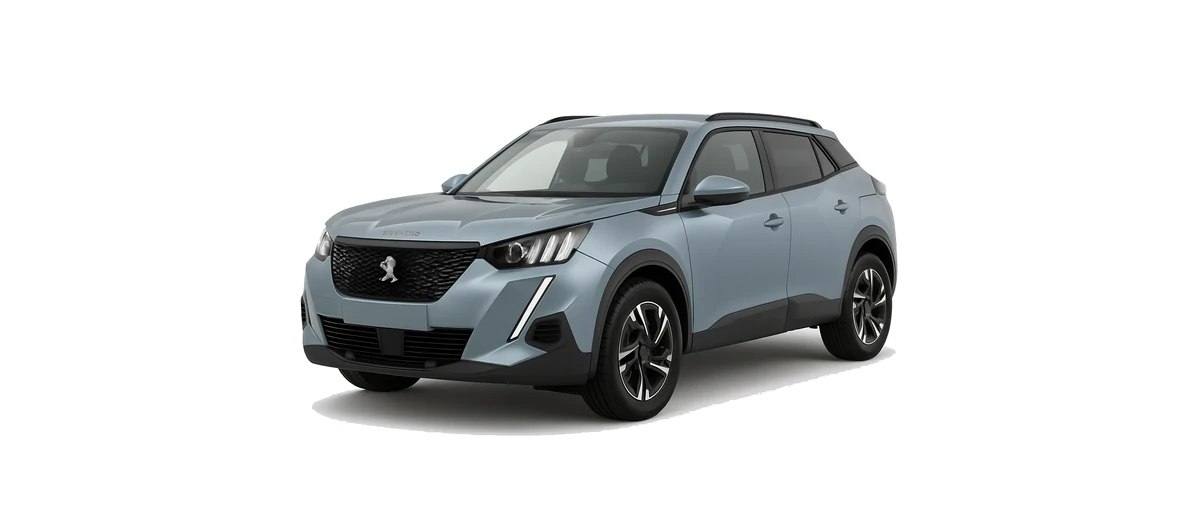
The Peugeot e-2008 is an all-electric compact SUV, not a plug-in hybrid, so all driving energy comes from charging the traction battery from mains electricity or a public charger. For UK drivers, the key point is that not every e-2008 has the same battery or the same charging specification. Current Peugeot UK material focuses on the 54 kWh, 156 hp E-2008, while many used examples are the earlier 50 kWh, 136 hp version.
That difference matters when comparing range figures, charging times and ownership costs. It is also worth checking whether the car has the optional 11 kW AC on-board charger, because most e-2008s are listed with a standard 7.4 kW AC charger. A 22 kW public post will not automatically mean 22 kW charging if the car cannot accept it.
This guide explains how to identify the likely charging setup, what cable you need for home and public AC charging, and how to plan rapid charging stops sensibly in the UK.
View Peugeot e-2008 Charging Cables
Peugeot e-2008 Battery and Charging Specifications
The Peugeot e-2008 uses a Type 2 inlet for AC charging and a CCS Combo 2 connection for DC rapid charging. In practice, that means a Type 2 to Type 2 cable is used for most home wallboxes and untethered public AC charge points, while motorway and rapid charging hubs use their own tethered CCS cable.
The charging inlet is generally described as being on the nearside rear quarter panel. On a UK car, that can be convenient for many kerbside and driveway setups, but cable length and parking position still matter when choosing a home charging cable.
For most UK owners, the standard AC charging figure to work around is 7.4 kW single-phase. Peugeot UK material for current versions lists a 7.4 kW on-board charger, and independent data sources list 7.4 kW AC as standard for both the 50 kWh and 54 kWh versions. Some cars may have an optional 11 kW three-phase on-board charger, so used buyers should check the exact vehicle specification rather than relying on a general e-2008 charging time.
Battery Options
There are two main battery contexts UK buyers and owners are likely to encounter.
Current 54 kWh version: current Peugeot UK information focuses on the 54 kWh, 156 hp E-2008. Peugeot quotes an official WLTP electric range of around 227.4 to 247 miles on the current model page, depending on specification and conditions. EV Database lists this version with a 54.0 kWh nominal battery and around 50.8 kWh usable, although Peugeot documentation has shown a different usable figure in some material. For that reason, it is safest to treat the gross 54 kWh figure as the headline specification and avoid relying too heavily on one usable-capacity number unless it is confirmed for the exact model year.
Earlier 50 kWh version: many used UK Peugeot e-2008 models are the 50 kWh, 136 hp version. These cars have the same broad Type 2 and CCS charging arrangement, but they usually have a shorter driving range than the latest 54 kWh model. Peugeot UK older specification material has quoted WLTP figures in the region of 191 to 206 miles for 50 kWh cars, while independent sources may show slightly different values depending on model year and configuration.
If you are buying used, check the V5, handbook, original order specification, dealer advert and infotainment information where available. Knowing whether the car is the 50 kWh or 54 kWh version helps set realistic expectations for range and charging stops.
AC Charging Speed
AC charging is what you use at home and at many destination chargers. The Peugeot e-2008’s standard AC limit is typically 7.4 kW, which makes a 7 kW UK home wallbox a good match for most cars. Even if a public AC post is rated at 22 kW, a standard 7.4 kW e-2008 will only charge at around its own on-board charger limit.
As a guide, a 50 kWh e-2008 can take roughly 7 hours 30 minutes for a full 0 to 100% charge at 7.4 kW, while the 54 kWh version is closer to around 8 hours 15 minutes. Real-world charging time varies with starting percentage, target percentage, charger output, temperature and the car’s own charging management.
Where the optional 11 kW three-phase charger is fitted, charging on a compatible three-phase AC post can be quicker, typically in the region of 5 to 5.5 hours for a full charge depending on battery version and conditions. This is most relevant for workplace, hotel, supermarket or council car park AC chargers. Many UK homes are single-phase, so the optional 11 kW charger may not reduce home charging time unless the property and charge point support three-phase charging.
DC Rapid Charging Speed
For longer journeys, the e-2008 uses CCS rapid chargers. These are the high-power public chargers with a thick tethered cable attached to the unit. You do not use your own Type 2 cable for DC rapid charging.
Peugeot UK states that the current E-2008 can charge from 20% to 80% in about 27 minutes on a public terminal of at least 100 kW, under suitable battery temperature conditions. Independent data for both the 50 kWh and 54 kWh versions places typical 10% to 80% rapid charging in roughly the high-20-minute range, with a peak DC rate around 100 kW.
A 100 kW or higher rapid charger is therefore sufficient to reach the e-2008’s peak charging capability. Plugging into a 150 kW or 350 kW charger is safe where the connector is compatible, but it will not make the car charge far beyond its own limit. As with most EVs, charging slows as the battery fills, so it is usually quicker on a long trip to charge to around 80% and continue rather than wait for 100% on a rapid charger.
Range and Efficiency
The current 54 kWh Peugeot e-2008 is quoted by Peugeot UK at around 227.4 to 247 miles WLTP. Real-world range is usually lower than the laboratory figure, especially in winter, at motorway speeds, in heavy rain or with roof loads. EV Database estimates around 185 miles of real-world range for the 54 kWh version.
Earlier 50 kWh cars have shorter range. Depending on specification and source, official figures are generally lower than the current 54 kWh model, and independent real-world estimates are around the mid-160-mile area. That can still be practical for commuting, school runs and local driving, but it changes how often you need to charge on longer journeys.
Efficiency is influenced by speed, outside temperature, tyre pressure, driving style and cabin heating use. Compact SUVs have a larger frontal area than small hatchbacks, so sustained motorway driving can make a noticeable difference to consumption. For the most predictable journey planning, use the car’s recent average consumption and remaining battery percentage rather than relying only on the official WLTP figure.
Charging at Home
For most Peugeot e-2008 owners, home charging is the cheapest and most convenient option. A dedicated 7 kW wallbox is well matched to the standard 7.4 kW on-board charger and will typically refill the battery overnight. If you use an EV-friendly electricity tariff, scheduled charging can reduce running costs further by charging during cheaper off-peak periods.
A tethered wallbox has a cable permanently attached, while an untethered wallbox requires you to use your own Type 2 to Type 2 cable. If you also use public AC chargers, an untethered setup can be convenient because the same cable can be kept in the boot for destination charging.
A 3-pin charger is generally best suited as a backup or occasional charging solution, but can be used regularly if a qualified electrician has confirmed the socket and electrical installation are suitable for sustained EV charging. Domestic sockets were not designed with repeated high-load EV charging in mind, so extension leads, old sockets and unknown wiring should be avoided.
If you have off-street parking, consider where the charge point will be installed relative to the e-2008’s rear-side charging inlet. A cable that comfortably reaches without being stretched, trapped under tyres or crossing a public walkway will make daily charging simpler.
Public Charging
For public AC charging, the Peugeot e-2008 uses a Type 2 connection. Many UK public AC chargers are untethered, so you will need to bring your own Type 2 to Type 2 cable. This applies to many 7 kW, 11 kW and 22 kW destination chargers found in car parks, hotels, workplaces and town centres.
Remember that the charger’s advertised output is only one part of the equation. A 22 kW post will only deliver what the car’s on-board AC charger can accept. If your e-2008 has the standard 7.4 kW AC charger, it will not charge at 22 kW on AC. If it has the optional 11 kW three-phase charger, it may charge faster on a compatible three-phase AC post, but you should confirm that your specific car is fitted with that option.
For DC rapid charging, use CCS chargers with tethered cables. Rapid charging is most useful on longer trips, where stopping between about 10% and 80% makes better use of the car’s fastest charging window. If you arrive at a rapid charger with a very high battery percentage, the session may be slower and less cost-effective.
Vehicle-Specific Features
The e-2008 is based on the Stellantis e-CMP electric platform and uses a 400 V-class architecture according to independent vehicle data. Its charging behaviour is typical of many compact EVs in this class: solid home charging compatibility, useful CCS rapid charging and a charging curve that slows at higher states of charge.
Heat pump availability appears to be trim-dependent in Peugeot UK material, with higher trims such as GT Premium more likely to list it in equipment sections. If winter efficiency is important to you, check the exact trim and build specification rather than assuming every e-2008 has one.
Battery preconditioning for rapid charging is not clearly offered as an active feature on the 50 kWh and 54 kWh versions checked in the research data. In practical terms, rapid charging performance may vary more noticeably with battery temperature, especially in colder weather. If the car has been driven for some time before reaching a rapid charger, charging performance may be better than when plugging in from cold.
Charging Tips
- Identify your version: check whether you have a 50 kWh or 54 kWh e-2008 before comparing range or charging times.
- Check the AC charger: do not assume the optional 11 kW charger is fitted. Many cars are 7.4 kW AC.
- Use a Type 2 cable for AC: a Type 2 to Type 2 cable is the right choice for untethered home and public AC charge points.
- Use CCS for rapid charging: rapid chargers have their own tethered CCS cable, so you do not need to supply one.
- Plan around 10% to 80%: rapid charging is usually most efficient in the middle of the battery, not near 100%.
- Expect seasonal variation: winter temperatures, motorway speeds and wet roads can reduce range.
- Choose cable length carefully: allow for the rear-side charging port and the way you park at home or at public chargers.
Frequently Asked Questions
Is the Peugeot e-2008 a plug-in hybrid?
The Peugeot e-2008 is a battery electric vehicle. It does not use petrol or diesel for propulsion and must be charged from an external electricity supply.
What charging cable does the Peugeot e-2008 use?
For AC charging, it uses a Type 2 connection, so a Type 2 to Type 2 cable is suitable for untethered wallboxes and public AC posts. For DC rapid charging, it uses CCS Combo 2 with the charger’s tethered cable.
Can the Peugeot e-2008 charge at 22 kW on a public AC charger?
Usually not. Most e-2008 versions are listed with a 7.4 kW AC on-board charger. Some may have an optional 11 kW three-phase charger, but you need to confirm that it is fitted to your specific car. The car will not charge at 22 kW AC simply because the post is rated at 22 kW.
How long does home charging take?
At around 7.4 kW, a 50 kWh e-2008 is typically around 7 hours 30 minutes from empty to full, while the 54 kWh version is closer to around 8 hours 15 minutes. Most daily top-ups take much less time because the battery is rarely empty.
How fast is rapid charging?
On a suitable 100 kW or higher CCS charger, Peugeot quotes about 27 minutes for 20% to 80% on the current E-2008 under suitable conditions. Independent sources place 10% to 80% charging at roughly 28 minutes for relevant versions.
What This Means for Drivers
The Peugeot e-2008 is straightforward to charge once you know which version you have. For most owners, a 7 kW home wallbox and a Type 2 to Type 2 cable cover everyday charging. The standard 7.4 kW AC limit means faster public AC posts will not always reduce charging time, while CCS rapid chargers are best saved for longer journeys.
The main buying and ownership lesson is to check the exact car. A current 54 kWh E-2008 has a longer quoted range than many older 50 kWh cars, and the optional 11 kW AC charger can make a difference on compatible public AC infrastructure. For used buyers, those details are more useful than relying on a single generic e-2008 specification.
Looking for a Charging Cable for Peugeot e-2008?
We offer Peugeot e-2008 charging cables suitable for Type 2 AC charging at home and on public charge points; choose the cable length and rating that best fits your parking setup and charging routine.
View Peugeot e-2008 Charging Cables
Please note that this information is intended as a guide. Charging specifications may change due to model and year of manufacture. For precise information, always refer to your vehicle user manual.

