
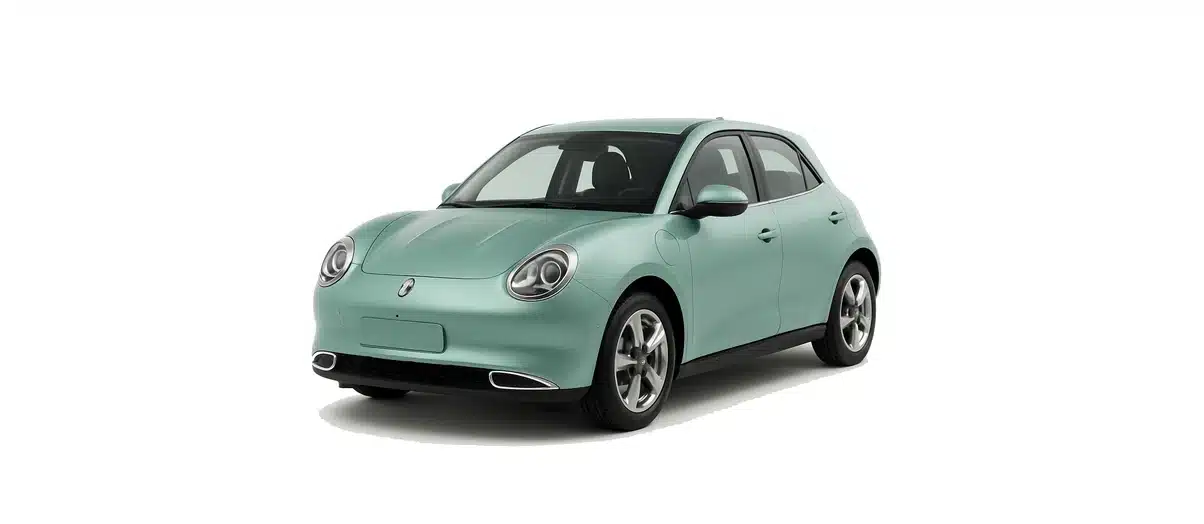
The Ora Funky Cat is a distinctive 5-door electric hatchback from GWM ORA / Great Wall Motor. In the UK, the Funky Cat name was used mainly for the 2022-2023 First Edition, with a limited First Edition+ arriving later with a larger battery. The name was then replaced by ORA 03, so used-car buyers need to be careful when comparing specifications.
For charging, the important point is simple: the Ora Funky Cat is a battery-electric vehicle, not a plug-in hybrid, and UK cars use a Type 2 connection for AC charging and a CCS Combo 2 connection for DC rapid charging. The cable type is the same across the main UK Funky Cat versions, but the battery size, range and expected charging time can differ significantly between the common 48 kWh First Edition and the rarer 63 kWh First Edition+.
View Ora Funky Cat Charging Cables
Ora Funky Cat Battery and Charging Specifications
The UK Ora Funky Cat is best understood as two related versions: the original First Edition with a 47.8 kWh gross battery, and the later limited First Edition+ with a 63.1 kWh gross battery. Both use the same UK and European charging connector standards, but the larger-battery car offers a longer official range and takes longer to charge from empty at home.
| Specification | Ora Funky Cat First Edition | Ora Funky Cat First Edition+ |
|---|---|---|
| Battery size | 47.8 kWh gross / around 45.4 kWh usable | 63.1 kWh gross / around 59.3 kWh usable |
| Official WLTP range | Up to 193 miles | Around 260-261 miles |
| AC charging connection | Type 2 | Type 2 |
| Maximum AC charging | Up to 11 kW, where three-phase AC is available | Up to 11 kW, where three-phase AC is available |
| DC rapid charging connection | CCS Combo 2 | CCS Combo 2 |
| Typical quoted DC peak | Around 64 kW | Around 67-69 kW |
| Typical 10-80% rapid charge | About 45 minutes | About 48-49 minutes |
The charging port is positioned towards the left-front side of the car. This can be useful to remember when parking at public chargers, especially where short tethered rapid-charger cables make positioning more important.
Battery Options
The most common UK Funky Cat is the First Edition, which uses the 47.8 kWh gross battery. This is the version many used buyers will encounter, and it is usually associated with a WLTP range of up to 193 miles. Real-world range will vary with speed, weather, driving style, tyres, cabin heating use and route type, but an estimated real-world figure of roughly 160 miles is a sensible guide for mixed use.
The later Funky Cat First Edition+ introduced a larger 63.1 kWh gross battery. It was a limited-run model in the UK and is usually quoted at about 260 to 261 miles WLTP, with estimated real-world range closer to 210 miles in typical mixed conditions. Because the First Edition+ is less common, it is worth checking the vehicle documents, trim details or VIN information rather than assuming every Funky Cat has the larger pack.
This distinction matters when planning charging. A Type 2 cable suitable for one will suit the other, but the larger-battery car needs more energy to refill and can spend longer connected to a home charger if charged from a low percentage to full.
AC Charging Speed
The Ora Funky Cat can accept up to 11 kW AC charging through its Type 2 inlet, but this figure needs UK context. An 11 kW AC charge rate normally requires a three-phase electrical supply and a compatible three-phase charge point. Most UK homes have single-phase electricity, so a typical home wallbox will charge at up to about 7.4 kW rather than 11 kW.
On a 7.4 kW single-phase home charge point, the 48 kWh Funky Cat is likely to take around 7 hours 15 minutes for a 0-100% charge in idealised terms. The 63 kWh First Edition+ is likely to take around 9 hours 30 minutes from 0-100%. In day-to-day use, most owners will not be charging from completely empty to completely full, so overnight charging is generally practical.
On an 11 kW public or workplace AC charger with three-phase supply, charging can be quicker, provided the charger, cable and vehicle are all able to use three-phase AC. For AC charging away from home, a suitable Type 2 cable is usually required unless the charge point has its own tethered lead.
DC Rapid Charging Speed
For motorway services and faster public charging stops, the Ora Funky Cat uses the CCS Combo 2 connector. CCS rapid chargers have the cable attached to the charger, so you do not use your own Type 2 cable for DC rapid charging.
The Funky Cat is not an ultra-rapid charging leader by modern EV standards. The 48 kWh First Edition is typically quoted at around 64 kW maximum DC charging and about 45 minutes for a 10-80% charge. The 63 kWh First Edition+ is listed at around 67-69 kW maximum DC charging and roughly 48-49 minutes for a 10-80% charge.
As with all EVs, the peak charging figure is not held for the entire session. Charging is usually quickest at a lower to mid battery state of charge and slows as the battery fills. For that reason, a 10-80% rapid charge is often more time-efficient than waiting to reach 100% on a public charger, particularly if other drivers are waiting.
Range and Efficiency
The official WLTP range figures provide a useful comparison between versions, but real driving range depends on conditions. The 48 kWh First Edition is rated at up to 193 miles WLTP, while the 63 kWh First Edition+ is rated at around 260-261 miles WLTP. In colder weather, at sustained motorway speeds or with heavy use of heating and demisting, expect the achievable range to be lower.
For daily commuting, school runs and local journeys, the smaller-battery Funky Cat should still offer more than enough range for many drivers. For longer routes, the larger-battery First Edition+ gives more flexibility between charging stops. Either way, planning with a realistic buffer is better than relying on the official maximum figure.
GWM owner material advises charging to 80% where possible and using a desired charge limit. This is sensible for everyday battery care and also aligns with efficient public rapid charging, because the final 20% can take disproportionately longer.
Charging at Home
For most Ora Funky Cat owners, home charging will be the cheapest and most convenient way to run the car. A dedicated Type 2 home wallbox on a suitable off-street parking setup allows the car to be charged overnight and makes it easier to take advantage of off-peak electricity tariffs where available.
A tethered Type 2 wallbox has the cable permanently attached, which is convenient if you mainly charge at home. An untethered wallbox has a Type 2 socket, meaning you plug in your own Type 2 charging cable. Untethered units can look tidier and may be more flexible if you later change to another EV, but you need to keep a suitable cable available.
Although the Funky Cat can accept up to 11 kW AC, many UK homes will be limited to 7.4 kW single-phase charging. That is still sufficient for typical overnight charging. If you have access to a three-phase domestic, workplace or commercial installation, an 11 kW Type 2 setup may reduce charging time.
A 3-pin charger is generally best suited as a backup or occasional charging solution, but can be used regularly if a qualified electrician has confirmed the socket and electrical installation are suitable for sustained EV charging. Standard domestic sockets were not primarily designed for repeated high-load EV charging over many hours, so professional checking is important.
Public Charging
Public charging for the Ora Funky Cat falls into two main types: AC destination charging and DC rapid charging. AC destination chargers are common in town centres, car parks, hotels, workplaces and supermarkets. These often require your own Type 2 cable, especially where the unit is socketed rather than tethered.
DC rapid chargers are used when you need a quicker stop on a longer journey. These use CCS and have their own cable attached. For the Funky Cat, it is worth choosing a reliable rapid charger rather than necessarily searching for the highest-power ultra-rapid unit, because the car’s own DC charging capability is relatively modest compared with some newer EVs.
When planning a longer journey, check that the charger has CCS connectors, look at recent reliability information in charging apps, and build in a practical reserve. If you are driving the 48 kWh First Edition, you may want to plan more frequent stops than you would in the 63 kWh First Edition+.
Vehicle-Specific Features
The Funky Cat’s left-front charge-port location is one of the main practical details to know. At many AC chargers it will not matter much, but at some rapid-charging bays the car’s position can affect whether the tethered CCS cable reaches comfortably.
Battery preconditioning for rapid charging is not listed as available for the Funky Cat variants checked, so charging speeds may be more affected by cold weather or battery temperature than in EVs with more advanced preconditioning systems. Vehicle-to-load, vehicle-to-grid and vehicle-to-home capability are also not listed as supported for the Funky Cat variants checked.
Some data sources list a heat pump as optional for the 48 kWh model, while equipment can vary by configuration. It is therefore best not to assume a particular used Funky Cat has one unless it is confirmed in the vehicle specification.
Charging Tips
- Confirm which battery you have: the 48 kWh and 63 kWh cars have different range and charging expectations.
- Use Type 2 for AC charging: this covers home wallboxes, many workplace chargers and most socketed destination chargers.
- Use CCS for rapid charging: public DC rapid chargers have their own tethered cable.
- Do not assume 11 kW at home: most UK homes are single-phase and will typically charge at up to around 7.4 kW.
- Set an 80% limit for everyday use where practical: this supports battery care and avoids slower charging at high states of charge.
- Pre-plan longer trips: especially in winter or if driving the 48 kWh First Edition on motorway routes.
Frequently Asked Questions
What charging cable does the Ora Funky Cat use?
The Ora Funky Cat uses a Type 2 connection for AC charging. For DC rapid charging, it uses the CCS Combo 2 connector, with the rapid charger’s own cable attached.
Is the Ora Funky Cat a plug-in hybrid?
No. The Ora Funky Cat is a battery-electric vehicle. It does not have a petrol engine, range extender or plug-in hybrid powertrain.
Can the Ora Funky Cat charge at 11 kW at home?
The car can accept up to 11 kW AC, but this normally requires a three-phase supply. Most UK home wallboxes are single-phase and will typically charge at up to about 7.4 kW.
How long does the Ora Funky Cat take to rapid charge?
The 48 kWh First Edition is typically quoted at about 45 minutes for 10-80% on a suitable CCS rapid charger. The 63 kWh First Edition+ is around 48-49 minutes for a similar 10-80% session.
Do all Ora Funky Cat models have the larger 63 kWh battery?
No. Many UK Funky Cat cars are the First Edition with the 47.8 kWh gross battery. The 63.1 kWh First Edition+ was a later limited-run version, so used buyers should verify the exact model.
What This Means for Drivers
The Ora Funky Cat is straightforward to charge once you know which version you have. The charging connector is the same across the main UK models: Type 2 for AC and CCS for rapid charging. The main ownership difference is battery size. The common 48 kWh First Edition is well suited to local and mixed driving with occasional rapid charging, while the rarer 63 kWh First Edition+ offers more range for longer journeys.
For most UK owners, a 7.4 kW home wallbox and a good Type 2 cable setup will cover the majority of charging needs. Public CCS charging is useful for longer journeys, but it is best to plan around realistic rapid-charge speeds rather than expecting ultra-fast charging performance.
Looking for a Charging Cable for Ora Funky Cat?
If you need a compatible cable for home, workplace or public AC charging, choose a Type 2 charging cable suitable for your Ora Funky Cat and your charging setup.
View Ora Funky Cat Charging Cables
Please note that this information is intended as a guide. Charging specifications may change due to model and year of manufacture. For precise information, always refer to your vehicle user manual.

