
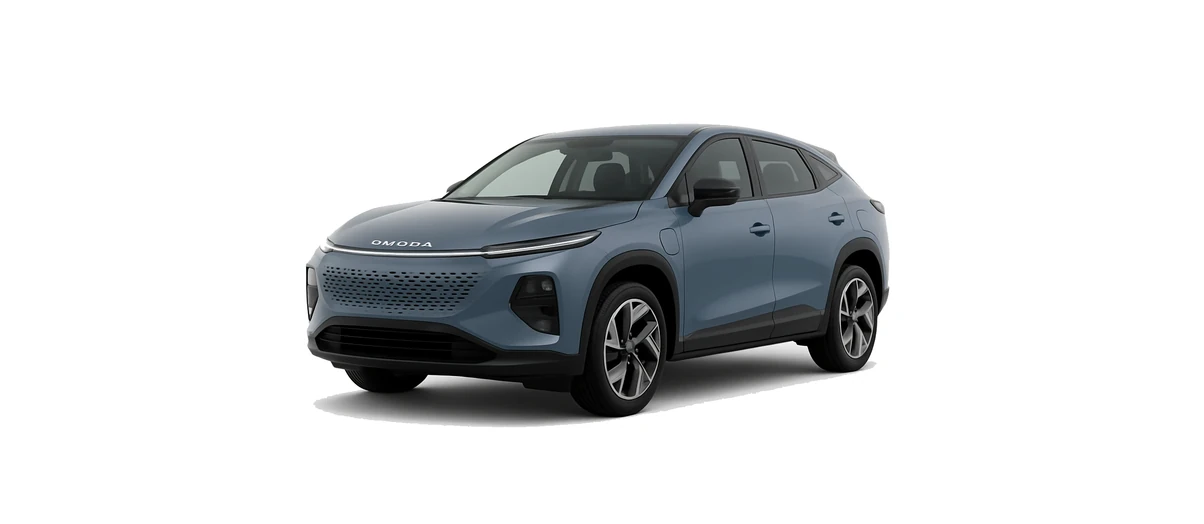
The Omoda 9 is an unusual entry in the UK plug-in hybrid market. Rather than being a full battery-electric vehicle, it is a 5-door SUV using Omoda’s SHS-P / Super Hybrid System plug-in hybrid powertrain, combining a 1.5-litre petrol engine with electric drive and a large battery for a PHEV. That means charging advice for the Omoda 9 sits somewhere between a conventional plug-in hybrid guide and a small EV ownership guide.
For many drivers, the headline figure is the official electric-only WLTP range of up to 93 miles. Real-world electric range will depend on speed, temperature, route, driving mode and how the vehicle manages its battery buffer, but the Omoda 9 has enough electric range for many weekday journeys if it is charged regularly. It also has the flexibility of a petrol engine for longer trips, so you are not dependent on public charging in the same way as a pure EV driver.
Omoda 9 Battery and Charging Specifications
UK information for the Omoda 9 points to a current Noble 1.5T SHS 3DHT AWD plug-in hybrid specification for the 2025/2026 model period. Published UK data lists a battery capacity of around 34.5 kWh gross, with Omoda UK press material referring to a 34.46 kWh M3P battery. A confirmed usable capacity has not been clearly stated in the UK sources reviewed, so it is best not to treat the full gross figure as the amount available for driving.
The Omoda 9 uses a Type 2 connection for AC charging and a CCS connection for DC rapid charging. This is important because most PHEVs in the UK are AC-only, whereas the Omoda 9 has published DC rapid-charging capability. For day-to-day charging, however, a Type 2 AC setup remains the most relevant option for most owners.
- Vehicle type: plug-in hybrid SUV, not a full battery-electric vehicle
- Battery: around 34.5 kWh gross, usable capacity not clearly confirmed
- Official electric range: up to 93 miles WLTP
- AC charging: listed at up to 6.6 kW
- DC rapid charging: published around 70 kW, with some source variation
- Connector: Type 2 for AC, CCS for DC rapid charging
Battery Options
At UK launch, the Omoda 9 appears to be offered in a single high-specification Noble plug-in hybrid form rather than with multiple battery sizes. That simplifies cable selection: UK buyers are not currently choosing between different battery packs with different charging speeds.
The battery is large by plug-in hybrid standards. A 34.5 kWh gross pack is closer in size to some older or smaller full EV batteries than to many traditional PHEVs. This is why the Omoda 9 can offer a long official electric-only range and why home charging is especially relevant. If you only charge occasionally, you are unlikely to get the best from the vehicle’s electric capability.
As with all plug-in hybrids, the battery management system will reserve some capacity to protect the battery and to support hybrid operation. For that reason, charging calculations based on the gross battery figure should be treated as broad estimates rather than exact timings.
AC Charging Speed
Published technical data lists the Omoda 9 at up to 6.6 kW AC charging. In practical UK terms, this makes a 7.4 kW single-phase home wallbox a sensible match. The wallbox may be capable of supplying up to 7.4 kW, but the car’s onboard charger is expected to limit AC charging to its own maximum.
This also matters when using public AC charging. If you plug the Omoda 9 into an 11 kW or 22 kW AC post, the vehicle should not charge at 11 kW or 22 kW simply because the post can supply it. The limiting factor is the car’s onboard AC charger. A higher-rated Type 2 cable can be useful for compatibility with future vehicles or other cars in the household, but it will not necessarily reduce charging time for the Omoda 9.
Some published information has referred to a manufacturer AC charging figure for 30-80%, but there is not enough consistent UK data to present a universal 0-100% AC charging time with confidence. For owners, the main point is simpler: regular overnight or off-peak charging from a suitable home charge point is likely to be the most convenient way to keep the battery topped up.
DC Rapid Charging Speed
DC rapid charging is one of the more distinctive features of the Omoda 9 as a plug-in hybrid. Several published sources list DC charging at around 70 kW and refer to a 30-80% rapid-charge time of about 25 minutes. Some Omoda brochure wording has quoted a slightly different peak figure and 30-80% time, so it is sensible to treat rapid-charging figures as approximate until confirmed in the vehicle handbook or the car’s charging display.
It is also worth noting that the available published timing is for 30-80%, not a confirmed 10-80% figure. Charging speeds can vary depending on battery state of charge, battery temperature, charger output, site conditions and how the car manages its charging curve.
For most owners, DC rapid charging should be seen as a useful extra rather than the main way to run the car. Rapid chargers are often more expensive than home electricity, especially when compared with an off-peak EV tariff. The benefit is convenience: if you are on a longer journey and want to replenish the electric range, the Omoda 9 can use suitable CCS rapid chargers in a way many PHEVs cannot.
Range and Efficiency
The official WLTP electric-only range for the Omoda 9 is up to 93 miles. That is an impressive figure for a plug-in hybrid and means the car can be treated rather like a compact EV for many daily routines. School runs, commuting, local shopping and short business journeys may be possible without using much petrol, provided the vehicle is charged frequently.
In real-world UK use, electric range is likely to vary. Independent reporting has suggested that around 60 miles may be a more realistic indication in some conditions, although individual results will depend heavily on driving style and journey type. Motorway speeds, cold weather, heavy loads, short stop-start trips and use of cabin heating or air conditioning can all affect energy use.
The key ownership habit is to plug in whenever it is convenient and cost-effective. If the car starts each day with a healthy battery charge, it can make the most of its electric capability. If it is rarely charged, it becomes a heavy hybrid SUV carrying a large battery without fully using the benefit of that battery.
Charging at Home
Home charging is likely to be the most important charging method for Omoda 9 drivers. A dedicated 7.4 kW home charge point is well matched to the car’s listed 6.6 kW AC charging capability and is usually more convenient, safer and faster than relying on a domestic socket.
A tethered home charger has its own cable attached, while an untethered charger requires you to use your own Type 2 cable. If you choose an untethered unit, a good-quality Type 2 cable is an everyday essential. Many owners prefer a cable long enough to reach comfortably whether the car is parked nose-in or reversed onto the driveway.
A 3-pin portable charger is generally best suited as a backup or occasional charging solution, but can be used regularly if a qualified electrician has confirmed the socket and electrical installation are suitable for sustained EV charging. Domestic sockets were not primarily designed for repeated high-load charging over many hours, so professional electrical advice is important if you plan to use one frequently.
Because the Omoda 9 is a PHEV, you may not need to charge from empty every night. Short top-ups can be enough to cover the next day’s journeys, especially if you have access to cheaper overnight electricity.
Public Charging
For public AC charging, the Omoda 9 uses a Type 2 cable. Many destination chargers at supermarkets, hotels, workplaces, town centres and car parks are untethered, meaning you need to bring your own cable. This is where having the right Type 2 cable in the boot becomes useful.
On AC, expect the vehicle to follow its onboard charging limit rather than the maximum advertised output of the post. A 22 kW post is still usable, but it should not be expected to charge the Omoda 9 at 22 kW.
For rapid charging, the Omoda 9 uses CCS. DC rapid chargers are normally tethered, so you use the cable attached to the charger rather than your own. Rapid charging can be helpful on longer days, but it is worth comparing the cost per kWh with your home tariff. In many cases, charging at home before you leave will be the cheaper way to maximise electric driving.
Vehicle-Specific Features
The most important vehicle-specific point is that the Omoda 9 is a plug-in hybrid, not a battery-electric SUV. That gives it two different operating personalities. With charge in the battery, it can cover many journeys using electric drive. When the battery is depleted or when the journey demands it, the petrol engine remains available as part of the hybrid system.
The car’s large PHEV battery and official 93-mile electric range make charging more rewarding than it is in many shorter-range plug-in hybrids. Owners who charge regularly should be able to reduce petrol use significantly on local journeys. At the same time, the petrol engine means long-distance planning is less dependent on finding chargers at every stop.
The CCS rapid-charging capability is also notable. It gives the Omoda 9 more flexibility than many PHEVs, although home AC charging remains the most natural everyday charging method.
Charging Tips
- Use home charging as the default: a 7.4 kW wallbox is a sensible match for the listed 6.6 kW AC charging capability.
- Carry a Type 2 cable: many UK public AC posts are untethered, especially at destination locations.
- Do not overpay for routine rapid charging: DC charging is useful, but it may cost much more than home charging.
- Charge little and often: frequent top-ups help you make better use of the Omoda 9’s electric range.
- Expect range variation: the 93-mile WLTP figure is an official test result, not a guarantee in every journey or season.
- Check your cable rating: a higher-rated cable can be compatible, but the car’s AC limit still controls charging speed.
Frequently Asked Questions
Is the Omoda 9 a full electric car?
No. The UK Omoda 9 is a plug-in hybrid using a petrol engine and electric drive. It can be charged from an external power source, but it is not a pure battery-electric vehicle.
What charging cable does the Omoda 9 use?
For AC charging, the Omoda 9 uses a Type 2 connection. For DC rapid charging, it uses CCS, and the rapid charger normally provides the cable.
Will an 11 kW or 22 kW charger make the Omoda 9 charge faster?
Not necessarily. The Omoda 9 is listed with up to 6.6 kW AC charging, so higher-output AC posts are expected to be limited by the car’s onboard charger.
How far can the Omoda 9 drive on electric power?
The official WLTP electric-only range is up to 93 miles. Real-world range can be lower depending on weather, speed, route, driving mode and vehicle load.
Can the Omoda 9 use rapid chargers?
Yes, published UK data indicates CCS DC rapid-charging capability, with several sources quoting around 70 kW and about 25 minutes for 30-80%. Published figures vary slightly, so owners should use the car’s handbook and charging display as the final reference.
What This Means for Drivers
The Omoda 9 is best understood as a long-electric-range plug-in hybrid. If you charge it regularly, it can behave like an electric car for a large share of everyday driving, while still offering petrol backup for longer journeys. That makes the right home setup and a suitable Type 2 cable particularly important.
A 7.4 kW home charge point is the natural fit for most UK households, while a Type 2 cable will cover untethered home chargers and public AC posts. DC rapid charging adds flexibility, but it is unlikely to be the cheapest routine charging method. For the best ownership experience, charge at home when you can, use public AC charging when parked for longer periods, and reserve rapid charging for journeys where it genuinely saves time.
Looking for a Charging Cable for Omoda 9?
If you need a compatible Type 2 charging cable for home or public AC charging, We offer Omoda 9 charging cables suitable for everyday UK plug-in hybrid use.
Please note that this information is intended as a guide. Charging specifications may change due to model and year of manufacture. For precise information, always refer to your vehicle user manual.

