
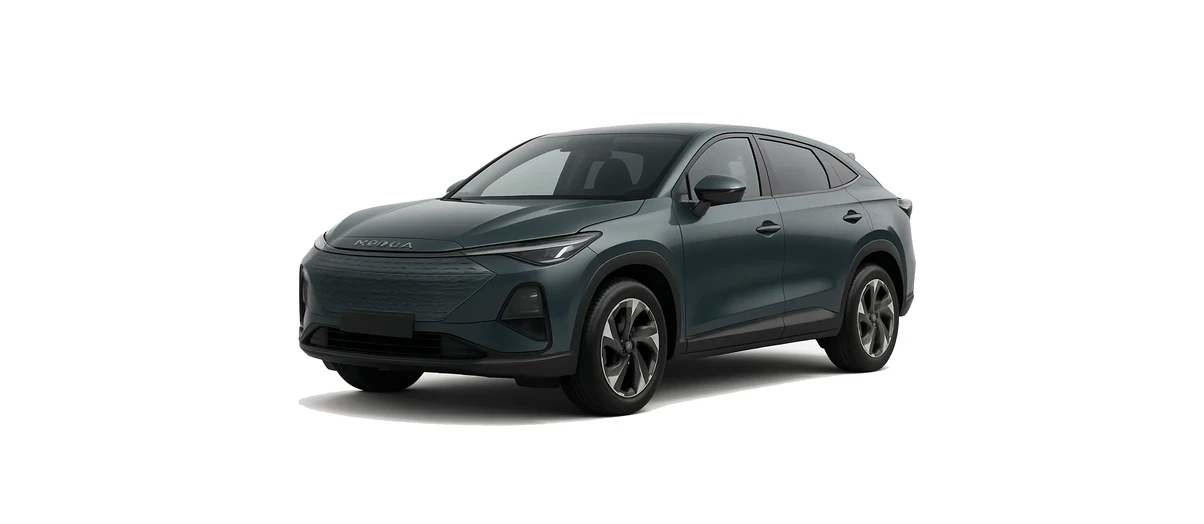
The Omoda 7 is a mid-size SUV due for UK customer deliveries in 2026, with the UK line-up expected to include both petrol and SHS-P plug-in hybrid versions. This guide focuses specifically on the Omoda 7 SHS-P plug-in hybrid, including Knight, Noble and Noble Tech trims. The non-plug-in petrol Omoda 7 does not need charging cables or plug-in charging advice.
The SHS-P version combines a 1.5T petrol engine, a dedicated hybrid transmission and an 18.4 kWh traction battery. Omoda UK quotes a claimed electric driving range of up to 56 miles, meaning many local journeys could be completed on electric power if the vehicle is charged regularly. Unlike many PHEVs, the Omoda 7 SHS-P is also expected to support DC rapid charging, although most owners will still find home or workplace AC charging the most practical and cost-effective option.
Omoda 7 Battery and Charging Specifications
The UK Omoda 7 SHS-P uses an 18.4 kWh plug-in hybrid battery. Some UK dealer and press material rounds this to 18.3 kWh, but Omoda UK lists 18.4 kWh, so that is the most appropriate headline figure to use. The usable or net battery capacity has not been clearly confirmed in UK official material, so it is best not to assume the full gross capacity is available for driving.
For AC charging, EU official Omoda specification data lists a maximum charging rate of 6.6 kW. UK dealer material describes charging from a 7.4 kW wallbox in around 2.5 hours, which is consistent with a vehicle-side AC limit below the full 7.4 kW output of a typical UK single-phase home charger. Until a final UK handbook confirms otherwise, 6.6 kW should be treated as the likely onboard AC charging limit.
The Omoda 7 SHS-P is also listed with up to 40 kW DC rapid charging. That is unusual for a plug-in hybrid, as many PHEVs either do not support DC charging at all or support much lower practical charging rates. Published European material quotes a 30-80% DC rapid charge time of about 20 minutes. A verified 10-80% time has not been found, so it should not be quoted as a confirmed figure.
The charging connector is expected to be Type 2 for AC charging and CCS2 for DC rapid charging, based on EU specification listings and the vehicle’s confirmed European rapid-charging capability. UK official product pages had not clearly listed the connector type at the time of writing, so owners should check their final UK handbook or vehicle specification if they need complete confirmation.
Battery Options
For the UK plug-in hybrid Omoda 7 SHS-P range, the key battery figure is the 18.4 kWh traction battery used with the 1.5T petrol-hybrid system. Current information indicates that SHS-P Knight, Noble and Noble Tech trims share the same core charging hardware, although final UK brochures and owner documentation should be checked when available.
This is important because the Omoda 7 name is also used for a petrol model. The petrol Omoda 7 does not have a plug-in traction battery and does not need a Type 2 charging cable, wallbox charging or rapid charging. Charging advice in this article applies only to the SHS-P plug-in hybrid.
AC Charging Speed
AC charging is likely to be the main way most UK Omoda 7 SHS-P drivers charge the car. The expected maximum AC charging rate is 6.6 kW, so a standard 7.4 kW home wallbox should be more than sufficient. The wallbox may be capable of delivering 7.4 kW, but the car will only draw what its onboard charger can accept.
In practical terms, a home wallbox should be able to charge the battery in roughly the same sort of timeframe described by UK dealer material: around 2.5 hours under suitable conditions. Actual charging time can vary with battery temperature, starting state of charge, energy losses, the charger, cable condition and any charging limits set in the vehicle or wallbox app.
For home wallboxes and untethered public AC charge points, the Omoda 7 SHS-P will require a suitable Type 2 charging cable, assuming the expected UK/EU connector arrangement is confirmed. A 32 amp Type 2 cable is normally the most practical choice for a single-phase UK wallbox, as it comfortably supports the car’s expected AC charging demand.
DC Rapid Charging Speed
The Omoda 7 SHS-P’s DC rapid charging capability is one of its more distinctive features. A peak rate of up to 40 kW is modest compared with a battery-electric SUV, but it is notable for a PHEV. European technical material quotes a 30-80% DC rapid charging time of about 20 minutes.
That does not mean the Omoda 7 SHS-P should be treated like a long-range BEV. Its battery is much smaller, and rapid charging a PHEV only adds a limited amount of electric range. For most owners, DC charging will make sense only in specific situations: for example, topping up during a longer journey, arriving at a destination where no AC charging is available, or wanting to preserve electric driving in a low-emission area.
It is also worth remembering that public rapid chargers are often priced higher than home electricity and may be in demand from fully electric vehicles that depend on them for longer-distance travel. For day-to-day use, overnight home charging or workplace AC charging will usually be more convenient and economical.
Range and Efficiency
Omoda UK quotes a claimed electric range of up to 56 miles for the Omoda 7 SHS-P. As with all WLTP figures, real-world range will depend on driving conditions, speed, temperature, terrain, tyre choice, load and use of heating or air conditioning. Short urban and suburban trips are usually where a PHEV is most likely to make good use of its electric range.
The key ownership habit is simple: charge regularly. If the Omoda 7 SHS-P is plugged in at home or work whenever practical, many shorter journeys can be completed using electric power. If it is not charged, it will operate more like a conventional hybrid and rely more heavily on petrol, reducing the running-cost benefits of choosing the plug-in hybrid model.
Omoda UK also lists 23 g/km CO2 for the SHS-P, reflecting its plug-in hybrid test-cycle performance. In everyday use, emissions and fuel consumption depend heavily on how often the battery is charged and how much driving is completed in electric mode.
Charging at Home
Home charging is likely to be the easiest and cheapest way to run the Omoda 7 SHS-P as intended. A dedicated 7.4 kW home charger should be more than enough for the vehicle’s expected 6.6 kW AC onboard charger. Because the battery is relatively small compared with a full BEV, it should usually be possible to replenish it within a few hours rather than overnight from empty.
If you have access to an off-peak electricity tariff, scheduling the car to charge during cheaper hours can help reduce running costs. Even if the Omoda 7 SHS-P does not need the full off-peak window, setting a charging schedule makes it easier to start each day with useful electric range.
A 3-pin plug-in charger is generally best suited as a backup or occasional charging solution, but can be used regularly if a qualified electrician has confirmed the socket and electrical installation are suitable for sustained EV charging. Domestic sockets were not primarily designed for repeated high-load vehicle charging, so a properly installed wallbox is normally the better long-term home charging solution.
Public Charging
For public AC charging, the Omoda 7 SHS-P should be able to use untethered Type 2 charge points with a suitable Type 2 cable, subject to final UK connector confirmation. Many UK destination chargers are rated at 7 kW or 22 kW, but the car will be limited by its onboard AC charger rather than the full output of higher-rated posts.
Public AC charging is especially useful at workplaces, supermarkets, hotels, gyms, leisure centres and town-centre car parks. Because the Omoda 7 SHS-P has a smaller battery than a BEV, a short stop can add a meaningful amount of electric driving range.
For DC rapid charging, the car is expected to use a CCS2 connector and accept up to 40 kW. Most UK rapid chargers have tethered cables, so you normally do not need to bring your own cable for DC charging. The quoted 30-80% DC charging time of about 20 minutes should be viewed as a useful top-up figure rather than a reason to rely on rapid charging every day.
Vehicle-Specific Features
The most important vehicle-specific point is that the Omoda 7 SHS-P is a plug-in hybrid, not a fully electric car. It can drive on electric power for local trips, then continue as a petrol-hybrid vehicle when the battery is depleted or when driving conditions require it.
The Omoda 7 SHS-P is also reported to offer Vehicle-to-Load (V2L) capability, with UK material referring to a genuine Omoda V2L cable accessory. V2L can allow the vehicle’s battery to power suitable external electrical devices, depending on the vehicle settings, accessory used and power limits specified by the manufacturer. This should not be confused with Vehicle-to-Grid or Vehicle-to-Home capability, which has not been confirmed.
At the time of writing, UK official material had not clearly confirmed items such as heat pump fitment or battery preconditioning for charging, so those features should not be assumed. Owners should refer to the final UK handbook for trim-specific equipment and charging instructions.
Charging Tips
- Charge little and often: PHEVs deliver their best running-cost benefits when the battery is topped up regularly.
- Use a home wallbox where possible: A 7.4 kW wallbox should comfortably support the car’s expected 6.6 kW AC charging limit.
- Choose the right cable: A Type 2 cable is expected to be required for untethered AC charging points.
- Do not over-rely on rapid charging: DC charging is useful, but home and workplace charging will usually make more financial and practical sense.
- Check connector details in the handbook: Type 2 and CCS2 are the expected arrangement, but UK official connector wording should be confirmed in final owner documentation.
- Use EV mode for suitable journeys: Local commutes, school runs and errands are ideal opportunities to use the claimed 56-mile electric range.
Frequently Asked Questions
Is the Omoda 7 SHS-P a fully electric car?
No. The Omoda 7 SHS-P is a plug-in hybrid. It has a petrol engine, hybrid transmission and rechargeable traction battery. It can drive on electric power for shorter journeys, but it is not a battery-electric vehicle.
What size battery does the Omoda 7 SHS-P have?
Omoda UK lists an 18.4 kWh battery for the SHS-P plug-in hybrid. The usable or net battery capacity has not been clearly confirmed in UK official material.
What charging cable does the Omoda 7 SHS-P use?
The expected AC connector is Type 2, meaning a Type 2 cable should be used for home wallboxes and untethered public AC charge points. This is based on EU specification listings and the vehicle’s rapid-charging capability, but final UK handbook confirmation is recommended.
How fast can the Omoda 7 SHS-P charge at home?
The best-supported figure is up to 6.6 kW on AC. A typical 7.4 kW home wallbox should therefore be more than enough, with UK dealer material suggesting a charge time of around 2.5 hours under suitable conditions.
Can the Omoda 7 SHS-P rapid charge?
Yes, current European and UK dealer material indicates DC rapid charging at up to 40 kW, with a quoted 30-80% charge time of about 20 minutes. A verified 10-80% time has not been confirmed.
Does the petrol Omoda 7 need a charging cable?
No. Charging cables apply to the Omoda 7 SHS-P plug-in hybrid only. The petrol Omoda 7 is not plugged in to charge.
What This Means for Drivers
The Omoda 7 SHS-P should suit drivers who want electric driving for everyday local journeys but still value the flexibility of a petrol-hybrid system for longer trips. Its claimed 56-mile electric range is useful for a PHEV, and the ability to use DC rapid charging adds flexibility that many plug-in hybrids do not offer.
However, the best ownership experience will come from treating it as a car that should be charged regularly at home or work. A Type 2 cable and a dedicated home wallbox will be the most important charging tools for most drivers. Rapid charging is a useful extra, not the main charging strategy.
Looking for a Charging Cable for Omoda 7?
We offer charging cables suitable for UK plug-in hybrid and electric vehicles, including options for drivers preparing for the Omoda 7 SHS-P. Choose a cable that matches the vehicle’s confirmed connector type and your intended home or public AC charging use.
Please note that this information is intended as a guide. Charging specifications may change due to model and year of manufacture. For precise information, always refer to your vehicle user manual.

