
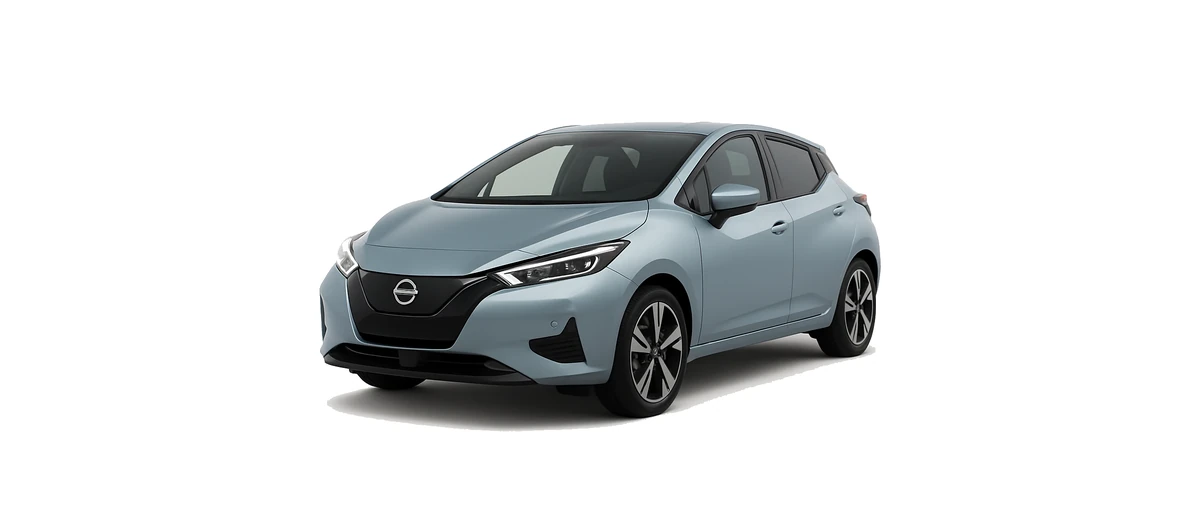
The Nissan Micra has returned to the UK market as an electric supermini. For charging advice, it is important to be clear about the version being discussed: this guide applies to the all-new sixth-generation Nissan Micra EV, model year 2025 onwards. Older petrol-powered Micra models are not plug-in vehicles and do not use EV charging cables.
The current electric Micra is a battery-electric vehicle with two battery choices: a 40kWh version and a 52kWh version. Both use a Type 2 connection for AC charging at home, work and many public charging points, and a CCS Combo 2 connection for DC rapid charging. In everyday UK use, most owners will charge mainly from a home wallbox or public AC charger, using rapid charging for longer journeys.
View Nissan Micra Charging Cables
Nissan Micra Battery and Charging Specifications
The electric Nissan Micra is offered with two battery sizes. Nissan refers to these as 40kWh and 52kWh batteries, while EV Database estimates usable capacities of around 40kWh and 52kWh respectively. Both versions have an 11kW onboard AC charger, although that maximum AC speed normally requires a three-phase electricity supply.
| Specification | Nissan Micra 40kWh | Nissan Micra 52kWh |
|---|---|---|
| Vehicle type | Battery-electric 5-door hatchback | Battery-electric 5-door hatchback |
| AC charging connector | Type 2 | Type 2 |
| DC rapid charging connector | CCS Combo 2 | CCS Combo 2 |
| Maximum AC charging | 11kW | 11kW |
| Maximum DC charging | Up to 80kW | Up to 100kW |
| Official WLTP range | Up to around 196 miles | Up to around 257 miles |
| Typical 7.4kW home charge estimate | About 6.5 hours from empty to full | About 8.5 hours from empty to full |
EV Database lists the charge port location as the left-front side of the vehicle. As with all EVs, charging times and range will vary with temperature, battery state of charge, charger output and driving conditions.
Battery Options
The 40kWh Standard Range version is available on UK grades including Engage and Advance. It is the lighter, lower-capacity option and is likely to suit drivers who mostly cover local trips, commuting and regular town use. Nissan’s current UK brochure lists up to 196 miles WLTP for this version, while EV Database estimates real-world range at about 160 miles depending on conditions.
The 52kWh Extended Range version is available on UK grades including Advance and Evolve. This version offers the longer official range, with Nissan listing up to 257 miles WLTP. EV Database estimates a real-world range of about 205 miles. For drivers who frequently cover longer routes, have less predictable weekly mileage, or want more flexibility between charging stops, the 52kWh version will generally be the more comfortable choice.
These figures should be treated as useful comparisons rather than guarantees. Winter weather, motorway speeds, short journeys, heating use, tyre choice and payload can all reduce the range you see in normal UK driving.
AC Charging Speed
Both electric Micra battery versions have an 11kW onboard AC charger. This is useful because it allows the car to take advantage of three-phase AC charging where available, such as at some workplaces, hotels, car parks and destination chargers.
However, many UK homes have single-phase electricity. A typical home wallbox on a single-phase supply delivers up to 7.4kW, so the Micra’s 11kW AC capability will not normally be reached at home unless the property has a suitable three-phase installation. On a 7.4kW home charger, EV Database estimates around 6 hours 30 minutes for the 40kWh version and around 8 hours 30 minutes for the 52kWh version from empty to full.
On an 11kW three-phase AC charger, Nissan’s own figures indicate 10-100% charging in around 3 hours 40 minutes for the 40kWh car and around 4 hours 45 minutes for the 52kWh car. In practice, most owners will plug in overnight or during working hours, so the difference between 7.4kW and 11kW may matter most for quick turnarounds rather than routine daily charging.
DC Rapid Charging Speed
For long-distance journeys, the Nissan Micra uses CCS Combo 2 rapid charging. At a rapid or ultra-rapid public charger, the charging cable is normally tethered to the charger, so you do not use your own Type 2 cable for DC charging.
The 40kWh Micra is listed with DC charging up to 80kW, while the 52kWh version is listed at up to 100kW. Nissan states a 15-80% rapid charge time of around 30 minutes for both battery versions. EV Database estimates a 10-80% rapid charge at around 32 minutes for the 40kWh version and around 31 minutes for the 52kWh version.
It is best not to think of rapid charging as a constant fixed speed. The highest charging rate is usually only reached under suitable conditions and within a certain battery percentage window. Charging power tapers as the battery fills, especially beyond 80%, so a journey stop to 80% is often much more time-efficient than waiting for 100%.
Range and Efficiency
The Micra’s range depends on battery size and usage. The 40kWh version is aimed at drivers who want a compact EV for urban, suburban and moderate-distance use. The 52kWh version gives a larger buffer and is better suited to drivers who want fewer charging stops on longer journeys.
In real UK conditions, expect motorway driving and cold weather to reduce range compared with official WLTP figures. The Micra’s standard heat pump should help improve efficiency when heating the cabin in colder conditions, but it cannot remove the normal seasonal range variation that affects all EVs.
For planning, it is sensible to use the official WLTP figures as a comparison between versions, then allow a margin for your own driving style and route. If most of your journeys are short and you can charge at home, the smaller battery may be entirely practical. If you regularly drive longer distances, the 52kWh version’s additional range may be worth having.
Charging at Home
Home charging is usually the most convenient way to run an electric Micra. A dedicated 7.4kW home wallbox will be enough for most UK households, giving a full charge overnight even on the larger 52kWh version. Many owners will not charge from empty to full every time; instead, they will top up from perhaps 30% or 40% to 80% or 90%, which takes less time.
For home wallboxes with a socketed outlet, you will need a Type 2 charging cable. A 7.4kW Type 2 cable is sufficient for most single-phase UK home charging. If you expect to use three-phase workplace or public AC chargers, an 11kW or 22kW-rated three-phase Type 2 cable may be useful because it can support the Micra’s 11kW AC capability where the charger and electrical supply allow it.
A 3-pin EV charger can be useful in some circumstances, but it is generally best suited as a backup or occasional charging solution. It can be used regularly if a qualified electrician has confirmed the socket and electrical installation are suitable for sustained EV charging. Standard domestic sockets were not all installed with repeated long-duration EV charging in mind, so safety and suitability should be checked before relying on one routinely.
Public Charging
Public charging for the Nissan Micra falls into two main categories: AC destination charging and DC rapid charging. AC points are common in car parks, workplaces, hotels, supermarkets and town centres. Many of these are socketed, which means you will need your own Type 2 cable. Charging speed will depend on the charger output, the cable rating and whether the supply is single-phase or three-phase.
DC rapid chargers are designed for quicker top-ups during longer trips. These use the CCS port and almost always have their own attached cable. For efficient journey planning, it is usually better to arrive with a reasonably low state of charge and leave at around 80%, rather than stopping too early or waiting for the final 20% to complete.
If you often park at public AC chargers for several hours, the Micra’s 11kW AC capability can be a real advantage when the charger supports three-phase output. On slower 7kW posts, charging will be similar to a typical home wallbox.
Vehicle-Specific Features
The all-new electric Micra is based on the AmpR Small dedicated EV platform, shared in broad architecture with the Renault 5 E-Tech Electric. Its compact size and electric-only layout make it a modern supermini rather than a converted version of the older petrol Micra.
Nissan lists a heat pump as standard equipment, which is useful for cabin heating efficiency in cooler weather. EV Database also lists navigation-based battery preconditioning for the Micra, which can help prepare the battery for rapid charging when a compatible rapid charger is set as a destination. As always, the benefit will depend on how the car is driven and how the route is planned.
Vehicle-to-load capability is also confirmed by Nissan. The brochure states support for appliances up to 3.1kW, allowing suitable external devices to be powered from the car with the correct equipment. This is not the same as vehicle-to-grid or vehicle-to-home capability; V2G and V2H are not listed as supported for the Micra in the research data used for this guide.
Charging Tips
- Choose the right Type 2 cable: A 7.4kW single-phase cable is enough for typical UK home charging, while an 11kW or 22kW three-phase cable may be useful for three-phase AC chargers.
- Do not expect 11kW at every AC charger: The car can accept up to 11kW AC, but the charger and supply must also support it.
- Use rapid charging strategically: On longer trips, plan around a 10/15% to 80% stop of roughly 30-32 minutes in suitable conditions.
- Avoid routine rapid charging to 100%: Charging slows significantly at higher states of charge, so 80% is usually the practical target during journeys.
- Allow for winter range: Cold temperatures, wet roads and higher-speed driving can reduce efficiency.
- Check whether a public AC charger is tethered or socketed: Socketed chargers require your own Type 2 cable.
Frequently Asked Questions
Does every Nissan Micra need a charging cable?
No. This guide applies to the all-new electric Nissan Micra from the 2025 model year onwards. Earlier UK Micra generations were petrol-powered and do not use EV charging cables.
What charging cable does the Nissan Micra use?
The electric Nissan Micra uses a Type 2 connector for AC charging. For DC rapid charging, it uses CCS Combo 2, and the rapid charger normally provides the cable.
Can the Nissan Micra charge at 11kW at home?
Only if the home has a suitable three-phase supply and compatible charging equipment. Most UK homes use single-phase 7.4kW wallboxes, so many owners should expect lower AC charging speeds at home.
How long does the Nissan Micra take to charge at home?
On a typical 7.4kW UK home wallbox, estimates are about 6.5 hours from empty to full for the 40kWh version and about 8.5 hours for the 52kWh version.
How fast is Nissan Micra rapid charging?
The 40kWh version is listed at up to 80kW DC, while the 52kWh version is listed at up to 100kW DC. Nissan claims 15-80% in around 30 minutes, while EV Database estimates around 31-32 minutes for 10-80%.
What This Means for Drivers
The electric Nissan Micra is designed to be a practical UK supermini with straightforward charging requirements. For most owners, a Type 2 cable and a 7.4kW home wallbox will cover daily charging needs. The 11kW onboard charger adds flexibility at three-phase AC points, while CCS rapid charging makes longer journeys realistic when planned around sensible 80% charging stops.
The main choice is between the 40kWh and 52kWh batteries. The smaller battery should suit many local and commuting drivers, while the larger battery gives more range and more flexibility for longer journeys. Either way, understanding the difference between home AC charging, public AC charging and DC rapid charging will help you get the best from the car.
Looking for a Charging Cable for Nissan Micra?
If you need a suitable Type 2 cable for the all-new electric Nissan Micra, We offer Nissan Micra charging cable options for home, workplace and public AC charging.
View Nissan Micra Charging Cables
Please note that this information is intended as a guide. Charging specifications may change due to model and year of manufacture. For precise information, always refer to your vehicle user manual.

