
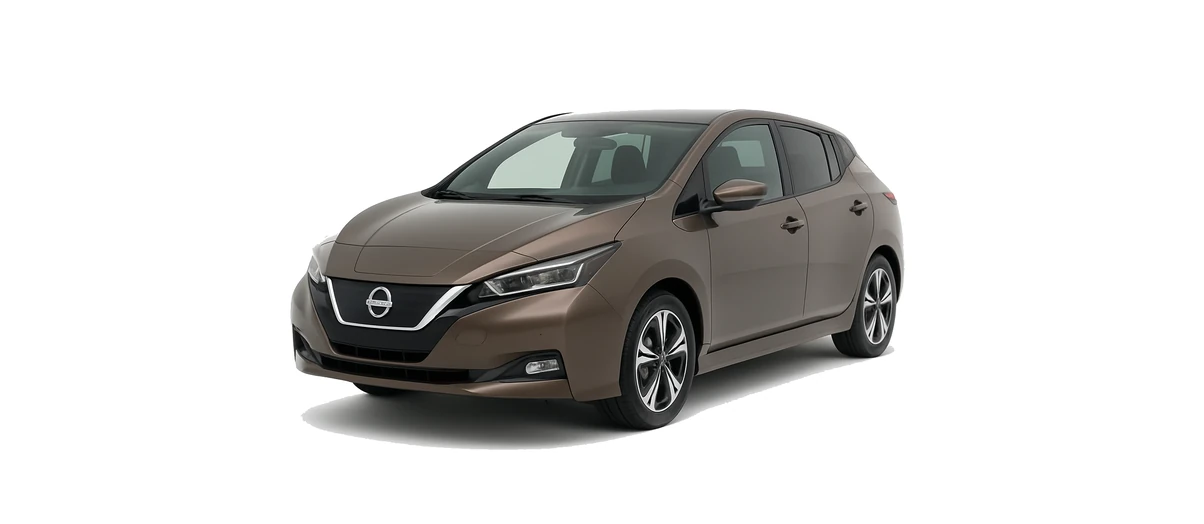
The All-New Nissan Leaf marks an important change for UK Leaf drivers. Earlier Nissan Leaf models are strongly associated with Type 1 or Type 2 AC charging depending on age and CHAdeMO DC rapid charging, but the new-generation Leaf uses the modern UK/EU combination of Type 2 for AC charging and CCS2 for DC rapid charging. That connector change is the key point to understand before choosing charging cables or planning public charging stops.
This guide focuses on the All-New Nissan Leaf covered by Nissan’s 2025 model-year technical material. It is a battery-electric vehicle only, not a plug-in hybrid, and is listed with 52 kWh Standard Range and 75 kWh Extended Range battery options in technical information. At the time of writing, the 75 kWh version is the clearly represented UK launch/configurable model, while the 52 kWh version should be checked for current UK ordering availability.
View Nissan Leaf Models From 2025 Charging Cables
Nissan Leaf Models From 2025 Battery and Charging Specifications
For cable selection, the most important specification is the charging port. UK and European All-New Nissan Leaf models use a Type 2 inlet for AC charging and CCS2 / CCS Combo 2 for DC rapid charging. This means you will use a Type 2 cable for untethered home wallboxes and many public AC charge points, while rapid chargers use their own tethered CCS cable.
- Vehicle type: battery-electric vehicle
- AC charging: up to 11 kW where the electrical supply and charger support it
- Typical UK home charging: often up to 7 kW / 7.4 kW on single-phase installations
- DC rapid charging: up to 105 kW on the 52 kWh version and up to 150 kW on the 75 kWh version, according to Nissan technical data
- AC connector: Type 2
- DC connector: CCS2, not CHAdeMO
Older Leaf warning: do not assume charging accessories for previous-generation Leaf models will suit the All-New Leaf. Many older UK Leaf models used CHAdeMO for DC rapid charging, whereas this generation uses CCS2. AC cable needs can also vary by generation, so always match the cable to the specific vehicle generation and charging inlet.
Battery Options
Nissan technical material lists two battery options for the All-New Leaf: a 52 kWh Standard Range version and a 75 kWh Extended Range version. The 75 kWh model is the main UK launch/configurable version currently highlighted by Nissan UK, while the 52 kWh model appears in technical specifications and third-party data but may be a later or availability-dependent option in the UK.
The 52 kWh Standard Range version is listed by Nissan with a WLTP range of up to 271 miles. EV Database UK estimates this pack at around 55.0 kWh nominal and 52.9 kWh usable, with an estimated real-world range of about 205 miles. Those real-world figures are estimates and will vary with weather, speed, driving style and load.
The 75 kWh Extended Range version is marketed by Nissan as the longer-range option, with Nissan UK quoting up to 386 miles WLTP for the 75 kWh Engage version. EV Database UK estimates the pack at around 79.0 kWh nominal and 75.1 kWh usable, with an estimated real-world range of about 285 miles. The WLTP figure is useful for comparing vehicles, but it should not be treated as a guaranteed day-to-day range.
AC Charging Speed
The All-New Nissan Leaf is listed with up to 11 kW AC charging. In practical UK terms, the speed you see will depend on the charge point and your electrical supply. An 11 kW AC charge normally requires a three-phase supply, which is common at some commercial premises but not typical for many UK homes.
Most UK domestic wallbox installations are single-phase and usually charge at up to around 7 kW or 7.4 kW. The car can accept more on AC where supported, but a single-phase home charger will be the limiting factor for many owners. Nissan quotes 10-100% AC charging in around 6 hours for the 52 kWh battery and around 7 hours for the 75 kWh battery under suitable 11 kW conditions. On a 7 kW / 7.4 kW home wallbox, charging from low to full will take longer.
For everyday use, you rarely need to charge from completely empty to 100%. Many drivers simply top up overnight, adding enough range for the next day while taking advantage of off-peak electricity tariffs if available.
DC Rapid Charging Speed
For longer journeys, the All-New Leaf’s move to CCS2 is a significant improvement in public charging compatibility. Most UK motorway and high-power rapid charging hubs are built around CCS, and the charger’s cable is attached to the unit, so you do not need to bring your own DC rapid charging cable.
Nissan technical data lists the 52 kWh version at up to 105 kW DC and the 75 kWh version at up to 150 kW DC. For the 75 kWh version, a later Nissan information pack states a 10-80% DC rapid charge in about 35 minutes under suitable conditions. Nissan sources also describe other charging windows, such as 15-80% or 20-80%, so it is important to compare like with like when reading charging-time claims.
Peak rapid charging power is not held for the whole charging session. The actual speed depends on battery temperature, the charger’s capability, state of charge, site load and other factors. Charging is usually fastest at a low-to-mid state of charge and slows as the battery fills, particularly above 80%.
Range and Efficiency
The headline range figure for the 75 kWh All-New Leaf is up to 386 miles WLTP, while the 52 kWh Standard Range version is listed at up to 271 miles WLTP. WLTP testing provides a standardised comparison figure, but real driving range can be lower, especially in cold weather, at motorway speeds, with a fully loaded car, or when using heating and accessories.
For planning purposes, drivers should think in terms of realistic journey buffers rather than using the full WLTP number. The 75 kWh version should suit longer trips more comfortably, while the 52 kWh version, where available, is likely to be aimed more at drivers with shorter regular journeys and convenient home or workplace charging.
Charging at Home
Home charging is usually the most convenient and cost-effective way to run an electric car. For the All-New Nissan Leaf, a dedicated Type 2 home wallbox is the normal solution. If the wallbox is tethered, it will have its own Type 2 cable attached. If it is untethered, you will need a separate Type 2 to Type 2 charging cable.
Although the car can accept up to 11 kW AC, many UK homes will be limited to around 7 kW / 7.4 kW because they have a single-phase supply. This is still very practical for overnight charging. For example, you may not recharge the whole 75 kWh battery from empty to full every night, but you can add a substantial amount of range during a typical overnight window.
A 3-pin charger is generally best suited as a backup or occasional charging solution, but can be used regularly if a qualified electrician has confirmed the socket and electrical installation are suitable for sustained EV charging. Standard domestic sockets were not designed with continuous high-load EV charging as their primary purpose, so condition, circuit protection and installation quality matter.
Public Charging
Public AC charging normally uses the same Type 2 standard as home charging. Some AC points are tethered, but many destination chargers at car parks, hotels, workplaces and town centres are untethered. For those, you need to carry a Type 2 cable.
For rapid and ultra-rapid charging, the All-New Leaf uses CCS2. This is where the new-generation Leaf differs most from older Leaf models. You should not buy CHAdeMO rapid-charging accessories for the All-New Leaf’s UK/EU DC charging, because the vehicle’s rapid-charging inlet is CCS2.
On longer journeys, plan stops around suitable CCS rapid chargers and do not rely solely on peak kW figures. A 150 kW-capable car can only charge at that rate if the charger, battery temperature and state of charge allow it. In many real sessions, average charging power is more important than the brief peak.
Vehicle-Specific Features
Nissan UK states that the All-New Leaf has a Battery Thermal Management System, intended to help with charging-temperature control. This is particularly relevant for repeated rapid charging or charging in hot or cold conditions.
Battery preconditioning is described by Nissan in connection with route planning and Google Maps, although feature availability can depend on grade, connected services and market specification. Where fitted and active, preconditioning can help prepare the battery before arriving at a rapid charger, improving the chance of a stronger charging session.
A heat pump is listed as available or fitted depending on grade information, so buyers should check the exact trim specification. A heat pump can improve cabin-heating efficiency in cooler weather, but it should not be assumed to be present on every version unless confirmed for that specific car.
Vehicle-to-load capability is also listed by Nissan UK, with output up to 3.1 kW, but availability is grade- and accessory-dependent. Nissan indicates that a V2L adaptor may be required at customer cost on some versions, while certain grades list a V2L connector as included. Current UK customer-facing information should be checked before relying on V2L for a specific use case. Vehicle-to-grid or vehicle-to-home support should not be assumed without a current Nissan UK confirmation and compatible equipment details.
Charging Tips
- Choose Type 2 for AC charging: the All-New Leaf uses Type 2 for home and public AC charging in the UK.
- Do not choose CHAdeMO for this generation: rapid charging is CCS2, unlike many older Leaf models.
- Match cable rating to your needs: an 11 kW-capable car may benefit from a three-phase Type 2 cable where three-phase AC charging is available, but many UK home users will charge on single-phase.
- Use rapid charging most efficiently: aim to arrive at a rapid charger with a low-to-mid battery level rather than nearly full.
- Do not chase 100% on rapid chargers: charging often slows significantly above 80%, so it is usually quicker on long journeys to continue driving and charge again later.
- Use route planning where fitted: battery preconditioning and route planning can help on longer journeys, depending on grade and service availability.
Frequently Asked Questions
Does the All-New Nissan Leaf use CHAdeMO?
No. UK/EU All-New Nissan Leaf models from this generation use CCS2 for DC rapid charging. CHAdeMO applies to many older Leaf models, not this new-generation version.
What charging cable do I need for the Nissan Leaf from 2025?
For AC charging, you need a Type 2 cable when using an untethered wallbox or untethered public AC charger. DC rapid chargers use their own tethered CCS2 cable, so you do not bring a separate rapid-charging cable.
Can the All-New Leaf charge at 11 kW at home?
The vehicle is listed with up to 11 kW AC charging, but 11 kW normally requires a three-phase supply. Many UK homes are single-phase and will typically charge at up to around 7 kW / 7.4 kW with a suitable wallbox.
How long does rapid charging take?
For the 75 kWh version, Nissan information gives a 10-80% DC rapid charging time of about 35 minutes under suitable conditions. Other Nissan materials use different charge windows, so always check the percentage range being quoted.
Is the 386-mile range a real-world guarantee?
No. The 386-mile figure is a WLTP comparability figure for the 75 kWh version. Real-world range varies with temperature, road speed, terrain, driving style, tyre condition and vehicle load.
What This Means for Drivers
The All-New Nissan Leaf is a major change from the Leaf many UK drivers already know. The key ownership point is simple: use Type 2 for AC charging and CCS2 for rapid charging. That makes the car easier to integrate with the modern UK public rapid charging network, but it also means buyers must avoid assuming older Leaf CHAdeMO accessories are suitable.
For most owners, a Type 2 home wallbox and a suitable Type 2 cable for untethered AC charge points will cover routine charging. The 75 kWh version offers the strongest range and rapid-charging capability, while the 52 kWh version, where available, may suit drivers with more local usage and regular charging access.
Looking for a Charging Cable for Nissan Leaf Models From 2025?
If you need a cable for the All-New Nissan Leaf, choose a Type 2 charging cable suitable for UK home and public AC charging, and make sure you are selecting for the CCS2-equipped new-generation model rather than an older CHAdeMO Leaf.
View Nissan Leaf Models From 2025 Charging Cables
Please note that this information is intended as a guide. Charging specifications may change due to model and year of manufacture. For precise information, always refer to your vehicle user manual.

