
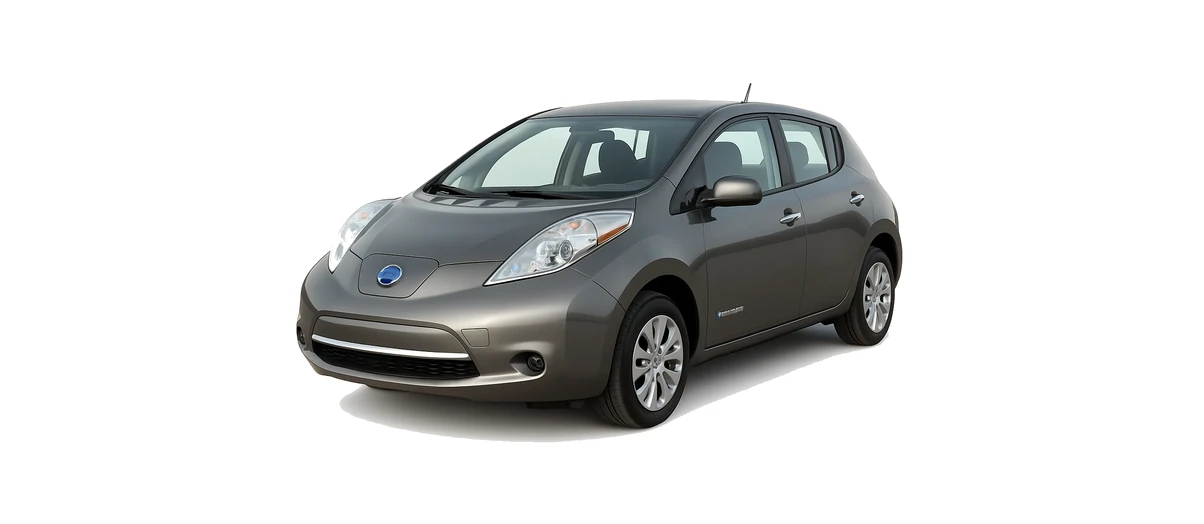
The first-generation Nissan Leaf is one of the most common used electric cars in the UK, but it is also one of the models where cable choice can cause confusion. This guide is for UK Nissan Leaf models up to 2017, covering the early ZE0 and AZE0 cars with Type 1 AC charging. It is not the same as the 2018-on second-generation Leaf, which uses a different AC connector in the UK and Europe.
For these pre-2018 Leafs, the key points are simple but important: the car is a pure battery-electric vehicle, AC charging uses a Type 1 inlet on the vehicle, rapid charging uses CHAdeMO rather than CCS, and the onboard AC charger may be either around 3.3 kW or 6.6 kW depending on model year, trim and options. Before buying a cable or planning regular charging, it is worth confirming the exact battery size and onboard charger fitted to the individual car.
View Nissan Leaf Charging Cables – Models To 2017 Charging Cables
Nissan Leaf Charging Cables – Models To 2017 Battery and Charging Specifications
UK Nissan Leaf models up to 2017 are 5-door electric hatchbacks. They were sold with 24 kWh and, later, 30 kWh battery options. Unlike later European-market Leafs, these cars use a Type 1 / SAE J1772 / Yazaki connector for AC charging. For DC rapid charging, they use a CHAdeMO connector, normally connected by a tethered cable at the rapid charger.
This distinction matters because many UK public AC charge points are untethered and provide a Type 2 socket. On those units, an early Leaf usually needs a Type 2-to-Type 1 cable. A Type 2-to-Type 2 cable, commonly used by newer EVs, will not fit the AC inlet on these pre-2018 UK Leafs.
Battery Options
There is no single battery size that applies to every Nissan Leaf built up to 2017. The main versions found in the UK used market are:
- 24 kWh MY11-13: early first-generation cars, with around 22 kWh usable capacity. EV Database gives a real-world range estimate of about 78 miles and an NEDC figure of about 109 miles.
- 24 kWh MY14-17 / UK-built facelift 24 kWh: later 24 kWh versions, again with around 22 kWh usable capacity. EV Database UK estimates around 80 miles of real-world range and lists an NEDC figure of about 124 miles.
- 30 kWh MY15-17: later first-generation cars with a larger battery, around 28 kWh usable. EV Database UK estimates about 105 miles of real-world range and lists an NEDC figure of about 155 miles.
These cars were generally published with NEDC figures rather than modern WLTP ratings, so it is best not to compare their official numbers directly with newer EVs. On used examples, battery health can also make a noticeable difference. When viewing a car, check the battery health bars or obtain a state-of-health reading where possible.
AC Charging Speed
AC charging speed is one of the most important details to check on a pre-2017 Leaf. Many cars have a 3.3 kW onboard AC charger. Some later cars and trims were available with a 6.6 kW onboard charger. The cable and charge point can only supply power up to the limit the car is able to accept, so a car with a 3.3 kW onboard charger will not charge at 7 kW simply because it is plugged into a 7 kW wallbox.
As a rough guide, EV Database lists 0-100% AC charging at around 8-10 hours for 3.3 kW versions. With the 6.6 kW charger, a 24 kWh Leaf may charge in roughly 4 hours, while a 30 kWh version may take around 5 hours under suitable conditions. Actual charging time depends on starting charge level, battery temperature, charger output and the vehicle’s condition.
For cable selection, a 16A Type 1 cable is usually sufficient for a 3.3 kW Leaf. A 32A Type 1 cable is useful if the car has the 6.6 kW onboard charger, because it allows the car to take advantage of a typical 7 kW home or workplace charge point. If you are unsure which onboard charger your car has, check the vehicle documentation, trim specification, previous sales paperwork or ask a Nissan specialist to confirm.
DC Rapid Charging Speed
Rapid charging on these Nissan Leaf models uses CHAdeMO, not CCS. This is a crucial difference when planning motorway or long-distance journeys, because many newer rapid chargers prioritise CCS. A CCS plug will not connect directly to a CHAdeMO-only Leaf.
The rapid charging capability is commonly listed at around 46-47 kW maximum, with EV Database giving around 28-29 minutes for a 10-80% charge under suitable conditions. Treat this as an approximate figure rather than a guarantee. Battery temperature, state of charge, the charger’s output, battery age and battery condition can all affect charging speed. Older or more degraded cars may charge more slowly, especially if the battery is cold, hot or already at a high state of charge.
Range and Efficiency
Real-world range for early Leafs varies more than many newer EVs because the cars are now older, battery sizes differ and battery health is a major factor. As a cautious guide, EV Database estimates around 78-80 miles for 24 kWh versions and around 105 miles for the 30 kWh version. In cold weather, at motorway speeds or with a reduced battery state of health, usable range may be lower.
For daily local driving, commuting and urban use, many owners still find these cars practical when charged at home or work. For longer trips, route planning matters. Check both distance and charger type, and make sure the planned rapid chargers actually have CHAdeMO connectors available.
Charging at Home
For most owners, home charging is the easiest and most predictable way to run a first-generation Leaf. If you have an untethered UK home charge point with a Type 2 socket, you will normally need a Type 2-to-Type 1 cable. If you have a tethered charge point, the fixed cable must have a Type 1 plug to connect to these models.
A 7 kW home charge point can be useful even if the Leaf itself has the 3.3 kW onboard charger, because the charge point may also serve future vehicles. However, the Leaf will only draw what its onboard charger allows. Owners of 6.6 kW-equipped cars should use a suitable 32A Type 1 cable if they want to make use of faster AC charging from a compatible wallbox.
A 3-pin charger is generally best suited as a backup or occasional charging solution, but can be used regularly if a qualified electrician has confirmed the socket and electrical installation are suitable for sustained EV charging. Avoid relying on old, damaged or heavily loaded sockets, and do not use unsuitable extension leads for EV charging.
Public Charging
Public charging for these Leafs is split into two main situations. For slower AC charging at destination chargers, car parks, hotels, workplaces and some town-centre locations, you will usually need your own Type 2-to-Type 1 cable if the post is untethered. These sessions are useful when the car will be parked for several hours.
For rapid charging, look specifically for CHAdeMO. The cable is normally attached to the rapid charger, so you do not usually bring your own rapid charging cable. Before setting off, check a live charging map or network app to confirm that the site has CHAdeMO, that it is working, and that it is not already occupied. As the UK rapid charging network increasingly focuses on CCS, this step is particularly important for CHAdeMO vehicles.
Vehicle-Specific Features
Some later mid- and top-trim UK Leafs, such as certain Acenta and Tekna versions from the 2013-on update period, were fitted with a heat-pump cabin heater. This can help reduce heating energy use compared with a conventional resistive heater in some conditions, but it is not universal across all 2011-2017 cars. Do not assume a specific used Leaf has a heat pump unless the trim and specification confirm it.
Battery preconditioning for rapid charging is not confirmed for these versions, and EV Database lists preconditioning as not possible for the relevant first-generation models. That means rapid charging performance may be more affected by battery temperature than on newer EVs with active preconditioning features.
Charging Tips
- Confirm the AC inlet: UK Leafs up to 2017 use Type 1 for AC charging. Later Leafs are different, so avoid buying a cable based only on the Leaf name.
- Check the onboard charger rating: a 32A cable is most useful for cars with the 6.6 kW onboard charger. A 3.3 kW car will not charge faster because of a higher-rated cable.
- Plan CHAdeMO stops carefully: not every rapid charging site supports CHAdeMO, and availability can vary by location.
- Allow for battery age: used Leafs can vary significantly in state of health, so range and charging behaviour may not match published estimates.
- Charge little and often where convenient: for local use, regular home or workplace top-ups are usually easier than relying on rapid charging.
Frequently Asked Questions
Does a Nissan Leaf up to 2017 use a Type 1 or Type 2 charging cable?
UK first-generation Nissan Leaf models up to 2017 use a Type 1 connector for AC charging. On an untethered UK public or home charge point with a Type 2 socket, you normally need a Type 2-to-Type 1 cable.
Can I use a Type 2-to-Type 2 cable with this Leaf?
No, not for the AC inlet on these pre-2018 UK cars. A Type 2-to-Type 2 cable is for vehicles with a Type 2 AC inlet, which applies to many newer EVs but not these early Leafs.
Do all pre-2017 Nissan Leafs charge at 6.6 kW?
No. Many have a 3.3 kW onboard AC charger, while 6.6 kW was optional or available on some later cars and trims. Check the individual car before choosing between a 16A and 32A Type 1 cable.
Does the first-generation Leaf use CCS for rapid charging?
No. UK first-generation Leafs use CHAdeMO for DC rapid charging. CCS rapid charger plugs will not connect directly to these cars.
What battery sizes were available?
The main UK first-generation versions used 24 kWh and 30 kWh battery packs. The 30 kWh version arrived later and generally offers a longer range, but used-vehicle battery health remains very important.
What This Means for Drivers
The most useful thing you can do as a pre-2017 Leaf owner or buyer is identify the exact charging setup of the car. Confirm that it is the Type 1 first-generation model, check whether it has the 3.3 kW or 6.6 kW onboard AC charger, and remember that rapid charging depends on CHAdeMO availability rather than CCS. With the right cable and realistic range planning, these early Leafs can still be practical electric cars for commuting, local journeys and low-cost everyday use.
Looking for a Charging Cable for Nissan Leaf Charging Cables – Models To 2017?
You can choose a suitable Type 1 charging cable for Nissan Leaf models up to 2017, including options for home, workplace and untethered public AC charging.
View Nissan Leaf Charging Cables – Models To 2017 Charging Cables
Please note that this information is intended as a guide. Charging specifications may change due to model and year of manufacture. For precise information, always refer to your vehicle user manual.

