
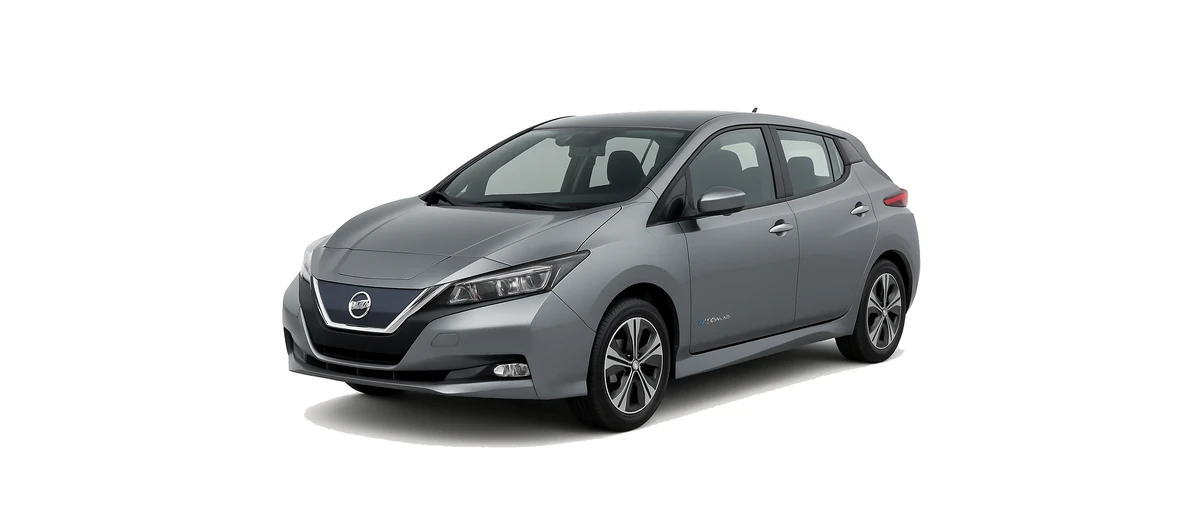
The second-generation Nissan Leaf, sold in the UK from 2018 to 2024, remains one of the most familiar used electric hatchbacks on the road. It is a full battery-electric vehicle, not a plug-in hybrid, and it uses two different charging connections: Type 2 for AC charging and CHAdeMO for DC rapid charging. This distinction is important because the cable you carry for home, workplace and many public AC charge points is not the same as the rapid-charge connector used on motorway and high-power public chargers.
For UK and European 2018-2024 Nissan Leaf models, the key cable choice is straightforward: a Type 2 to Type 2 charging cable is the correct option for most untethered AC charging. The car’s onboard AC charger is limited to 6.6 kW, so a standard 7 kW home wallbox is a good practical match. Faster-rated 11 kW or 22 kW AC posts can still be used where compatible, but they will not make the Leaf charge above its onboard AC limit.
View Nissan Leaf 2018 to 2024 Charging Cables
Nissan Leaf 2018 to 2024 Battery and Charging Specifications
The 2018-2024 UK Nissan Leaf is the ZE1 second-generation Leaf, a 5-door front-wheel-drive electric hatchback. It should not be confused with many older first-generation Leaf models, which often used Type 1 for AC charging, or with the later all-new generation. For this 2018-2024 guide, UK cars use a Type 2 AC inlet and a CHAdeMO DC rapid-charge inlet, both positioned under the front centre charging flap.
| Vehicle type | Battery-electric vehicle |
|---|---|
| AC charging connector | Type 2 |
| DC rapid charging connector | CHAdeMO |
| Maximum AC charging rate | 6.6 kW single-phase |
| Main battery options | 40 kWh gross / about 39 kWh usable, and e+ 62 kWh gross / about 59 kWh usable |
| Typical AC cable choice | Type 2 to Type 2, 32 A single-phase suitable for 7 kW charging |
Battery Options
There are two main battery versions to be aware of when looking at used UK examples. The standard Leaf uses a 40 kWh gross battery, with around 39 kWh usable capacity in later published data. This version was available across the 2018-2024 second-generation model period, including pre-facelift and facelift cars.
The larger-battery model is the Leaf e+, usually described as a 62 kWh version, with around 59 kWh usable capacity. Nissan owner material may refer to this as a 60 kWh battery model. It offers a longer official range and a longer charging time on AC because there is more battery capacity to refill.
When buying a used Leaf, it is worth confirming exactly which battery version you are looking at. Charging connector fitment is the same for AC cable selection, but range, charging duration and journey planning differ between the 40 kWh and e+ versions.
AC Charging Speed
For AC charging, the 2018-2024 Nissan Leaf uses a 6.6 kW single-phase onboard charger. This onboard charger is the limiting factor, not the rating printed on a faster public AC post. In practice, a 7 kW home wallbox is a very suitable match, and a 32 amp single-phase Type 2 to Type 2 cable is appropriate for making use of the car’s normal AC charging capability.
Approximate 0-100% AC charging times are around 7 hours for the 39 kWh usable battery and around 10 hours 45 minutes for the 59 kWh usable e+ battery when using a suitable 7 kW wallbox. Real charging times can vary depending on the starting battery level, temperature, charge point output and the car’s own charging management.
A three-phase 11 kW or 22 kW Type 2 cable is not needed to make the Leaf charge faster, because the car does not accept 11 kW or 22 kW AC charging. It may still work as a cable if correctly rated and compatible, but it does not unlock extra AC speed on this model.
DC Rapid Charging Speed
For rapid charging, the 2018-2024 Nissan Leaf uses CHAdeMO rather than CCS. This is one of the most important practical differences between the Leaf and many newer electric cars in the UK. CCS has become the more common rapid connector on newer EVs, so Leaf drivers should check that a planned rapid charging site has a CHAdeMO connector before relying on it.
You do not normally buy or carry a separate CHAdeMO cable for public rapid charging. CHAdeMO rapid chargers use a thick tethered cable attached to the charging unit. Your own Type 2 cable is for AC charging at home, work and untethered public posts, not for DC rapid charging.
Charging performance varies by battery version and conditions. For 40 kWh cars, published data indicates rapid charging from 10-80% in roughly 43 minutes, with Nissan owner information describing 40 kWh models as limited to 50 kW on quick chargers. For e+ cars, Nissan owner information says 60 kWh battery models can use compatible public quick chargers up to 100 kW, while independent charging data often records lower typical average charging power during a 10-80% session, with around 59 minutes quoted for the larger battery. In everyday use, temperature, state of charge and charger capability all matter.
Range and Efficiency
Official WLTP range depends on the battery version and model year. For the 40 kWh Leaf, UK figures are broadly in the region of 168 to 177 miles WLTP depending on version and test configuration. Real-world range is usually lower than the headline WLTP figure and will vary with speed, weather, tyre condition, driving style and cabin heating or air-conditioning use.
The Leaf e+ offers a longer official range. Published WLTP figures for the 62 kWh e+ are broadly in the 239 to 247 mile range depending on model year and configuration, with real-world estimates commonly lower than that. The larger battery makes the e+ more flexible for longer trips, but it also takes longer to refill on AC when starting from a low state of charge.
As with any used EV, battery condition matters. If you are buying a used 2018-2024 Leaf, check the car’s history, battery state of health where available, charging behaviour and whether the displayed range seems consistent with the vehicle’s age, mileage and battery version.
Charging at Home
Home charging is usually the most convenient and cost-effective way to run a Nissan Leaf. A 7 kW single-phase wallbox suits the Leaf’s 6.6 kW onboard charger well, allowing the standard battery to recharge overnight and the e+ to recover a substantial amount of range during a typical evening-to-morning charging window.
If your home wallbox is untethered, you will need a Type 2 to Type 2 charging cable. A 32 A single-phase cable is the practical match for the Leaf’s AC charging capability. If your wallbox is tethered and already has a Type 2 plug, you can connect that directly to the car without using a separate cable.
A 3-pin charger is generally best suited as a backup or occasional charging solution, but can be used regularly if a qualified electrician has confirmed the socket and electrical installation are suitable for sustained EV charging. Domestic sockets were not originally designed around long, high-load EV charging sessions, so the condition of the socket, wiring and circuit protection should not be assumed.
Public Charging
For public AC charging at destinations such as car parks, hotels, supermarkets and workplaces, the Leaf uses its Type 2 inlet. Many slower and fast public AC posts in the UK are untethered, meaning you need to bring your own Type 2 to Type 2 cable. These chargers are useful for adding range while the car is parked for a few hours.
For rapid charging on longer journeys, look for CHAdeMO availability. The rapid charger’s tethered CHAdeMO plug connects to the Leaf’s separate DC inlet under the front flap. Because CHAdeMO is less common than CCS at some newer charging hubs, it is sensible to check live charger information before setting off, particularly on routes you do not know well.
Successive rapid charges, high battery temperature or very cold conditions can lengthen charging times. Nissan’s charging safeguards may reduce power to protect the battery. This is especially relevant on long-distance trips with multiple rapid stops, where the car may not always accept its best possible charging rate.
Vehicle-Specific Features
The Leaf’s front-mounted charging flap is convenient for nose-in parking at many charge points. Under that flap are two separate inlets: Type 2 for AC and CHAdeMO for DC rapid charging. This layout can be useful, but it also means drivers new to the Leaf should understand which connector is used for which type of charger.
Heat pump availability depends on version. Published data lists the heat pump as optional on 40 kWh versions and standard on e+ versions, so it should not be assumed on every used car. A heat pump, where fitted, can help reduce heating energy use in colder conditions, but actual winter range still depends on temperature, route and driving style.
Battery preconditioning for rapid charging is not listed as available for these models, so the Leaf should not be treated like newer EVs that actively prepare the battery based on navigation to a charger. Charging speed can therefore be more sensitive to battery temperature.
Vehicle-to-home and vehicle-to-grid capability is associated with the Leaf’s CHAdeMO/V2X ecosystem, but this requires compatible external equipment and is not a normal function of a Type 2 cable, CHAdeMO rapid lead or 3-pin charger. Vehicle-to-load household socket functionality is not supported on these models.
Charging Tips
- Carry the right AC cable: for UK 2018-2024 Leaf models, that means Type 2 to Type 2 for untethered home and public AC charging.
- Do not expect 22 kW AC charging: the Leaf’s onboard AC charger is limited to 6.6 kW.
- Plan CHAdeMO rapid stops: the Leaf does not use CCS, so confirm CHAdeMO availability before longer journeys.
- Use rapid charging thoughtfully: repeated rapid sessions and hot or cold battery conditions can slow charging.
- Check the battery version: 40 kWh and e+ models have different range and charging-time expectations.
- For used cars, check battery health: age, mileage, charging history and state of health can affect real-world usability.
Frequently Asked Questions
What charging cable does a 2018-2024 Nissan Leaf need?
For UK and European second-generation Nissan Leaf models from 2018 to 2024, the usual AC charging cable is a Type 2 to Type 2 cable. A 32 A single-phase cable is suitable for using the car’s 6.6 kW onboard charger on a 7 kW wallbox or compatible public AC post.
Does the 2018-2024 Nissan Leaf use Type 1 or Type 2?
The UK second-generation Leaf covered here uses Type 2 for AC charging. This is different from many older first-generation Leaf models, which are often associated with Type 1 AC charging.
Does the Nissan Leaf use CCS rapid charging?
No. The 2018-2024 UK Nissan Leaf uses CHAdeMO for DC rapid charging, not CCS. Rapid CHAdeMO chargers normally have a tethered cable attached to the charging unit.
Will an 11 kW or 22 kW charger make the Leaf charge faster?
No. The car’s onboard AC charger is limited to 6.6 kW, so it will not charge at 11 kW or 22 kW AC even if the public post or cable is rated higher.
How long does the Nissan Leaf take to charge at home?
On a suitable 7 kW wallbox, the 39 kWh usable battery version takes roughly 7 hours from empty to full. The 59 kWh usable e+ version takes roughly 10 hours 45 minutes. Many day-to-day top-ups will be shorter because drivers rarely charge from completely empty.
What This Means for Drivers
The 2018-2024 Nissan Leaf is simple to live with once you separate AC and DC charging in your mind. For home, workplace and many destination chargers, you need Type 2 AC charging and the car will charge at up to 6.6 kW. For rapid charging, you need to find a CHAdeMO-equipped charger and use the tethered connector on the rapid unit.
The main planning point is that the Leaf’s rapid connector is different from the CCS connector used by many newer EVs. That does not prevent longer journeys, but it does mean route planning is more important. For daily use, a 7 kW home wallbox and the correct Type 2 cable make the Leaf a practical electric hatchback, especially when charging overnight on a suitable tariff.
Looking for a Charging Cable for Nissan Leaf 2018 to 2024?
If you need a suitable Type 2 charging cable for a UK second-generation Nissan Leaf, We can help you choose a cable for home, workplace and untethered public AC charging.
View Nissan Leaf 2018 to 2024 Charging Cables
Please note that this information is intended as a guide. Charging specifications may change due to model and year of manufacture. For precise information, always refer to your vehicle user manual.

