
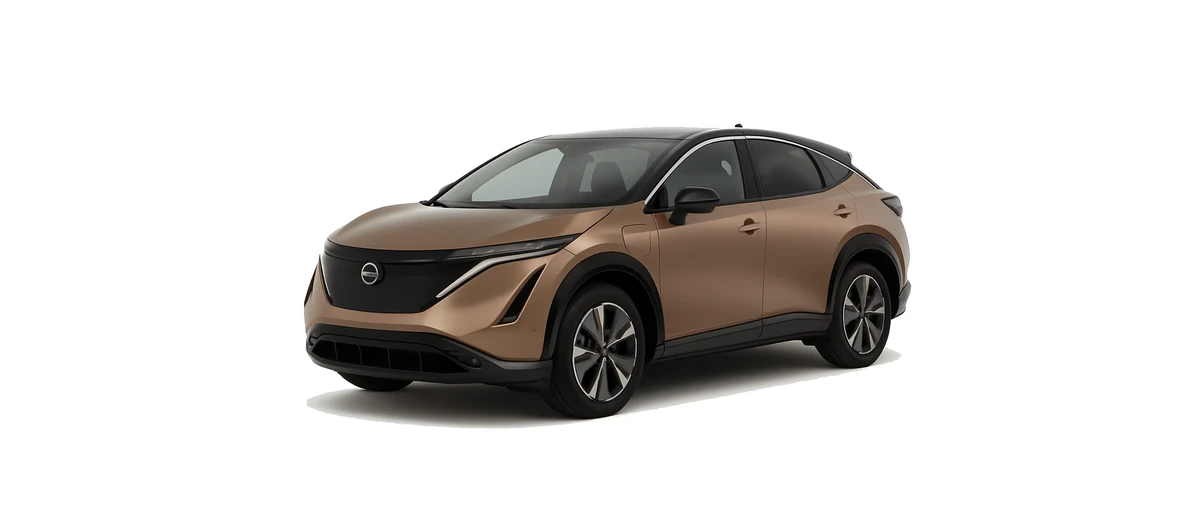
The Nissan Ariya is a 5-seat electric SUV/crossover and a battery-electric vehicle, so charging is central to day-to-day ownership. For UK drivers, the key point is that not every Ariya has the same charging capability. Current UK retail information lists 63 kWh and 87 kWh usable battery options, with AC charging capability varying by version and model year.
Before choosing a charging cable or estimating charging times, it is worth identifying the exact Ariya you have or are buying. Current 63 kWh UK variants are shown with 7.4 kW AC charging in Nissan’s live specification tables, while current 87 kWh variants are shown with 22 kW AC charging. However, most UK homes are single-phase, so even an Ariya capable of 22 kW AC will usually charge at up to around 7.4 kW at home unless you have a suitable three-phase supply and charge point.
View Nissan Ariya Charging Cables
Nissan Ariya Battery and Charging Specifications
UK and European sources identify the Nissan Ariya charging connections as Type 2 for AC charging and CCS Combo 2 for DC rapid charging. In practical terms, this means a Type 2 cable is used for untethered home wallboxes and many public AC charge points, while rapid chargers use the larger CCS connector attached to the charging unit itself.
Current UK Ariya models support DC rapid charging at up to 130 kW, depending on battery temperature, state of charge, charger capability and other conditions. Nissan also lists a liquid-cooled and heated battery system, with a heat pump shown as standard in UK equipment information. Battery heating and pre-conditioning functions can help the car prepare for charging in some conditions, although charging performance will still vary in cold weather, hot weather or after repeated rapid charging.
Battery Options
The current UK Ariya range is listed with two main usable battery capacities: 63 kWh and 87 kWh. The 63 kWh battery has a gross capacity of around 66 kWh and is offered on current 2WD variants. Nissan lists WLTP combined range of up to 250 miles for the 63 kWh Advance, while EV Database estimates real-world range at around 205 miles.
The larger 87 kWh usable battery has a gross capacity of around 91 kWh. In the most range-focused current 2WD form, Nissan lists WLTP combined range of up to 329 miles, while EV Database estimates real-world range at around 275 miles for the 87 kWh front-wheel-drive version. e-4ORCE all-wheel-drive and Nismo versions use the 87 kWh usable pack but have lower official range figures than the longest-range 2WD model.
This distinction matters because battery size affects charging time, likely daily charging behaviour and how often you will need to use rapid charging on long journeys. A larger battery can go further between charges, but it also takes longer to refill from a low state of charge when using the same AC charging power.
AC Charging Speed
AC charging is the type of charging most owners use at home and at many workplace or destination charge points. The Nissan Ariya uses a Type 2 inlet for AC charging. A Mode 3 Type 2 cable is therefore the normal cable choice for UK public AC charging and for untethered home charge points.
The important Ariya-specific detail is the onboard charger. Current UK specification tables show 63 kWh Ariya variants with 7.4 kW AC charging as standard, while current 87 kWh variants are shown with 22 kW AC charging. Some brochure notes indicate 22 kW AC may be optional on certain 63 kWh versions, so owners should confirm the exact vehicle specification rather than assuming all cars are the same.
A 22 kW AC Ariya can only make full use of that speed when connected to a compatible three-phase AC charge point and supply. This is more common at workplaces, commercial premises and some public destination chargers than at homes. Most UK domestic wallboxes are single-phase and typically charge at up to around 7.4 kW, even if the car itself is capable of accepting more on three-phase AC.
DC Rapid Charging Speed
For longer journeys, the Ariya uses CCS Combo 2 DC rapid charging. The DC connector is tethered to the rapid charger, so you do not need to carry a separate DC charging cable. You simply plug the charger’s CCS connector into the Ariya’s charging port.
Current UK specifications list up to 130 kW DC rapid charging. In real use, the maximum figure is not held for the whole session. Rapid charging normally follows a curve: the car may charge quickly at a lower state of charge, then slow down as the battery fills. EV Database estimates around 48 minutes for a 10-80% DC rapid charge on the 87 kWh Ariya, with the 63 kWh version estimated at a shorter time. Actual results depend heavily on charger output, ambient temperature, battery temperature and starting state of charge.
On a journey, it is usually more efficient to plan rapid charging stops around the 10-80% or 20-80% window rather than charging to 100% every time. The final part of the battery is typically slower to charge, so stopping a session at around 80% can often reduce overall journey time.
Range and Efficiency
The headline WLTP range for the current UK Ariya is up to 329 miles on the 87 kWh Advance 2WD model. That should not be treated as a universal figure for every Ariya. The 63 kWh version, e-4ORCE all-wheel-drive models and Ariya Nismo versions have lower official figures.
Real-world range will vary with speed, weather, wheel and tyre specification, cabin heating or cooling, driving style and load. EV Database estimates around 205 miles for the 63 kWh Ariya and around 275 miles for the 87 kWh front-wheel-drive Ariya. In winter, motorway range can be lower than in mild weather, particularly if the battery is cold and the cabin heater is working hard.
The standard heat pump helps improve efficiency when heating the cabin compared with more energy-intensive heating methods, but it does not make the car immune to seasonal range changes. As with most EVs, pre-warming the cabin while plugged in can help preserve battery energy before a cold journey.
Charging at Home
For most Ariya owners, a dedicated home wallbox is the most convenient charging method. Plugging in overnight or during cheaper electricity periods means the car can start each day with the level of charge you need. A single-phase 7.4 kW home wallbox is the most common UK setup and will suit many owners, including those with a 22 kW-capable 87 kWh Ariya, because the home supply is usually the limiting factor.
A 63 kWh Ariya on a 7.4 kW home wallbox can usually be replenished comfortably overnight from a typical daily-use state of charge. The 87 kWh model has a larger battery, so a very low-to-full charge will take longer, but most drivers do not arrive home empty or need to charge to 100% every night. Setting a sensible charge limit for regular use can also help avoid unnecessary time spent at high battery state of charge.
A 3-pin charger is generally best suited as a backup or occasional charging solution, but can be used regularly if a qualified electrician has confirmed the socket and electrical installation are suitable for sustained EV charging. Because the Ariya has a relatively large battery, a 3-pin socket will be much slower than a dedicated wallbox and is not usually the most convenient everyday option.
Public Charging
Public charging for the Ariya falls into two broad categories: AC destination charging and DC rapid charging. AC destination chargers are often found in car parks, hotels, shopping centres, workplaces and leisure venues. Some are tethered, but many require you to bring your own Type 2 charging cable.
If you have an 87 kWh Ariya with 22 kW AC capability, three-phase public AC chargers can be especially useful because they may provide a faster top-up than a typical single-phase home wallbox. If you have a 63 kWh Ariya with 7.4 kW AC charging, the car will not charge faster just because the AC post can supply 22 kW; the vehicle’s onboard charger determines the AC rate it can accept.
For motorway and A-road journeys, CCS rapid chargers are the preferred option. You do not need to buy a CCS cable because the cable is part of the charger. Choose chargers with enough output to make good use of the Ariya’s rapid-charging capability, but remember that charger availability, battery temperature and state of charge can all affect the result.
Vehicle-Specific Features
The Ariya is built on Nissan’s dedicated electric vehicle platform and is specified with a liquid-cooled and heated battery system in UK information. This is relevant because battery temperature has a significant effect on charging speed, especially at rapid chargers. A cold battery may charge more slowly until it warms up, while very hot conditions or repeated rapid charging sessions can also reduce charging performance.
UK equipment information lists a heat pump as standard, which is useful for efficiency in colder weather. Battery pre-conditioning is also referenced in relation to Ariya charging and thermal management, although owners should check the exact operation in their vehicle handbook and infotainment system because features can vary by model year and software version.
Nissan has announced a MY2026 UK update with revised styling, Google built-in, reported V2L capability and an 11 kW bidirectional onboard charger, with first deliveries reported for September 2026. These details should be treated as model-year-specific until confirmed in the latest Nissan UK retail specification tables for the exact car. They should not be assumed to apply to current or used pre-facelift Ariya models.
Charging Tips
- Check your battery size: 63 kWh and 87 kWh Ariya models have different range and charging-time expectations.
- Confirm your AC capability: Current UK 63 kWh cars are generally listed at 7.4 kW AC, while current 87 kWh cars are listed at 22 kW AC.
- Do not assume 22 kW at home: most UK homes are single-phase and will charge at up to around 7.4 kW with a suitable wallbox.
- Carry a Type 2 cable: it is the most useful owner-supplied cable for untethered home, workplace and public AC charging.
- Use CCS for long journeys: rapid chargers have tethered CCS connectors, so no separate DC cable is required.
- Plan rapid stops sensibly: charging from around 10-80% is usually more time-efficient than waiting for 100% on a trip.
- Prepare in cold weather: use available battery heating or pre-conditioning functions where appropriate and allow for slower charging in low temperatures.
Frequently Asked Questions
What charging cable does the Nissan Ariya use?
The Nissan Ariya uses a Type 2 connection for AC charging. For UK public AC charge points and untethered home wallboxes, a Type 2 charging cable is the normal cable to carry.
Does the Nissan Ariya use CCS rapid charging?
Yes. UK and European Ariya models use CCS Combo 2 for DC rapid charging. The cable is attached to the rapid charger, so owners do not need to carry a separate CCS cable.
Do all Nissan Ariya versions charge at 22 kW AC?
No. Current UK specification information is variant-dependent. 63 kWh models are shown with 7.4 kW AC charging in live UK specifications, while current 87 kWh variants are shown with 22 kW AC. Always check the exact car’s specification.
Can I use a 22 kW cable with a 7.4 kW Ariya?
Yes, a suitable Type 2 cable rated for 22 kW can be used for lower-power AC charging as well, provided it is compatible with the charge point and vehicle. The car will only draw what it can accept and what the charger can supply.
Is the Nissan Ariya a hybrid or plug-in hybrid?
No. In the UK sources checked, the Nissan Ariya is a battery-electric vehicle, not a plug-in hybrid, range extender or petrol-assisted EV.
What This Means for Drivers
The Nissan Ariya is straightforward to charge once you know which version you have. The main ownership decision is not whether it uses Type 2 and CCS, because that is clear, but whether your car has the 63 kWh or 87 kWh battery and what AC onboard charger is fitted. That determines whether 22 kW public AC charging is useful to you and how realistic your charging-time expectations should be.
For most UK owners, a Type 2 cable and a 7.4 kW home wallbox will cover the majority of charging needs. Drivers with an 87 kWh Ariya and access to three-phase AC charging may benefit from the car’s higher AC capability, while all Ariya drivers can use CCS rapid charging for longer trips. If you are considering a MY2026 car, check the latest UK specification carefully, as the announced charging and V2L updates may differ from current outgoing models.
Looking for a Charging Cable for Nissan Ariya?
We offer charging cables suitable for the Nissan Ariya, including Type 2 options for home and public AC charging. Choose the right cable for your Ariya version, charge point and expected charging use.
View Nissan Ariya Charging Cables
Please note that this information is intended as a guide. Charging specifications may change due to model and year of manufacture. For precise information, always refer to your vehicle user manual.

