
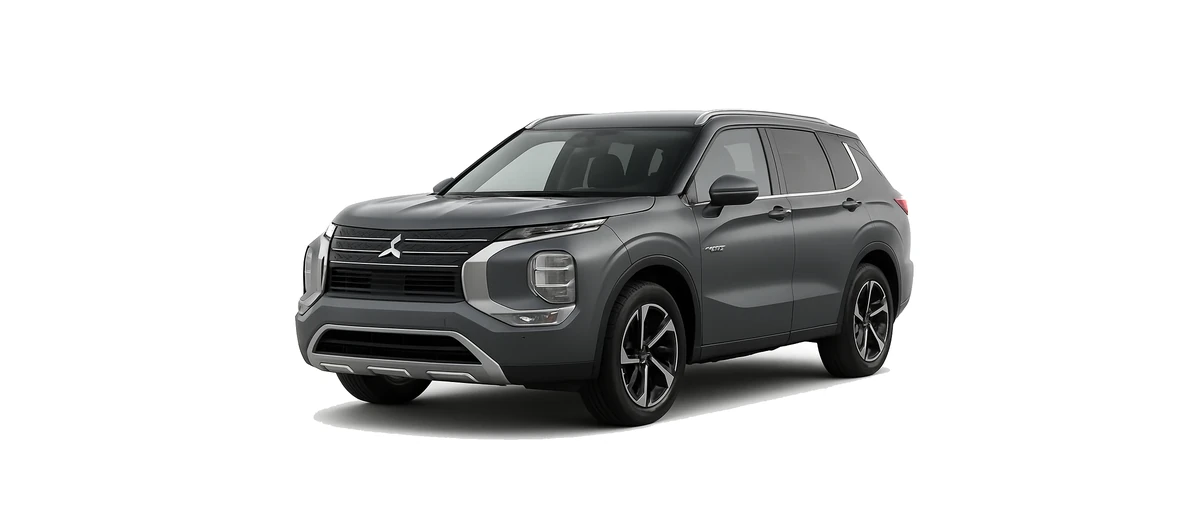
The Mitsubishi Outlander is best known in the UK as the Outlander PHEV: a plug-in hybrid SUV that can run on electric power for local journeys while still having a petrol engine for longer trips. That makes charging habits slightly different from a pure electric car. Most owners will get the greatest benefit by charging little and often at home, then using petrol or public charging only when it suits the journey.
There is one particularly important point with the Outlander PHEV: you should check the charging socket before buying a cable. The current all-new UK/EU Outlander PHEV uses Type 2 AC charging and CHAdeMO rapid charging. However, many older UK Outlander PHEV models from the 2013-2021 era may use a Type 1 AC inlet instead, usually paired with CHAdeMO for DC rapid charging. A Type 2 cable for a new car will not necessarily be correct for a used earlier car.
This guide explains how home charging, public charging and cable selection work for the Mitsubishi Outlander PHEV, with separate guidance for the current 2026 model and older used examples.
View Mitsubishi Outlander Charging Cables
Mitsubishi Outlander Battery and Charging Specifications
As of June 2026, Mitsubishi UK lists the all-new Outlander PHEV for the UK market in Nativa and Diamond trims, with UK deliveries announced for May 2026. It is a plug-in hybrid, not a fully electric vehicle. The current model combines a 2.4-litre petrol engine with front and rear electric motors and a plug-in lithium-ion traction battery.
For the current UK/EU generation, official European technical data lists a 22.7 kWh lithium-ion drive battery. Mitsubishi UK quotes up to 53 miles of all-electric range, although real-world electric range will vary with temperature, driving speed, route, tyre condition, load and how often the petrol engine is required.
Charging information for the current EU specification points to normal AC charging at 230 V / 16 A, taking about 6.5 hours to reach 100%. In practical terms, that means an AC charging rate of roughly 3.7 kW single-phase. The current model is also unusual among plug-in hybrids because it supports CHAdeMO DC rapid charging, with official material referring to charging to 80% in about 32 minutes on a suitable rapid supply.
Older UK Outlander PHEV models need separate treatment. Late previous-generation UK cars commonly used a 13.8 kWh battery and were quoted at around 28 miles WLTP Equivalent All Electric Range. Earlier pre-facelift versions may differ again, so check the year, trim and physical charging inlet before choosing a cable.
Battery Options
For the current all-new Outlander PHEV, European Mitsubishi technical data lists a 22.7 kWh gross battery capacity. The usable capacity is not clearly stated in the research data, so it is better to treat the published figure as the overall battery specification rather than assuming a specific usable amount.
For late 2018-2021-era UK Outlander PHEV examples, older specification data lists a 13.8 kWh lithium-ion traction battery. These cars were built to a different specification from the current all-new model, so the newer 22.7 kWh battery and 53-mile electric range should not be applied to them.
If you are buying a used Outlander PHEV, the battery size, electric range and cable requirement can vary by model year. The safest approach is to check the vehicle’s handbook, charging flap labels and actual inlet shape before purchasing charging accessories.
AC Charging Speed
The current UK/EU Outlander PHEV should be treated as a Type 2 AC vehicle. Its onboard AC charging capability is around 230 V / 16 A, or approximately 3.7 kW. On a suitable home charge point or public AC post, a full charge is quoted at around 6.5 hours.
This also means that a higher-rated cable will not make the car charge faster. For example, using a 7 kW, 11 kW or 22 kW capable cable does not override the car’s onboard charger. The vehicle will still draw only what it is designed to accept, which for the current EU data is about 16 A single-phase AC.
However, buying a higher-rated cable can still be reasonable for durability, future vehicle compatibility or use with other EVs in the household. It simply should not be expected to reduce the Outlander PHEV’s AC charge time.
For older UK Outlander PHEV models, the important issue is not only speed but connector type. Many earlier cars use a Type 1 vehicle inlet for AC charging. When using an untethered UK public AC charger, these cars typically need a Type 2-to-Type 1 cable. Current Type 2-to-Type 2 guidance should not be applied automatically to every Outlander PHEV.
DC Rapid Charging Speed
The current all-new Outlander PHEV uses CHAdeMO for DC rapid charging, according to Mitsubishi European material. Mitsubishi UK refers to a 32-minute 0-80% charging time on a 105 A rapid supply. European technical literature also refers to charging to 80% in about 32 minutes.
CHAdeMO is worth understanding because it is less common on newer UK rapid chargers than CCS. Many modern rapid charging hubs prioritise CCS, and some sites may have only one CHAdeMO connector or none at all. This does not usually matter for day-to-day ownership, because the Outlander PHEV is best suited to regular AC charging at home or work, but it may affect route planning if you intend to use rapid charging on longer journeys.
You do not need to buy a separate cable for DC rapid charging. CHAdeMO rapid chargers have a tethered cable attached to the charging unit. Your own cable is for AC charging, such as home wallboxes and untethered public AC posts.
Range and Efficiency
Mitsubishi UK quotes up to 53 miles of all-electric range for the current all-new Outlander PHEV. For many owners, that is enough for school runs, commuting, shopping and local journeys without using much petrol, provided the vehicle is plugged in regularly.
As with any plug-in hybrid, the real running cost depends heavily on charging discipline. If you charge at home overnight and start most local journeys with a full battery, the Outlander PHEV can cover a large share of everyday driving electrically. If you rarely plug it in, it will behave more like a petrol hybrid carrying a larger battery, and fuel consumption will be less favourable.
Older Outlander PHEV models have shorter electric ranges. Late previous-generation UK cars are commonly associated with a 13.8 kWh battery and around 28 miles WLTP Equivalent All Electric Range. This can still be very useful for local trips, but it is not the same as the current model’s official electric range.
Charging at Home
Home charging is the most convenient way to run an Outlander PHEV efficiently. Because the current model’s AC charging limit is around 3.7 kW, it does not need an especially high-powered home setup to achieve a full overnight charge. A dedicated home charge point is normally the most practical option, especially if you can make use of an off-peak electricity tariff.
For the current all-new Outlander PHEV, a Type 2 cable is the relevant AC cable type when using untethered home or public AC charging equipment. If your home charge point is tethered, the attached cable must also match the car’s Type 2 inlet.
A 3-pin charger is generally best suited as a backup or occasional charging solution, but can be used regularly if a qualified electrician has confirmed the socket and electrical installation are suitable for sustained EV charging. Standard domestic sockets were not all installed with long-duration EV charging in mind, so do not assume any convenient socket is automatically suitable.
For older Outlander PHEV owners, home charging depends on the inlet fitted to the vehicle. If the car has a Type 1 AC inlet, a tethered Type 2 home charger will not plug directly into it unless the charger has the correct connector arrangement. Many owners of older models use a suitable Type 1 charging cable or a charger fitted with the correct Type 1 vehicle connector.
Public Charging
Public charging for the Outlander PHEV falls into two categories: AC destination charging and CHAdeMO DC rapid charging.
AC destination charging is useful when the car will be parked for several hours, such as at a workplace, hotel, leisure centre or town-centre car park. For the current model, you will normally use a Type 2-to-Type 2 Mode 3 cable on untethered AC posts. The car will charge at its own AC limit, so even if the post is rated at 7 kW, 11 kW or 22 kW, the Outlander PHEV will not necessarily use the full output.
For older used Outlander PHEV models with a Type 1 AC inlet, the typical public charging cable is Type 2-to-Type 1. The charge point end is Type 2 because that is the common UK public AC socket, while the vehicle end must match the older car’s Type 1 inlet.
CHAdeMO rapid charging can be useful if you want to add electric range during a longer trip, but it is not essential for normal Outlander PHEV ownership. Availability varies, and CCS is now more widely supported on many new UK rapid chargers. Before relying on CHAdeMO, check the charging network app to confirm the connector is present and working.
Vehicle-Specific Features
The current Outlander PHEV has several features that are relevant to EV-style use. Mitsubishi Europe material confirms a heat pump system on the new Outlander PHEV, which can help manage cabin heating more efficiently than relying solely on resistive heating in suitable conditions.
European material also refers to V2H compatibility, although UK hardware, wallbox compatibility, installation requirements and trim availability should be checked carefully before assuming this feature can be used at home. It should not be treated as a universal plug-and-play capability.
Benelux specification material lists trim-dependent 230 V / 1,500 W AC outlet functionality, which is a form of onboard power supply often discussed as V2L-style use. However, UK trim availability should be verified before buying the car or planning to rely on this feature for camping, tools or emergency power.
No reliable UK-market confirmation was found for battery preconditioning, so it is best not to assume this is fitted.
Charging Tips
- Check the socket first: current UK/EU cars use Type 2 AC, but many older UK Outlander PHEVs may use Type 1 AC.
- Do not overbuy for speed: a higher-rated AC cable will not make the current Outlander PHEV charge faster than its onboard AC limit of roughly 3.7 kW.
- Use home charging regularly: a PHEV gives the best savings when it starts local journeys with a charged battery.
- Plan CHAdeMO stops: CHAdeMO can be useful, but it is less common than CCS on newer UK rapid chargers.
- Separate new and used specifications: do not apply the current 22.7 kWh battery and 53-mile electric range to older 2013-2021-era vehicles.
- Keep the right cable in the boot: this is especially important for used cars, where Type 1 and Type 2 compatibility can be confused.
Frequently Asked Questions
Is the Mitsubishi Outlander a fully electric car?
No. The UK vehicle covered here is the Mitsubishi Outlander PHEV, a plug-in hybrid. It can drive on electric power for local journeys, but it also has a petrol engine.
What charging cable does the current Mitsubishi Outlander PHEV need?
The current all-new UK/EU Outlander PHEV should use a Type 2 Mode 3 cable for AC charging on untethered home or public charge points.
Do all Outlander PHEVs use Type 2?
No. This is the key compatibility warning. Many older UK Outlander PHEV models may use a Type 1 AC vehicle inlet, usually requiring a Type 2-to-Type 1 cable for public AC charging.
Will a 22 kW cable charge the Outlander PHEV faster?
Not on the current model’s known AC specification. The car’s onboard AC limit is around 3.7 kW, so a higher-rated cable does not increase the vehicle’s maximum AC charging speed.
Does the Outlander PHEV use CCS rapid charging?
Current reliable European material identifies CHAdeMO for DC rapid charging, not CCS. CHAdeMO rapid chargers have tethered cables, so you do not buy a separate DC cable.
How long does the current Outlander PHEV take to charge?
European technical data indicates about 6.5 hours to charge to 100% on 230 V / 16 A AC. Mitsubishi material also refers to charging to 80% in about 32 minutes using a suitable CHAdeMO rapid supply.
What This Means for Drivers
The Mitsubishi Outlander PHEV is straightforward to live with once you identify the correct charging inlet. For the current all-new model, choose Type 2 for AC charging and remember that the car’s roughly 3.7 kW onboard AC limit determines charging speed. For older used cars, check carefully for a Type 1 inlet before ordering a cable.
Because it is a plug-in hybrid, the Outlander PHEV rewards consistent charging rather than occasional rapid charging. Plugging in overnight, using workplace AC charging where available and keeping the correct cable in the vehicle will usually deliver the best ownership experience.
Looking for a Charging Cable for Mitsubishi Outlander?
We offer Mitsubishi Outlander charging cables for both current Type 2-equipped models and older vehicles that may require Type 1 compatibility, so check your vehicle inlet before ordering.
View Mitsubishi Outlander Charging Cables
Please note that this information is intended as a guide. Charging specifications may change due to model and year of manufacture. For precise information, always refer to your vehicle user manual.

