
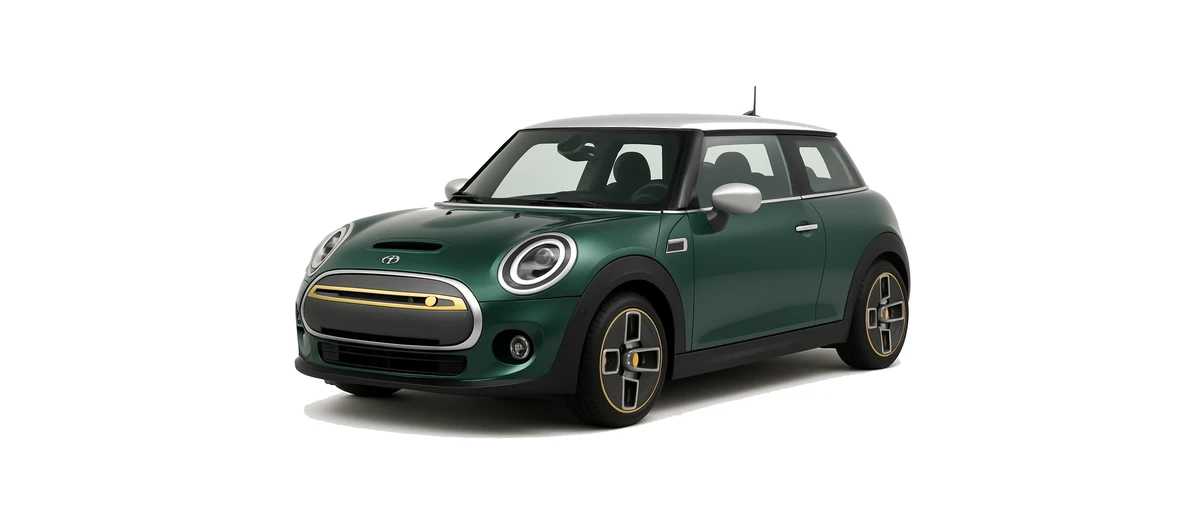
The MINI Electric is a compact 3-door battery-electric hatchback that suits short commutes, town driving and regular local journeys particularly well. In the UK, the name “MINI Electric” normally refers to the discontinued F56 MINI Cooper SE BEV sold from 2020 until early 2024. That distinction matters, because MINI now sells the newer all-electric MINI Cooper E, SE and JCW, which have different batteries and faster DC charging.
This guide focuses mainly on the UK-market F56 MINI Electric, while also highlighting where the current MINI Cooper Electric models differ. If you are choosing a charging cable or checking charging speeds, the key point is simple: both use a Type 2 AC socket and CCS rapid charging inlet, but the older MINI Electric should not be confused with the newer J01 MINI Cooper Electric when comparing battery size and rapid charging figures.
View Mini Electric Charging Cables
Mini Electric Battery and Charging Specifications
For the legacy UK MINI Electric F56 / Cooper SE, the main charging specification is:
- Vehicle type: battery-electric vehicle, not a plug-in hybrid
- Battery: 32.6 kWh gross / 28.9 kWh usable
- Charging port: Type 2 AC and CCS Combo 2 DC
- Charge port location: off-side rear quarter panel, behind the rear-right charge flap
- Maximum AC charging: up to 11 kW, where suitable three-phase AC is available
- Typical UK home charging: up to 7.4 kW on a single-phase wallbox
- Maximum DC rapid charging: around 50 kW
- Typical rapid charge: around 30 minutes from 10-80% in suitable conditions
- WLTP range: up to around 145 miles, depending on version and test basis
- Real-world range guide: around 110 miles according to EV Database UK
The MINI Electric uses the European Type 2 and CCS standard, so cable selection is straightforward. For AC charging at home or on untethered public posts, you use a Type 2 connector. For DC rapid charging, the public rapid charger normally has its own tethered CCS cable attached, so you do not need to carry a separate rapid charging cable.
Battery Options
The UK MINI Electric F56 was offered with a 32.6 kWh gross battery, of which around 28.9 kWh is usable. This was the main battery fitted across the UK MINI Electric range, including the Level 2, Level 3 and Resolute Edition versions listed in MINI UK’s 2023 brochure.
Because the battery is relatively small by modern EV standards, charging sessions are usually short. The trade-off is range: the MINI Electric is at its best when used as a daily urban, suburban or commuter EV rather than as a high-mileage motorway car. It can still be used for longer trips, but those trips need more planning than they would in a larger-battery EV.
The current all-electric MINI Cooper range is different. The newer MINI Cooper E is listed with a larger battery than the older MINI Electric, while the MINI Cooper SE and JCW versions use a larger battery again. These J01-generation cars are not the same vehicle as the discontinued MINI Electric F56, so avoid applying current MINI Cooper Electric battery figures to the older car.
AC Charging Speed
The MINI Electric F56 supports AC charging at up to 11 kW through its Type 2 inlet. However, most UK homes have a single-phase electricity supply, so a typical dedicated home charge point will charge at up to 7.4 kW rather than 11 kW. That is still a good match for the MINI Electric’s battery size.
As a guide, EV Database estimates a full charge from empty to full at roughly 4 hours 45 minutes on a 7.4 kW home wallbox, or about 3 hours 15 minutes where 11 kW three-phase AC charging is available. MINI’s 2023 UK brochure quotes charging to 80% from around 3 hours 12 minutes on a 7.4 kW home charger, and from around 2 hours 30 minutes on an 11 kW public AC charger.
If you plug the car into a 22 kW untethered AC post, the MINI Electric will not charge at 22 kW. The car’s onboard AC charger is the limiting factor, so it will take only what it can accept, up to 11 kW on compatible three-phase AC.
DC Rapid Charging Speed
For rapid charging, the legacy MINI Electric F56 uses CCS. Public rapid and ultra-rapid chargers normally have a tethered CCS cable permanently attached, so you simply plug the charger’s CCS connector into the car’s combined inlet.
The older MINI Electric rapid charges at up to around 50 kW. In suitable conditions, a 10-80% rapid charge takes about 30 minutes. That makes quick top-ups easy, especially because the battery is small, but it also means the car will not make use of the much higher headline speeds offered by modern ultra-rapid chargers.
This is one of the most important differences between the older MINI Electric and the current all-electric MINI Cooper models. Current MINI Cooper Electric versions are listed with faster DC charging capability, with the Cooper E at up to about 70 kW and the Cooper SE / JCW at up to about 95 kW. Those figures should not be used for the discontinued MINI Electric F56.
Range and Efficiency
The official WLTP range for the MINI Electric is up to around 145 miles. In real-world driving, a practical expectation is closer to around 110 miles, with the exact figure depending on speed, weather, road type, driving style, tyre choice and cabin heating use.
A small battery can be a strength if your daily mileage is modest. Many owners will be able to recharge at home every few days rather than every night. The car’s light, compact nature also suits low-speed driving, where EVs are typically efficient.
Motorway driving is where the MINI Electric’s range is more limited. Higher speeds increase energy consumption, and cold winter conditions can reduce the available range further. If you regularly cover long motorway journeys, it is worth planning rapid charging stops in advance and allowing a sensible range buffer rather than arriving at chargers with very little charge remaining.
Charging at Home
For most UK owners, the most convenient charging setup is a dedicated 7.4 kW Type 2 home wallbox. If the wallbox is tethered, it has its own Type 2 cable attached. If it is untethered, you will need a Type 2 to Type 2 cable to connect the wallbox to the car.
A 7.4 kW wallbox is well matched to the MINI Electric. Even if the battery is low at the end of the day, it should usually be ready again by the next morning. If you have access to three-phase charging at home or work, the car may be able to use up to 11 kW AC, but that is less common in normal UK domestic settings.
The 3-pin charging cable, where supplied or purchased separately, is generally best suited as a backup or occasional charging solution, but can be used regularly if a qualified electrician has confirmed the socket and electrical installation are suitable for sustained EV charging. Standard domestic sockets were not originally designed around repeated high-load EV charging, so the condition of the socket, circuit and installation matters.
When buying a used MINI Electric, do not assume every original cable is still with the car. MINI’s brochure listed both an AC home/occasional 3-pin Type 2 cable and an AC public Type 2 11 kW cable as standard for the 2023 car, but used vehicles may be missing one or both.
Public Charging
There are two main types of public charging to understand: AC destination charging and DC rapid charging.
AC destination chargers are often found in car parks, hotels, workplaces, supermarkets and town centres. Many are untethered, meaning you need to bring your own Type 2 to Type 2 cable. The MINI Electric can charge from these posts at up to 11 kW if the post and electricity supply support it, although some posts may offer 7 kW or less.
DC rapid chargers are used for shorter stops on longer journeys. These chargers normally have a CCS cable attached. With the MINI Electric, rapid charging is most useful between roughly 10% and 80%. Charging above 80% usually slows down, so on a longer trip it can be quicker to continue driving and stop again later rather than waiting for the final percentage points.
Because the MINI Electric has a modest battery and a 50 kW rapid charging peak, route planning is worthwhile for longer journeys. Check charger availability, connector type and live status where possible before relying on a stop.
Vehicle-Specific Features
The MINI Electric F56 is a converted electric version of the familiar MINI Hatch rather than the later dedicated J01 electric model. It retains the compact 3-door hatchback format and places the charging flap on the rear-right side of the vehicle.
The F56 MINI Electric is listed with a standard heat pump, which can help reduce heating-related energy use in colder conditions compared with relying only on resistive heating. However, battery preconditioning for DC rapid charging is not listed for this model, so charging speed can vary with battery temperature and conditions.
Vehicle-to-load, vehicle-to-home and vehicle-to-grid functions are not listed for the legacy MINI Electric. In normal ownership, it should be treated as a conventional battery-electric car for driving and charging, rather than as a vehicle designed to power external equipment or feed electricity back to a home or grid.
Charging Tips
- Confirm which electric MINI you own. The older MINI Electric F56 and newer MINI Cooper Electric J01 both use Type 2/CCS, but their battery and rapid charging figures differ.
- Use a Type 2 to Type 2 cable for untethered AC posts. This is the main cable to keep in the boot for public destination charging.
- Do not expect 22 kW AC charging. Even on a 22 kW post, the legacy MINI Electric is limited to up to 11 kW AC.
- Use CCS rapid chargers for longer trips. You do not need your own CCS cable; rapid chargers normally have one attached.
- Plan motorway journeys with a buffer. The car’s compact battery makes charging stops more frequent than in larger EVs.
- Charge to suit your journey. An 80% daily target may be practical for many local journeys, but charging to 100% is sensible when you genuinely need the full range.
Frequently Asked Questions
Is the MINI Electric a plug-in hybrid?
No. The UK MINI Electric F56 / Cooper SE is a battery-electric vehicle. It should not be confused with the MINI Countryman Plug-in Hybrid, which has different charging behaviour.
What charging cable does the MINI Electric use?
For AC charging, it uses a Type 2 connection. For untethered public AC posts, you need a Type 2 to Type 2 cable. For DC rapid charging, the car uses CCS, and the rapid charger normally provides the cable.
Can the MINI Electric charge at 22 kW AC?
No. The legacy MINI Electric supports up to 11 kW AC. If connected to a 22 kW AC post, it will still be limited by the car’s onboard charger.
How long does the MINI Electric take to charge at home?
On a typical 7.4 kW UK home wallbox, a full charge is commonly estimated at under five hours from empty. Charging to 80% will take less time, and many daily top-ups will be much shorter.
How fast is MINI Electric rapid charging?
The discontinued F56 MINI Electric rapid charges at up to around 50 kW DC, with a typical 10-80% rapid charge taking about 30 minutes in suitable conditions.
Do the newer MINI Cooper Electric models charge faster?
Yes. The current MINI Cooper Electric range has different batteries and faster DC charging capability than the older MINI Electric F56. If you own a newer MINI Cooper E, SE or JCW, check the specification for your exact model.
What This Means for Drivers
The MINI Electric is simple to charge and well suited to drivers who can charge at home or regularly use local AC posts. Its Type 2 and CCS charging setup is standard for UK and European EV charging, and its compact battery means it does not need long overnight charging sessions.
The main limitation is not cable compatibility but range and rapid charging speed. The legacy MINI Electric is a 50 kW rapid-charging EV with a modest battery, so it is best approached as a stylish urban and commuter car that can handle longer trips with planning, rather than as a long-range motorway EV.
If you are comparing specifications online, always check whether the information refers to the discontinued F56 MINI Electric or the newer J01 all-electric MINI Cooper. Mixing the two can lead to unrealistic expectations about battery size, charging speed and journey planning.
Looking for a Charging Cable for Mini Electric?
We offer charging cables for the Mini Electric, including Type 2 options for home wallboxes and untethered public AC charging posts.
View Mini Electric Charging Cables
Please note that this information is intended as a guide. Charging specifications may change due to model and year of manufacture. For precise information, always refer to your vehicle user manual.

