
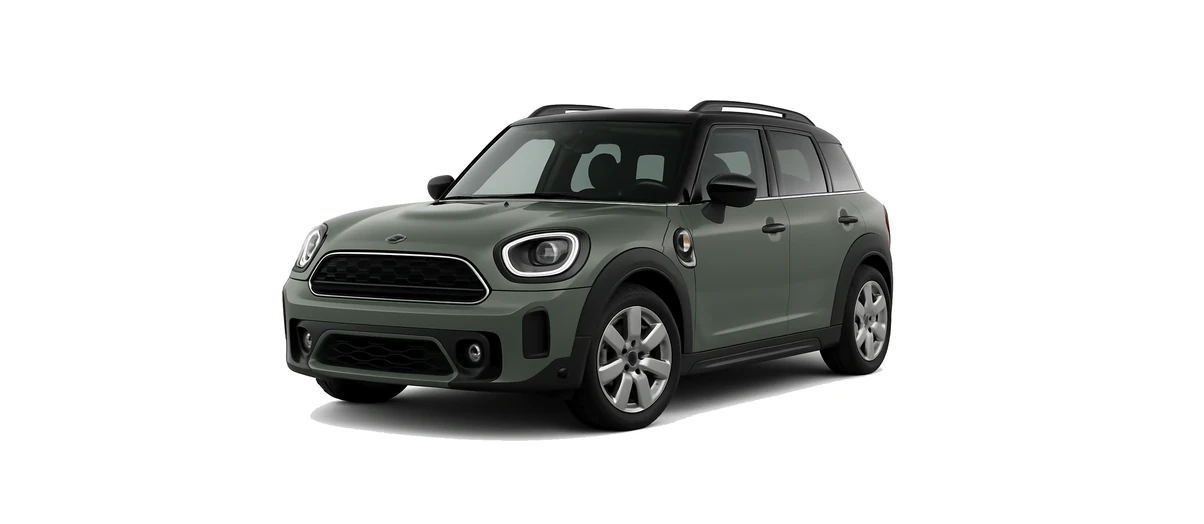
The Mini Countryman PHEV is one of the more easily confused electrified MINI models, because it sits between conventional petrol Countryman models and the newer all-electric MINI Countryman. This guide is for the previous-generation F60 MINI Countryman Cooper S E ALL4 Plug-in Hybrid, often referred to as the Mini Countryman PHEV. It is not the current all-electric Countryman E or SE, and it should not be treated like a rapid-charging battery-electric vehicle.
As a plug-in hybrid, the Countryman PHEV combines a petrol engine with an externally rechargeable high-voltage battery and an electric motor. For day-to-day driving, regular charging can help you make the most of its electric range, especially on commutes, school runs and local journeys. For longer trips, the petrol engine remains part of the driving experience, so charging advice is mainly about topping up the traction battery efficiently rather than planning long-distance rapid-charge stops.
View Mini Countryman PHEV Charging Cables
Mini Countryman PHEV Battery and Charging Specifications
The UK-market F60 MINI Countryman Plug-in Hybrid was sold as the Cooper S E ALL4 PHEV in the previous Countryman generation. It is now a used-market model in the UK, as MINI’s current Countryman line-up focuses on petrol and fully electric versions rather than a plug-in hybrid Countryman.
The key charging point for owners is simple: the Mini Countryman PHEV uses Type 2 AC charging. Later UK brochure data lists AC charging at up to 3.7 kW, with both home wallbox and public AC charging using the same Type 2 inlet. There is no confirmed CCS or DC rapid charging capability for the F60 Countryman PHEV, so it should be charged at home, work or public AC destination chargers rather than motorway rapid chargers.
- Vehicle type: plug-in hybrid compact SUV / crossover
- Charging connector: Type 2 AC, UK/EU
- Maximum AC charging rate: up to 3.7 kW on later UK brochure specification
- DC rapid charging: not supported in the official UK PHEV charging data
- Charging flap location: front-left lower A-panel area, often described as behind the front-wing charging badge
Battery Options
One of the most important checks with the Mini Countryman PHEV is the model year. Early and later F60 plug-in hybrid cars are not all identical, and battery capacity changed during the model’s life.
Early launch-era cars, around 2017, are widely listed with a smaller battery of approximately 7.6 kWh gross. BMW/MINI launch information quoted an electric range of around 40 km, or roughly 25 miles, under the test conditions used at the time. Exact usable capacity and range can depend on the model year and the source, so owners of early cars should check the handbook, registration details or VIN-specific information rather than assuming later figures apply.
Later UK brochure specification, including MINI UK’s July 2023 F60 Countryman brochure, lists the Countryman Plug-in Hybrid with a 10 kWh gross lithium-ion battery and 8.8 kWh net battery content. The same brochure quotes a WLTP all-electric range of 28.0 to 29.8 miles, with an equivalent all-electric range of 31.1 to 32.3 miles.
If you are buying a charging cable for a used Countryman PHEV, use this quick checklist before ordering:
- Confirm that your car is the F60 Countryman Cooper S E ALL4 plug-in hybrid, not the newer all-electric Countryman.
- Check the registration year and handbook to understand whether it is an early smaller-battery car or a later 10 kWh gross model.
- Confirm the charging inlet is Type 2 AC.
- Remember that a higher-rated charge point will not make the car charge beyond its onboard AC limit.
AC Charging Speed
For later UK cars, MINI’s official brochure lists AC charging at 3.7 kW. It quotes charging from empty to 80% in around 2 hours 24 minutes and to 100% in around 3 hours 12 minutes using a 3.7 kW home wallbox or AC public charge point.
This means the Countryman PHEV does not need a very high-powered AC supply to achieve its best charging speed. A 7 kW home wallbox is still useful because it provides a dedicated, convenient and safer charging setup, but the car will draw only around 3.7 kW. Similarly, plugging into a 7 kW, 11 kW or 22 kW public AC post will not make the PHEV charge faster than the onboard charger allows.
For public AC charging, a Type 2-to-Type 2 cable is the correct cable type. A 16A single-phase Type 2 cable is sufficient for the Countryman PHEV’s 3.7 kW charging limit, although some owners choose a 32A cable if they want something more future-proof for another EV or a later vehicle with a faster onboard charger.
DC Rapid Charging Speed
The Mini Countryman PHEV should not be planned around DC rapid charging. Official UK PHEV charging information refers to Type 2 AC charging, including home wallbox, public AC and 3-pin occasional charging. It does not list CCS rapid charging for this plug-in hybrid model.
This is a key difference between the F60 Countryman PHEV and the current all-electric MINI Countryman. The electric Countryman uses a much larger battery and has rapid-charging capabilities, but those specifications do not apply to the plug-in hybrid Countryman. If you are reading charging information online, make sure it is for the Cooper S E ALL4 PHEV rather than the newer Countryman E or SE.
Range and Efficiency
Later UK brochure data gives the Mini Countryman PHEV an official WLTP all-electric range of up to 29.8 miles. Real-world electric range will vary with temperature, speed, tyre condition, use of heating or air conditioning, driving style and route type. In typical UK use, many plug-in hybrids achieve their best electric efficiency on local journeys where speeds are moderate and charging is frequent.
Because the Countryman PHEV has a petrol engine as well as an electric motor, it is best understood as a car that rewards routine charging rather than one that relies on occasional long charging stops. If you charge at home overnight or at work during the day, you can often cover short trips using a meaningful amount of electric driving. If you do not charge regularly, the car will behave more like a conventional hybrid with additional battery weight, reducing the benefit of the plug-in system.
Charging at Home
Home charging is usually the most convenient way to run a Mini Countryman PHEV. A dedicated home wallbox gives you a weather-resistant, fixed charging point and avoids the need to rely on a standard domestic socket. Even though many UK wallboxes are rated at 7 kW, the Countryman PHEV will still charge at its own maximum AC rate, which is around 3.7 kW on later UK brochure cars.
For a later 10 kWh gross / 8.8 kWh net car, the official MINI figure for a full charge on a 3.7 kW wallbox is around 3 hours 12 minutes. In practice, this means the battery can be replenished easily during an evening at home or while parked during the working day.
The 3-pin occasional charging cable is slower. MINI’s later UK brochure lists 3-pin charging at 2.3 kW and around 5 hours to 100%. A 3-pin charger is generally best suited as a backup or occasional charging solution, but can be used regularly if a qualified electrician has confirmed the socket and electrical installation are suitable for sustained EV charging. Avoid using damaged sockets, coiled extension leads or any setup that becomes warm during charging.
Public Charging
Public charging for the Mini Countryman PHEV is mainly about destination charging. Suitable locations include workplace car parks, hotels, supermarkets, town-centre car parks and leisure venues with AC charge points. These are places where the car can be parked for a few hours while the battery tops up.
Most untethered public AC charge points in the UK require you to bring your own Type 2-to-Type 2 cable. Because the Countryman PHEV charges at up to about 3.7 kW, you do not need to seek out the fastest AC post. Availability, parking time and cost will usually matter more than the headline power rating of the charger.
Motorway rapid chargers are less relevant for this model. If a charging hub mainly offers CCS rapid chargers, it may not be useful for the Countryman PHEV unless it also has a compatible AC Type 2 socket. On longer journeys, the petrol engine provides flexibility, so it is usually better to use public AC charging when it fits naturally into your stop rather than making a journey depend on it.
Vehicle-Specific Features
The Countryman PHEV uses MINI’s plug-in hybrid layout with a petrol engine driving the front axle and an electric motor powering the rear axle, creating an electrified ALL4 system. This layout is part of what makes the car different from both a normal petrol Countryman and a fully electric MINI.
The high-voltage battery and plug-in hybrid hardware also affect packaging. MINI UK’s 2023 technical data lists luggage capacity at 405 to 1,275 litres, which is reduced compared with some petrol Countryman versions because of the PHEV components.
Where equipped and activated, MINI app and connected services can support charging status information and remote cabin pre-conditioning. This can be useful for comfort before departure, especially in colder weather, but it should not be confused with confirmed battery preconditioning for rapid charging.
Charging Tips
- Charge little and often: plug-in hybrids work best when the battery is topped up regularly.
- Use a Type 2-to-Type 2 cable for public AC posts: this is the main cable required for UK destination charging.
- Do not overpay for speed you cannot use: the car’s onboard charger limits AC charging to around 3.7 kW on later UK cars.
- Check your model year: early and later F60 PHEVs have different battery sizes, so range and charge-time expectations should be adjusted accordingly.
- Keep the cable accessible: regular charging is easier if your cable is stored neatly and can be reached without unpacking the boot.
- Use scheduled charging if available: charging overnight on a suitable electricity tariff can help reduce running costs.
Frequently Asked Questions
What charging cable does the Mini Countryman PHEV use?
It uses a Type 2 AC connection. For untethered UK public AC charge points, you will need a Type 2-to-Type 2 charging cable.
Can the Mini Countryman PHEV use rapid chargers?
The F60 Countryman PHEV is not listed with CCS or DC rapid charging in the official UK plug-in hybrid charging data. It is best charged using AC home, workplace and destination chargers.
Will a 7 kW wallbox charge it faster than 3.7 kW?
No. A 7 kW wallbox is convenient and suitable, but the car will only draw up to the limit of its onboard AC charger. For later UK brochure cars, that limit is 3.7 kW.
Is a 16A Type 2 cable enough?
Yes, a 16A single-phase cable is sufficient for the Countryman PHEV’s 3.7 kW AC charging. A 32A cable may be worth considering if you want extra flexibility for a future EV.
Is the Mini Countryman PHEV the same as the all-electric MINI Countryman?
No. The Countryman PHEV is the previous-generation plug-in hybrid model with a petrol engine and a smaller rechargeable battery. The current all-electric Countryman is a different vehicle with different charging specifications.
What This Means for Drivers
For most UK owners, the Mini Countryman PHEV is straightforward to charge once you separate it from the newer all-electric Countryman. Think of it as an AC-charging plug-in hybrid: use a home wallbox where possible, carry a Type 2-to-Type 2 cable for public destination charging, and do not expect DC rapid-charging behaviour.
The biggest practical decision is choosing the right cable rating and confirming which version of the car you own. Later cars with the 10 kWh gross battery can take a full charge in a little over three hours on a suitable 3.7 kW AC supply, while early cars may have a smaller battery and slightly different expectations. Either way, regular charging is the key to getting the best from the plug-in hybrid system.
Looking for a Charging Cable for Mini Countryman PHEV?
We offer Mini Countryman PHEV charging cables for UK home and public AC charging, including Type 2 options suitable for this plug-in hybrid model.
View Mini Countryman PHEV Charging Cables
Please note that this information is intended as a guide. Charging specifications may change due to model and year of manufacture. For precise information, always refer to your vehicle user manual.

