
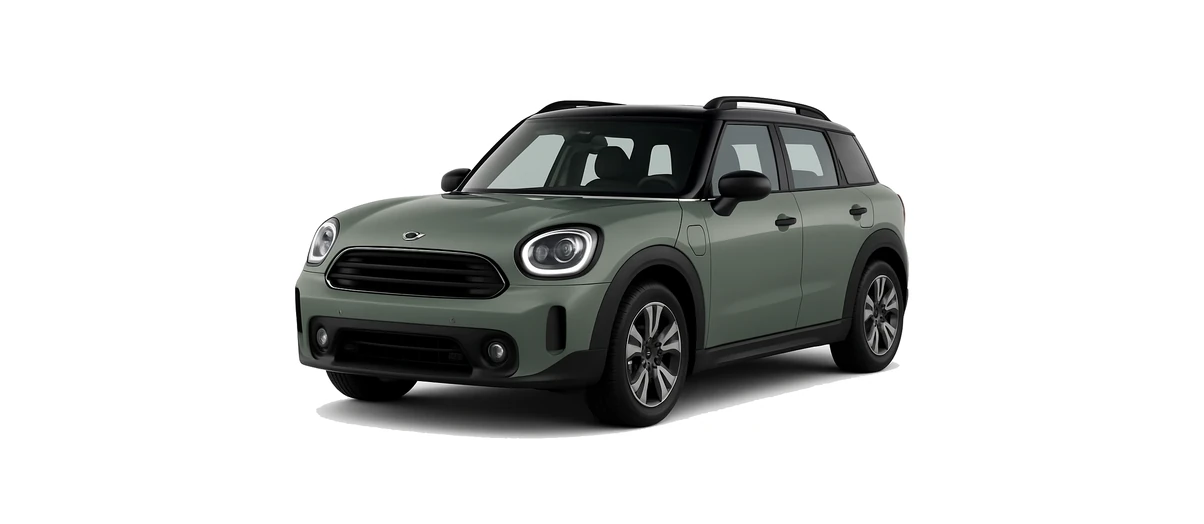
The Mini Countryman Electric is the all-electric version of MINI’s U25 Countryman compact SUV, currently offered in the UK as the Countryman E and Countryman SE ALL4. It is a battery-electric vehicle, not to be confused with older Countryman plug-in hybrid models, and it uses Type 2 AC charging and CCS Combo 2 rapid charging.
For UK drivers, the most important charging point is that the car’s headline AC capability does not always match what you will see at home. The Countryman Electric is listed with 11 kW AC charging as standard, while some data points to 22 kW AC availability depending on configuration. However, most UK homes use a single-phase 7.4 kW wallbox, so everyday charging is usually planned around that figure. On longer journeys, the car can use CCS rapid chargers at up to 130 kW, with an official 10-80% charging claim of around 29 minutes in suitable conditions.
View Mini Countryman Electric Charging Cables
Mini Countryman Electric Battery and Charging Specifications
The UK Mini Countryman Electric line includes two main all-electric variants: the Countryman E with front-wheel drive and the Countryman SE ALL4 with all-wheel drive. Publicly available figures differ slightly by source and model year, so it is best to treat battery and range figures as variant-dependent rather than universal.
- Vehicle type: Battery-electric compact SUV
- UK variants: Countryman E and Countryman SE ALL4
- AC charging: Type 2
- DC rapid charging: CCS Combo 2
- Charging port location: right-rear side, according to EV Database UK
- Standard AC charging: 11 kW, with 22 kW appearing as optional or configuration-dependent in some data
- Maximum DC charging: up to 130 kW
- Official DC charging time: 10-80% in around 29 minutes under suitable conditions
A Mode 3 public charging cable is listed in MINI UK technical data, but owners may still want to check what came with their specific vehicle, especially if buying used or ex-demo. Cable length, three-phase rating and keeping a spare can all affect convenience.
Battery Options
The Mini Countryman Electric battery is broadly in the mid-60 kWh class, but the exact published capacity depends on the source and model-year context. EV Database UK lists MY26 Countryman E and SE ALL4 versions with a 66.5 kWh nominal battery and 65.2 kWh usable capacity. MINI UK’s live performance page lists a battery capacity of 64.6 kWh for both E and SE, without clearly labelling whether that figure is gross or usable. Earlier MY24-25 data is also slightly different, with EV Database UK listing 66.5 kWh nominal and 64.7 kWh usable.
In practical ownership terms, these differences are small enough that they should not change your charging routine. For route planning and daily use, it is more helpful to think in terms of your actual efficiency, the available public chargers on your route and whether you are charging to 80%, 90% or 100% before departure.
Not the older Countryman PHEV: this guide is for the current all-electric U25 Mini Countryman Electric. It should not be used for the older F60 Countryman Plug-in Hybrid / Cooper S E ALL4, which has different battery, range and charging requirements.
AC Charging Speed
AC charging is what you will use at home and at many destination chargers, such as workplace, supermarket, hotel and town-centre charging posts. The Mini Countryman Electric uses a Type 2 inlet for AC charging.
MINI UK quotes an 11 kW AC 0-100% charging time of about 6 hours 30 minutes. That figure is relevant where three-phase AC supply is available and the car is using its 11 kW onboard charger. MINI UK material also shows a 22 kW AC 0-100% time of around 3 hours 45 minutes, while EV Database UK describes 22 kW AC as optional. For that reason, it is sensible to check the exact vehicle specification before assuming that a particular Countryman Electric can charge at 22 kW AC.
At home in the UK, the more common case is a 7.4 kW single-phase wallbox. On this type of charger, a near-empty to full charge is likely to take roughly 10 to 10.5 hours. In real life, many owners will not charge from 0% to 100% every time. If you plug in overnight after a normal day’s driving, the car can usually recover a useful amount of range well before morning.
For cable selection, a Type 2 to Type 2 cable is the correct AC cable type. A 32A single-phase cable is suitable for typical 7.4 kW home and public AC charging. If your vehicle is specified for three-phase AC charging and you want to use 11 kW or potentially 22 kW public posts, a three-phase Type 2 cable rated appropriately for the charger and vehicle is the more flexible choice.
DC Rapid Charging Speed
For motorway and longer-distance charging, the Mini Countryman Electric uses the CCS Combo 2 connector. Its peak DC rapid charging rate is quoted at up to 130 kW, with MINI giving an official 10-80% time of around 29 minutes.
That 29-minute figure should be treated as an ideal-condition claim rather than a guaranteed stop time. Rapid charging depends on charger output, battery temperature, starting state of charge, ambient conditions, charger availability and the charging curve. EV Database UK’s curve-based estimates suggest a session on a suitable high-power charger may be closer to the low-to-mid 30-minute range in some circumstances.
To give the car the best chance of reaching a strong rapid-charging rate, choose a CCS charger rated at 150 kW or higher where available. The charger does not have to match the car exactly, but a 50 kW unit will obviously limit the session. As with most EVs, charging usually slows significantly beyond 80%, so 10-80% is the most efficient motorway charging window.
Range and Efficiency
Published range figures for the Mini Countryman Electric vary by variant, trim, equipment, wheels and model year. MINI UK’s live page quotes current WLTP combined range figures of 262-310 miles for the Countryman E and 267-289 miles for the Countryman SE. A November 2025 MINI UK technical PDF gives different ranges, quoting 262-287 miles for the E and 247-268 miles for the SE ALL4. EV Database UK also separates MY24-25 cars from MY26 cars.
For everyday use, it is safest to view the official WLTP range as a comparison figure rather than a promise. Real-world range will vary with speed, weather, temperature, road type, tyre choice, load and cabin heating or cooling. A sensible real-world planning figure for mixed use may be closer to the mid-200-mile region, with EV Database UK estimating around 245 miles in some contexts. Motorway driving in winter is likely to be lower, while slower urban and suburban journeys can be more favourable.
The Countryman Electric is listed with a heat pump and navigation-linked battery preconditioning by EV Database UK for MY26 versions. These can help improve cold-weather usability and rapid-charging consistency, particularly when the navigation system knows you are heading to a suitable rapid charger.
Charging at Home
For most UK owners, a dedicated home wallbox will be the most convenient charging method. A 7.4 kW single-phase home charger is the normal benchmark, even though the car’s onboard AC charging capability may be higher on three-phase supplies or certain specifications. A home wallbox is faster, safer and more convenient than relying on a domestic socket.
A typical routine is to plug in when the car is parked overnight and set a charging schedule to take advantage of an EV-friendly electricity tariff. Many drivers charge to around 80% for daily use and only charge to 100% before a longer journey, although you should follow MINI’s in-car guidance and owner’s manual for battery care recommendations.
A 3-pin charger is generally best suited as a backup or occasional charging solution, but can be used regularly if a qualified electrician has confirmed the socket and electrical installation are suitable for sustained EV charging. Domestic sockets were not all installed with long-duration EV charging in mind, so inspection is important before relying on one frequently.
Public Charging
Public charging for the Mini Countryman Electric falls into two main categories: AC destination charging and DC rapid charging. AC posts normally require you to use your own Type 2 cable, while DC rapid chargers have a tethered CCS cable attached to the unit.
At a 7 kW public AC post, charging speed will be similar to a home wallbox. At an 11 kW three-phase post, the Countryman Electric should be able to take advantage of the higher output if the car and cable support it. At 22 kW AC posts, check your vehicle specification first, because 22 kW AC appears to be optional or configuration-dependent rather than something to assume on every UK car.
On rapid chargers, use CCS. The vehicle is listed with Autocharge and Plug & Charge support on CCS charging by EV Database UK, although availability also depends on the charging network, account setup and charger compatibility. If supported, these features can reduce the amount of app or card interaction needed at compatible chargers.
Vehicle-Specific Features
The Mini Countryman Electric is based on BMW Group’s FAAR platform rather than a dedicated EV-only platform, and EV Database UK lists it as using a 400 V architecture. In day-to-day use, this mainly means its charging behaviour is in line with many mainstream EVs: capable home charging, useful destination charging and competitive but not ultra-high DC peak charging.
The Countryman E and Countryman SE ALL4 have different performance and drivetrain layouts, but both use the same basic charging connector arrangement: Type 2 for AC and CCS for DC. The SE ALL4’s all-wheel-drive system and equipment may affect range, so it is worth checking the exact WLTP figure attached to the trim and wheel combination you are considering.
UK-market V2L, V2G and V2H capability should not be assumed for this model. EV Database UK lists these functions as not supported, and they are not clearly promoted by MINI UK for the UK Countryman Electric.
Charging Tips
- Plan around 7.4 kW at home: this is the normal UK single-phase wallbox speed, even though the car can accept 11 kW AC and may have 22 kW capability in some configurations.
- Check before assuming 22 kW AC: verify the exact vehicle specification and use a suitable three-phase Type 2 cable if you want faster public AC charging.
- Use 10-80% on rapid chargers: this is usually the most time-efficient window on long journeys.
- Choose 150 kW+ CCS chargers when possible: this gives the car the opportunity to approach its 130 kW peak, although the peak will not be held throughout the session.
- Keep the right cable in the boot: a Type 2 public charging cable is the key cable for untethered AC posts.
- Do not mix up PHEV accessories: cables and assumptions for the older Countryman plug-in hybrid are not the right reference point for the current all-electric Countryman.
Frequently Asked Questions
What charging cable does the Mini Countryman Electric use?
It uses a Type 2 connection for AC charging. For DC rapid charging, it uses CCS Combo 2. Public rapid chargers have their own tethered CCS cable, while many public AC posts require you to bring a Type 2 cable.
How fast does the Mini Countryman Electric charge at home?
On a typical UK 7.4 kW single-phase wallbox, expect roughly 10 to 10.5 hours from empty to full. Most day-to-day top-ups will take less time because you are unlikely to arrive home at 0%.
Can it charge at 22 kW AC?
Some MINI and third-party data references 22 kW AC charging, but EV Database UK indicates that the 22 kW onboard charger is optional. Check the exact UK vehicle specification before relying on 22 kW AC charging.
How long does rapid charging take?
MINI quotes around 29 minutes for 10-80% DC charging at up to 130 kW in suitable conditions. In real-world use, allow for variables such as charger output, battery temperature and state of charge.
What range should I expect?
Official WLTP figures vary by Countryman E or SE ALL4 variant, equipment and model year, broadly ranging from the high-200-mile area to around 310 miles in some MINI UK figures. Real-world mixed driving may be closer to the mid-200-mile region, depending on conditions.
What This Means for Drivers
The Mini Countryman Electric is straightforward to live with if you match your charging expectations to UK conditions. At home, think in terms of a 7.4 kW wallbox and overnight charging. On public AC chargers, check whether your car supports 11 kW only or has the optional/configuration-dependent 22 kW capability. On longer journeys, use CCS rapid chargers, aim for 10-80% stops and choose 150 kW or faster units where convenient.
The main cable decision is whether you simply need a practical Type 2 cable for home and destination charging, or whether a three-phase Type 2 cable makes sense for your charging habits. If you regularly use 11 kW or 22 kW public AC posts and your vehicle supports the relevant speed, a three-phase cable can offer more flexibility. If your charging is mostly at home on a tethered wallbox, your cable needs may be limited to public AC charging and backup use.
Looking for a Charging Cable for Mini Countryman Electric?
If you need a replacement, spare or longer Type 2 charging cable for the Mini Countryman Electric, choose one that matches how you charge: typical 7.4 kW home use, 11 kW public AC charging, or three-phase use where your vehicle specification supports it.
View Mini Countryman Electric Charging Cables
Please note that this information is intended as a guide. Charging specifications may change due to model and year of manufacture. For precise information, always refer to your vehicle user manual.

