
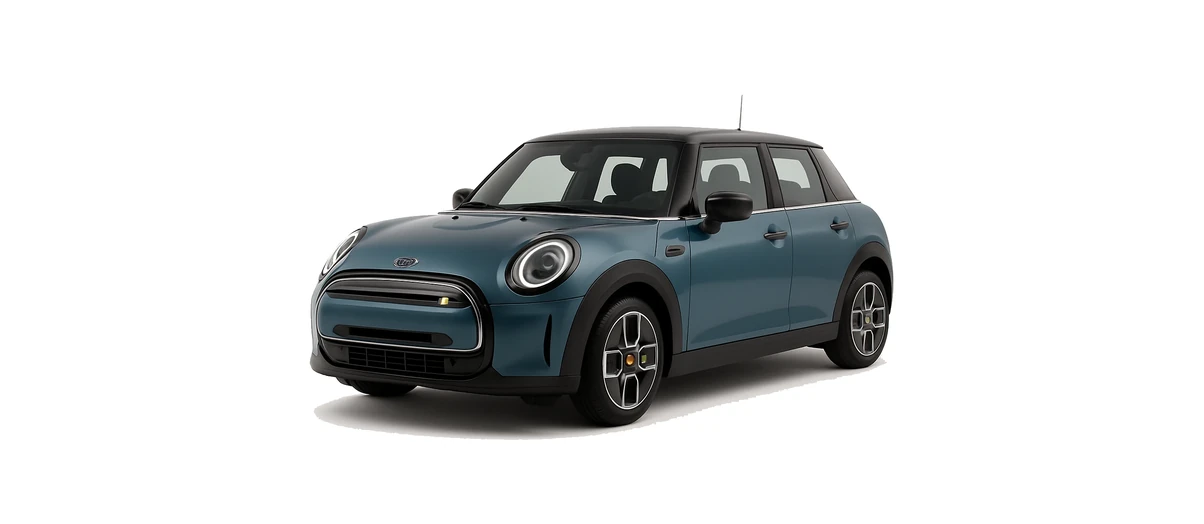
The MINI Cooper Electric is a compact battery electric 3-door hatchback, but not every MINI Cooper Electric on UK roads has the same battery, range or rapid-charging speed. The current UK model is the J01 all-electric MINI Cooper, sold as the Cooper E, Cooper SE and Cooper JCW Electric. Many used examples, however, are the earlier F56-based MINI Electric / Cooper SE sold from around 2020 to early 2024.
This distinction matters when you are choosing charging equipment or planning a journey. Current J01 cars have larger battery options, faster DC rapid charging on SE and JCW versions, and battery preconditioning. The older F56 MINI Electric is still a very usable city and commuter EV, but it has a smaller battery and lower rapid-charging capability. All UK versions covered here are battery electric vehicles, not plug-in hybrids.
View Mini Cooper Electric Charging Cables
Mini Cooper Electric Battery and Charging Specifications
UK MINI Cooper Electric models use a Type 2 connector for AC charging and CCS Combo 2 for DC rapid charging. The charging port is on the right rear side of the car. For most owners, the most important points are straightforward: use Type 2 for home and many public AC posts, and use CCS rapid or ultra-rapid chargers for motorway and longer-distance charging.
The current J01 MINI Cooper Electric supports up to 11 kW AC charging when connected to a suitable three-phase AC supply. In the UK, most homes have single-phase electricity, so a typical home wallbox will charge at up to 7.4 kW rather than 11 kW. This is still more than quick enough for normal overnight charging.
On DC rapid charging, the current Cooper E and Cooper SE/JCW differ. The Cooper E is capped at around 70 kW DC, while the Cooper SE and JCW Electric are rated at around 95 kW DC. The older F56 MINI Electric / Cooper SE is lower again, at roughly 49–50 kW DC. This means the number printed on a public charger is not the same as the car’s charging speed: a 150 kW charger will not make a Cooper E charge at 150 kW.
Battery Options
The current J01 MINI Cooper E uses a smaller battery than the Cooper SE and JCW Electric. MINI UK’s charging and range data lists the Cooper E with a 36.6 kWh battery capacity, while independent specification data identifies this as around 40.7 kWh gross and 36.6 kWh usable. Official WLTP range varies by specification, with MINI UK quoting around 180–186 miles for current Cooper E models.
The current J01 MINI Cooper SE uses the larger pack. MINI UK lists 49.2 kWh battery capacity, with specification data giving around 54.2 kWh gross and 49.2 kWh usable. WLTP range for the Cooper SE varies by trim and wheel specification, with official UK figures broadly around 239–249 miles, and some sources quoting up to around 250 miles depending on configuration.
The current MINI Cooper JCW Electric uses the same 49.2 kWh usable battery pack according to MINI UK’s range and charging table. Its WLTP range is listed at around 226–250 miles, depending on specification.
The previous F56 MINI Electric / Cooper SE is a different generation and should not be treated as having the same figures as the current car. Used UK examples from around 2020 to February 2024 have a smaller battery, commonly listed as 32.6 kWh gross and 28.9 kWh usable. WLTP range is around 126–145 miles, with real-world range often lower, especially in winter or at motorway speeds.
AC Charging Speed
All the MINI Cooper Electric versions covered here support up to 11 kW AC charging, but there is an important UK ownership detail: 11 kW AC normally requires three-phase electricity. Most UK domestic properties are single-phase, so a typical home wallbox will supply up to 7.4 kW.
For the current J01 MINI Cooper E, MINI quotes a 0–100% AC charging time of around 4 hours 15 minutes at 11 kW. For the current Cooper SE and JCW Electric, the larger battery means the equivalent 11 kW AC time is around 5 hours 15 minutes. On a normal 7.4 kW home wallbox, charging will take longer, but it will still usually fit comfortably into an overnight parking window.
The older F56 MINI Electric is smaller-batteried, so it can be quick to charge on AC. It is commonly quoted at around 3 hours 15 minutes from empty to full at 11 kW, or roughly 4 hours 45 minutes at 7.4 kW. In everyday use, you are rarely charging from completely empty, so top-ups are often much shorter.
A 22 kW public AC post will not charge the MINI Cooper Electric at 22 kW. The car’s onboard AC charger is the limiting factor, so the practical maximum is up to 11 kW on a suitable three-phase post, or up to 7.4 kW on single-phase equipment.
DC Rapid Charging Speed
DC rapid charging is most useful on longer trips, where you want to add range quickly during a short stop. For current J01 cars, MINI UK quotes 10–80% charging in about 28–30 minutes depending on the variant and conditions.
The Cooper E peaks at around 70 kW DC. The Cooper SE and JCW Electric are faster, at around 95 kW DC. The previous F56 MINI Electric / Cooper SE is typically around 49–50 kW DC. In practice, rapid-charging speed is affected by battery temperature, state of charge, charger condition, site load and the car’s charging curve. The fastest speeds are usually seen when the battery is warm and at a lower state of charge.
For the current J01 models, battery preconditioning is available, including navigation-assisted preconditioning according to specification data. This can help prepare the battery for faster rapid charging when a compatible rapid charger is set as the destination. The older F56 MINI Electric should not be assumed to have battery preconditioning.
Range and Efficiency
Official WLTP range is useful for comparing cars, but it is not a guarantee of what you will see on every journey. The current MINI Cooper E is officially around 180–186 miles depending on specification. The current Cooper SE is around 239–249 miles, while the JCW Electric is listed at around 226–250 miles. The older F56 MINI Electric / Cooper SE is around 126–145 miles WLTP.
Real-world range will usually be lower than WLTP, particularly in cold weather, at motorway speeds, with heavy cabin heating use, or when carrying passengers and luggage. Short urban journeys tend to suit the MINI Cooper Electric well because regenerative braking and lower speeds can improve efficiency. Long winter motorway journeys are where range drops most noticeably.
MINI recommends charging to 80% for daily use to help optimise battery life. WLTP figures are based on a full 100% charge, so your daily range at an 80% target will be lower than the headline figure. Charging to 100% is still useful before longer trips, especially if you can set the car to finish shortly before departure.
Charging at Home
For most UK MINI Cooper Electric owners, a dedicated Type 2 home wallbox is the most convenient charging method. You can choose a tethered wallbox with the cable attached, or an untethered wallbox where you plug in your own Type 2 cable. Either approach works; the best option depends on whether you prefer convenience at home or a tidier installation when not in use.
A 7.4 kW single-phase wallbox is the common domestic choice. Although the MINI Cooper Electric can accept up to 11 kW AC, most UK homes will not provide three-phase AC without a specific installation. If you do have three-phase supply, a suitable 11 kW wallbox can make better use of the car’s AC capability.
A 3-pin portable charger is generally best suited as a backup or occasional charging solution, but can be used regularly if a qualified electrician has confirmed the socket and electrical installation are suitable for sustained EV charging. Standard domestic sockets were not designed primarily for repeated high-load charging over many hours, so professional electrical advice is important.
Public Charging
Public AC charging is common in car parks, hotels, workplaces and town centres. These posts normally use Type 2, and some require you to bring your own cable. For the MINI Cooper Electric, a Type 2 to Type 2 cable is the key cable for untethered public AC charging.
Rapid and ultra-rapid chargers use tethered CCS cables, so you do not need to bring your own DC cable. Plug the CCS connector into the car, follow the operator’s payment or app instructions, and the car and charger will manage the charging session.
When choosing rapid chargers, match expectations to the car rather than the charger headline. A current Cooper SE or JCW Electric can make good use of a 100 kW-class charger, while the Cooper E is closer to a 70 kW peak. The older F56 model will not benefit much from seeking out chargers far above 50 kW, unless location or reliability makes them the better option.
Vehicle-Specific Features
Specification data lists a heat pump as standard on both current J01 and previous F56 MINI Cooper Electric entries checked. A heat pump can help reduce the energy used for cabin heating compared with relying solely on resistive heating, although real-world benefit depends on temperature and usage.
Current J01 models support battery preconditioning, including navigation-assisted preconditioning. This is especially useful before rapid charging in colder conditions. The previous F56 MINI Electric / Cooper SE should be treated differently, as the checked data does not list battery preconditioning for that generation.
Vehicle-to-load, vehicle-to-home and vehicle-to-grid capability should not be assumed for the MINI Cooper Electric. The checked specification data lists V2L, V2H and V2G as not supported for the relevant current and previous entries.
Charging Tips
- Identify your generation first: current J01 Cooper E, SE and JCW Electric models have different battery and rapid-charging figures from the older F56 MINI Electric.
- Use 80% for daily charging: this is MINI’s recommended everyday target to help optimise battery life.
- Charge to 100% before longer trips: for best practice, time the charge so the car reaches full shortly before you leave.
- Do not chase unnecessary charger speed: a 150 kW charger will not make a Cooper E charge above its own limit, and the older F56 is lower still.
- Carry a Type 2 cable: many UK public AC posts are untethered, so your own cable gives you more options.
- Use preconditioning on current J01 cars: setting a rapid charger as the destination can help prepare the battery where supported.
Frequently Asked Questions
What charging cable does the MINI Cooper Electric use?
For UK and European AC charging, the MINI Cooper Electric uses a Type 2 connection. For DC rapid charging, it uses CCS Combo 2. A Type 2 to Type 2 cable is the main cable to carry for untethered home or public AC charging.
Can the MINI Cooper Electric charge at 22 kW AC?
No. The UK data supports an 11 kW AC onboard charger. On most UK home wallboxes, charging will usually be up to 7.4 kW because domestic electricity supplies are typically single-phase.
How fast does the MINI Cooper Electric rapid charge?
It depends on the version. Current Cooper E models peak at around 70 kW DC, while current Cooper SE and JCW Electric models are around 95 kW DC. The previous F56 MINI Electric / Cooper SE is around 49–50 kW DC.
Is the MINI Cooper Electric a plug-in hybrid?
No. The MINI Cooper Electric is a battery electric vehicle. It does not have a petrol engine and must be charged from mains electricity or public EV charging infrastructure.
Does the older MINI Electric have the same battery as the current car?
No. The earlier F56 MINI Electric / Cooper SE has a smaller battery and shorter range than the current J01 Cooper E, SE and JCW Electric models. It should be considered separately when planning charging stops or comparing specifications.
What This Means for Drivers
The MINI Cooper Electric is simple to live with once you know which version you have. For current J01 owners, the Cooper E is the smaller-battery version with around 70 kW DC rapid charging, while the Cooper SE and JCW Electric use the larger pack and can rapid charge at around 95 kW. For older F56 owners, the car remains well suited to city use and commuting, but range and rapid charging are more limited.
At home, a 7.4 kW Type 2 wallbox is the practical choice for most UK households. On the road, carry a Type 2 cable for public AC charging and use CCS rapid chargers for longer journeys. The most important point is to avoid assuming one universal MINI Cooper Electric specification: battery size, range, preconditioning and rapid-charging speed all depend on the generation and variant.
Looking for a Charging Cable for Mini Cooper Electric?
If you need a suitable Type 2 charging cable for home or public AC charging, We offer MINI Cooper Electric charging cables for current J01 models and earlier F56 MINI Electric vehicles.
View Mini Cooper Electric Charging Cables
Please note that this information is intended as a guide. Charging specifications may change due to model and year of manufacture. For precise information, always refer to your vehicle user manual.

