
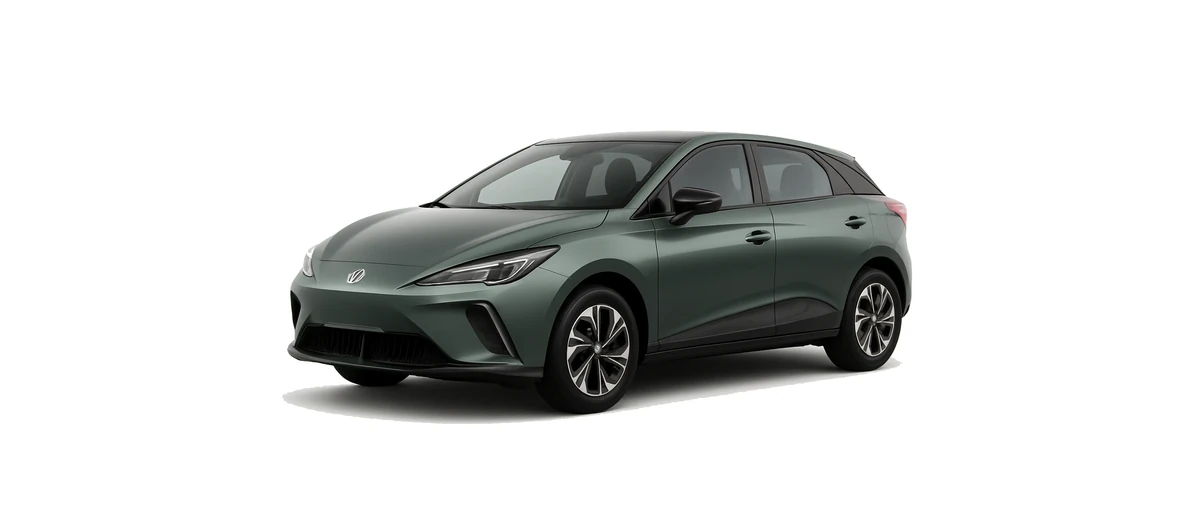
The MG IM6 is a large pure-electric SUV / coupe-SUV introduced for the UK market from 2025. It is one of MG’s most charging-focused electric models to date, combining a large 100 kWh nominal battery, an 800V-class electrical architecture and a very high claimed DC rapid-charging capability. For drivers moving from an earlier EV, the headline figures are impressive, but day-to-day charging remains straightforward: at home and on most public AC chargers, the MG IM6 uses a Type 2 connection, while rapid and ultra-rapid charging uses the CCS connector attached to the charging unit.
This guide explains the key UK charging details for the MG IM6, including the difference between the Long Range, Performance and Launch Edition variants, what to expect from a typical 7 kW home wallbox, and why the car’s ultra-rapid charging potential depends heavily on charger power, battery condition, state of charge and site conditions.
MG IM6 Battery and Charging Specifications
UK-market MG IM6 models are battery-electric vehicles, not plug-in hybrids. The UK brochure covers three 100 kWh variants: the 100 Long Range, 100 Performance and 100 Launch Edition. All use the same 100 kWh nominal battery pack, with a quoted usable capacity of 96.5 kWh.
The charging connection is Type 2 / CCS Combo 2. In practical UK terms, that means a Type 2 cable is used for home wallboxes and public AC charging points, while DC rapid and ultra-rapid chargers normally have their own tethered CCS cable. The IM6 has an 11 kW onboard AC charger across the UK range, although this maximum AC rate generally requires access to a suitable three-phase supply. Most UK homes are single-phase, so many owners will see charging speeds closer to 7 kW on a home wallbox.
On DC, MG quotes a maximum rapid-charging capability of up to 396 kW and a 10-80% charge time of 17 minutes when using a sufficiently powerful 350 kW ultra-fast charger under suitable conditions. This is a peak capability rather than a guaranteed rate at every charger, so it should be treated as a best-case figure rather than a promise for every journey.
Battery Options
The MG IM6 range is refreshingly simple from a battery perspective because all UK variants use the same 100 kWh nominal / 96.5 kWh usable NCM battery. The main differences are drivetrain, performance equipment and range.
- MG IM6 100 Long Range: rear-wheel drive, 388 miles WLTP combined and up to 510 miles WLTP city according to the UK brochure. This is the range-focused version.
- MG IM6 100 Performance: all-wheel drive, with a quoted 313 miles WLTP combined and 398 miles WLTP city. This version prioritises performance over maximum range.
- MG IM6 100 Launch Edition: all-wheel drive, also quoted at 313 miles WLTP combined and 398 miles WLTP city, with additional equipment including adaptive damping and air suspension.
It is important not to apply the 388-mile WLTP figure to every IM6. That figure belongs to the 100 Long Range. The Performance and Launch Edition models trade some driving range for their all-wheel-drive performance setup.
AC Charging Speed
The MG IM6 is fitted with an 11 kW onboard AC charger. This is useful for drivers who have access to three-phase charging, such as some workplaces, commercial sites and a smaller number of domestic installations. At 11 kW, a large battery such as the IM6’s can be replenished more quickly than on a 7 kW supply, but most UK households should not assume they will automatically get the full 11 kW AC rate.
On a typical UK single-phase 7 kW home wallbox, MG quotes around 16 hours for a 10-100% charge. EV charging estimates for 0-100% are in a similar overnight-plus region. In real ownership, most drivers will not charge from almost empty to completely full every day, so routine charging sessions may be much shorter. For example, replacing the energy used for a normal commute or local driving can often be done comfortably overnight.
For cable choice, the key point is that the MG IM6 uses a Type 2 connection for AC charging. A suitable Type 2 cable is therefore the relevant cable for untethered home wallboxes and public AC posts.
DC Rapid Charging Speed
DC rapid charging is one of the MG IM6’s headline strengths. The car uses an 800V-class high-voltage architecture, with MG listing 875 V maximum operating voltage and 751 V nominal voltage in UK specification material. MG states that the IM6 can charge at up to 396 kW DC and complete a 10-80% charge in 17 minutes on a 350 kW ultra-fast charger under standardised conditions.
Those figures put the IM6 among the faster-charging electric SUVs available in the UK, but owners should understand how rapid charging works in practice. The maximum figure is a peak rate, not the rate the car will hold for the full session. Independent specification data lists a lower maximum figure and an average 10-80% charging rate below the peak, which is normal for high-powered EV charging. The charging curve changes as the battery fills, and power normally reduces as the state of charge rises.
For long journeys, the fastest strategy is usually to arrive at a rapid charger with a relatively low state of charge and charge to around 80%, rather than waiting for 100%. The final 20% is usually much slower, and the IM6’s quoted 17-minute figure specifically relates to the 10-80% window on a sufficiently powerful charger. Charger output, battery temperature, starting state of charge, how busy the charging site is and local grid limitations can all affect the result.
Range and Efficiency
The MG IM6’s range depends on variant and conditions. The 100 Long Range is the efficiency-focused model, with a UK WLTP combined figure of 388 miles. The 100 Performance and 100 Launch Edition are quoted at 313 miles WLTP combined. City-cycle WLTP figures are higher, but motorway driving, winter temperatures, heavy rain, roof loads, high speeds and frequent use of performance can all reduce achievable range.
For the Long Range version, EV Database estimates around 310 miles of real-world range. This is not an official MG figure, but it is a useful reminder that WLTP numbers are laboratory-derived comparison figures rather than guaranteed everyday results. With a battery of this size, the IM6 should suit long-distance driving well, especially when paired with reliable ultra-rapid charging stops, but planning remains important on longer UK and European journeys.
The standard heat pump should help improve efficiency in cooler conditions compared with relying solely on resistive cabin heating. As with any EV, winter range will still vary depending on temperature, driving speed, tyres and cabin heating use.
Charging at Home
For most MG IM6 owners, home charging will be the cheapest and most convenient way to run the car. A dedicated home wallbox is usually the best solution, especially if paired with an off-peak EV electricity tariff. Because the IM6 has a large usable battery, charging from a low state of charge on a 7 kW wallbox can take a long time, but that is less of a problem if the car is plugged in regularly and topped up overnight.
A Type 2 charging cable is required for untethered home wallboxes. If your wallbox is tethered, it will already have a cable attached, but many drivers still keep a separate Type 2 cable in the car for public AC chargers. A three-phase-capable Type 2 cable may be worth considering if you expect to use 11 kW AC charging points, though your actual charging speed will depend on the power available from the charge point and the electrical supply.
A 3-pin charging cable can be useful, but it should be treated carefully. A 3-pin charger is generally best suited as a backup or occasional charging solution, but can be used regularly if a qualified electrician has confirmed the socket and electrical installation are suitable for sustained EV charging. Because the IM6 has such a large battery, a domestic socket will be very slow compared with a dedicated wallbox.
Public Charging
Public charging for the MG IM6 falls into two main categories: AC destination charging and DC rapid charging. AC charging is common at hotels, car parks, workplaces, supermarkets and town-centre locations. Many of these chargers are untethered, so you use your own Type 2 cable. Charging speeds vary, but 7 kW, 11 kW and 22 kW posts are common. The IM6’s onboard AC charger determines the maximum AC rate the car can accept, so a 22 kW AC post will not necessarily mean 22 kW into the car.
For motorway and long-distance use, DC rapid and ultra-rapid chargers are more relevant. These chargers use CCS and are normally tethered, meaning the cable is attached to the charger. The IM6’s high peak DC capability means it can make good use of powerful ultra-rapid chargers when conditions are right. However, if you plug into a 50 kW or 150 kW charger, the charging rate will be limited by that charger even if the car could accept more.
When planning a long trip, it is sensible to look for reliable high-power hubs, check live charger status where possible and have a backup site in mind. The IM6’s large battery reduces how often you need to stop, while its 10-80% rapid-charging potential should make well-planned stops relatively short on suitable infrastructure.
Vehicle-Specific Features
The MG IM6 is notable because it brings very high charging capability to a UK MG SUV. Its 800V-class architecture is central to that, helping support high-power DC charging where the charger and conditions allow. The UK brochure also lists a heat pump as standard, which is useful for efficiency in colder weather.
Vehicle-to-Load is also listed as standard for UK IM6 models. V2L allows the car’s battery to power external electrical devices through suitable equipment. It is useful for camping, outdoor work or powering small appliances, although owners should check the UK owner documentation for correct use and any output limits. The available UK data confirms V2L, but not vehicle-to-home or vehicle-to-grid capability, so the IM6 should not be treated as a home backup power system.
The Launch Edition adds adaptive damping and air suspension, while four-wheel steering is standard in the range. These features do not change the basic charging cable requirement, but they help position the IM6 as a more advanced large electric SUV rather than a simple budget EV.
Charging Tips
- Use Type 2 for AC charging: the MG IM6 uses a Type 2 socket for home and public AC charging.
- Expect 7 kW at many UK homes: although the car can accept 11 kW AC, most UK domestic wallboxes are single-phase 7 kW units.
- Use CCS for rapid charging: DC rapid and ultra-rapid chargers normally have a tethered CCS cable attached.
- Plan rapid stops around 10-80%: the fastest part of a DC charging session is usually below 80%.
- Do not rely on the peak figure every time: the 396 kW claim is a maximum under suitable conditions, not a constant charging rate.
- Choose the right variant expectations: the Long Range has the highest WLTP range; the Performance and Launch Edition prioritise AWD performance.
- Keep a Type 2 cable in the car: it is useful for untethered public AC chargers, destination charging and many workplace charge points.
Frequently Asked Questions
What charging cable does the MG IM6 use?
The MG IM6 uses a Type 2 connection for AC charging and CCS Combo 2 for DC rapid charging. For everyday home and public AC charging, a Type 2 cable is the relevant cable. For rapid charging, the CCS cable is usually tethered to the charger.
Can the MG IM6 charge at 11 kW at home?
The IM6 has an 11 kW onboard AC charger, but reaching 11 kW usually requires a suitable three-phase supply. Most UK homes have single-phase electricity and a 7 kW wallbox, so many owners should expect around 7 kW home charging rather than 11 kW.
How long does the MG IM6 take to charge at home?
On a typical 7 kW UK home wallbox, MG quotes about 16 hours for a 10-100% charge. In normal use, many owners top up from a partial state of charge, so overnight charging can still be practical.
How fast can the MG IM6 rapid charge?
MG quotes up to 396 kW DC and 10-80% in 17 minutes on a 350 kW ultra-fast charger under suitable conditions. Real-world speeds vary depending on the charger, battery state of charge, battery temperature and site conditions.
Does every MG IM6 have the same range?
No. The 100 Long Range is quoted at 388 miles WLTP combined. The 100 Performance and 100 Launch Edition are quoted at 313 miles WLTP combined.
What This Means for Drivers
The MG IM6 is an unusually capable rapid-charging EV for the MG brand in the UK, but its everyday charging needs are simple. For home and public AC charging, you need the right Type 2 cable and realistic expectations about the power available. For many UK households, a 7 kW wallbox will be the normal charging method, even though the car itself can accept up to 11 kW AC on a suitable supply.
On long journeys, the IM6’s strength is its ability to use high-power CCS chargers effectively. The best results will come from stopping at reliable ultra-rapid sites, arriving with a lower state of charge and charging to around 80% before continuing. The large battery, strong WLTP figures and high claimed DC peak make the IM6 well suited to drivers who cover longer distances, provided they plan charging stops sensibly.
Looking for a Charging Cable for MG IM6?
We offer MG IM6 charging cables for home, workplace and public AC charging, including Type 2 options suitable for everyday UK use.
Please note that this information is intended as a guide. Charging specifications may change due to model and year of manufacture. For precise information, always refer to your vehicle user manual.

