
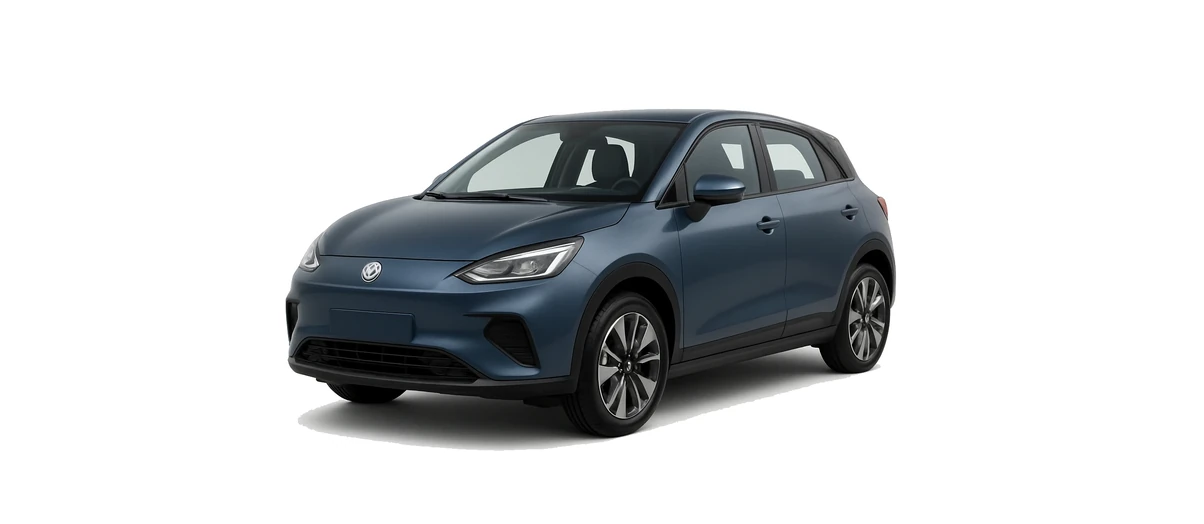
The MG IM5 is a pure electric liftback saloon offered in the UK with three main variants: 75 Standard Range, 100 Long Range and 100 Performance. For charging, the important point is that the IM5 range is not one single technical package. The 75 Standard Range uses a 75 kWh gross LFP battery and a 400 V-class architecture, while the 100 Long Range and 100 Performance use a 100 kWh gross NCM battery and an 800 V-class architecture.
That difference matters most on rapid chargers. The 75 Standard Range is officially rated at up to 153 kW DC and is well matched to 150 kW-class rapid chargers. The 100 kWh cars, by contrast, are listed by MG with up to 396 kW DC charging and can make much better use of suitable 350 kW ultra-rapid chargers. For AC charging, all UK MG IM5 variants use a Type 2 connection and have an 11 kW onboard charger, although many UK homes will charge at around 7 kW on a single-phase wallbox.
MG IM5 Battery and Charging Specifications
The UK MG IM5 uses a Type 2 socket for AC charging and CCS Combo 2 for DC rapid charging. In MG’s UK material this is described as a Combined Type 2 and CCS connection. EV Database UK places the charge port on the left rear side of the car.
| Variant | Battery | WLTP range | AC charging | Official DC charging |
|---|---|---|---|---|
| MG IM5 75 Standard Range | 75 kWh gross / 73.5 kWh usable LFP | 304 miles | Type 2, up to 11 kW | Up to 153 kW, 10-80% in 26 minutes |
| MG IM5 100 Long Range | 100 kWh gross / 96.5 kWh usable NCM | 441 miles | Type 2, up to 11 kW | Up to 396 kW, 10-80% in 17 minutes |
| MG IM5 100 Performance | 100 kWh gross / 96.5 kWh usable NCM | 357 miles | Type 2, up to 11 kW | Up to 396 kW, 10-80% in 17 minutes |
Manufacturer rapid-charging times are achieved under standardised conditions, typically with a suitable charger, favourable battery temperature and an appropriate state of charge. In everyday use, charging speed can vary with weather, charger capability, battery temperature, battery percentage and site load.
Battery Options
The MG IM5 75 Standard Range has a 75 kWh gross battery, with 73.5 kWh listed as usable capacity. This version uses LFP battery chemistry and has an official WLTP combined range of 304 miles. Its electrical architecture is listed as 400 V-class, with a maximum operating voltage of 409 V.
The MG IM5 100 Long Range and 100 Performance both use a 100 kWh gross battery with 96.5 kWh usable capacity. These versions use NCM battery chemistry and are listed with an 800 V-class architecture, with a maximum operating voltage of 875 V. The Long Range is the range-focused version, with an official WLTP combined figure of 441 miles, while the Performance version is rated at 357 miles WLTP combined.
Because the 75 kWh and 100 kWh cars have different architectures and rapid-charging limits, it is best to treat them as different charging profiles rather than assuming every MG IM5 will behave the same at a rapid charger.
AC Charging Speed
All UK MG IM5 variants have an 11 kW AC onboard charger and use a Type 2 connection. On a three-phase AC supply, such as some workplace, destination and public AC posts, the car can accept up to 11 kW. For drivers who regularly use 11 kW or 22 kW public AC posts, a three-phase Type 2 charging cable may be worth choosing so the car can use its full AC capability where the supply allows.
At home in the UK, the more common setup is a single-phase 7 kW or 7.4 kW wallbox. MG’s UK brochure gives 10-100% AC charging times on a 7 kW charger as around 12 hours for the 75 Standard Range and around 16 hours for the 100 Long Range and 100 Performance. EV Database’s empty-to-full estimates are broadly similar, at about 11 hours 45 minutes for the 75 kWh car and about 15 hours 30 minutes for the 100 kWh variants on typical single-phase AC charging.
A 3-pin charging cable is generally best suited as a backup or occasional charging solution, but can be used regularly if a qualified electrician has confirmed the socket and electrical installation are suitable for sustained EV charging. For most IM5 owners, a dedicated Type 2 home wallbox will be the more convenient and robust everyday option.
DC Rapid Charging Speed
DC rapid charging is where the biggest difference between MG IM5 variants appears. The 75 Standard Range is officially rated at up to 153 kW DC, with a 10-80% charging time of 26 minutes when using a suitable 350 kW charger under standardised conditions. In practice, a 150 kW-class charger is already close to the car’s maximum DC capability, so using a higher-rated charger will not necessarily deliver a meaningful time saving.
The 100 Long Range and 100 Performance are much faster on suitable ultra-rapid chargers. MG lists both 100 kWh variants at up to 396 kW DC, with a 10-80% time of 17 minutes on a 350 kW charger. EV Database UK lists a slightly lower maximum figure, but still places the 100 kWh cars firmly in the high-power ultra-rapid category. For practical route planning, the key point is that the 100 kWh versions can benefit from a 350 kW-class charger in a way the 75 Standard Range generally cannot.
As with most EVs, charging beyond 80% on a rapid charger is usually slower. On long journeys, it is often quicker to arrive at a lower state of charge, charge to around 70-80%, then continue to the next stop rather than waiting for the final 20%.
Range and Efficiency
Official WLTP range figures are useful for comparing models, but they should not be treated as guaranteed everyday range. The MG IM5 75 Standard Range is rated at 304 miles WLTP combined, the 100 Long Range at 441 miles, and the 100 Performance at 357 miles.
For a more cautious UK planning figure, EV Database estimates around 250 miles of real-world range for the 75 Standard Range, around 325 miles for the 100 Long Range and around 300 miles for the 100 Performance. Actual range will vary with motorway speed, outside temperature, tyre choice, load, driving style and use of heating or air conditioning.
The standard heat pump listed in MG’s UK brochure should help improve cabin heating efficiency in colder weather compared with purely resistive heating, although winter motorway driving will still reduce range compared with mild-weather mixed driving.
Charging at Home
For most MG IM5 drivers, home charging will be the simplest and cheapest way to keep the car ready for daily use. A dedicated Type 2 wallbox rated at around 7 kW is the normal UK home installation. It is fast enough to replenish typical daily mileage overnight and can usually take advantage of off-peak EV tariffs if the charger and energy supplier support scheduled charging.
If you own the 75 Standard Range, a 7 kW home charger should take roughly 12 hours for a 10-100% charge based on MG’s brochure figure. The 100 kWh variants take longer because of their larger usable battery capacity, with MG quoting around 16 hours from 10-100% on a 7 kW AC charger.
Most drivers do not need to charge from near empty to 100% every night. A common routine is to plug in during off-peak hours and set a charging limit suitable for daily use, then charge higher before longer journeys if needed. Owners should follow MG’s current owner guidance for preferred charge limits, particularly because the IM5 uses different battery chemistries depending on variant.
Public Charging
Public charging for the MG IM5 splits into two main types: AC destination charging and DC rapid or ultra-rapid charging. AC posts are commonly found at workplaces, hotels, car parks, supermarkets and town-centre locations. These often require you to bring your own Type 2 cable. The IM5 can accept up to 11 kW AC where three-phase power is available, although many UK AC posts and most home chargers provide around 7 kW on single phase.
DC rapid and ultra-rapid chargers have a tethered CCS connector, so you do not use your own Type 2 cable for rapid charging. For the 75 Standard Range, a charger rated around 150 kW is a sensible match. For the 100 Long Range and 100 Performance, choosing a reliable 350 kW-class ultra-rapid charger gives the best chance of approaching the fastest advertised charging times, subject to conditions.
Vehicle-Specific Features
MG’s UK brochure lists a heat pump as standard across the IM5 range. This is useful for energy-efficient cabin heating, particularly in colder conditions. Vehicle-to-Load charging is also listed as standard, meaning the car can supply power to external devices using suitable equipment, within the limits set by MG.
Vehicle-to-Grid and Vehicle-to-Home support should not be assumed. The sources reviewed list V2G and V2H as not supported. Battery preconditioning is not clearly confirmed in the UK sources reviewed, so it is best not to rely on a specific preconditioning function unless it is confirmed in current MG owner documentation for your vehicle.
Charging Tips
- Choose the right cable: a Type 2 cable is the correct AC cable type for the MG IM5.
- Consider three-phase if you use public AC often: the IM5 can accept up to 11 kW AC on a suitable three-phase supply.
- Match rapid chargers to your variant: the 75 Standard Range is well matched to 150 kW-class chargers, while the 100 kWh cars can make better use of 350 kW ultra-rapid units.
- Plan around 10-80% on long trips: this is usually the most time-efficient rapid-charging window.
- Do not rely solely on WLTP range: use variant-specific real-world estimates when planning motorway journeys.
- Check your home electrics: use a qualified installer for a wallbox and have any regular 3-pin charging setup professionally assessed.
Frequently Asked Questions
What charging cable does the MG IM5 use?
The MG IM5 uses a Type 2 cable for AC charging. For DC rapid charging, it uses the CCS Combo 2 connector attached to the rapid charger.
Can the MG IM5 charge at 11 kW AC?
Yes. UK MG IM5 variants have an 11 kW AC onboard charger. To reach 11 kW, you normally need a suitable three-phase AC supply. Many UK homes charge at around 7 kW on single phase.
How long does the MG IM5 take to charge at home?
MG lists 10-100% charging on a 7 kW AC charger as around 12 hours for the 75 Standard Range and around 16 hours for the 100 Long Range and 100 Performance.
Do all MG IM5 versions rapid charge at the same speed?
No. The 75 Standard Range is officially rated at up to 153 kW DC and 10-80% in 26 minutes. The 100 Long Range and 100 Performance are listed at up to 396 kW DC and 10-80% in 17 minutes on a suitable 350 kW charger.
Is the MG IM5 a plug-in hybrid?
No. UK sources describe the MG IM5 as a battery-electric vehicle only. No UK PHEV, hybrid or range-extender version was found in the reviewed data.
What This Means for Drivers
The MG IM5 is a strong example of why variant-specific charging information matters. If you choose the 75 Standard Range, you get a large LFP battery, useful range and rapid charging that is well suited to 150 kW-class infrastructure. If you choose the 100 Long Range or 100 Performance, the larger NCM battery and 800 V-class architecture make 350 kW ultra-rapid charging much more relevant.
For everyday UK ownership, however, all versions are straightforward: use a Type 2 cable for AC charging, install or use a 7 kW home wallbox where possible, and consider a three-phase Type 2 cable if you regularly access 11 kW workplace or public AC posts. On longer trips, plan rapid charging by variant rather than by model name alone.
Looking for a Charging Cable for MG IM5?
You can find Type 2 charging cables suitable for MG IM5 AC charging, including options for home, workplace and public charging use.
Please note that this information is intended as a guide. Charging specifications may change due to model and year of manufacture. For precise information, always refer to your vehicle user manual.

