
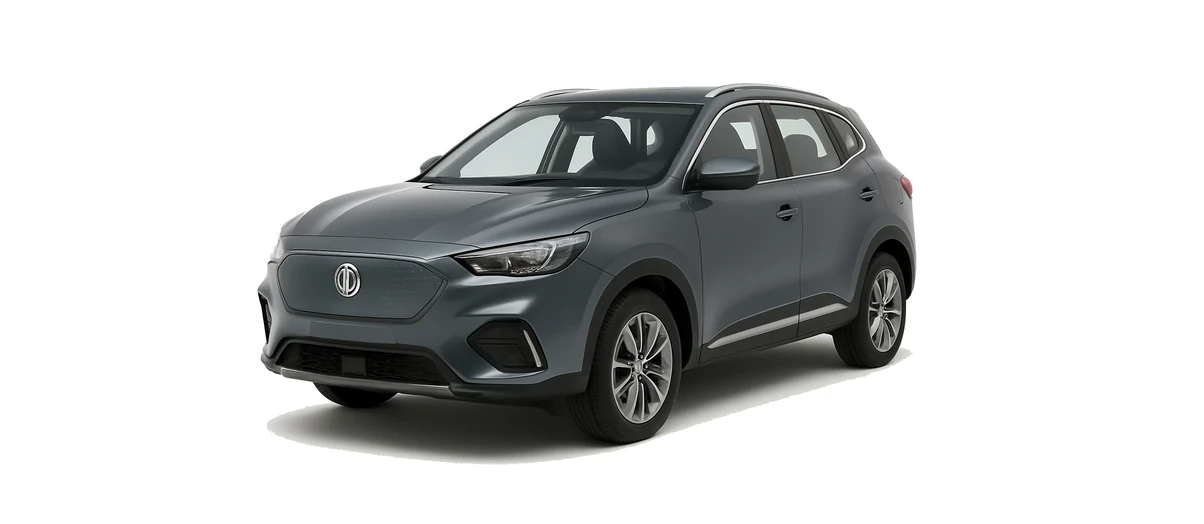
The MG HS is a mid-size SUV sold in the UK with several different powertrains, so the first step is knowing which version you have. Petrol and Hybrid+ versions of the MG HS do not plug in and do not need an EV charging cable. This guide is for the MG HS Plug-in Hybrid, also known as the MG HS PHEV.
For cable choice, the key point is simple: the MG HS Plug-in Hybrid uses Type 2 AC charging. It is designed primarily for home wallboxes, workplace charge points and public AC chargers rather than rapid motorway charging. Current UK MG HS Plug-in Hybrid models use a larger battery than earlier cars, so charging times and electric range are not the same across all used examples.
MG HS Battery and Charging Specifications
The current UK MG HS Plug-in Hybrid, based on the June 2025 UK brochure data, has a 24.7 kWh nominal battery with 23.2 kWh usable capacity. MG lists this as a lithium-ion LFP battery. The official electric-only range is up to 75 miles WLTP combined, with up to 84 miles WLTP city range.
Charging is via a Type 2 AC connection. The current model is listed with 7 kW AC charging, giving a full charge in about 4 hours from empty to 100%. MG also lists 2.2 kW domestic three-pin charging at about 7 hours 30 minutes to 100%.
Earlier MG HS Plug-in Hybrid models, sold roughly from 2020 to 2024, used a smaller 16.6 kWh battery and different charging hardware. Those cars are often quoted with around 32 miles WLTP electric range in UK charging guides, while MG Europe information for the related MG EHS PHEV lists a 3.7 kW onboard charger and about 4.5 hours to full. If you are buying a used MG HS PHEV, it is worth checking which generation you have before relying on a single range or charging-time figure.
Battery Options
There are two main MG HS Plug-in Hybrid battery contexts that UK drivers are likely to encounter:
- Current UK MG HS Plug-in Hybrid SE/Trophy: 24.7 kWh nominal battery capacity, 23.2 kWh usable capacity, Type 2 AC charging, up to 75 miles WLTP combined electric range.
- Earlier MG HS Plug-in Hybrid / MG EHS PHEV models: 16.6 kWh battery, shorter official electric range and typically lower-power AC charging than the current UK car.
This difference matters because the current car can cover many daily commutes on electric power alone if charged regularly. The earlier model can still be useful for local electric driving, but it has a smaller battery and should not be compared directly with the latest 24.7 kWh version.
AC Charging Speed
AC charging is the main charging method for the MG HS Plug-in Hybrid. For the current UK model, MG lists a 7 kW charge time of about 4 hours to reach 100%. This makes a dedicated home wallbox a practical option for overnight charging, evening top-ups and keeping the car ready for electric driving each day.
A Type 2 charging cable is the right cable for most untethered home chargers, workplace charge points and public AC posts. Some home wallboxes are tethered, meaning the cable is attached to the unit; others are untethered and require you to plug in your own Type 2 cable.
The current car can also be charged from a domestic three-pin socket at a listed 2.2 kW, taking about 7 hours 30 minutes to reach 100%. A three-pin charger is generally best suited as a backup or occasional charging solution, but can be used regularly if a qualified electrician has confirmed the socket and electrical installation are suitable for sustained EV charging.
DC Rapid Charging Speed
No CCS or DC rapid charging port is confirmed for the UK MG HS Plug-in Hybrid in the data reviewed for this guide. That means it should be treated as an AC-charging plug-in hybrid, not as a rapid-charging electric car.
In practical terms, you should not plan journeys around 10-80% rapid-charging stops in an MG HS PHEV. Instead, charge at home, at work or on public AC posts when parked for a few hours. On longer trips, the petrol engine provides the extended range, while the battery can be used for local driving, town sections and lower-speed journeys where electric running is most useful.
Range and Efficiency
The current UK MG HS Plug-in Hybrid has an official electric-only range of up to 75 miles WLTP combined. MG also quotes up to 84 miles WLTP city range, reflecting the fact that plug-in hybrids often perform well in urban and stop-start driving when the battery is charged.
Independent UK testing gives a useful real-world reference point. Auto Express recorded 68.1 miles of all-electric range in its plug-in hybrid testing, which is close to the official figure and notably strong for a PHEV SUV. As with any electrified vehicle, actual range will vary depending on temperature, speed, terrain, tyre condition, load, driving style and how much heating or air conditioning is used.
For the earlier 16.6 kWh MG HS Plug-in Hybrid, drivers should expect a shorter electric range. UK charging guides commonly quote around 32 miles WLTP for the 2020-era car. If you are comparing used models, avoid assuming that the latest 75-mile WLTP figure applies to older vehicles.
Charging at Home
Home charging is the most convenient way to run an MG HS Plug-in Hybrid efficiently. If you can charge overnight or while the car is parked at home, you are more likely to begin each day with a full battery and use electric power for short journeys.
For the current 24.7 kWh model, a 7 kW home wallbox should take about 4 hours from empty to full. In everyday use, you may not arrive home with a completely empty battery, so top-ups can be shorter. For example, plugging in after local errands, a commute or the school run may only require a partial recharge.
An untethered wallbox will require a separate Type 2 charging cable. Many owners prefer having their own cable available because it can also be used at many public AC chargers. If your home charger is tethered, you may still want a separate cable for workplace or destination charging.
When using a three-pin domestic charger, pay attention to safety and convenience. Three-pin charging is slower and places a sustained load on the socket for several hours. It is best treated as a backup or occasional method unless a qualified electrician has checked the socket and wider electrical installation for regular EV charging use.
Public Charging
Public charging for the MG HS Plug-in Hybrid is mainly about AC destination charging. This includes supermarket chargers, workplace bays, hotel chargers, town-centre posts and car parks. If the unit is untethered, you will need your own Type 2 cable.
Because the MG HS PHEV is not confirmed with DC rapid charging, the most useful public chargers are those where the car can be parked for a meaningful amount of time. A 7 kW post suits shopping trips, office parking, gym visits or longer appointments. Very high-powered rapid chargers are generally aimed at fully electric vehicles with CCS charging and are not the natural match for this model.
It is also worth checking pricing. Some public AC chargers bill per kWh, some by time, and some include overstay fees. With a plug-in hybrid, the battery is smaller than a full EV battery, so the cost and convenience of a public top-up will depend on how long you are parked and what you plan to do with the electric range afterwards.
Vehicle-Specific Features
The current MG HS Plug-in Hybrid stands out among PHEV SUVs because of its relatively large battery. A usable capacity of 23.2 kWh is sizeable for a plug-in hybrid, giving the car a longer official electric range than many older PHEVs.
Current Plug-in Hybrid versions also include MG iSMART features with remote or pre-start cabin climate functions, depending on specification and app availability. This can help prepare the cabin before a journey, but it should not be confused with battery preconditioning for rapid charging.
The most important vehicle-specific distinction remains the powertrain. A petrol MG HS and an MG HS Hybrid+ do not use charging cables. Only the MG HS Plug-in Hybrid needs a Type 2 EV charging cable.
Charging Tips
- Confirm the version first: check whether your car is the current 24.7 kWh PHEV or the earlier 16.6 kWh PHEV before comparing charging times or electric range.
- Use a Type 2 cable: this is the correct connector type for home wallboxes, workplace chargers and most public AC posts used by the MG HS PHEV.
- Charge little and often: plug-in hybrids deliver their best fuel-saving benefit when the battery is charged regularly.
- Do not rely on rapid charging: there is no confirmed CCS/DC rapid charging capability for the UK MG HS Plug-in Hybrid in the reviewed data.
- Consider cable length: a longer cable can be more convenient on driveways or awkward public bays, while a shorter cable may be easier to store.
- Use three-pin charging carefully: it is useful as a fallback, but a professionally installed wallbox is usually more convenient for regular charging.
Frequently Asked Questions
Does every MG HS need a charging cable?
No. Only the MG HS Plug-in Hybrid uses a charging cable. Petrol and Hybrid+ versions are not plug-in vehicles.
What charging cable does the MG HS Plug-in Hybrid use?
The MG HS Plug-in Hybrid uses a Type 2 AC charging connection. A Type 2 cable is suitable for untethered home wallboxes, workplace charge points and public AC chargers.
How long does the current MG HS Plug-in Hybrid take to charge?
Current UK brochure data lists about 4 hours to charge to 100% on a 7 kW charger. A 2.2 kW domestic three-pin charge is listed at about 7 hours 30 minutes to 100%.
Can the MG HS Plug-in Hybrid use DC rapid chargers?
No CCS/DC rapid charging connection is confirmed for the UK MG HS Plug-in Hybrid in the data reviewed. It should be planned around AC charging rather than rapid charging.
What is the electric range of the MG HS Plug-in Hybrid?
The current UK 24.7 kWh MG HS Plug-in Hybrid has an official electric-only range of up to 75 miles WLTP combined. Auto Express recorded 68.1 miles in independent testing. Earlier 16.6 kWh models have a shorter quoted electric range, often around 32 miles WLTP in UK charging guides.
What This Means for Drivers
The MG HS Plug-in Hybrid is best understood as a practical AC-charging PHEV SUV. The current model’s larger battery gives it a useful electric range for commuting, school runs and local journeys, provided it is charged regularly. A 7 kW home wallbox and a Type 2 cable are the most convenient combination for most owners.
Used-car buyers should be particularly careful. The earlier 16.6 kWh MG HS PHEV and the current 24.7 kWh model have different range and charging expectations. Before buying a cable or comparing running costs, confirm the model year, battery size and charging specification of the exact car.
Looking for a Charging Cable for MG HS?
If you drive an MG HS Plug-in Hybrid, choose a Type 2 charging cable suitable for your home wallbox, workplace charger or public AC charging needs. We offer MG HS charging cables to help you charge conveniently at home and on the road.
Please note that this information is intended as a guide. Charging specifications may change due to model and year of manufacture. For precise information, always refer to your vehicle user manual.

