
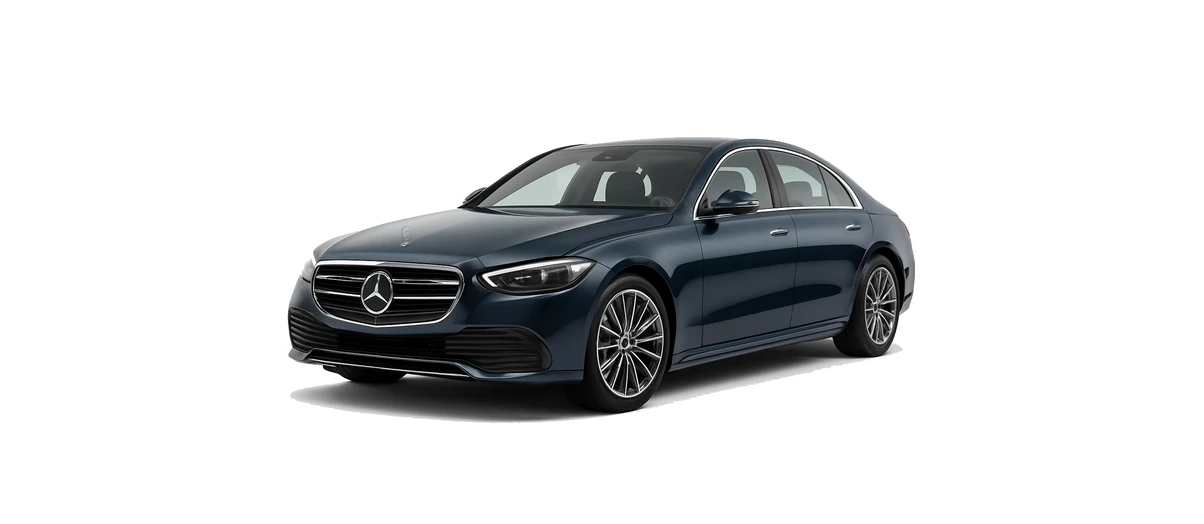
The Mercedes S 450e is not a fully electric car; it is a petrol plug-in hybrid version of the Mercedes-Benz S-Class. That distinction matters, because the best way to charge and use it is different from a battery-electric vehicle. With a sizeable usable battery for a PHEV, a long official electric range and unusually strong charging capability, the S 450e rewards owners who plug in regularly rather than treating the battery as an occasional extra.
Current UK Mercedes-Benz data lists the S 450 e L / S 450 e Long as a long-wheelbase luxury saloon with a petrol plug-in hybrid powertrain, a usable battery capacity of 21.96 kWh, up to 67 miles of WLTP electric range, 11 kW AC charging and 60 kW DC rapid charging. Earlier W223/V223 S 450e examples may have different outputs, range figures or equipment, so used-car buyers should always check the exact model year, vehicle specification or VIN.
View Mercedes S 450e Charging Cables
Mercedes S 450e Battery and Charging Specifications
The current UK Mercedes S 450e uses a 2,999 cc six-cylinder petrol engine combined with a 120 kW electric motor. Mercedes-Benz UK lists the latest S 450 e L with a 320 kW / 435 hp system output, although earlier cars may be quoted differently. For charging purposes, the key point is that this is a large-battery plug-in hybrid with both Type 2 AC charging and CCS DC charging.
- Vehicle type: petrol plug-in hybrid electric vehicle
- Body style: long-wheelbase luxury saloon
- Charging port: Type 2 for AC charging and CCS for DC rapid charging
- Usable battery capacity: 21.96 kWh on current UK data
- Official electric range: up to 67 miles WLTP
- Maximum AC charging: 11 kW where supported
- Maximum DC charging: up to 60 kW
This combination makes the S 450e unusual among plug-in hybrids. Many PHEVs rely mainly on slower AC charging and do not offer rapid charging at all. The S 450e can use AC charging for everyday home, workplace and destination charging, while its CCS port gives the option of short rapid-charging stops when that genuinely helps your journey.
Battery Options
For the current UK Mercedes S 450e, Mercedes-Benz lists a usable battery energy content of 21.96 kWh. Mercedes-Benz UK vehicle and tax data, along with several third-party data sources, also refer to a 28.6 kWh input or gross capacity. For owner guidance, the usable figure is the more relevant one because it better reflects the energy available for electric driving.
There is no need to choose between multiple battery sizes on current UK S 450e data in the way you might with some fully electric cars. However, specification can vary by model year and market, so if you are buying used, it is sensible to confirm the exact derivative and charging equipment. This is especially important for cars registered across 2022 to 2025, where published power outputs and WLTP bands may not match the latest UK S 450 e L figures.
AC Charging Speed
AC charging is the most natural way to charge the Mercedes S 450e. Current UK data lists a maximum AC charging capacity of 11 kW, with Mercedes-Benz quoting around 2 hours 15 minutes for a full AC charge under suitable conditions. That 11 kW figure is important, because it normally requires a compatible three-phase AC charge point.
Many UK homes have single-phase electrical supplies, and most domestic wallboxes are rated up to 7.4 kW. On that kind of home charger, the S 450e is likely to charge more slowly than the official 11 kW figure. The exact time will depend on the charger, the vehicle’s state of charge, ambient conditions and any charging settings selected in the car.
For cable selection, a Type 2 to Type 2 charging cable rated for at least 32 amps is the practical choice for untethered UK public AC posts and untethered home charge points. If you want the best chance of accessing the S 450e’s full 11 kW AC capability at suitable workplace or public three-phase posts, a 32 amp three-phase Type 2 cable is the most future-proof option.
DC Rapid Charging Speed
One of the S 450e’s standout charging features is its support for DC rapid charging. Current UK Mercedes-Benz data lists CCS DC charging at up to 60 kW, with a 10-80% charging time of around 20 minutes. For a plug-in hybrid, that is notably quick and can be genuinely useful if you want to extend electric running during a busy day or add charge during a short stop.
However, it is worth thinking about rapid charging differently from a fully electric car. The S 450e has a much smaller usable battery than a BEV, so rapid-charging sessions are usually brief. You are not planning an entire long-distance journey around electric charging in the same way you would in an EQE, EQS or another battery-electric vehicle. Because the S 450e also has a petrol engine, long-distance driving is best planned around both charging opportunities and fuel use.
DC charging may also cost more per kWh than home or workplace charging. For many owners, rapid charging will be a helpful option rather than the default way to run the car.
Range and Efficiency
Mercedes-Benz UK lists the current S 450e with up to 67 miles of WLTP electric range, with EAER data around a similar level. That is a long official electric range for a plug-in hybrid and means many local journeys can be completed without using the petrol engine, provided the car is charged regularly.
As with any plug-in vehicle, the WLTP figure should not be treated as a guaranteed real-world result. Electric range can be affected by temperature, motorway speeds, tyre and wheel choice, passenger and luggage load, driving style and use of cabin heating or air conditioning. In gentle urban and suburban driving, the S 450e should be able to make good use of its battery. In cold weather or at higher speeds, expect the electric range to be lower than the official figure.
The biggest efficiency advantage comes from plugging in whenever practical. If the car is used for short trips but rarely charged, it becomes a heavy petrol hybrid rather than a luxury saloon capable of meaningful electric mileage.
Charging at Home
Home charging is usually the easiest and most cost-effective way to run a Mercedes S 450e. With a dedicated wallbox, you can start most days with a full battery and use electric power for commuting, school runs, local appointments and town driving. For an owner whose daily mileage sits within the electric range, that can significantly reduce petrol use.
A 7.4 kW single-phase home charger will not normally provide the full 11 kW AC charging rate listed for the car, but it should still be more than adequate for overnight charging. If you have access to a three-phase supply and a suitable charger, the S 450e may be able to use its higher AC charging capability and complete a full charge more quickly.
A 3-pin charger is generally best suited as a backup or occasional charging solution, but can be used regularly if a qualified electrician has confirmed the socket and electrical installation are suitable for sustained EV charging. For a car like the S 450e, a properly installed wallbox is usually the better long-term solution because it is faster, safer and more convenient for regular use.
Public Charging
For public AC charging in the UK, the Mercedes S 450e uses a Type 2 connection. Many public AC posts are untethered, meaning you need to bring your own Type 2 to Type 2 cable. This applies to many town-centre posts, hotel chargers, workplace chargers, car parks and destination chargers.
Because the S 450e can charge at up to 11 kW on AC where supported, cable rating matters. A 32 amp three-phase Type 2 cable is the best match if you want compatibility with three-phase 11 kW posts. It will also work on many lower-powered Type 2 AC chargers, subject to the charge point and vehicle settings.
For rapid charging, the CCS connector is tethered at the charger, so you do not need your own DC cable. Simply connect the rapid charger’s CCS plug to the car. The S 450e’s 60 kW peak rate is useful, but you should still consider whether rapid charging makes economic and practical sense for each journey. If you can charge cheaply at home or at work, that will usually be the preferred option.
Vehicle-Specific Features
The S 450e’s most important charging-related feature is its combination of strong AC charging and rare-for-a-PHEV DC rapid charging. The 11 kW AC onboard charger means it can make good use of suitable three-phase destination and workplace chargers, while the 60 kW CCS capability gives flexibility when you need a quick battery top-up.
Some Mercedes-Benz plug-in hybrid models with DC charging have been reported to support Plug & Charge functionality through Mercedes me Charge when correctly equipped and activated. If this feature matters to you, check the specific UK vehicle, Mercedes me account setup and charging provider compatibility before relying on it.
For used vehicles, specification checks are particularly important. Do not assume that every S 450e has identical charging equipment, official range or power output. The safest approach is to use the VIN, Mercedes-Benz documentation or the car’s onboard charging information to confirm the exact details.
Charging Tips
- Use a 32 amp Type 2 cable: choose Type 2 to Type 2 for untethered UK AC posts and home chargers.
- Consider three-phase: a 32 amp three-phase Type 2 cable is the best fit for accessing up to 11 kW AC where the charger supports it.
- Plug in often: the S 450e works best when treated as a large-battery PHEV and charged whenever parked at home or work.
- Use DC charging selectively: rapid charging is helpful, but home and workplace AC charging will usually be cheaper and more convenient.
- Do not rely on WLTP range as a promise: weather, speed and driving style can all reduce electric range.
- Check used-car specifications: model-year differences mean exact range, output and equipment should be verified before buying accessories.
Frequently Asked Questions
Is the Mercedes S 450e fully electric?
No. The Mercedes S 450e is a petrol plug-in hybrid. It can drive on electric power for local journeys when charged, but it also has a petrol engine for longer trips and hybrid operation.
What charging cable does the Mercedes S 450e need?
For UK AC charging, the S 450e uses a Type 2 connection. A Type 2 to Type 2 cable rated for at least 32 amps is recommended for untethered home, workplace and public AC charge points. A three-phase 32 amp cable is the most future-proof option for 11 kW AC charging.
How long does the Mercedes S 450e take to charge?
Mercedes-Benz UK quotes around 2 hours 15 minutes for AC charging at up to 11 kW under suitable conditions. On many UK single-phase 7.4 kW home chargers, a full charge may take longer. DC rapid charging is listed at up to 60 kW, with 10-80% taking around 20 minutes.
Can the Mercedes S 450e use rapid chargers?
Yes, current UK data lists CCS DC rapid charging at up to 60 kW. The rapid charger provides the tethered CCS cable, so you do not need to carry a separate rapid-charging cable.
Is public rapid charging worth it for a plug-in hybrid?
Sometimes. It can be useful if you want to extend electric running during the day, but it is not always the cheapest or most natural charging pattern for a PHEV. Home, workplace and destination AC charging will suit most owners better for regular use.
What This Means for Drivers
The Mercedes S 450e is best understood as a luxury plug-in hybrid that is genuinely worth charging properly. Its official electric range is long for a PHEV, its 11 kW AC charging is stronger than many plug-in hybrids, and its 60 kW CCS rapid charging adds flexibility that many rivals do not offer. To get the benefit, owners should build charging into their normal routine rather than leaving the battery empty.
For most UK drivers, the ideal setup is a dedicated home wallbox, regular workplace or destination charging where available, and a good-quality Type 2 to Type 2 cable kept in the car. If you regularly use public or workplace AC chargers, choosing a 32 amp three-phase cable makes sense because it gives the S 450e the best chance of using its full AC capability on compatible charge points.
Looking for a Charging Cable for Mercedes S 450e?
We offer Mercedes S 450e charging cables suitable for UK Type 2 AC charging, including options for home, workplace and public charging.
View Mercedes S 450e Charging Cables
Please note that this information is intended as a guide. Charging specifications may change due to model and year of manufacture. For precise information, always refer to your vehicle user manual.

