
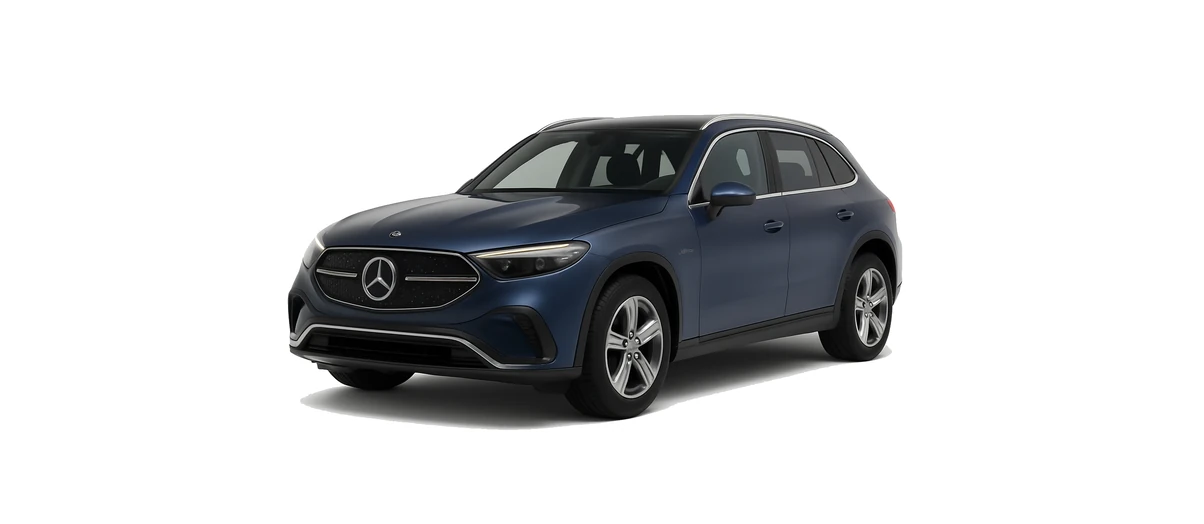
The Mercedes GLC 400 is best understood in the UK as the new all-electric Mercedes-Benz GLC 400 4MATIC electric, also referred to as the GLC with EQ Technology. That distinction matters because the name can be confused with the older EQC 400 or with the GLC 400 e plug-in hybrid sold in some markets. This guide focuses on the current battery-electric GLC 400 4MATIC.
With a 94 kWh usable battery, up to 405 miles of official WLTP range and an 800-volt electrical architecture, the GLC 400 Electric is designed to be a long-distance SUV with very fast DC charging when the right charger is available. In everyday UK use, however, the charging experience will depend heavily on where you plug in: a normal home wallbox, a three-phase AC charger, an older 400 V rapid charger or a high-power 800 V-compatible CCS charger will all deliver very different results.
View Mercedes GLC 400 Charging Cables
Mercedes GLC 400 Battery and Charging Specifications
The UK-market Mercedes GLC 400 4MATIC electric uses a Type 2 socket for AC charging and a CCS Combo 2 connector for DC rapid charging. Type 2 is the standard connection used by most UK home wallboxes and many public destination chargers, while CCS is used for rapid and ultra-rapid charging at motorway services, charging hubs and other high-power locations.
| Vehicle | Mercedes GLC 400 4MATIC electric / GLC with EQ Technology |
|---|---|
| Powertrain | Battery-electric vehicle |
| Usable battery capacity | 94 kWh |
| Charging port | Type 2 AC / CCS Combo 2 DC |
| Standard AC charging | Up to 11 kW three-phase |
| Optional AC capability | 22 kW where specified and supported by the charge point |
| Maximum DC rapid charging | Up to 330 kW on compatible 800 V high-power chargers |
| Quoted DC charging time | About 22 minutes from 10-80% under suitable conditions |
| Official WLTP range | Up to 405 miles, depending on specification |
Battery Options
Mercedes-Benz UK lists the GLC 400 4MATIC electric with a 94 kWh usable battery. Some independent sources estimate a total or gross capacity of around 100 kWh, but the most useful figure for drivers is the usable capacity because that is the portion available for driving.
At 94 kWh usable, the battery is large by family SUV standards. It supports long journeys between charges, but it also means that a full charge from a low state of charge takes a noticeable amount of time on slower AC equipment. For most owners, the practical approach is not to wait until empty and then charge to full, but to top up regularly at home or use rapid charging strategically on longer trips.
AC Charging Speed
The GLC 400 Electric is listed with 11 kW three-phase AC charging as standard. On a suitable three-phase AC charger, Mercedes-Benz quotes a 0-100% AC charging time of around 10.5 hours. This is useful for workplaces, commercial sites and some homes with a three-phase electricity supply.
Many UK homes, however, have a single-phase supply. In that situation, a typical dedicated home wallbox will usually provide up to 7.4 kW, even though the car itself can accept more on three-phase AC. At 7.4 kW, a full charge from very low to 100% will take longer than the headline three-phase figure, but overnight charging will still cover most daily driving needs comfortably.
Mercedes-Benz also describes 22 kW AC capability as optional or equipment dependent. This should not be assumed to be standard on every GLC 400 Electric. Even where the vehicle has 22 kW AC charging, it only helps if the charge point can supply 22 kW and the electrical installation supports it. Many public AC posts in the UK are 7 kW, 11 kW or 22 kW, but whether the car benefits from the full rate depends on both the vehicle specification and the charger.
DC Rapid Charging Speed
DC charging is where the Mercedes GLC 400 Electric’s 800-volt architecture becomes especially important. Mercedes-Benz UK states a maximum DC charging rate of up to 330 kW, with a 10-80% charging time of about 22 minutes on a compatible high-power charger. That makes the car well suited to long motorway journeys when the right charging infrastructure is available.
The key phrase is “compatible”. Not every CCS rapid charger can deliver the car’s peak rate. To get close to the headline figure, you should look for high-power chargers that support 800 V operation and offer sufficient output. On suitable ultra-rapid chargers, the GLC 400 should be able to add a substantial amount of range during a short stop.
Mercedes-Benz UK also notes 400 V DC charging compatibility via an onboard DC charging system, with charging at up to 100 kW where an 800 V charger is not available. This is useful because it means the car can still use older or lower-voltage CCS infrastructure, but charging will be far slower than on an 800 V high-power unit.
Range and Efficiency
The official UK WLTP range for the Mercedes GLC 400 4MATIC electric is listed at up to 405 miles. As with any EV, the exact official figure may vary depending on trim, wheel size, equipment and options. Real-world range will also vary with speed, weather, driving style, passenger load and use of heating or air conditioning.
Independent real-world estimates suggest a range of around 310 miles in mixed use, which is a sensible planning figure for many UK drivers. In warmer weather and on slower A-roads, you may do better. In winter, at sustained motorway speeds or with a fully loaded car, range can be lower.
The GLC 400 Electric is equipped with a heat pump and battery preconditioning according to the available specification data. A heat pump can help improve efficiency in colder conditions, while battery preconditioning is particularly useful before rapid charging because the battery can be brought closer to an ideal charging temperature. For best results, use the car’s navigation and charging planning features when travelling to a rapid charger.
Charging at Home
For most UK owners, home charging will be the cheapest and most convenient way to run the Mercedes GLC 400 Electric. A dedicated Type 2 home wallbox is the usual solution. On a standard single-phase domestic supply, the practical charging rate is typically up to 7.4 kW. That is lower than the car’s 11 kW AC capability, but it is still enough for regular overnight charging.
If you have three-phase electricity at home, the standard onboard charger can use up to 11 kW AC. If the vehicle has the optional 22 kW AC capability and the installation supports it, faster AC charging may be possible. This is not typical for most UK domestic properties, so it is worth checking your supply, wallbox rating and vehicle specification before assuming a particular AC speed.
A 3-pin EV charger can be useful, but it is generally best suited as a backup or occasional charging solution. It can be used regularly if a qualified electrician has confirmed the socket and electrical installation are suitable for sustained EV charging. Because the GLC 400 has a large battery, a 3-pin charge will be slow and is unlikely to be the preferred daily charging method for most owners.
Public Charging
Public AC charging is useful when parked for several hours, such as at hotels, workplaces, town centres or long-stay car parks. For these posts, you will normally use your own Type 2 cable. Depending on the charger and the car’s specification, the GLC 400 may charge at 7 kW, 11 kW or, if equipped and supported, up to 22 kW AC.
For long journeys, CCS rapid and ultra-rapid charging will be much more important. The best match for the GLC 400 Electric is a high-power CCS charger that supports 800 V charging. These are the chargers most likely to unlock the car’s very fast peak charging capability and make the quoted 10-80% time achievable in favourable conditions.
At older 400 V rapid chargers, the GLC 400 can still charge, but Mercedes-Benz lists a lower maximum of up to 100 kW in that situation. This remains useful for topping up, but it is a different experience from using a modern ultra-rapid 800 V-compatible unit. When planning a long trip, it is worth checking charger power, live availability and recent reliability reports before setting off.
Vehicle-Specific Features
The Mercedes GLC 400 Electric is built on a dedicated Mercedes-Benz electric platform with 800-volt architecture. That is the foundation for its high DC charging peak and helps distinguish it from older Mercedes electric SUVs. It should not be confused with the discontinued EQC 400, which has different battery, range and charging characteristics.
Mercedes-Benz UK also describes MB.CHARGE Home Pro as enabling smart bidirectional charging at home, including feeding energy back to the home or grid where supported. This should be treated as dependent on compatible hardware, services, installation and market or regulatory support. It should not be assumed to work with any ordinary home wallbox.
Plug & Charge and Autocharge support are also listed by independent specification sources. Where supported by the charging network and account setup, these features can simplify public charging authentication, reducing the need to use apps or contactless payment each time.
Charging Tips
- Use a Type 2 cable for AC charging. This is the cable you will use at many public AC posts and some untethered home wallboxes.
- Do not expect 11 kW at most UK homes. A typical single-phase home wallbox is usually limited to around 7.4 kW.
- Check whether your car has optional 22 kW AC charging. It is equipment dependent and only useful where the charger can also provide it.
- Prioritise 800 V ultra-rapid chargers on long trips. These are the chargers most likely to approach the car’s 330 kW peak.
- Use 400 V rapid chargers when needed, but plan for slower stops. Mercedes-Benz lists up to 100 kW on 400 V DC equipment.
- Use the 10-80% window for rapid charging. Charging beyond 80% on DC usually slows down, so it is often quicker to make shorter, better-timed stops.
- Charge to 100% mainly when you need it. For daily use, many owners avoid regularly charging to full unless preparing for a longer journey.
Frequently Asked Questions
Is the Mercedes GLC 400 a plug-in hybrid?
In this guide, no. The UK Mercedes GLC 400 4MATIC electric is a battery-electric vehicle. It should not be confused with the GLC 400 e plug-in hybrid sold in some markets.
What charging cable does the Mercedes GLC 400 use?
For AC charging, it uses a Type 2 connection. For DC rapid charging, it uses CCS Combo 2. You normally need your own Type 2 cable for untethered home wallboxes and many public AC chargers, while rapid chargers usually have a tethered CCS cable attached.
Can the Mercedes GLC 400 charge at 22 kW AC?
Mercedes-Benz lists 11 kW AC as the standard maximum. 22 kW AC capability is described as optional or equipment dependent, so you should check the exact vehicle specification. You will also need a compatible three-phase 22 kW charge point.
How fast can the Mercedes GLC 400 rapid charge?
Mercedes-Benz quotes up to 330 kW DC charging and around 22 minutes for a 10-80% charge on a compatible 800 V high-power charger. On 400 V DC chargers, Mercedes-Benz lists charging at up to 100 kW.
What is the range of the Mercedes GLC 400 Electric?
The official UK WLTP range is up to 405 miles, depending on specification. A real-world mixed-use planning figure of around 310 miles is more cautious, with conditions and driving style making a significant difference.
What This Means for Drivers
The Mercedes GLC 400 Electric combines a large usable battery with very rapid 800 V charging, but UK owners should separate the headline figures from everyday charging reality. At home, many drivers will charge at up to 7.4 kW on single-phase power. At public AC posts, the benefit of 11 kW or optional 22 kW charging depends on both the car and the charge point. On the motorway, the fastest charging will come from compatible 800 V ultra-rapid CCS chargers, while older 400 V units will be limited to a lower rate.
For most drivers, the ideal setup is straightforward: a reliable home wallbox for everyday charging, a suitable Type 2 cable for AC charging away from home, and a good understanding of which rapid chargers can make the most of the car’s 800 V system.
Looking for a Charging Cable for Mercedes GLC 400?
If you need a suitable Type 2 cable for home or public AC charging, We offer Mercedes GLC 400 charging cables matched to the vehicle’s UK charging requirements.
View Mercedes GLC 400 Charging Cables
Please note that this information is intended as a guide. Charging specifications may change due to model and year of manufacture. For precise information, always refer to your vehicle user manual.

