
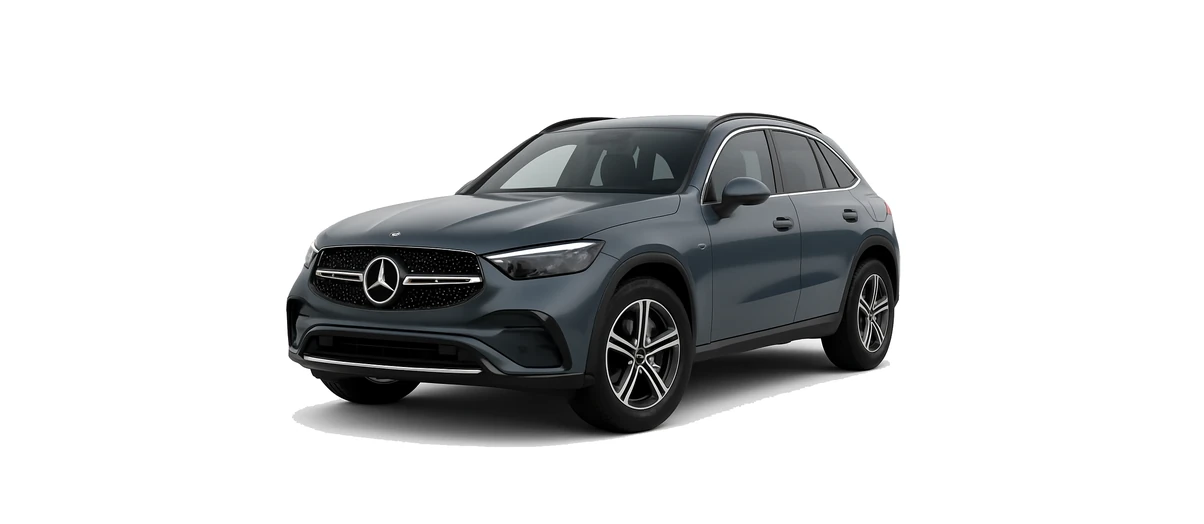
The Mercedes GLC 300e is a petrol plug-in hybrid SUV, not a fully electric vehicle. That distinction matters when choosing a charging cable, planning home charging and comparing public charging options. It also matters because the GLC 300e has changed significantly between generations.
Current UK-market X254-generation GLC 300 e 4MATIC models have a much larger plug-in hybrid battery than the previous X253-generation GLC 300e sold around 2020 to 2022. Mercedes-Benz UK lists the current model with up to 75 miles of WLTP electric range, 25.28 kWh usable battery energy, 11 kW AC charging and 60 kW DC rapid charging. Older UK GLC 300e models were different, with a 13.5 kWh battery and 7.4 kW AC charging listed in previous UK price-list data.
This guide is therefore written as a model-year checker as much as a charging guide. Before buying a cable or comparing charge times, confirm whether your GLC 300e is the newer X254 model or the previous X253/C253 generation, and check the exact specification of your vehicle.
View Mercedes GLC 300e Charging Cables
Mercedes GLC 300e Battery and Charging Specifications
For the current UK X254 Mercedes GLC 300 e 4MATIC, Mercedes-Benz UK technical data lists a usable battery energy content of 25.28 kWh, 11 kW maximum AC charging and 60 kW maximum DC charging. Mercedes-Benz Group also describes the new-generation GLC plug-in hybrid battery as having 31.2 kWh total capacity.
For AC charging in the UK and Europe, the current GLC 300e uses a Type 2 connection. For DC rapid charging, the current car uses CCS Combo 2. This means day-to-day charging is normally handled with a Type 2 cable at home, at work or at destination chargers, while longer-day top-ups can use compatible CCS rapid chargers where available.
Older X253-generation UK GLC 300e models should be treated separately. Previous UK price-list information listed a 13.5 kWh battery, 7.4 kW AC onboard charging and an AC wallbox charging time of about 1 hour 30 minutes from 10% to 100%. Do not assume that current X254 charging figures apply to an older vehicle.
Battery Options
The most important battery split is between the current and previous UK generations:
- Current X254 GLC 300 e 4MATIC: Mercedes-Benz UK lists 25.28 kWh usable battery energy, with Mercedes-Benz Group describing the total high-voltage battery capacity as 31.2 kWh.
- Previous X253 GLC 300 e 4MATIC: previous UK data listed a 13.5 kWh lithium-ion battery. Usable capacity was not confirmed in the reviewed data.
This difference is large for a plug-in hybrid. The newer car has a battery capacity more like a small older electric car than a traditional short-range PHEV, which is why its electric range and charging requirements are noticeably different from earlier GLC 300e models.
AC Charging Speed
AC charging is the charging method most GLC 300e owners will use most often. It covers home wallboxes, many workplace chargers and most slower public posts.
On the current X254 GLC 300 e 4MATIC, Mercedes-Benz UK lists 11 kW maximum AC charging and a 0% to 100% AC charging time of around 2.75 hours when using a suitable wallbox or public charging station. To achieve the full 11 kW AC rate, the charging point must be able to supply the appropriate three-phase power. Many UK homes have single-phase electricity and many home wallboxes are rated at 7.4 kW, so the vehicle may charge below its headline 11 kW capability at home.
For the current model, a three-phase Type 2 charging cable rated for 11 kW or 22 kW is the safest choice if you want to preserve the car’s full AC capability on suitable public or workplace chargers. A 22 kW three-phase Type 2 cable does not make the car charge at 22 kW, but it is compatible with lower-powered posts and gives flexibility across different AC chargers.
For older X253 GLC 300e models with 7.4 kW AC charging, a 32 amp Type 2 cable is appropriate for most UK AC charging. However, because equipment can vary by exact year, market and specification, older vehicles should be checked individually before buying a cable.
DC Rapid Charging Speed
One of the unusual features of the current X254 GLC 300 e 4MATIC is DC rapid charging support. Mercedes-Benz UK lists a 60 kW maximum DC charging rate and a 10% to 80% DC charging time of around 29 minutes.
That is useful for a plug-in hybrid because it makes short electric top-ups more practical during longer days. For example, if you are making several urban trips after a motorway journey, a rapid charge may help you use more electric driving rather than relying entirely on petrol.
However, DC rapid charging should not be viewed as essential for daily ownership. Most owners will get the best value and convenience from regular AC charging at home or work. It is also important not to assume that every older GLC 300e supports DC rapid charging. Previous-generation UK information reviewed for the X253 model primarily listed 7.4 kW AC charging, so DC capability on older cars should be checked against the exact vehicle.
Range and Efficiency
Mercedes-Benz UK lists the current GLC 300 e 4MATIC with a WLTP electric range of up to 75 miles and an EAER figure of 77 miles. In real UK use, the distance you achieve on electric power will depend on speed, temperature, route, payload, tyre condition and use of cabin heating or air conditioning.
The key ownership point is that the current GLC 300e can cover many daily journeys electrically if it is charged regularly. For drivers with a commute, school run or local business route within the electric range, the petrol engine may be used much less often than in older short-range plug-in hybrids.
Older X253-generation UK GLC 300e models were closer to the traditional PHEV pattern. Previous UK data listed around 27 to 28 miles EAER for the SUV and around 26 to 27 miles for Coupé versions. That is still useful for short local trips, but it requires more frequent charging if you want to maximise electric driving.
Charging at Home
For most UK owners, home charging is the simplest way to run a GLC 300e efficiently. Plugging in overnight means the car can start the next day with a full battery, reducing petrol use on local journeys.
A dedicated home wallbox is usually the most convenient option. Many UK wallboxes are single-phase 7.4 kW units. On an older X253 GLC 300e, that aligns well with the listed 7.4 kW AC onboard charger. On the current X254 model, a 7.4 kW single-phase wallbox may not use the car’s full 11 kW AC capability, but it can still provide a practical overnight charge for many owners.
If your property has or can support three-phase charging, the current X254 GLC 300e may be able to make better use of its 11 kW AC capability, provided the charger and installation are suitable. Always use a qualified installer for home charging equipment.
A 3-pin charger is generally best suited as a backup or occasional charging solution, but can be used regularly if a qualified electrician has confirmed the socket and electrical installation are suitable for sustained EV charging. Extension leads should not be used for EV charging.
Public Charging
Public AC charging is useful when parked for a few hours, such as at a workplace, hotel, leisure centre or town-centre car park. For these locations, you will normally use your own Type 2 cable unless the charger has a tethered lead.
If you own the current X254 GLC 300e, a three-phase Type 2 cable rated at 11 kW or 22 kW is a sensible choice because it allows the car to use suitable 11 kW AC charging posts. If you use only a lower-rated cable, the cable may become the limiting factor. If you own an older 7.4 kW X253 car, a 32 amp Type 2 cable is generally the relevant choice, subject to checking your exact vehicle.
For the current model, DC rapid charging uses a tethered CCS connector at the charging station, so you do not need to carry a separate cable for DC rapid charging. You simply connect the charger’s CCS plug to the vehicle. For older cars, do not rely on DC rapid charging being available unless the car’s charging port and vehicle specification clearly confirm it.
Vehicle-Specific Features
The GLC 300e’s charging behaviour is shaped by its plug-in hybrid layout. It combines a petrol engine with an electric drive system, 4MATIC all-wheel drive and a 9G-TRONIC automatic transmission. The charging goal is not to replace every long journey with charging stops, as it would be in a pure electric car, but to keep the battery topped up so that shorter journeys can be completed electrically as often as possible.
The current X254 generation stands out because its battery is unusually large for a mid-size plug-in hybrid SUV and because its 60 kW DC rapid charging capability is not common among PHEVs. That makes charging more flexible than on many plug-in hybrids, but it also makes it more important to choose the right AC cable and to understand the difference between model generations.
Charging Tips
- Check your generation first: current X254 and previous X253 GLC 300e models have very different battery and charging specifications.
- Use Type 2 for AC charging: this is the standard connection for home, workplace and many public AC posts in the UK and Europe.
- Choose a cable that does not restrict the car: current 11 kW-capable cars are best matched with a three-phase Type 2 cable rated for 11 kW or 22 kW.
- Do not expect 22 kW charging from the vehicle: a 22 kW cable can be compatible, but the current UK GLC 300e is listed at 11 kW AC maximum.
- Charge little and often: regular overnight or workplace charging helps maximise electric miles.
- Use DC rapid charging selectively: on current models, it is helpful on longer days, but routine AC charging is usually the core charging method.
Frequently Asked Questions
Is the Mercedes GLC 300e fully electric?
No. The Mercedes GLC 300e is a petrol plug-in hybrid. It can drive on electric power when the battery has charge, but it also has a petrol engine. It should not be confused with the separate all-electric GLC models.
What charging cable does the Mercedes GLC 300e use?
For AC charging, the GLC 300e uses a Type 2 charging cable in the UK and Europe. Current X254 cars with 11 kW AC capability are best served by a three-phase Type 2 cable rated for 11 kW or 22 kW. Older X253 cars with 7.4 kW AC charging are generally suited to a 32 amp Type 2 cable.
Can the Mercedes GLC 300e use rapid chargers?
The current UK X254 GLC 300 e 4MATIC is listed with 60 kW DC rapid charging and a 10% to 80% DC time of around 29 minutes. Older GLC 300e models should be checked individually, as previous-generation UK data reviewed here primarily listed AC charging.
Will an 11 kW GLC 300e charge at 11 kW from my home wallbox?
Not necessarily. Many UK home wallboxes are single-phase 7.4 kW units. The current GLC 300e’s 11 kW AC maximum generally requires suitable three-phase charging infrastructure.
What This Means for Drivers
If you own a current X254 Mercedes GLC 300e, charging is more flexible than many plug-in hybrid owners may expect. The larger battery gives a meaningful electric range, 11 kW AC charging supports quick top-ups on suitable AC posts, and 60 kW DC charging can be useful during busy days.
If you own an older X253 GLC 300e, the car is still straightforward to charge, but it should be treated as a different vehicle for cable and charging-speed purposes. Its smaller battery and 7.4 kW AC charging mean a different charging pattern and different expectations.
In both cases, the best ownership habit is simple: use a suitable Type 2 cable, charge regularly at home or work where possible, and check your exact vehicle specification before relying on headline figures.
Looking for a Charging Cable for Mercedes GLC 300e?
We offer Mercedes GLC 300e charging cables for UK home, workplace and public AC charging, including Type 2 options suitable for different model years and charging setups.
View Mercedes GLC 300e Charging Cables
Please note that this information is intended as a guide. Charging specifications may change due to model and year of manufacture. For precise information, always refer to your vehicle user manual.

