
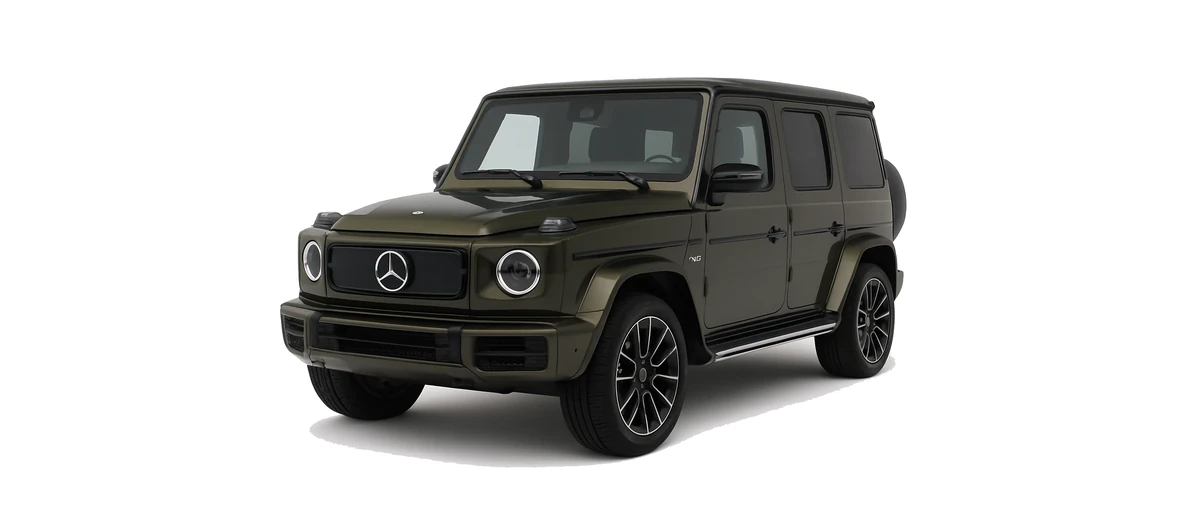
The Mercedes G 580 with EQ Technology is the fully electric version of the G-Class: a large luxury off-road SUV with four electric motors, serious off-road hardware and a substantial battery. For UK owners, the charging setup is refreshingly straightforward: the G 580 uses a Type 2 connection for AC charging and CCS Combo 2 for DC rapid charging.
What makes the electric G-Class different from many sleeker EVs is not the cable type, but the energy demand. Its large battery gives it a useful driving range, but the vehicle is heavy, upright and built for capability rather than aerodynamic efficiency. That means home charging habits, route planning and using rapid chargers effectively matter more than they might in a smaller, lower EV.
View Mercedes G 580 Charging Cables
Mercedes G 580 Battery and Charging Specifications
The UK-market Mercedes G 580 electric, also known as the G 580 with EQ Technology, is a battery-electric vehicle rather than a plug-in hybrid. It uses a modified G-Class ladder-frame architecture, with the battery housed and protected within the structure and four individually controlled electric motors providing all-wheel drive.
For charging, UK and European models use a Type 2 AC inlet and CCS Combo 2 rapid-charging connection. EV Database UK lists the charge port on the right rear side of the vehicle. The on-board AC charger is rated at 11 kW, while DC rapid charging is quoted at up to 200 kW under suitable conditions.
Key UK charging figures to be aware of are:
- Vehicle type: full battery-electric SUV
- AC charging connector: Type 2
- DC rapid charging connector: CCS Combo 2
- Maximum AC charging rate: 11 kW
- Typical UK home wallbox charging rate: up to 7.4 kW on most single-phase homes
- Maximum DC charging rate: up to 200 kW
- Official-style DC charging time: around 32 minutes from 10-80% in suitable conditions
Battery Options
The electric G-Class is offered with a large battery pack. Most independent technical listings and professional reviews quote a usable capacity of around 116 kWh, while some Mercedes-Benz UK information has shown 117 kWh usable energy. This small difference is likely due to rounding or market-specific data presentation, so it is safest to treat the battery as approximately 116-117 kWh usable.
The nominal or gross battery capacity is commonly listed at around 124 kWh. Usable capacity is the more relevant figure for owners, because it reflects the energy generally available for driving after the manufacturer’s battery protection buffers are taken into account.
A battery of this size has two practical implications. First, the G 580 can cover long distances when charged and driven efficiently. Secondly, a full charge from a low state of charge takes time on AC power, especially on a normal UK single-phase home wallbox. Owners who regularly complete long journeys should plan their home charging routine and make use of DC rapid charging when needed.
AC Charging Speed
The Mercedes G 580 has an 11 kW AC on-board charger. This is the maximum rate at which the car can accept AC power, regardless of whether it is connected to a higher-rated public AC post. In the UK, this is an important distinction: some public AC charge points are labelled as 22 kW, but the G 580 should be expected to charge at up to 11 kW AC because of the vehicle’s on-board charger limit.
To achieve the full 11 kW AC rate, you would normally need a three-phase supply, either at a suitable home or business installation or at a compatible public AC charging post. Many UK homes have single-phase electricity, where a typical dedicated wallbox provides up to 7.4 kW. At that rate, the G 580 will still charge reliably, but a full charge from empty will take considerably longer than it would at 11 kW.
As a guide, a 0-100% AC charge is estimated at roughly 12 hours or a little over 12 hours at 11 kW. On a 7.4 kW home wallbox, a full charge can be closer to 18 hours or more. In everyday use, most owners will not be charging from 0-100%; topping up from, for example, 40% to 80% overnight is much more realistic.
DC Rapid Charging Speed
For long-distance journeys, the G 580 supports DC rapid charging at up to 200 kW. Mercedes-Benz and supporting technical sources quote a 10-80% charging time of around 32 minutes when the vehicle, battery temperature and charger are all in suitable condition.
As with all EVs, peak charging power is not maintained from 10% all the way to 80%. The car will follow a charging curve, accepting higher power when the battery is at a lower state of charge and reducing power as the battery fills. This means that charging from 80% to 100% on a rapid charger is usually much slower and is best reserved for situations where you genuinely need the extra range.
For the best results, use high-power CCS chargers rated at 200 kW or above where available. A lower-powered rapid charger will still work, but the session will be limited by the charger rather than by the car. The G 580 also supports navigation-led battery preconditioning, so using the Mercedes navigation system or Electric Intelligence route planning before a rapid-charging stop can help prepare the battery for faster DC charging.
Range and Efficiency
Current UK information for the Mercedes G 580 electric points to a WLTP range of around 291 miles, with some sources and derivative data showing figures in the broader 283-294 mile range. Because figures can vary by specification, wheel choice, market data and testing context, it is worth checking the live Mercedes-Benz UK specification for the exact derivative being ordered.
Real-world range is likely to be lower than the headline WLTP number. EV Database UK estimates around 245 miles in mixed use, and owners should expect conditions to make a noticeable difference. The G 580 is a large, heavy and boxy off-road SUV, so motorway speeds, cold weather, wet roads, roof accessories, off-road driving and enthusiastic acceleration can all reduce efficiency.
This does not make the electric G-Class impractical, but it does make planning more important. A large battery gives a useful buffer, yet it also takes longer to refill. Drivers who cover high daily mileage should think in terms of regular overnight charging and well-planned rapid-charging stops rather than occasional large top-ups.
Charging at Home
For most UK owners, a dedicated home wallbox will be the most convenient way to charge the Mercedes G 580. A 7.4 kW single-phase wallbox is common in UK homes and is well suited to overnight charging. Even though it will not use the car’s full 11 kW AC capability, it provides a safe, consistent and convenient charging routine.
A 32A Type 2 charging cable is the correct cable type for AC charging the G 580 in the UK and Europe. If you use untethered home charging or public AC posts, a good-quality Type 2 cable gives you the flexibility to connect when the charge point does not have its own tethered lead.
Three-phase charging may be worth considering for businesses, rural properties, workshops or homes that already have a suitable three-phase supply. With the right installation, the G 580 can charge at up to 11 kW AC, reducing charging time compared with a 7.4 kW single-phase wallbox.
A 3-pin domestic charger is generally best suited as a backup or occasional charging solution, but can be used regularly if a qualified electrician has confirmed the socket and electrical installation are suitable for sustained EV charging. Because the G 580 has a large battery, charging from a normal domestic socket will be very slow and is unlikely to be ideal as the main charging method for most owners.
Public Charging
Public charging for the Mercedes G 580 falls into two main categories: AC destination charging and DC rapid charging. AC destination chargers are useful when the vehicle will be parked for several hours, such as at hotels, offices, town centres or long-stay car parks. The G 580 can accept up to 11 kW AC, provided the charger and supply can deliver it.
DC rapid charging is the better option when you need to add range quickly during a journey. Look for CCS rapid or ultra-rapid chargers, ideally rated at 200 kW or higher if you want the best possible charging performance. The car will still charge on 50 kW, 100 kW or 150 kW units, but a lower-rated charger will increase the time needed for a meaningful top-up.
On road trips, it is usually more efficient to arrive at a rapid charger with a lower state of charge, charge to around 70-80%, and continue driving rather than waiting for the final 20%. The final part of the battery fills more slowly, so repeated shorter charging stops can often be quicker than one long session to 100%.
Vehicle-Specific Features
The G 580 is unusual among electric SUVs because it is designed to preserve the character and capability of the G-Class. It uses four electric motors, with one associated with each wheel, allowing very precise control of torque. It also includes features such as selectable LOW RANGE off-road gearing, G-TURN for rotating the vehicle on loose or low-friction surfaces, and G-STEERING to help tighten the turning circle off road.
From a charging perspective, the most useful feature is route planning with battery preconditioning. When a rapid charger is set as a destination through the appropriate Mercedes navigation system, the vehicle can prepare the battery temperature before arrival. This can improve the chance of reaching higher charging speeds, especially in cold weather or after gentle driving.
Some specifications also use the rear-door design box as storage rather than a traditional spare wheel cover. Depending on the vehicle’s configuration, this can provide a convenient place to store charging accessories, although owners should still keep cables clean, dry and secured when not in use.
Charging Tips
- Use a 32A Type 2 cable: this is the practical AC cable choice for UK home and public charging.
- Do not expect 22 kW AC charging: even if a public post is rated at 22 kW, the G 580’s AC charging capability is listed at 11 kW.
- Charge overnight where possible: the large battery is best managed with regular top-ups rather than waiting until it is nearly empty.
- Use rapid chargers strategically: on long journeys, CCS chargers rated at 200 kW or above are the best match for the car’s peak DC capability.
- Precondition before rapid charging: enter your charging stop into the Mercedes navigation system where available so the battery can be prepared.
- Allow for winter and motorway range reduction: the G 580’s weight and shape mean high-speed driving and cold weather can have a noticeable effect.
- Avoid unnecessary 100% rapid charges: charging beyond 80% on DC power is usually slower and best kept for trips where the extra range is needed.
Frequently Asked Questions
What charging cable does the Mercedes G 580 use?
The Mercedes G 580 uses a Type 2 cable for AC charging in the UK and Europe. For DC rapid charging, it uses the CCS Combo 2 connector, where the charging cable is normally tethered to the rapid charger.
Can the Mercedes G 580 charge at 22 kW AC?
No. Although some public AC charge points are rated at 22 kW, the G 580’s on-board AC charger is listed at 11 kW. The car will charge at up to its own AC limit, assuming the charger, cable and supply can support it.
How long does the Mercedes G 580 take to charge at home?
On a typical UK 7.4 kW home wallbox, a full 0-100% charge can take around 18 hours or more. In normal ownership, partial overnight top-ups are more common. With a suitable three-phase 11 kW AC supply, a full charge is closer to around 12 hours.
How fast is Mercedes G 580 rapid charging?
The G 580 supports DC rapid charging at up to 200 kW, with a quoted 10-80% time of around 32 minutes in suitable conditions. Actual charging speed depends on charger output, battery temperature, state of charge and site conditions.
What is the real-world range of the Mercedes G 580?
The UK WLTP figure is around 291 miles for current listing data, although published figures vary slightly by source and derivative. A mixed real-world estimate of around 245 miles is a useful planning guide, with lower figures possible in winter, at sustained motorway speeds or during demanding off-road use.
What This Means for Drivers
The Mercedes G 580 is not complicated to charge, but it rewards good planning. A Type 2 cable, a dedicated home wallbox and sensible use of CCS rapid charging will cover most ownership needs. The main point to remember is that this is a high-consumption luxury off-roader with a large battery, so charging sessions are naturally longer than they would be in a smaller EV.
For daily use, the best approach is to charge little and often at home, keeping enough range available for unexpected journeys. For long trips, use the car’s navigation to plan charging stops and enable battery preconditioning before arriving at a rapid charger. With those habits in place, the electric G-Class can be used confidently without making charging more complicated than it needs to be.
Looking for a Charging Cable for Mercedes G 580?
If you need a suitable Type 2 cable for home or public AC charging, We sell charging cables for the Mercedes G 580, including options for UK owners using 32A Type 2 charging equipment.
View Mercedes G 580 Charging Cables
Please note that this information is intended as a guide. Charging specifications may change due to model and year of manufacture. For precise information, always refer to your vehicle user manual.

