
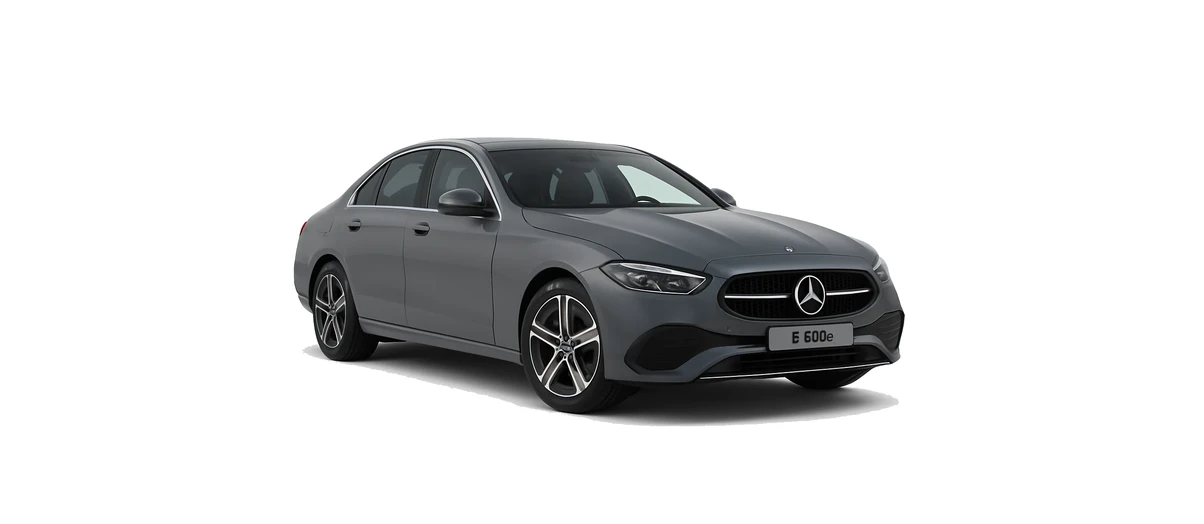
The Mercedes E 300e is a petrol plug-in hybrid E-Class, not a fully electric car. That distinction matters, because charging advice for this model depends heavily on which generation you own. The current UK E 300e, introduced with the W214/S214 E-Class generation from 2023/2024 onward, has a much larger plug-in hybrid battery than earlier versions and can support faster charging. Older W213/S213 E 300e models use different charging hardware and should not be treated as having the same specification.
For current UK models, Mercedes-Benz lists a 25.4 kWh high-voltage battery, 19.53 kWh usable energy content, up to 11 kW AC charging and up to 55 kW DC rapid charging where fitted. Older UK E 300e models from around 2021-2023 were listed with a 13.5 kWh usable battery and 7.4 kW AC charging. In practical terms, that means the correct cable and the charging speeds you can expect depend on the car’s generation, charge flap and specification.
View Mercedes E 300e Charging Cables
Mercedes E 300e Battery and Charging Specifications
The E 300e badge has been used across more than one generation of Mercedes-Benz E-Class, so it is best to start by identifying the car. The current W214 saloon and S214 estate plug-in hybrid models are the long-electric-range versions. These combine a 1,999 cc petrol engine with an electric motor and a comparatively large plug-in hybrid battery.
| Version | Battery | AC charging | DC rapid charging | Connector guidance |
|---|---|---|---|---|
| Current W214/S214 E 300e | 25.4 kWh gross / 19.53 kWh usable | Up to 11 kW | Up to 55 kW where fitted | Type 2 for AC; CCS for DC on compatible cars |
| Older W213/S213 E 300e | 13.5 kWh usable in 2022 UK data | Up to 7.4 kW | Do not assume DC compatibility | Often treated as Type 2 AC; check the charge flap/VIN |
This is why a single universal charging claim for every Mercedes E 300e can be misleading. If you are buying a cable or planning charging stops, confirm whether you have the current W214/S214 plug-in hybrid or the older W213/S213 model.
Battery Options
The current Mercedes E 300e uses a 25.4 kWh high-voltage battery, with Mercedes-Benz UK technical data listing 19.53 kWh usable energy content. For a plug-in hybrid, that is a sizeable battery and is one of the reasons the current car can cover many short and medium journeys on electric power when it is charged regularly.
Older E 300e models are different. UK 2022 E-Class data listed a 13.5 kWh usable battery for the W213/S213 plug-in hybrid models. That smaller battery means a shorter electric-only range and a different charging profile. It also means that advice based on the current 25.4 kWh battery should not automatically be applied to an older E 300e.
If you are unsure which version you have, check the registration date, the vehicle documentation, the charge flap and, where necessary, ask a Mercedes-Benz retailer to confirm by VIN. This is especially important before assuming the vehicle can use CCS rapid charging.
AC Charging Speed
AC charging is the main charging method for most Mercedes E 300e drivers. It is the type of charging used by home wallboxes, workplace charge points and many public destination chargers. A Type 2 Mode 3 cable is the normal cable required for untethered AC charge points.
For the current W214/S214 E 300e, Mercedes-Benz lists a maximum AC charging capacity of 11 kW and an approximate 0-100% AC charging time of around 2 hours when the right charging supply is available. In the UK, many home wallboxes are single-phase and commonly deliver up to around 7.4 kW if the property and installation support it. On that type of home charger, the current E 300e may charge more slowly than the best-case 11 kW figure.
To make use of 11 kW AC charging, the car needs a suitable three-phase AC supply, such as many public or workplace Type 2 charge points. A 22 kW public AC post will not make the current E 300e charge at 22 kW, because the vehicle’s onboard AC charger is the limiting factor. It should charge at up to its own 11 kW limit where the post, cable and vehicle conditions allow.
Older W213/S213 E 300e models were listed in UK data with 7.4 kW AC charging and a wallbox charging time of around 1 hour 30 minutes from 10-100%. For these cars, a 22 kW AC post also will not provide 22 kW charging; the car will charge only up to its onboard AC capability.
DC Rapid Charging Speed
One of the more unusual features of the current Mercedes E 300e is that it can support DC rapid charging, with Mercedes-Benz UK listing up to 55 kW and an approximate 10-80% time of around 20 minutes. That is not common across all plug-in hybrids and can be useful if you are using the car for a longer day and want to restore electric range quickly.
For current UK/EU-style rapid-charging E 300e models, the AC connector is Type 2 and the DC rapid connector is CCS. DC rapid chargers have tethered cables, so you do not need to carry your own cable for CCS charging. You simply connect the charger’s CCS plug to the vehicle, provided your car is equipped for DC charging.
However, this rapid-charging advice should not be applied to every E 300e. Many older W213/S213 cars should be treated as Type 2 AC plug-in hybrids unless CCS compatibility is confirmed on that specific vehicle. Always check the charge flap: a CCS inlet has the Type 2 upper section plus two larger DC pins below it. If your car has only the Type 2 section, it is for AC charging only.
Range and Efficiency
The current Mercedes E 300e has an official UK WLTP electric range in the mid-60-mile area, with around 65-67 miles depending on body style, trim and equipment. Estate versions and higher-specification cars may vary because weight, wheels and equipment can all affect official range.
Real-world electric range will depend on weather, speed, terrain, tyre condition, cabin heating or cooling demand and how the car is driven. As with any plug-in hybrid, the best results usually come from regular charging and using electric power for the journeys it suits best: commuting, school runs, local errands and town driving.
Older E 300e models had a shorter official electric range. UK 2022 data put earlier saloon and estate versions roughly in the low-to-mid-30-mile electric range band. That is still useful for many daily journeys, but it is materially different from the current W214/S214 car.
Charging at Home
Home charging is usually the most convenient and cost-effective way to run a Mercedes E 300e as a plug-in hybrid. Charging overnight or while the car is parked means you can start many days with a full battery, reducing petrol use on shorter journeys.
A dedicated home wallbox is generally the best everyday solution. Most UK home installations are single-phase, commonly offering up to 7.4 kW where the electrical supply supports it. That is enough to charge both current and older E 300e models comfortably during normal parking periods, even if it does not always achieve the current car’s maximum 11 kW AC capability.
For untethered home wallboxes, you will need a Type 2 charging cable. A 32 amp Type 2 cable is a sensible choice for flexibility. If you regularly use three-phase public or workplace AC chargers with a current E 300e, a three-phase Type 2 cable can help you access the car’s 11 kW AC capability where available.
A 3-pin charger is generally best suited as a backup or occasional charging solution, but can be used regularly if a qualified electrician has confirmed the socket and electrical installation are suitable for sustained EV charging. Standard domestic sockets were not all installed with repeated long-duration high-load EV charging in mind, so professional checks are important.
Public Charging
For public AC charging, the Mercedes E 300e uses a Type 2 connection. Many public AC charge points are untethered, meaning you need to bring your own cable. This is where a Type 2 Mode 3 cable is essential.
On the current E 300e, a three-phase AC post can be useful because the car can accept up to 11 kW AC. On a 7 kW public charger, it will charge at up to the charger’s limit. On a 22 kW AC post, it will be limited by the car to up to 11 kW. For an older E 300e with 7.4 kW AC charging, public AC charging will be limited to around that level even if the post is rated higher.
If your current E 300e has CCS DC charging, rapid charging can be useful on longer trips or on days when you have used most of the battery and want to regain electric range quickly. For day-to-day ownership, however, AC charging at home, work or destinations is usually the more natural fit for a plug-in hybrid battery.
Vehicle-Specific Features
The current Mercedes E 300e is part of the fourth-generation Mercedes-Benz plug-in hybrid system. Mercedes-Benz environmental material describes the current high-voltage battery as having internal cooling, supporting thermal management and the car’s DC fast-charging capability.
The most important ownership feature is the size of the current battery relative to many older plug-in hybrids. With regular charging, the current E 300e can cover a substantial share of everyday driving electrically, while still retaining the petrol engine for longer journeys.
Features such as vehicle-to-load, vehicle-to-grid, vehicle-to-home, heat pump equipment or battery preconditioning should not be assumed unless confirmed for your exact UK vehicle and specification. They are not necessary for choosing a Type 2 charging cable, but they can affect how owners understand the car’s broader energy-management capabilities.
Charging Tips
- Identify your generation first: current W214/S214 and older W213/S213 E 300e models have different batteries and charging speeds.
- Choose Type 2 for AC charging: this applies to home wallboxes, workplace chargers and most destination AC chargers.
- Consider a 32 amp cable: it gives useful flexibility across home and public AC charging. A three-phase cable is particularly useful if you want to access 11 kW AC charging on current models where available.
- Do not assume CCS on older cars: check the charge flap or confirm by VIN before planning DC rapid charging.
- Use rapid charging selectively: for current CCS-equipped cars, DC charging is helpful on busy days, but home and workplace AC charging will usually be cheaper and easier.
- Charge little and often: plug-in hybrids work best when charged regularly rather than driven as petrol cars with a permanently depleted battery.
Frequently Asked Questions
Is the Mercedes E 300e fully electric?
No. The Mercedes E 300e is a petrol plug-in hybrid. It can drive on electric power when charged, but it also has a petrol engine.
What charging cable does the Mercedes E 300e need?
For AC charging, the Mercedes E 300e uses a Type 2 cable. A 32 amp Type 2 Mode 3 cable is a good choice for flexibility. Current models that regularly use three-phase AC charging can benefit from a three-phase Type 2 cable.
Can the Mercedes E 300e use rapid chargers?
Current W214/S214 E 300e models can support CCS DC rapid charging at up to 55 kW where fitted, with Mercedes-Benz quoting around 20 minutes from 10-80%. Older E 300e models should not be assumed to have CCS rapid charging; check the charge flap or VIN.
Will a 22 kW AC charger charge the E 300e at 22 kW?
No. The current E 300e is limited by its onboard AC charger to up to 11 kW. Older models listed at 7.4 kW AC will be limited to around that level. A higher-rated AC post does not override the car’s onboard charger limit.
How long does it take to charge at home?
Mercedes-Benz quotes around 2 hours for the current E 300e from 0-100% on suitable 11 kW AC charging. Many UK home wallboxes are single-phase and commonly charge at up to around 7.4 kW, so home charging may take longer. Older 13.5 kWh usable-battery models were listed at around 1 hour 30 minutes from 10-100% on a wallbox.
What This Means for Drivers
The Mercedes E 300e is best understood as two different charging stories. The current W214/S214 version is a long-electric-range plug-in hybrid with 11 kW AC charging and, where fitted, 55 kW CCS rapid charging. That makes it unusually capable for a PHEV and well suited to regular electric driving if you charge at home or work.
Older W213/S213 versions remain practical plug-in hybrids, but with a smaller battery, shorter electric range and 7.4 kW AC charging. For these cars, cable choice is still straightforward: a Type 2 cable for AC charging, with no assumption of CCS rapid charging unless the vehicle itself confirms it.
For most owners, the key is to charge regularly and choose a cable that matches how the car is used. A good Type 2 cable will cover home, workplace and public AC charging, while CCS rapid charging on current compatible models is a useful extra rather than the main charging method.
Looking for a Charging Cable for Mercedes E 300e?
If you need a suitable Type 2 charging cable for your Mercedes E 300e, We offer model-specific cable options for current and earlier E 300e plug-in hybrid models; always confirm your vehicle generation and charge port before ordering.
View Mercedes E 300e Charging Cables
Please note that this information is intended as a guide. Charging specifications may change due to model and year of manufacture. For precise information, always refer to your vehicle user manual.

