
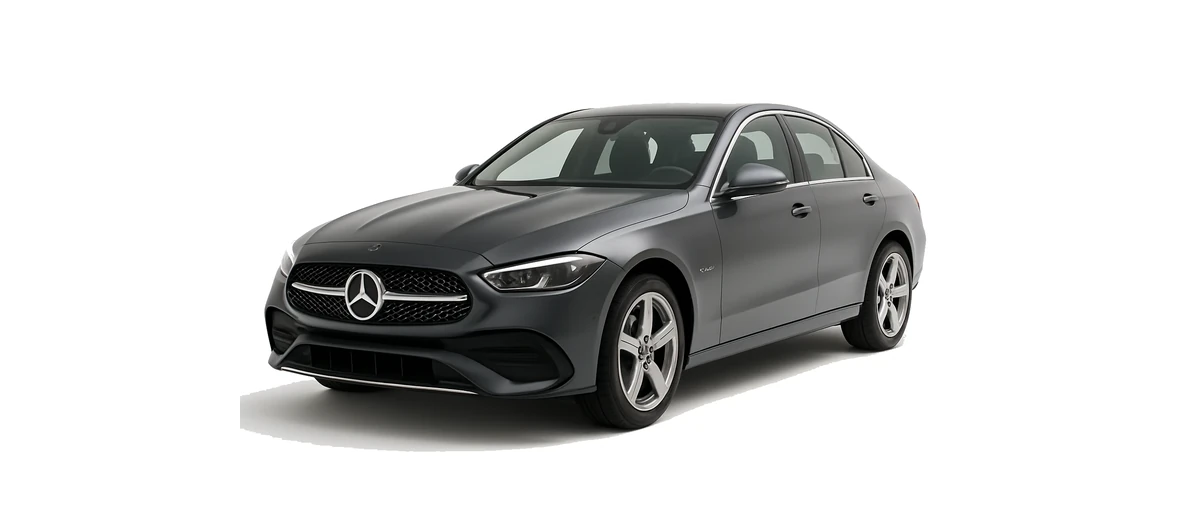
The Mercedes E 300de is a diesel plug-in hybrid E-Class, available in saloon and estate forms. That distinction matters: it is not a fully electric vehicle, so it can run on diesel power when the battery is depleted, but regular charging is still the key to getting the best from its electric driving capability.
It is also important to know which generation of E 300de you own or are buying. UK cars span at least two materially different plug-in hybrid generations. Earlier W213/S213 facelift models, commonly sold around 2020 to 2023, are typically listed with a 13.5 kWh usable battery and 7.4 kW AC charging. Current W214/S214 UK models are different, with Mercedes-Benz UK listing a 19.53 kWh usable battery, 11 kW AC charging and 55 kW DC rapid charging. In other words, there is no single charging specification that safely applies to every E 300de.
This guide explains the differences, how to charge at home and in public, and what to consider when choosing a charging cable for a Mercedes E 300de in the UK.
View Mercedes E 300de Charging Cables
Mercedes E 300de Battery and Charging Specifications
The current UK Mercedes E 300de is part of the W214 saloon and S214 estate E-Class range. It combines a diesel engine with an electric motor and plug-in battery, giving the car a useful electric-only driving range for commuting, local journeys and low-emission urban use, while retaining long-distance diesel flexibility.
For current UK W214/S214 cars, Mercedes-Benz UK lists a usable battery energy content of 19.53 kWh. July 2024 UK specification information also lists a lithium-ion battery capacity of 25.4 kWh for the E 300de saloon and estate. Charging capability is unusually strong for a plug-in hybrid: current UK specifications list up to 11 kW AC charging and up to 55 kW DC charging, with a quoted 10-80% DC charging time of around 20 minutes.
Earlier W213/S213 E 300de models should be treated separately. UK price-list and review data for those cars commonly lists a 13.5 kWh usable battery, 7.4 kW AC charging and a wallbox charging time of roughly 1 hour 30 minutes from near-empty to full. DC rapid charging should not be assumed on these earlier cars unless the individual vehicle and its charging inlet confirm it.
Battery Options
The main battery difference is generation-based rather than a simple optional battery pack choice. If you are comparing used and new E 300de models, this is one of the most important charging points to check.
- Current UK W214/S214 E 300de saloon and estate: Mercedes-Benz UK lists a usable battery capacity of 19.53 kWh, with UK specification information also giving a lithium-ion battery capacity of 25.4 kWh.
- Earlier W213/S213 E 300de models, around 2020-2023: commonly listed with a 13.5 kWh usable battery and a lower AC charging capability.
Because the E 300de name has been used across both generations, it is sensible to check the model year, body code, handbook, charging flap, build sheet or Mercedes specification data before relying on any charging figure. A cable that physically fits a Type 2 AC inlet may still not make an older car charge any faster than its onboard charger allows.
AC Charging Speed
For AC charging, the Mercedes E 300de uses a Type 2 connection in the UK and Europe. A Type 2 Mode 3 cable is the correct style of cable for untethered home wallboxes and many public AC charging posts.
Current UK W214/S214 E 300de models are listed with a maximum AC charging capacity of 11 kW. Mercedes-Benz UK lists a 0-100% AC charging time at a wallbox or public charging station of around 2 hours. UK specification information also gives a 10-100% time of around 3 hours when using a 7.4 kW AC wallbox.
The 11 kW figure requires a suitable three-phase AC supply and charger. Many UK homes have single-phase electricity, and many domestic wallboxes are 7.4 kW units. On that type of home installation, a current E 300de will not receive 11 kW; it will charge at the lower rate available from the wallbox and supply. This is normal and does not indicate a fault.
Earlier W213/S213 cars are different. They are commonly listed with a 7.4 kW onboard AC charger, so an 11 kW or 22 kW public AC post will not make them charge at 11 kW. The car’s onboard AC charger sets the limit. For an earlier E 300de, a good-quality Type 2 cable is still useful, but it should not be bought on the assumption that it unlocks 11 kW charging.
DC Rapid Charging Speed
DC rapid charging is where the generation split becomes especially important. Current UK W214/S214 E 300de models are listed by Mercedes-Benz UK with up to 55 kW DC charging and a 10-80% charging time of around 20 minutes. For a plug-in hybrid, that is a notable capability, because many PHEVs either have slow DC charging or no DC rapid charging at all.
On current DC-capable UK and European cars, DC charging would typically use a CCS/Combo 2 style inlet. However, owners should still confirm the actual vehicle inlet before making any DC-related assumption, especially when buying a used E 300de. Earlier W213/S213 E 300de information commonly shows AC charging only or does not confirm DC rapid charging, so it would be misleading to say that every E 300de supports rapid charging.
For everyday ownership, DC charging on the current model can be useful if you want to restore a meaningful amount of electric range during a short stop. However, routine home and workplace charging will usually be cheaper and more convenient where available.
Range and Efficiency
For the current UK E 300de, Mercedes-Benz UK lists different electric range figures for the saloon and estate. The current saloon is listed with a WLTP electrical range of up to 65 miles and an EAER figure of 71 miles. The current estate is listed with a WLTP electrical range of up to 63 miles and an EAER figure of 67 miles.
These figures make the E 300de unusually practical for electric local driving by plug-in hybrid standards, but real-world range will vary. Temperature, journey speed, use of heating or air conditioning, wheel and tyre specification, terrain, payload and driving style can all affect how far the car travels before the diesel engine is needed.
Earlier W213/S213 cars have a smaller usable battery, so they should not be expected to match the electric range of the current generation. If you are shopping for a used E 300de, compare the exact car’s age and specification rather than assuming the latest Mercedes figures apply.
Charging at Home
For most Mercedes E 300de owners, home charging is the easiest way to maximise electric driving. Plugging in overnight or whenever the car is parked for several hours means the battery can start each day full, allowing short journeys to be completed with little or no diesel use.
A dedicated home wallbox is usually the best routine charging solution. For many UK homes this will be a 7.4 kW single-phase unit. On a current W214/S214 E 300de, this is below the car’s maximum 11 kW AC capability, but it is still fast enough for overnight charging and is reflected in Mercedes UK’s 10-100% 7.4 kW AC charging time of around 3 hours. On an earlier W213/S213 E 300de with 7.4 kW AC charging, a 7.4 kW wallbox is well matched to the car’s onboard charger.
If you have access to three-phase power at home or at work, a current E 300de may be able to use up to its listed 11 kW AC maximum with suitable equipment. This can shorten charging sessions, but it is not essential for most domestic use.
Charging from a domestic 3-pin plug is generally best suited as a backup or occasional charging solution, but can be used regularly if a qualified electrician has confirmed the socket and electrical installation are suitable for sustained EV charging. For routine charging, a properly installed dedicated wallbox is usually the safer and more convenient choice.
Public Charging
When using public AC charging, a Type 2 Mode 3 cable is the key item to carry if the charger is untethered. Many destination chargers at car parks, hotels, workplaces, supermarkets and town centres are AC posts where the driver provides the cable.
On current W214/S214 E 300de models, public AC charging can be useful if you are parked for a couple of hours. If the post and electrical supply can provide 11 kW three-phase AC, the car may be able to use its listed 11 kW maximum. If the post is 7.4 kW single-phase, it will charge more slowly but still conveniently for many stops.
For earlier W213/S213 cars, public AC charging remains useful, but the car is typically limited to 7.4 kW AC. A higher-rated public AC post will not override that vehicle limit.
For current DC-capable cars, rapid charging can be worthwhile on longer journeys where you want to restore electric range quickly. Mercedes lists 55 kW DC and around 20 minutes from 10-80% for the current UK model. For older used examples, check the inlet and specification first, as DC rapid charging should not be assumed.
Vehicle-Specific Features
The most distinctive feature of the Mercedes E 300de is that it is a diesel plug-in hybrid. Many PHEVs use petrol engines, while the E 300de pairs diesel long-distance efficiency with electric running for shorter trips. That makes charging behaviour especially important: the more regularly you charge, the more often the car can use its electric capability instead of relying on the combustion engine.
The second key feature is the difference between generations. The current W214/S214 UK model has a larger usable battery and, according to Mercedes-Benz UK data, stronger charging capability than earlier W213/S213 cars. The current model’s 55 kW DC rapid charging is particularly unusual for a PHEV and can make short public rapid-charge sessions more practical.
Mercedes UK plug-in hybrid equipment information also lists a Mode 3 cable for wallbox and public charging. Owners should still check what was supplied with their individual car, especially on used vehicles where cables may have been removed, lost or replaced.
Charging Tips
- Identify your generation first: check whether your E 300de is an earlier W213/S213 car or a current W214/S214 model before relying on charging speed figures.
- Use a Type 2 Mode 3 cable for AC charging: this is suitable for untethered home wallboxes and many UK public AC chargers.
- Do not overbuy for older cars: an earlier 7.4 kW AC E 300de will not charge at 11 kW simply because the cable or post can support it.
- Check for DC capability on used cars: current UK cars list 55 kW DC charging, but older examples may not support rapid charging.
- Charge regularly: as with any plug-in hybrid, the E 300de delivers its best electric-driving benefit when the battery is topped up often.
- Match the cable to your charging environment: if you often use untethered public AC posts, keeping a suitable Type 2 cable in the boot is highly practical.
Frequently Asked Questions
Is the Mercedes E 300de fully electric?
No. The Mercedes E 300de is a diesel plug-in hybrid. It can drive on electric power when the battery has charge, but it also has a diesel engine for longer journeys and for times when the battery is depleted.
What charging cable does the Mercedes E 300de use?
For AC charging in the UK and Europe, the Mercedes E 300de uses a Type 2 connection. A Type 2 Mode 3 cable is suitable for untethered home wallboxes and many public AC charge points.
Does every Mercedes E 300de charge at 11 kW AC?
No. Current UK W214/S214 E 300de models are listed with 11 kW AC charging, but earlier W213/S213 cars are commonly listed with 7.4 kW AC charging. The car’s onboard charger determines the maximum AC charging rate.
Does every Mercedes E 300de support DC rapid charging?
No. Current UK W214/S214 cars are listed with 55 kW DC charging and a 10-80% time of around 20 minutes, but earlier E 300de models should not be assumed to support DC rapid charging. Check the vehicle inlet and specification.
How far can the current E 300de drive on electric power?
Mercedes-Benz UK lists the current E 300de saloon with up to 65 miles WLTP electrical range and the current estate with up to 63 miles WLTP electrical range. Real-world range will vary with conditions and driving style.
What This Means for Drivers
The Mercedes E 300de can be a very effective plug-in hybrid when it is charged regularly, especially for drivers who combine local electric journeys with longer motorway trips. However, the model’s charging capability depends heavily on generation. Current W214/S214 cars offer a larger usable battery, 11 kW AC charging and confirmed 55 kW DC charging in UK data. Earlier W213/S213 cars are more typically 7.4 kW AC models with a smaller usable battery and no universal DC rapid-charging claim.
For most owners, the practical answer is simple: use a dedicated wallbox for routine charging, carry a Type 2 Mode 3 cable for untethered AC posts, and check your exact vehicle before assuming 11 kW AC or DC rapid charging capability. That approach avoids overestimating the car’s charging speed and helps you choose a cable that fits how you actually use the vehicle.
Looking for a Charging Cable for Mercedes E 300de?
We offer charging cables suitable for Mercedes E 300de AC charging, including Type 2 options for home wallboxes and public AC charge points; always check your vehicle generation and charging specification before ordering.
View Mercedes E 300de Charging Cables
Please note that this information is intended as a guide. Charging specifications may change due to model and year of manufacture. For precise information, always refer to your vehicle user manual.

