
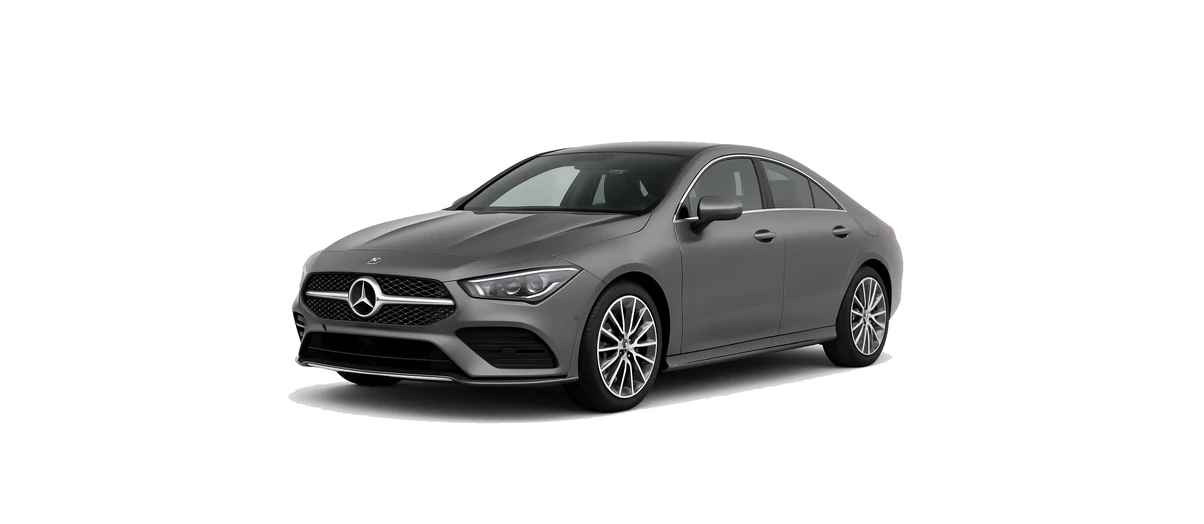
The Mercedes CLA 250e is a plug-in hybrid, not a fully electric car. That distinction matters when choosing a charging routine, comparing specifications and buying a cable. It combines a 1.3-litre petrol engine with an electric motor and a relatively small traction battery, so the best ownership experience usually comes from frequent, convenient top-ups rather than relying on rapid charging in the same way a battery-electric vehicle driver might.
There is also some model-year complexity. UK information for the CLA 250e has changed over time, with earlier launch material, 2024 UK documents and later July 2025-production brochure material showing different battery and charging figures. It is also easy to confuse the CLA 250e plug-in hybrid with the newer all-electric CLA 250+ / CLA 250 with EQ Technology, which uses completely different charging hardware and battery specifications.
This guide focuses on the UK-market Mercedes CLA 250e plug-in hybrid in Coupé and Shooting Brake forms, with clear caveats where specifications vary by model year.
View Mercedes CLA 250e Charging Cables
Mercedes CLA 250e Battery and Charging Specifications
Later UK Mercedes CLA 250e plug-in hybrid material lists Type 2 AC charging and CCS Combo 2 DC charging, with up to 11 kW AC and up to 22 kW DC on relevant versions. However, earlier UK launch information for the CLA 250e listed 7.4 kW AC charging and 24 kW DC charging. Because of this, the safest approach is to check the exact car, especially if you are buying used.
For UK and European cars where DC charging is fitted, the charging inlet is generally a Type 2 socket with the lower CCS pins for DC rapid charging. In practice, that means you use a Type 2 Mode 3 cable for most home wallboxes and many public AC posts, while tethered CCS rapid chargers use their own attached cable.
If you are standing by the car, the quickest visual check is the charging flap. A Type 2-only inlet has the round upper Type 2 section. A CCS Combo 2 inlet has the Type 2 section plus two larger DC pins below it, usually hidden by an additional lower cap or cover.
Battery Options
Official UK sources do not present one single battery figure for every CLA 250e model year. Mercedes-Benz UK launch and 2024 material list a lithium-ion battery capacity of 15.6 kWh. Later UK brochure material effective from July 2025 production lists a published battery capacity of 12.9 kWh for the CLA 250e. The source does not clearly state gross versus usable capacity, so it is best treated as a published capacity figure rather than a directly comparable usable battery size.
For day-to-day ownership, the practical point is that the CLA 250e has a small plug-in hybrid battery rather than a large BEV battery. That makes regular home or workplace charging particularly valuable. If you can start most local journeys with the battery charged, the car can cover a meaningful amount of urban and suburban driving electrically before the petrol engine becomes necessary.
AC Charging Speed
AC charging is the main charging method for most Mercedes CLA 250e owners. Later UK brochure material lists an 11 kW AC on-board charger, with a quoted 0-100% AC charging time of around 2 hours at 11 kW. The same later material also lists around 4 hours 30 minutes from a 7.4 kW wallbox. Earlier CLA 250e sources list 7.4 kW AC charging, so do not assume every used car will accept 11 kW.
In the UK, most domestic wallboxes are single-phase and typically supply up to 7.4 kW. An 11 kW AC charge rate usually requires a suitable three-phase supply, which is more common at commercial premises than at ordinary homes. If your CLA 250e supports 11 kW AC but your home wallbox is 7.4 kW, the car will simply charge at the lower available rate.
For cable choice, a Type 2 to Type 2 Mode 3 cable is the key item for untethered home wallboxes and public AC charge points. A 32 amp cable is the usual practical choice for a UK wallbox. Drivers who regularly use three-phase AC posts may wish to choose a three-phase Type 2 cable, particularly if their specific CLA 250e supports 11 kW AC charging.
DC Rapid Charging Speed
The CLA 250e is unusual among plug-in hybrids because UK material lists DC rapid charging capability on relevant versions. Later UK brochure material gives up to 22 kW DC and a 10-80% charging time of around 28 minutes. Earlier launch information referenced 24 kW DC charging, so again, the exact figure depends on model year and source.
By battery-electric vehicle standards, 22 kW DC is modest. A modern BEV may charge several times faster at a motorway rapid charger. For the CLA 250e, DC charging is best seen as a useful convenience rather than the foundation of every journey. It can make sense if you are between appointments, stopping at a rapid charger anyway, or trying to restore electric range during a long day of short urban and interurban trips.
You do not need to buy a separate DC rapid charging cable. CCS public rapid chargers are tethered, meaning the cable is attached to the charging unit. Your own cable is mainly for AC charging.
Range and Efficiency
Later UK brochure information lists an electric range of around 48-52 miles EAER for the CLA 250e Coupé and around 47-51 miles for the Shooting Brake, depending on version and equipment. Earlier and 2024 figures vary. Independent used-car commentary suggests a real-world electric range of around 35 miles may be more realistic for many drivers.
As with any plug-in hybrid, electric range depends heavily on temperature, speed, route, driving style, load, wheel and tyre specification, and use of heating or air conditioning. Short urban trips in mild weather are usually the most favourable. Fast dual carriageway or motorway driving in winter will reduce electric-only range more quickly.
Efficiency also depends on whether the car is actually charged. A plug-in hybrid used without plugging in regularly will behave much more like a petrol car carrying extra battery weight. A CLA 250e that is charged at home or work and used for short daily journeys can make far better use of its electric motor.
Charging at Home
For most UK CLA 250e drivers, home charging is the easiest and most cost-effective routine. A 7 kW wallbox is likely to be sufficient for overnight charging and for topping up between daily journeys. Even if your car supports 11 kW AC, a 7.4 kW domestic wallbox will usually be more than adequate for a plug-in hybrid battery of this size.
A tethered wallbox has its own attached cable, so you simply plug it into the car. An untethered wallbox requires a separate Type 2 cable. Many owners still prefer to keep a Type 2 cable in the boot for public AC charging, even if their home charger is tethered.
A 3-pin domestic charger is generally best suited as a backup or occasional charging solution, but can be used regularly if a qualified electrician has confirmed the socket and electrical installation are suitable for sustained EV charging. Avoid using damaged sockets, extension leads or unknown outdoor supplies. EV charging places a long, continuous load on a circuit, so the condition of the installation matters.
If you are setting up home charging for the first time, ask the installer about load management, off-peak tariffs and cable storage. Because the CLA 250e battery is relatively small, scheduling charging during cheaper overnight electricity periods can be straightforward.
Public Charging
Public charging for the CLA 250e falls into two categories: AC destination charging and DC rapid charging. AC posts are common in car parks, supermarkets, hotels, leisure centres and workplaces. Many of these are untethered, so you need your own Type 2 cable.
Public AC charging is often the better match for a plug-in hybrid. If you park for one to four hours, the car may gain a substantial amount of electric range while you are doing something else. This suits the CLA 250e well because its battery does not need the long sessions associated with larger BEVs.
DC rapid charging can be helpful, but it should be used selectively. The CLA 250e’s DC charging rate is low compared with many full EVs, and rapid chargers may be priced at a premium. It is most useful when the time saving is genuinely worthwhile, such as on a busy workday with multiple urban journeys and limited opportunity for slower charging.
Vehicle-Specific Features
Mercedes UK material lists the CLA 250e as available in both Coupé and Shooting Brake body styles. It also lists Mode 2 domestic and Mode 3 public or wallbox charging cables as standard equipment in some PHEV specifications, although equipment can vary by age, trim, previous ownership and market source. If buying used, check what is actually present with the vehicle rather than relying solely on brochure wording.
Mercedes also lists features such as pre-entry climate control and radar-based recuperation for its plug-in hybrid equipment. These can improve comfort and energy management, but they should not be confused with confirmed heat-pump or battery-preconditioning specifications unless your exact model documentation states otherwise.
The most important vehicle-specific warning is the name. The CLA 250e plug-in hybrid is not the newer all-electric CLA 250+ / CLA 250 with EQ Technology. Do not use the all-electric CLA’s large battery, high DC charging rate or long electric range figures when researching the CLA 250e PHEV.
Charging Tips
- Check the charging inlet: Look for a Type 2 socket or a CCS Combo 2 inlet with lower DC pins, especially on used cars.
- Confirm the model year: Published UK specifications differ between earlier, 2024 and later brochure material.
- Buy for your real charging pattern: A Type 2 cable is more useful day to day than focusing on DC rapid charging.
- Use AC charging often: Short, regular top-ups are ideal for a plug-in hybrid battery.
- Do not over-plan rapid charging: CCS charging is useful where fitted, but peak power is modest by BEV standards.
- Keep a cable in the car: Many public AC posts are untethered, so having your own Type 2 cable avoids missed charging opportunities.
Frequently Asked Questions
Is the Mercedes CLA 250e fully electric?
No. The CLA 250e is a petrol plug-in hybrid. It can drive on electric power for shorter journeys when charged, but it also has a petrol engine and should not be treated as a full battery-electric vehicle.
What charging cable does the Mercedes CLA 250e use?
For UK AC charging, the CLA 250e uses a Type 2 connection. A Type 2 to Type 2 Mode 3 cable is the main cable for untethered home wallboxes and public AC charge points. Where DC charging is fitted, CCS rapid chargers use their own tethered cable.
Does every CLA 250e have 11 kW AC charging?
No. Later UK material lists 11 kW AC charging, but earlier launch information lists 7.4 kW AC. Check the exact model year, VIN information or vehicle documentation before assuming the maximum AC rate.
Can the Mercedes CLA 250e use rapid chargers?
UK and European CLA 250e models with CCS Combo 2 DC charging can use compatible rapid chargers. Later UK brochure material lists up to 22 kW DC and around 28 minutes from 10-80%. Confirm this on the individual vehicle, particularly with used or imported cars.
Is a three-phase cable worth buying?
It may be worthwhile if your specific CLA 250e supports 11 kW AC and you regularly use three-phase public or workplace charge points. If you only charge from a typical UK single-phase 7.4 kW wallbox, a suitable 32 amp Type 2 cable will usually cover your needs.
What This Means for Drivers
The Mercedes CLA 250e rewards a simple charging routine. Charge at home or work whenever convenient, keep a Type 2 cable available for public AC posts, and treat DC rapid charging as an occasional bonus rather than the main strategy. Before buying accessories, confirm whether your car is an earlier 7.4 kW AC version or a later version listed with 11 kW AC and 22 kW DC capability.
The main buying mistake to avoid is mixing up CLA model lines. The CLA 250e PHEV, earlier and later CLA 250e specifications, and the all-electric CLA 250+ are different charging stories. Once you identify the exact car, cable choice becomes much simpler.
Looking for a Charging Cable for Mercedes CLA 250e?
If you need a compatible Type 2 charging cable for a Mercedes CLA 250e, choose a cable that matches how and where you charge most often, and check your exact model year if you want to make use of three-phase AC charging.
View Mercedes CLA 250e Charging Cables
Please note that this information is intended as a guide. Charging specifications may change due to model and year of manufacture. For precise information, always refer to your vehicle user manual.

