
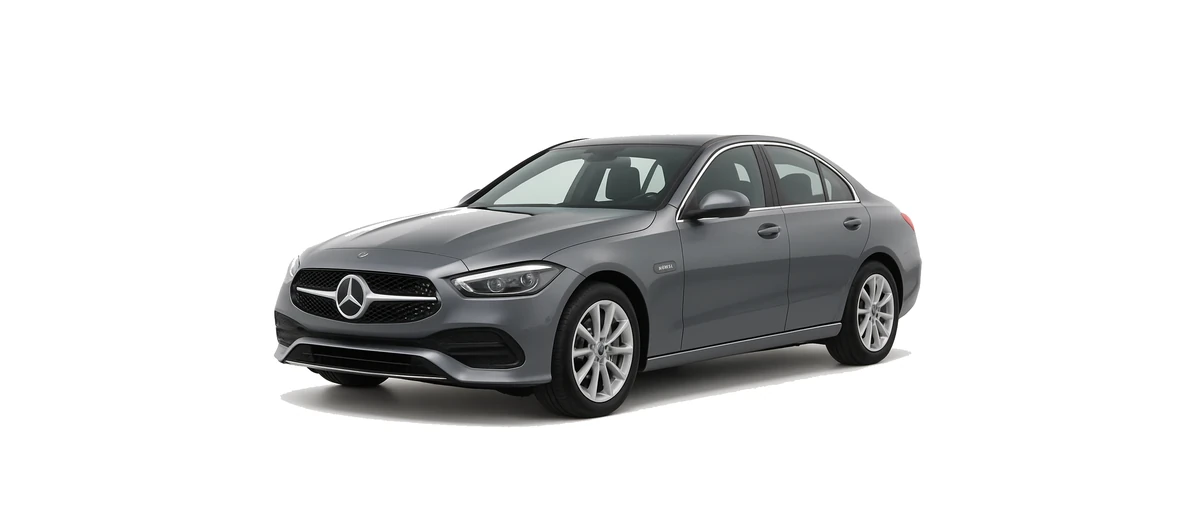
The Mercedes C 350e is a plug-in hybrid version of the W205 C-Class, sold in the UK in saloon and estate forms during the mid-to-late 2010s. It is important to be clear about the model covered here: this guide is for the older UK-market C 350e petrol plug-in hybrid, not the newer C 300 e or C 300 de models that replaced later C-Class plug-in hybrids and use very different battery and charging hardware.
For C 350e owners, charging is straightforward. The car uses a Type 2 AC charging connection and has a relatively small plug-in hybrid battery, so it is usually charged at home, at work, or at destination AC charge points. It is not a pure electric car and it does not have confirmed DC rapid-charging capability, so its charging routine is quite different from a modern battery-electric vehicle.
View Mercedes C 350e Charging Cables
Mercedes C 350e Battery and Charging Specifications
The UK-market Mercedes C 350e should be treated as a petrol plug-in hybrid electric vehicle, or PHEV. It can drive for short distances on electric power, but it also has a combustion engine for longer journeys and when the battery is depleted. The plug-in battery is there to reduce fuel use on short trips rather than to provide long-distance electric-only driving.
Key charging details for the W205 C 350e are:
- Vehicle type: petrol plug-in hybrid, not a full battery-electric vehicle
- Charging connector: Type 2 AC
- Onboard AC charging rate: up to around 3.7 kW
- DC rapid charging: not supported on the UK C 350e according to the available model data
- Battery capacity: 6.2 kWh total capacity stated in Mercedes-Benz launch material
- Typical real-world electric range: around 16 miles, depending on conditions and battery condition
- Body styles: saloon and estate when new
The charge inlet is widely described as being positioned on the right-rear area of the car. As with any used plug-in hybrid, it is sensible to check the vehicle itself, the handbook and any supplied charging equipment, especially if the car has changed hands several times.
Battery Options
The C 350e was fitted with a small lithium-ion battery by modern plug-in hybrid standards. Mercedes-Benz launch information for the C 350e stated a total battery capacity of 6.2 kWh. Some third-party EV charging databases list usable capacity at around 5.0 kWh, but that should be treated as a third-party figure rather than an official UK Mercedes-Benz specification.
This battery size explains much of the C 350e’s charging behaviour. It does not need high-power rapid charging because there is not a large battery to refill. Instead, it is designed for regular AC top-ups that can be completed in a short period of time. For many owners, charging little and often is more useful than waiting until the battery is fully depleted.
Battery age also matters. The C 350e is now a discontinued model, so real-world electric range and charging performance can vary between individual cars. Temperature, mileage, service history, tyre choice, driving style and how often the cabin heating or air conditioning is used can all affect the distance available from a full charge.
AC Charging Speed
The Mercedes C 350e charges using single-phase AC power via a Type 2 connection. The onboard charger is rated at up to around 3.7 kW, which means the car will not use the full output of a faster 7 kW or 7.4 kW home wallbox. If connected to a 7 kW wallbox, the vehicle simply limits charging to its own onboard maximum.
Mercedes launch material quoted around 1 hour 45 minutes for a 10-100% charge using a suitable wallbox or public AC point at 230 V, 16 A and 3.7 kW. A domestic 230 V, 13 A supply was quoted at around 2 hours in the same context. Real charging times can vary depending on the starting charge level, cable, charger, battery temperature and the condition of the vehicle.
A 7 kW home wallbox is still a sensible choice for many C 350e drivers. It provides a safe and convenient dedicated charging setup, even though this particular car will draw only about 3.7 kW. It may also be useful for a future plug-in hybrid or full electric vehicle with a higher onboard AC charging rate.
DC Rapid Charging Speed
The UK-market Mercedes C 350e should not be planned around DC rapid charging. The available data for this W205 C-Class plug-in hybrid points to Type 2 AC charging only, with no confirmed CCS connector and no DC rapid-charging capability.
That means there is no meaningful 10-80% DC rapid-charging time for this model. If you arrive at a motorway rapid-charging hub, the C 350e will generally not be the type of vehicle that uses the high-power DC chargers. Instead, it should be topped up from AC charging equipment, such as a home wallbox, workplace charger, hotel charger, supermarket AC post or other destination charging point.
This is one of the main areas where confusion can occur. Later C-Class plug-in hybrids in some markets, and current UK C-Class plug-in hybrid models badged C 300 e or C 300 de, have different batteries and charging specifications. Those newer figures should not be applied to the older UK C 350e.
Range and Efficiency
The original launch electric range figure for the C 350e was 31 km, which is approximately 19 miles, on an older pre-WLTP test cycle. This should not be presented as a WLTP figure. In everyday UK driving, a realistic electric-only range is often closer to around 16 miles, although some drivers may see more or less depending on conditions.
As a plug-in hybrid, the C 350e is at its most efficient when it is charged frequently and used for short local journeys where the electric range can cover a meaningful portion of the trip. Commuting, school runs, local errands and stop-start urban driving are the types of use where regular charging can have the greatest effect on fuel consumption.
On longer journeys, once the plug-in battery has been depleted, the car continues as a petrol hybrid. It can still recover energy through hybrid operation, but the benefit of plugging in is greatest when you start journeys with charge in the battery. Cold weather and heavy use of cabin heating can reduce the available electric range, particularly because the battery is relatively small.
Charging at Home
Home charging is usually the most convenient way to run a Mercedes C 350e. Because the battery is small, an overnight charge is more than enough; in many cases, the car can be replenished in a couple of hours from a suitable setup. The simplest everyday routine is to plug in when you return home, especially if you expect to make short journeys later the same day or the following morning.
For a home wallbox with an untethered socket, you will need a Type 2 charging cable. A tethered wallbox with a Type 2 lead can also be used, provided the cable and connector are in good condition and suitable for the vehicle. The C 350e’s onboard charger will limit the power it accepts, so a higher-rated wallbox will not force extra power into the car.
A 3-pin charger is generally best suited as a backup or occasional charging solution, but can be used regularly if a qualified electrician has confirmed the socket and electrical installation are suitable for sustained EV charging. This is especially important with older properties, garages, extension leads or outdoor sockets, where heat build-up and circuit condition need careful consideration.
If you are installing a new home charger, a dedicated wallbox is normally preferable to relying on a domestic socket. It is neater, safer for regular use, usually weather-resistant when installed correctly, and more convenient for day-to-day charging.
Public Charging
For public charging, the C 350e is best matched with AC destination chargers. Many UK public AC posts are untethered, meaning you need to bring your own Type 2 cable. This is where cable selection becomes important: without the correct cable, you may not be able to use an otherwise suitable charging post.
Because the car charges at up to around 3.7 kW, a public 7 kW or 22 kW AC post will not make it charge at 7 kW or 22 kW. The charger may be capable of more, but the car’s onboard charger determines the maximum AC charging rate it can accept. Even so, AC posts are still useful because the battery is small and a useful top-up can be achieved during a shopping trip, meal, work meeting or hotel stay.
It is worth checking parking rules as well as charging rules. Some public charge points are intended for active charging only, and plug-in hybrids with small batteries may finish charging before the parking session ends. Moving the car once charged helps keep the bay available for other drivers and avoids possible overstay fees.
Vehicle-Specific Features
The most important vehicle-specific point is the C 350e’s position in the C-Class timeline. It is a discontinued W205-generation plug-in hybrid that was introduced in the UK market era around 2015 and later withdrawn or replaced as Mercedes-Benz moved to newer plug-in hybrid technology. Current UK C-Class plug-in hybrids use C 300 e and C 300 de badging, not C 350e, and their battery and charging figures are substantially different.
The C 350e’s compact plug-in battery and 3.7 kW AC charging make it simple to live with if expectations are set correctly. It is not designed for long electric road trips, and it is not a rapid-charging EV. Instead, it rewards regular charging and short electric journeys, with the petrol engine available when the electric range is used up.
No confirmed information in the research data supports claiming features such as DC rapid charging for this UK-market C 350e. Owners comparing specifications online should be cautious, as some websites may mix older C 350e information with newer plug-in hybrid C-Class data from other markets.
Charging Tips
- Use a Type 2 cable: this is the key cable type for untethered home wallboxes and public AC charging posts.
- Do not chase rapid chargers: the C 350e is an AC-only plug-in hybrid, so plan charging around home, work and destination AC points.
- Top up often: small, frequent charges can be more useful than waiting until the battery is empty.
- Remember the onboard limit: a 7 kW wallbox is fine, but the car will usually draw only up to around 3.7 kW.
- Check cable condition: inspect connectors, pins and insulation regularly, especially if the cable is stored in the boot.
- Be realistic in winter: cold weather and cabin heating can reduce electric range noticeably on a small-battery PHEV.
- Avoid specification mix-ups: do not use newer C 300 e or C 300 de charging figures when planning for a C 350e.
Frequently Asked Questions
Is the Mercedes C 350e a full electric car?
No. The Mercedes C 350e is a petrol plug-in hybrid. It can be charged externally and driven for short distances on electric power, but it also has a petrol engine.
What charging cable does the Mercedes C 350e use?
The C 350e uses a Type 2 AC charging connection. For untethered wallboxes and many public AC charge points, you will need a suitable Type 2 charging cable.
How fast can the Mercedes C 350e charge?
The onboard AC charger is rated at up to around 3.7 kW. Mercedes launch material quoted around 1 hour 45 minutes for a 10-100% charge on a suitable 3.7 kW wallbox or public AC point.
Can the Mercedes C 350e use a 7 kW home charger?
Yes. A 7 kW home charger can be used, but the car will only draw up to its onboard AC charging limit of around 3.7 kW. The wallbox may still be useful for convenience and for future vehicles.
Does the Mercedes C 350e have rapid charging?
No confirmed DC rapid-charging capability was found for the UK-market W205 C 350e. It should be treated as a Type 2 AC charging plug-in hybrid, not a CCS rapid-charging EV.
What electric range should I expect?
The original launch figure was 31 km, approximately 19 miles, on an older pre-WLTP cycle. In real-world use, around 16 miles is a more cautious expectation, with variation depending on battery age, temperature and driving style.
What This Means for Drivers
The Mercedes C 350e is easy to charge when understood as an older plug-in hybrid rather than a modern long-range EV. Its small battery means charging sessions are short, and a Type 2 cable will cover the main charging situations owners are likely to encounter. The car is best suited to drivers who can plug in regularly and make frequent short journeys where electric running can reduce petrol use.
The main thing to avoid is applying newer C-Class plug-in hybrid figures to this model. Current C 300 e and C 300 de specifications do not describe the older UK C 350e. For the C 350e, think Type 2 AC charging, around 3.7 kW maximum AC charge rate, short electric range and no DC rapid charging.
Looking for a Charging Cable for Mercedes C 350e?
If you need a suitable cable for home or public AC charging, We sell Mercedes C 350e charging cables designed for Type 2 charging use.
View Mercedes C 350e Charging Cables
Please note that this information is intended as a guide. Charging specifications may change due to model and year of manufacture. For precise information, always refer to your vehicle user manual.

