
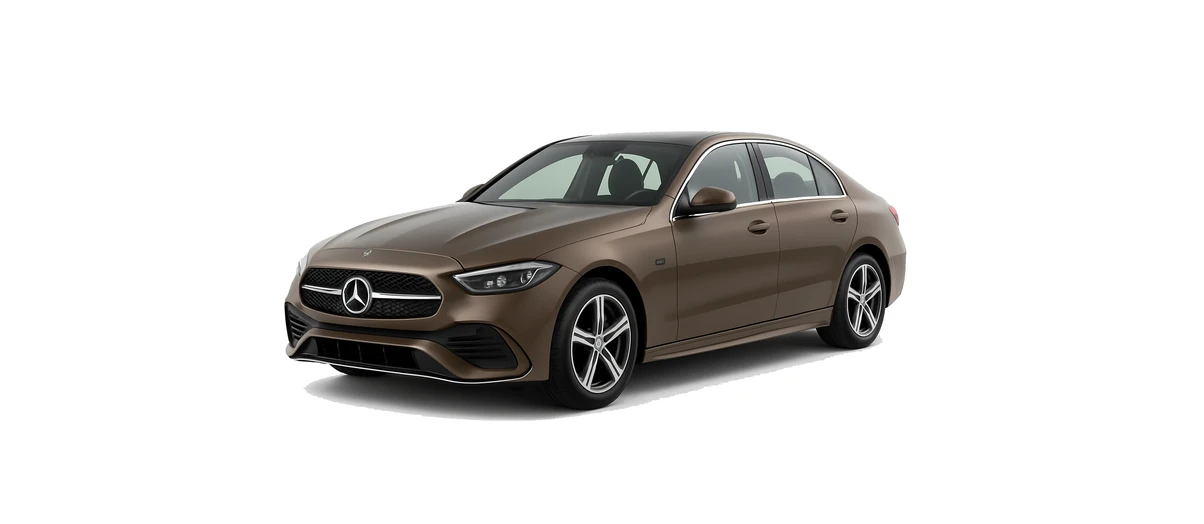
The Mercedes C 300e is a petrol plug-in hybrid version of the C-Class, available as a Saloon and, depending on model year and UK availability, as an Estate. It is not a pure electric car, but the current W206-generation C 300 e has an unusually large usable battery for a plug-in hybrid and can cover many daily journeys on electric power when charged regularly.
The most important point for owners is to identify which C 300e they have before choosing a charging cable or relying on rapid charging. Current UK-market W206 C 300 e models are listed by Mercedes-Benz UK with a 19.53 kWh usable battery, 11 kW AC charging and 55 kW DC charging. Older W205 C 300 e EQ Power examples are materially different, using a smaller battery and, in some UK cases, Type 2 AC charging only. Always check the vehicle inlet and model year before buying a replacement cable.
View Mercedes C 300e Charging Cables
Mercedes C 300e Battery and Charging Specifications
For the current UK W206 Mercedes C 300 e Saloon, Mercedes-Benz UK technical data lists a usable battery capacity of 19.53 kWh, maximum AC charging of 11 kW and maximum DC charging of 55 kW. Manufacturer and independent UK sources also refer to a total or high-voltage battery capacity of around 25.4 kWh, but for practical charging calculations the usable figure of about 19.5 kWh is the more relevant one.
The current C 300 e combines a 1,999 cc petrol engine with a 95 kW electric motor, giving a system output listed at 230 kW / 313 hp. Because it is a plug-in hybrid, it can be driven using electric power for many local journeys, while the petrol engine remains available for longer trips or when the battery is depleted.
Inlet type is a key detail. Current CCS-equipped W206 cars use a Type 2 connection for AC charging and a CCS Combo 2 connection for DC rapid charging. The CCS inlet looks like a Type 2 socket with two larger DC pins underneath. If your car has only the upper Type 2 section and no lower DC pins, it will not use CCS rapid chargers.
Battery Options
There are two main C 300e generations UK buyers and used-car owners are likely to encounter. The current W206 C 300 e uses the larger battery, with about 19.5 kWh usable energy and around 25.4 kWh total capacity quoted in manufacturer media and reviews. This is the version associated with the longer electric-only range and, where specified, 11 kW AC and 55 kW DC charging.
The previous-generation W205 C 300 e EQ Power, sold as a used-car option from around 2019 to 2021, used a smaller 13.5 kWh battery. Charging performance, range and socket specification should not be assumed to match the current W206 car. If you are buying accessories for a used C 300e, check the registration year, the vehicle documents and, most importantly, the physical charging port.
AC Charging Speed
AC charging is what most owners will use at home, at work and at many destination chargers. For the current W206 C 300 e, Mercedes-Benz UK lists a maximum AC charging capacity of 11 kW. On a compatible three-phase 11 kW AC charge point, Mercedes quotes a full wallbox or public AC charge time of about 2 hours.
Most UK homes have single-phase electricity, so a 7.4 kW home wallbox is more common than an 11 kW three-phase unit. Recent UK brochure data indicates around 3 hours for a 10-100% charge on a 7.4 kW AC wallbox, which is a realistic reference point for many domestic charging setups. On a lower-powered AC post, charging will take longer.
For untethered UK home chargers, workplace chargers and public AC posts, a Type 2 to Type 2 Mode 3 cable is the normal cable for the current C 300e and for many earlier Type 2-equipped examples. Cable length is a practical consideration: 5 metres suits many driveways, while 7.5 metres can be useful if the charge point and vehicle inlet are not always close together.
DC Rapid Charging Speed
DC rapid charging is one of the features that makes the current W206 C 300 e unusual among plug-in hybrids. Many PHEVs either do not support DC charging at all or charge only at modest AC speeds. Current Mercedes-Benz UK data lists DC charging at up to 55 kW, with a 10-80% DC charging time of about 20 minutes.
However, this should not be treated as a universal statement for every Mercedes C 300e. Older W205 UK cars may be Type 2 AC only, and some earlier UK coverage of the C 300 e stated that UK cars did not have 55 kW rapid charging. Before planning journeys around rapid charging, inspect the socket. A CCS-equipped car has the two larger pins below the Type 2 part of the inlet.
When using DC rapid chargers, you normally use the tethered cable attached to the charging unit, not your own Type 2 cable. Your own cable is mainly for AC charging on untethered home, work and public charge points.
Range and Efficiency
The current UK C 300 e Saloon is quoted with an electric range of up to about 70-71 miles under EAER/WLTP-style testing, depending on specification. Estate versions, wheel choices and trim differences can reduce the official figure slightly, with recent UK data indicating Estate figures in the high-60-mile region.
In real UK use, independent reviews suggest that around 60 miles of electric driving can be achievable in favourable mixed conditions. As with any plug-in hybrid, the result will vary with weather, speed, terrain, tyre choice, cabin heating or cooling use, and how gently the car is driven. Shorter winter trips and fast motorway driving are likely to reduce electric range.
The C 300e delivers its best running-cost benefit when it is charged often. If it is mostly driven with an empty battery, it will still operate as a hybrid, but it will be carrying the additional weight of the plug-in system while relying more heavily on petrol.
Charging at Home
For most C 300e owners, home charging will be the cheapest and most convenient way to use the car as intended. A dedicated 7.4 kW home wallbox is a strong match for the current model because it can add a substantial charge in roughly three hours on typical UK single-phase supply. That means many owners can replenish the battery overnight or between journeys during the day.
If your home has three-phase supply and a compatible 11 kW wallbox, the current W206 C 300 e can make use of the higher AC rate, reducing charging time. This is less common in UK domestic settings, but it may be available at some workplaces and public AC locations.
A 3-pin plug-in charger is generally best suited as a backup or occasional charging solution, but can be used regularly if a qualified electrician has confirmed the socket and electrical installation are suitable for sustained EV charging. Domestic sockets were not all installed with repeated long-duration high-load EV charging in mind, so it is sensible to have the installation checked before relying on one.
Public Charging
Public charging for the Mercedes C 300e falls into two categories: AC destination charging and, on CCS-equipped current cars, DC rapid charging. AC charging is useful when parked for a few hours at a hotel, office, car park, retail park or town-centre location. For untethered AC posts, you will usually need your own Type 2 to Type 2 cable.
DC rapid charging is more relevant if you need to restore a useful amount of electric range quickly. On a current W206 C 300 e with the CCS inlet, a 10-80% rapid charge is listed at about 20 minutes. That can be helpful on longer days when you want to maximise electric running rather than let the car operate mainly on petrol.
Because the battery is much smaller than a pure electric vehicle battery, public rapid charging sessions should usually be short. It may be more cost-effective to rapid charge only when the electric range is genuinely useful for the next part of the journey, rather than waiting for the final few percent.
Vehicle-Specific Features
The main vehicle-specific charging feature of the current C 300 e is the combination of long plug-in hybrid electric range, 11 kW AC charging and available 55 kW DC charging. This makes it more flexible than many PHEVs, particularly for drivers who can charge at home and occasionally top up quickly on the public network.
It is also important not to confuse the C 300 e petrol plug-in hybrid with the C 300 de diesel plug-in hybrid, earlier C-Class plug-in models, or future fully electric Mercedes-Benz models. Similar badges can hide very different batteries, sockets and charging speeds.
Charging Tips
- Check whether your car is a current W206 or older W205 before choosing a cable or relying on rapid charging.
- Inspect the inlet: Type 2 only means AC charging; CCS Combo 2 adds the lower DC pins for rapid charging.
- Use a Type 2 to Type 2 Mode 3 cable for untethered home, workplace and public AC chargers.
- Charge frequently to get the best value from the plug-in hybrid system.
- For daily use, aim to leave with enough charge for your regular local journeys rather than treating charging as an occasional extra.
- Remember that winter weather, motorway speeds and heavy cabin heating can reduce electric range.
Frequently Asked Questions
Is the Mercedes C 300e fully electric?
No. The Mercedes C 300e is a petrol plug-in hybrid. It has a rechargeable high-voltage battery and can drive on electric power, but it also has a petrol engine and fuel tank.
What charging cable does the Mercedes C 300e use?
For AC charging, the normal cable is a Type 2 to Type 2 Mode 3 cable. This is used with untethered UK home wallboxes and many public AC charge points. DC rapid chargers use their own tethered CCS cable, where the car supports CCS charging.
Can every Mercedes C 300e use 55 kW rapid charging?
No. Current UK W206 C 300 e data lists 55 kW DC charging, but older W205 examples and some early UK cars may be Type 2 AC only. Check the vehicle inlet and handbook for your exact car.
How long does home charging take?
On a typical 7.4 kW UK home wallbox, a current C 300 e can take roughly 3 hours for a substantial 10-100% charge. On a compatible 11 kW AC supply, Mercedes lists a full AC charge time of about 2 hours.
What electric range should I expect?
The current UK Saloon is officially quoted at up to about 70-71 miles depending on specification, with Estate and trim variations generally lower. Real-world UK use is often closer to around 60 miles in favourable conditions.
What This Means for Drivers
The Mercedes C 300e can be a very effective plug-in hybrid if it is charged regularly and matched with the right cable. For current W206 owners, the combination of a sizeable usable battery, 11 kW AC charging and available 55 kW DC charging makes it unusually capable for electric commuting and local driving. For used-car buyers, the key step is verification: older W205 cars differ significantly, so always check the socket and specification before assuming charging speed or rapid-charging compatibility.
Looking for a Charging Cable for Mercedes C 300e?
If you need a replacement or spare charging cable, choose one that matches your exact Mercedes C 300e generation, charging inlet and typical charging locations, and check the vehicle socket if you are unsure whether your car is Type 2 only or CCS-equipped.
View Mercedes C 300e Charging Cables
Please note that this information is intended as a guide. Charging specifications may change due to model and year of manufacture. For precise information, always refer to your vehicle user manual.

