
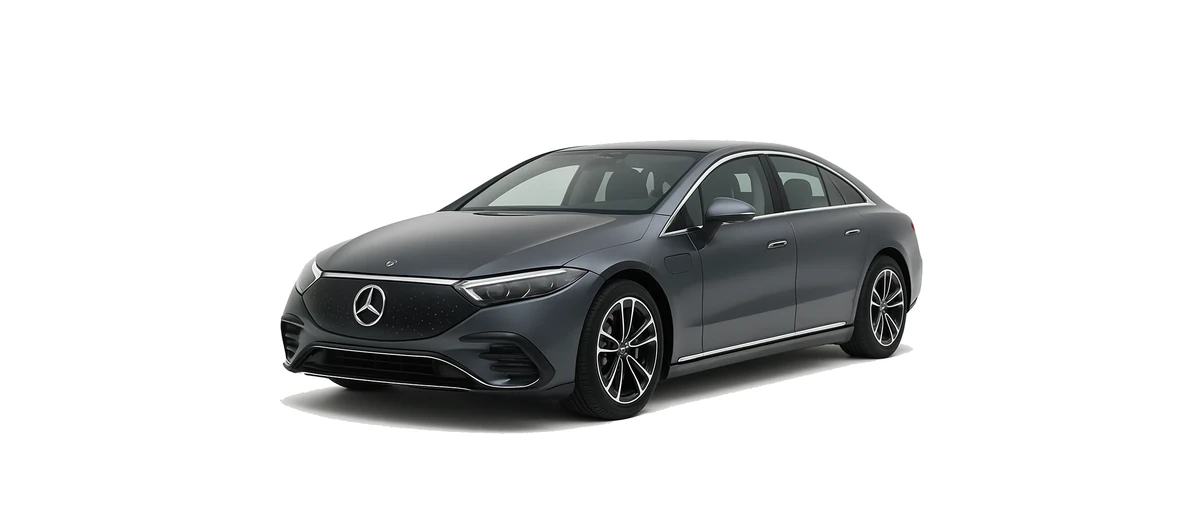
The Mercedes-Benz S 500 Plug-in Hybrid, also known in some contexts as the S 500 e, is an important model to identify correctly before choosing a charging cable. The chargeable version covered in this guide is the older W222 S-Class plug-in hybrid, launched in the UK around 2014 and now discontinued. It is not the same as every S 500-badged S-Class.
This distinction matters because some S 500 models are not plug-in vehicles at all. In particular, the current UK S 500 4MATIC is a petrol mild-hybrid model and is not externally chargeable. Later S-Class plug-in hybrids, such as S 450 e and S 580 e versions, also use different charging hardware and should not be used as the basis for selecting equipment for the older S 500 Plug-in Hybrid.
For the W222 Mercedes-Benz S 500 Plug-in Hybrid / S 500 e, the practical charging picture is straightforward: it uses Type 2 AC charging, has a relatively small plug-in hybrid battery, and is best kept topped up at home or at compatible public AC charge points. It should not be treated like a modern battery-electric vehicle with high-speed DC rapid charging.
View Mercedes-Benz S 500 Plug-in Hybrid / S 500 e Charging Cables
Mercedes-Benz S 500 Plug-in Hybrid / S 500 e Battery and Charging Specifications
The S 500 Plug-in Hybrid is a petrol-electric plug-in hybrid vehicle, not a battery-electric vehicle. It combines a 3.0-litre V6 petrol engine with an electric motor and an externally rechargeable lithium-ion battery. Period Mercedes-Benz launch material referred to an 85 kW electric motor and a combined system output of 325 kW, paired with a 7G-TRONIC PLUS automatic transmission.
For charging, the key figures are the battery size and onboard AC charging limit. Research sources for the older W222 S 500 Plug-in Hybrid indicate an 8.7 kWh high-voltage battery and a Type 2 AC charging connection. The onboard charger is listed at around 3.6 kW, which means the vehicle will not take full advantage of a faster 7 kW home wallbox, even though a 7 kW wallbox is still a suitable and convenient choice.
There is no confirmed CCS or CHAdeMO DC rapid charging inlet for this older S 500 Plug-in Hybrid. That makes it very different from some newer plug-in hybrids and battery-electric cars. When planning charging, assume Type 2 AC charging rather than motorway rapid charging.
Battery Options
The available research points to one relevant plug-in hybrid battery specification for the W222 S 500 Plug-in Hybrid / S 500 e launch-era model. Mercedes-Benz material states an 8.7 kWh high-voltage lithium-ion battery. Some charging-guide sources estimate usable capacity at around 7.8 kWh, although Mercedes did not clearly publish a UK usable battery capacity figure for this older model.
Because this is a plug-in hybrid with a small battery by modern standards, it is designed for short electric journeys and frequent top-ups rather than long-distance electric-only travel. The petrol engine remains part of the vehicle’s normal operating pattern, especially on longer trips, at higher speeds or when the battery state of charge is low.
It is also worth avoiding comparisons with current S-Class plug-in hybrids. Later Mercedes-Benz S-Class PHEV models have different battery capacities and charging capabilities, so their figures should not be applied to the older S 500 Plug-in Hybrid.
AC Charging Speed
The Mercedes-Benz S 500 Plug-in Hybrid / S 500 e uses Type 2 AC charging. For UK owners, that normally means a Type 2 to Type 2 cable for untethered home chargers and public AC charge points. If your home charger is tethered and already has a Type 2 connector, you usually plug the tethered lead directly into the vehicle.
The car’s onboard AC charger is understood to be around 3.6 kW. This is the limiting factor, not the rating of the charge point. A 7 kW home charger can supply more power than the S 500 PHEV can accept, so the car will simply charge at its own lower maximum rate. Likewise, connecting to an 11 kW or 22 kW public AC post will not make this older S-Class plug-in hybrid charge like a modern three-phase EV.
Typical charging times vary depending on starting charge level, temperature, charger output and battery condition. Mercedes-Benz brochure material referred to charging from 20% to 100% in around two hours using a wallbox, and just over four hours from a domestic socket. Other UK charging-guide estimates suggest an empty-to-full AC charge at roughly two and a half hours. In everyday use, many owners will be topping up rather than charging from completely empty.
DC Rapid Charging Speed
There is no confirmed DC rapid charging capability for the older W222 Mercedes-Benz S 500 Plug-in Hybrid / S 500 e. No reliable model-specific data confirms CCS or CHAdeMO rapid charging, and there is no appropriate 10-80% DC charging time to quote for this car.
This is a common source of confusion because some newer plug-in hybrids and many battery-electric vehicles support DC charging. The older S 500 Plug-in Hybrid should instead be planned around Type 2 AC charging. On long journeys, the petrol engine is the main backup once the electric range has been used, rather than rapid charging stops.
For owners, this means public rapid-charging hubs are usually not the relevant charging environment for this model. Look for destination AC charging at hotels, car parks, workplaces and town-centre charge points instead.
Range and Efficiency
Official electric-only range figures for the S 500 Plug-in Hybrid come from the older pre-WLTP testing era. Mercedes-Benz period material quoted up to 33 km, which is about 20.5 miles, while some UK charging-guide sources list 18 miles under NEDC-style context. A verified WLTP electric range is not available for this older model, so it is best not to compare it directly with newer WLTP-rated plug-in hybrids.
Real-world electric range will depend on temperature, driving speed, road type, cabin heating or cooling use, battery condition and how gently the car is driven. As a large long-wheelbase luxury saloon, the S 500 Plug-in Hybrid is not designed to be the most efficient electric-only vehicle. Its strength is the ability to cover shorter local trips on electric power when charged regularly, while retaining the petrol engine for longer journeys.
Owners who can charge at home each night are most likely to get the best from the plug-in hybrid system. Short commutes, school runs, urban errands and local business trips are the journeys where the battery can make the biggest difference.
Charging at Home
Home charging is the most practical way to run the Mercedes-Benz S 500 Plug-in Hybrid / S 500 e. The battery is small enough that an overnight charge is easily achievable, and the car’s 3.6 kW AC limit means there is no need to chase unusually high home charging speeds.
A standard 7 kW single-phase home wallbox is a sensible setup for most UK homes, even though the vehicle will charge at around 3.6 kW rather than the full 7 kW. The benefit is convenience, safety, weather resistance and compatibility with future EVs or plug-in hybrids. If the wallbox is untethered, you will need a Type 2 to Type 2 cable. If it is tethered with a Type 2 lead, a separate home cable may not be required for that charger, although you may still want one for public charging.
A 3-pin charger is generally best suited as a backup or occasional charging solution, but can be used regularly if a qualified electrician has confirmed the socket and electrical installation are suitable for sustained EV charging. Domestic sockets were not originally designed with repeated high-load EV charging as their main purpose, so professional checking is important if you intend to rely on one.
Because the battery is only 8.7 kWh gross, regular top-ups are more useful than waiting for the battery to run flat. Many owners will plug in whenever the car is parked at home, keeping electric range available for the next short journey.
Public Charging
For public charging, the most useful cable is a Type 2 to Type 2 charging cable. Many UK public AC charge points are untethered, meaning they provide the socket but not the cable. A suitable Type 2 cable lets you connect the S 500 Plug-in Hybrid to these posts at car parks, hotels, workplaces and retail destinations.
When using public AC chargers, remember that the charge point’s headline speed is not the same as the car’s charging speed. A 7 kW, 11 kW or 22 kW post may all be compatible with the right Type 2 connection, but the S 500 PHEV is expected to draw only around 3.6 kW. Paying for time-based charging on a higher-rated post may not offer good value if the car cannot use the extra power.
Public charging is most useful when the car will be parked for at least an hour or two. Short stops at rapid-charging sites are less relevant because this model does not have confirmed DC rapid charging. If you are using public infrastructure, choose AC destination charging rather than relying on rapid-charger availability.
Vehicle-Specific Features
The S 500 Plug-in Hybrid’s main vehicle-specific charging feature is its role as an externally rechargeable luxury saloon rather than a conventional hybrid. Charging the battery allows the car to complete suitable short journeys using electric power, with the petrol engine available for longer-distance flexibility.
Period Mercedes-Benz material also highlighted pre-entry climate control. This allows the cabin to be prepared before setting off, which can improve comfort. When used while plugged in, climate preparation may help preserve more battery charge for driving, depending on conditions and settings.
Charging-port descriptions vary between sources, so it is best to check the vehicle itself rather than relying on a universal location statement. The important compatibility point is the connector type: the older S 500 Plug-in Hybrid uses Type 2 AC charging.
Charging Tips
- Choose the right cable: for most UK public AC charging, use a Type 2 to Type 2 cable suitable for the vehicle and charge point.
- Do not expect 7 kW charging: a 7 kW wallbox is suitable, but the car is limited by its onboard charger to around 3.6 kW.
- Ignore rapid-charging claims unless model-specific: the older S 500 Plug-in Hybrid has no confirmed CCS or CHAdeMO rapid charging.
- Top up often: the small PHEV battery is best used with regular home charging rather than infrequent deep charges.
- Check the exact vehicle: not every Mercedes-Benz S 500 is a plug-in hybrid, so confirm that your car is the W222 S 500 Plug-in Hybrid / S 500 e before buying charging equipment.
- Use destination charging wisely: public AC charging is most worthwhile when the car will be parked long enough to recover useful electric range.
Frequently Asked Questions
Is the Mercedes-Benz S 500 Plug-in Hybrid a fully electric car?
No. The W222 S 500 Plug-in Hybrid / S 500 e is a plug-in hybrid electric vehicle. It has an externally rechargeable battery and an electric motor, but it also has a petrol V6 engine.
Does every Mercedes-Benz S 500 need a charging cable?
No. This is one of the most important points. The older S 500 Plug-in Hybrid / S 500 e is chargeable, but many S 500-badged cars are not plug-in vehicles. The current UK S 500 4MATIC, for example, is a petrol mild-hybrid model and is not charged from an external cable.
What charging cable does the S 500 Plug-in Hybrid use?
For UK public AC charging and untethered home chargers, the appropriate choice is a Type 2 to Type 2 cable. The vehicle uses Type 2 AC charging.
Can the S 500 Plug-in Hybrid use a 7 kW home charger?
Yes. A 7 kW home wallbox is suitable, but the car is expected to charge at around 3.6 kW because of its onboard charger limit. The charger can supply more power than the car can accept, and the vehicle will control the charging rate.
Can it use a 22 kW public AC charger?
It may be able to connect to compatible Type 2 AC posts, but a 22 kW rating will not make the older S 500 Plug-in Hybrid charge at 22 kW. The car’s onboard AC charger remains the limiting factor.
Does the S 500 Plug-in Hybrid have DC rapid charging?
There is no confirmed DC rapid charging capability for the older W222 S 500 Plug-in Hybrid / S 500 e. Do not plan around CCS or CHAdeMO rapid charging for this model.
How long does it take to charge?
As a guide, period Mercedes-Benz material referred to around two hours for a 20-100% wallbox charge, with other charging-guide estimates placing an empty-to-full charge at roughly two and a half hours. Charging from a domestic socket was described as taking just over four hours, subject to electrical suitability and charging conditions.
What This Means for Drivers
The Mercedes-Benz S 500 Plug-in Hybrid / S 500 e is at its best when treated as a short-range plug-in hybrid that is charged frequently. Its charging requirements are modest: Type 2 AC compatibility, a 3.6 kW onboard charging limit and no confirmed DC rapid charging. A normal 7 kW home wallbox and a Type 2 to Type 2 public charging cable are the most practical combination for many UK owners.
The main risk is badge confusion. Before buying a cable, confirm that your car is the older W222 S 500 Plug-in Hybrid or S 500 e, not a non-plug-in S 500 or a later S-Class plug-in hybrid with different charging specifications. Once the model is correctly identified, cable selection is simple and charging is easy to build into daily use.
Looking for a Charging Cable for Mercedes-Benz S 500 Plug-in Hybrid / S 500 e?
We offer charging cables for the Mercedes-Benz S 500 Plug-in Hybrid / S 500 e, helping owners choose a suitable Type 2 cable for home and public AC charging.
View Mercedes-Benz S 500 Plug-in Hybrid / S 500 e Charging Cables
Please note that this information is intended as a guide. Charging specifications may change due to model and year of manufacture. For precise information, always refer to your vehicle user manual.

