
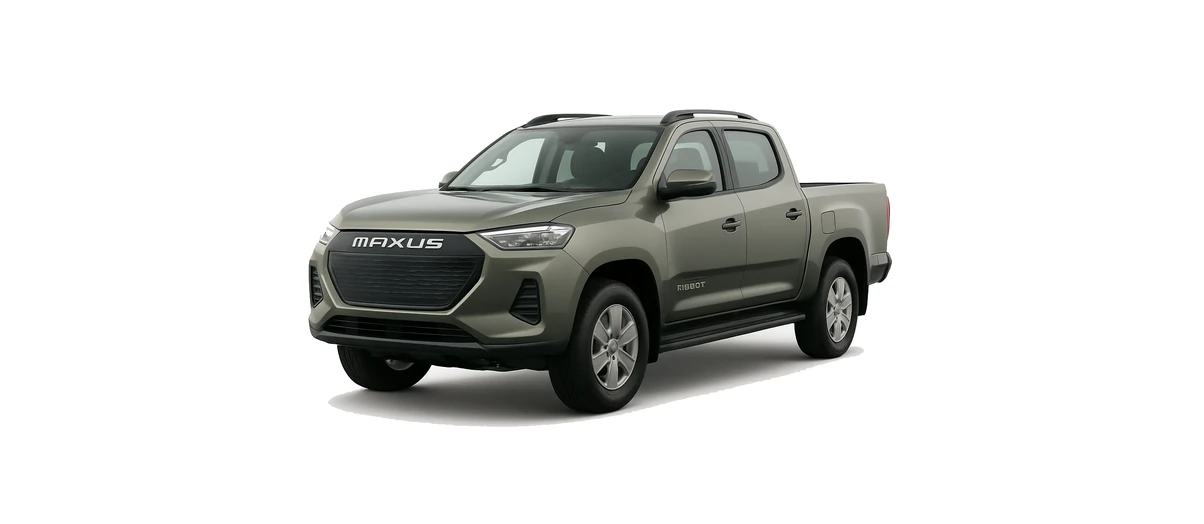
The Maxus T90EV is a fully electric double-cab pickup that arrived in the UK as one of the first electric pickups available to buyers here. It is a battery-electric vehicle, not a plug-in hybrid, and it combines a large 88.5 kWh-class battery with Type 2 AC charging and CCS rapid charging.
For many owners, the T90EV makes most sense as a depot-charged or home-charged work vehicle. Its large battery gives useful daily range, but its 80 kW maximum DC rapid charging rate is modest by newer EV standards. That means charging planning matters, especially if the pickup is being used for tools, cargo, motorway driving, towing or winter work.
This guide explains the main charging figures, what cable you need, how long charging is likely to take, and how to think about range in real UK use.
View Maxus T90EV Charging Cables
Maxus T90EV Battery and Charging Specifications
The Maxus T90EV uses a Type 2 inlet for AC charging and a CCS connection for DC rapid charging. This is the standard arrangement for most modern UK and European electric vehicles, so it is compatible with typical home wallboxes, workplace charge points and CCS public rapid chargers.
- Vehicle type: fully electric double-cab pickup
- Battery capacity: around 88.5 kWh, with sources not always making clear whether this is gross or usable capacity
- AC charging: commonly quoted at up to 11 kW via Type 2
- DC rapid charging: up to 80 kW via CCS
- Published rapid charging figure: around 20-80% in about 45 minutes
- WLTP range: quoted differently across sources, with launch material giving up to 220 miles and later sources commonly quoting about 205 miles
- Real-world range: roughly 180-190 miles unloaded is a sensible planning estimate from UK review data, with lower figures possible in demanding use
One point worth checking on any specific used T90EV is the onboard AC charging capability. UK brochure and review material generally lists 11 kW AC charging, but at least one fleet database has listed a lower figure. If you are buying or operating a particular vehicle, the handbook, VIN-specific data or dealer documentation should be treated as the deciding source.
Battery Options
The UK launch-era T90EV was offered with an 88.5 kWh-class battery. Published sources quote very similar figures, usually around 88.5 or 88.55 kWh, although they do not always clearly state whether this is gross capacity or usable capacity.
The T90EV was marketed as a practical electric work pickup rather than a high-performance lifestyle EV. It is rear-wheel drive in UK specification, with a rear-mounted electric motor. UK reviews also note that it was derived from the existing T90 pickup platform rather than being designed from the start as a dedicated EV platform.
In UK launch material, the T90EV was associated with a WLTP combined range of up to 220 miles. Other manufacturer and review sources commonly quote 330 km, which is about 205 miles. Because of this difference, it is better to treat the official figure as a range of published estimates rather than relying on one single number for every vehicle or usage pattern.
AC Charging Speed
AC charging is the most important charging method for most T90EV owners. This is the charging you use at home, at a depot, at a workplace, or at many destination chargers. The T90EV uses a Type 2 connection for AC charging.
With an 11 kW three-phase AC supply, sources quote a charge from around 5-100% taking approximately 9 hours. That makes overnight depot charging a strong fit, especially for fleets that can plug in at the end of each working day.
On a more typical UK single-phase 7 kW home or workplace wallbox, reviews suggest a near-full charge is likely to take roughly 13-15 hours. That is not unusually slow for such a large battery, but it does mean you should not expect to arrive home nearly empty and always be full again first thing in the morning unless your dwell time is long enough.
A 3-pin charging cable can be useful in some situations, but it is generally best suited as a backup or occasional charging solution. It can be used regularly if a qualified electrician has confirmed the socket and electrical installation are suitable for sustained EV charging. Because the T90EV has a large battery, a 3-pin socket will add range slowly and is unlikely to be the best everyday charging method for a working pickup.
DC Rapid Charging Speed
For longer journeys, the Maxus T90EV can use CCS public rapid chargers. The vehicle’s maximum DC charging rate is quoted at up to 80 kW. That is useful, but it is not in the same league as newer EVs capable of 150 kW, 200 kW or more.
The reliable published rapid-charging figure for the T90EV is approximately 20-80% in about 45 minutes. It is best to plan around that 20-80% window rather than assuming a quoted 10-80% time, because a confirmed 10-80% figure is not consistently provided in the available UK data.
As with all EVs, actual rapid charging speed depends on the battery’s state of charge, temperature, charger capability, site conditions and how much power the charger can deliver at the time. Even if you plug into a 150 kW or 350 kW public charger, the T90EV will still be limited by its own maximum charging capability.
Range and Efficiency
Range planning is especially important with an electric pickup. The T90EV has a large battery, but pickups are not as aerodynamic as smaller electric cars, and real-world use can vary dramatically.
Official figures vary by source. Early UK brochure material quoted up to 220 miles WLTP combined, while later manufacturer and data sources often use 330 km, or about 205 miles. In day-to-day use, UK review data suggests roughly 180-190 miles unloaded is a more realistic expectation in favourable conditions.
That figure can fall when the vehicle is heavily loaded, carrying tools or materials, driven at sustained motorway speeds, used in cold weather or towing. The T90EV was marketed with a payload of around 1,000 kg, but using that capability will naturally affect energy consumption. For business use, it is sensible to plan routes based on the job rather than the headline range figure.
Charging at Home
If you have off-street parking, a dedicated wallbox is the most convenient way to charge a Maxus T90EV. A 7 kW home charger will suit many private users, although the large battery means full charges take longer than they would in a smaller EV.
For fleet users, a workplace or depot installation may be more suitable. If three-phase power is available and the vehicle supports 11 kW AC charging, an 11 kW charge point can make the T90EV easier to turn around overnight. For example, a vehicle returning to base in the evening can be ready for the next working day without relying on public rapid charging.
When choosing a cable for home or workplace charging, the key requirement is a Type 2 charging cable. A 32 amp Type 2 cable is a common choice because it supports the typical 7 kW single-phase wallbox setup and can also be suitable for many three-phase AC charge points, depending on cable specification.
Public Charging
For public AC charging, the T90EV uses a Type 2 cable. Many destination chargers at hotels, car parks, supermarkets and workplaces are untethered, which means you need to bring your own cable. These are useful when the vehicle will be parked for several hours.
For rapid charging, the T90EV uses CCS. Most UK rapid and ultra-rapid chargers have tethered CCS cables attached to the charger, so you usually do not need to provide your own DC cable. You simply plug the charger’s CCS connector into the vehicle.
The important limitation is speed. A CCS charger may be physically compatible, but the vehicle will only charge at up to its own 80 kW maximum, and only when conditions allow. On long journeys, it is worth building in longer stops and aiming for practical charge windows, such as arriving with a comfortable reserve and charging to around 80% rather than trying to reach 100% at a rapid charger.
Vehicle-Specific Features
The T90EV’s most important charging-related feature is its straightforward Type 2 and CCS setup. This makes cable selection simple and gives access to the mainstream UK public charging network.
It is also worth noting what the T90EV is not. It is not a plug-in hybrid, so there is no petrol or diesel engine to fall back on when the battery is low. It is also not four-wheel drive in UK T90EV form, so it should not be treated as a direct electric replacement for every off-road 4×4 pickup use case.
The model also appears to have been discontinued in the UK market. Ordering opened around 2022 with deliveries from early 2023, but by 2026 it is not shown on the main current MAXUS UK range, where newer electric pickup options are listed instead. Used examples and dealer stock may still be available, so charging compatibility remains relevant for owners and buyers.
Charging Tips
- Use overnight charging where possible: the T90EV is well suited to home, depot or workplace charging rather than relying heavily on rapid chargers.
- Plan around 7 kW and 11 kW times: expect roughly 13-15 hours on a 7 kW wallbox for a near-full charge, or about 9 hours on a suitable 11 kW three-phase AC supply.
- Do not overestimate rapid charging: plan around 20-80% in about 45 minutes rather than expecting modern ultra-rapid EV speeds.
- Carry the right Type 2 cable: many public AC charge points are untethered, so a suitable Type 2 cable is essential for destination charging.
- Allow for payload and weather: range can drop when loaded, towing, travelling at motorway speeds or driving in winter conditions.
- Check used-vehicle documentation: because some sources differ on AC charging capability, confirm the exact charging specification for the vehicle you are buying or operating.
Frequently Asked Questions
What charging cable does the Maxus T90EV use?
The Maxus T90EV uses a Type 2 cable for AC charging. For DC rapid charging, it uses the CCS connector fitted to public rapid chargers.
How fast can the Maxus T90EV charge at home?
On a typical 7 kW single-phase wallbox, a near-full charge is likely to take around 13-15 hours. On a suitable 11 kW three-phase AC charger, published sources quote about 9 hours for 5-100%.
How fast can the Maxus T90EV rapid charge?
The T90EV can rapid charge at up to 80 kW via CCS. Published data usually quotes around 20-80% in about 45 minutes.
Is the Maxus T90EV a plug-in hybrid?
No. The Maxus T90EV is a fully electric battery-electric pickup. It does not have a combustion engine for driving when the battery is depleted.
What range should I expect from the Maxus T90EV?
Official figures vary between about 205 miles and 220 miles depending on source and model-year material. In real UK use, roughly 180-190 miles unloaded is a more cautious planning figure, with less possible when loaded, towing, driving quickly or in cold weather.
What This Means for Drivers
The Maxus T90EV works best when its charging routine is planned around the working day. If it can return to a depot, home driveway or workplace charge point overnight, its large battery and Type 2 AC charging setup can be practical. If it is expected to cover long distances with frequent rapid charging, the 80 kW DC limit means journey times need more planning.
For owners and fleet managers, the key is to match the vehicle to the route. Local and regional work with predictable overnight charging is a strong fit. Long motorway days, heavy payloads, towing and winter use need more conservative range planning and more time allowed for charging stops.
Looking for a Charging Cable for Maxus T90EV?
We offer Maxus T90EV charging cables suitable for Type 2 AC charging at home, work and public destination charge points, helping you keep the vehicle ready for daily use.
View Maxus T90EV Charging Cables
Please note that this information is intended as a guide. Charging specifications may change due to model and year of manufacture. For precise information, always refer to your vehicle user manual.

