
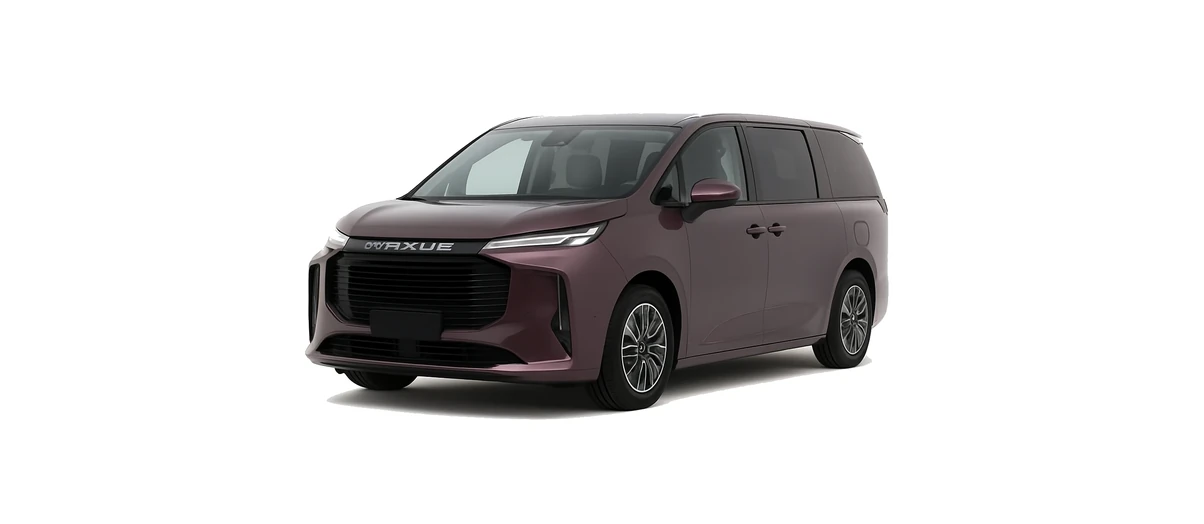
The Maxus MIFA 9 is a rare thing in the UK electric car market: a large fully electric MPV designed for families, executive passenger transport, hotels, shuttle work and fleet use. With seven seats in many UK configurations, electric sliding doors and passenger-focused equipment on higher trims, it has a very different charging profile from a small commuter EV. Its large 90 kWh battery gives useful range, but it also means charging speed, charger access and route planning matter.
UK-facing information describes the MIFA 9 as a battery electric vehicle with a Type 2 AC charging connection and CCS Combo 2 rapid charging. It has an 11 kW AC onboard charger, although many UK domestic installations are single-phase and will typically charge at up to 7.4 kW. On a suitable DC rapid charger, UK and European data points to a peak charging rate of around 114 kW, with a 10-80% session taking about 36 minutes in favourable conditions.
View Maxus MIFA 9 Charging Cables
Maxus MIFA 9 Battery and Charging Specifications
The UK-market Maxus MIFA 9 is a fully electric large MPV, not a plug-in hybrid. Current UK information describes a 90 kWh battery and three trims: Elite, Luxury and Premium. Earlier UK specification material gives slightly different WLTP range figures by trim, while current Maxus UK information summarises range as up to around 270 miles, so it is best to treat range as specification and model-year dependent rather than one fixed number.
| Vehicle type | Fully electric large MPV / people carrier |
| Battery | 90 kWh nominal capacity; around 84 kWh usable estimated by EV Database |
| AC charging connector | Type 2 |
| DC rapid charging connector | CCS Combo 2 |
| Maximum AC charging | Up to 11 kW, where a suitable 3-phase supply is available |
| Typical UK home charging | Usually up to 7.4 kW on a single-phase home charge point |
| Maximum DC charging | Around 114 kW peak |
| Typical rapid charging time | About 36 minutes from 10-80% in suitable conditions |
| WLTP range | Approximately 267-273 miles depending on trim/source; current UK summary up to about 270 miles |
| Real-world range guide | Roughly 220-230 miles depending on speed, load, weather and terrain |
Battery Options
UK information for the MIFA 9 centres on a 90 kWh battery pack across the Elite, Luxury and Premium trims. EV Database estimates usable capacity at around 84 kWh, which is a helpful figure when thinking about how much energy you may need to add during a charge.
This is a sizeable battery, which suits the MIFA 9’s role as a spacious people carrier. It also means that charging from a low state of charge can take longer than it would in a smaller hatchback with a 50-60 kWh pack. For private owners, overnight home charging will usually be the most convenient way to keep the vehicle ready. For business users, workplace, hotel or depot charging can be especially useful, particularly if vehicles are parked for several hours between journeys.
AC Charging Speed
The Maxus MIFA 9 is listed with an 11 kW AC onboard charger. This is useful because 11 kW AC charging can make a noticeable difference where 3-phase power is available, such as at some workplaces, fleet premises, hotels and commercial locations. At 11 kW, a full charge from empty to full is typically around nine hours, while official UK material also quotes about 8.5 hours for a 5-100% AC charge.
However, most UK homes have a single-phase electricity supply. On a typical 7.4 kW home charge point, the MIFA 9 will normally charge at up to 7.4 kW rather than the full 11 kW. In practical terms, a full empty-to-full charge on a 7.4 kW wallbox is likely to take around 13 hours 30 minutes. That sounds long, but many drivers do not arrive home empty and do not need to charge to 100% every night. Adding 30-50% overnight is usually straightforward on a dedicated home charger.
For AC charging away from home, the MIFA 9 uses a Type 2 cable. Many public AC posts in the UK are untethered, so carrying the correct Type 2 charging cable is important if you use destination chargers at hotels, car parks, offices or shopping centres.
DC Rapid Charging Speed
For long journeys, the MIFA 9 uses the CCS Combo 2 connector for DC rapid charging. UK and European charging data lists a peak DC charging rate of around 114 kW. EV Database records a 10-80% charging time of about 36 minutes, while Maxus UK material quotes around 30 minutes for a 30-80% charge. These are different charging windows, so they should not be compared directly.
As with most electric vehicles, the highest charging speeds are normally seen when the battery is warm, the state of charge is relatively low, and the charger is capable of supplying enough power. Charging speed reduces as the battery fills, particularly above 80%. For this reason, stopping for a 10-80% or 30-80% rapid charge is usually more time-efficient than waiting for 100% on a public DC charger.
Because the MIFA 9 is a large MPV, rapid charger layout can also matter. It is worth checking whether a charging site has suitable bay length, easy access and enough space around the charging port area, especially if travelling with passengers or luggage.
Range and Efficiency
The MIFA 9’s official UK range figures vary slightly by trim and source. Older UK specification material lists WLTP combined range as 273 miles for Elite, 270 miles for Luxury and 267 miles for Premium. Current Maxus UK information summarises the range as up to about 270 miles or 435 km. In everyday use, a realistic planning figure of around 220-230 miles is sensible, particularly for motorway trips.
Several factors can affect range. Higher speeds, cold weather, heavy passenger loads, roof accessories, hilly routes and frequent acceleration will all increase energy use. Conversely, urban and suburban journeys can be more efficient because regenerative braking helps recover energy and average speeds are lower.
The MIFA 9 is not a small or especially lightweight EV, so drivers should avoid planning long journeys around the maximum WLTP figure alone. If you are carrying six or seven people, luggage and using heating or air conditioning, building in a comfortable charging margin will make journeys less stressful.
Charging at Home
For most private UK owners, a dedicated Type 2 home wallbox will be the most convenient charging solution. A 7.4 kW single-phase wallbox can add a substantial amount of range overnight and is usually far more practical than relying on public chargers for daily use.
If your property has, or can support, a 3-phase electrical supply, the MIFA 9’s 11 kW AC capability may reduce charging time. This is more common in commercial settings than standard UK homes, but it can be useful for fleet bases, hotels, private hire operators and businesses that need to turn vehicles around reliably.
A 3-pin charger is generally best suited as a backup or occasional charging solution, but can be used regularly if a qualified electrician has confirmed the socket and electrical installation are suitable for sustained EV charging. For a large-battery vehicle such as the MIFA 9, a 3-pin connection will be slow, so it is unlikely to be ideal as the main charging method unless daily mileage is very low.
If you charge at home, it is also worth making use of scheduled charging where your charger or energy tariff supports it. Charging overnight on an EV-friendly tariff can reduce running costs, and setting a regular charge limit for day-to-day use can help avoid unnecessary time spent at high states of charge.
Public Charging
The MIFA 9 can use two main types of public charger. AC destination chargers use the Type 2 connector and are common at hotels, workplaces, car parks and leisure destinations. These are best for longer stops, such as a working day, overnight hotel stay or several hours parked while shopping or attending an event.
DC rapid and ultra-rapid chargers use the CCS connector and are designed for shorter charging stops during longer journeys. Although the MIFA 9’s peak DC rate is around 114 kW, it can still use higher-rated chargers; the vehicle will simply draw power up to what it can accept at that point in the charging session.
When planning a motorway journey, it is sensible to identify charging hubs before you set off and to have a backup location in mind. The MIFA 9’s large battery gives good flexibility, but a realistic range plan is important for a vehicle that may be carrying several passengers. For comfort, many drivers will prefer shorter, planned stops rather than arriving at a charger with very little battery remaining.
Vehicle-Specific Features
UK specification material lists a heat-pump auxiliary heating system as standard, which is useful for an electric vehicle because heating can be a significant energy demand in winter. A heat pump can help improve heating efficiency compared with relying solely on resistive heating, although real-world benefit depends on conditions and how the vehicle is used.
UK material also lists a standard battery heating device. This should not be confused with confirmed navigation-linked battery preconditioning for rapid charging, as that functionality is not clearly confirmed in the available UK data. In practice, rapid charging performance can still vary with battery temperature, outside temperature and the charger being used.
Vehicle-to-load, vehicle-to-home and vehicle-to-grid functionality is not supported according to the available UK/European charging data, so owners should not buy the MIFA 9 expecting export-power features unless Maxus confirms otherwise for a specific vehicle and market.
Charging Tips
- Use a Type 2 cable for AC charging: The MIFA 9 uses a Type 2 connection for home, workplace and destination charging.
- Remember the 7.4 kW home limit: Although the car can accept up to 11 kW AC, many UK homes will be limited to single-phase charging at around 7.4 kW.
- Plan rapid stops around 80%: DC charging normally slows at higher states of charge, so charging to 80% is often quicker overall than waiting for 100%.
- Use realistic motorway range: For long journeys, plan around roughly 200-230 miles depending on conditions rather than relying only on the WLTP maximum.
- Check charger access: The MIFA 9 is a large MPV, so consider bay size, cable reach and passenger access when choosing a charging location.
- Take advantage of long parking periods: Destination charging works well for hotels, airports, offices and fleet bases where the vehicle is parked for several hours.
Frequently Asked Questions
What charging cable does the Maxus MIFA 9 use?
The Maxus MIFA 9 uses a Type 2 connector for AC charging. For DC rapid charging, it uses the CCS Combo 2 connector, which is the standard rapid charging format for most modern UK and European electric vehicles.
Can the Maxus MIFA 9 charge at 22 kW AC?
No. UK and European data lists the MIFA 9 with an 11 kW AC onboard charger. It can use a 22 kW public AC post, but the vehicle will only draw up to its own onboard AC limit.
How long does it take to charge the Maxus MIFA 9 at home?
On a typical 7.4 kW UK home charge point, an empty-to-full charge is likely to take around 13 hours 30 minutes. In normal use, charging sessions are often shorter because you are usually topping up rather than charging from completely empty.
How fast can the Maxus MIFA 9 rapid charge?
The MIFA 9 is listed with a DC peak charging rate of around 114 kW. A 10-80% rapid charge is estimated at about 36 minutes in suitable conditions. Maxus also quotes around 30 minutes for a 30-80% charge, which is a different charging window.
What range should I expect from the Maxus MIFA 9?
Official UK WLTP figures are around 267-273 miles depending on trim and source, with current UK information summarising range as up to about 270 miles. For everyday planning, especially on motorways, roughly 220-230 miles is a more realistic guide.
What This Means for Drivers
The Maxus MIFA 9 is best understood as a spacious electric MPV with a large battery and solid charging capability rather than a small efficiency-focused EV. Its 11 kW AC charging support is particularly useful for businesses, hotels and fleet operators with 3-phase supplies, while most private UK owners will rely on 7.4 kW home charging and overnight top-ups.
For long-distance work, the CCS rapid charging capability makes motorway journeys practical, provided stops are planned around realistic range and the usual 80% rapid charging sweet spot. Drivers carrying passengers for family, airport, executive or shuttle use should also consider charger access and bay size, not just charger power.
Looking for a Charging Cable for Maxus MIFA 9?
We offer Maxus MIFA 9 charging cables suitable for Type 2 AC charging at home, work and public destination chargers, helping you choose the right cable for your charging routine.
View Maxus MIFA 9 Charging Cables
Please note that this information is intended as a guide. Charging specifications may change due to model and year of manufacture. For precise information, always refer to your vehicle user manual.

