
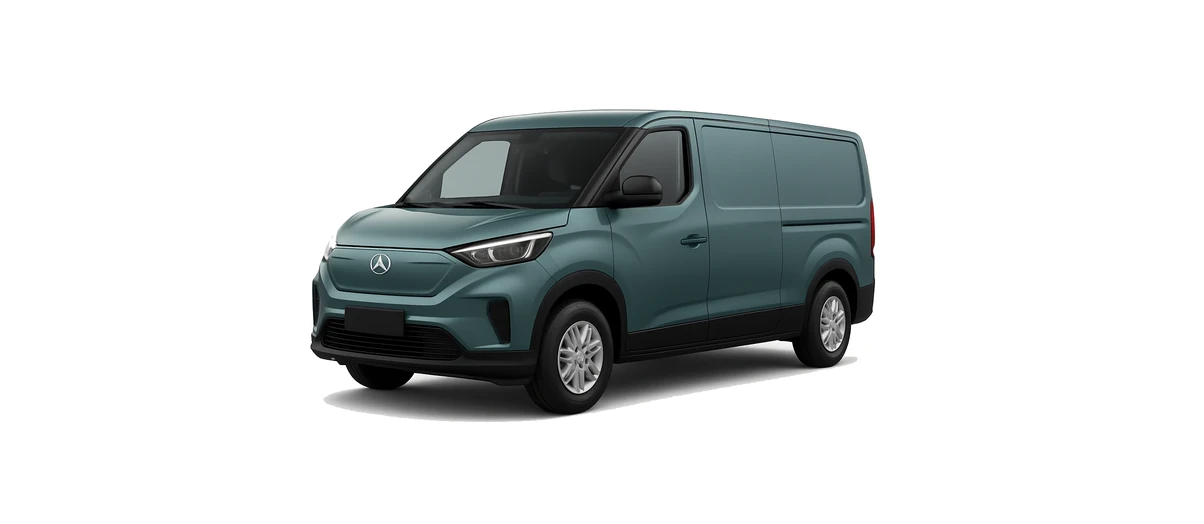
The Maxus eDeliver 7 is a current UK-market fully electric medium panel van, positioned between the smaller eDeliver 3 and the larger eDeliver 9. It is aimed at businesses, fleets and owner-drivers who need a practical electric light commercial vehicle for local, regional and mixed-duty work. UK orders opened in early 2024, with launch material listing a choice of 77 kWh and 88 kWh battery versions across different body lengths and heights.
For charging, the key point is that the eDeliver 7 uses a Type 2 connection for AC charging and CCS for DC rapid charging. It has up to 11 kW AC charging capability where a suitable three-phase supply is available, which makes it particularly well suited to depot and workplace overnight charging. However, many UK home wallboxes are single-phase and typically provide up to 7.4 kW, so home charging times can be longer than the headline 11 kW figures suggest.
View Maxus eDeliver 7 Charging Cables
Maxus eDeliver 7 Battery and Charging Specifications
The eDeliver 7 is a battery electric vehicle, not a plug-in hybrid, and should not be confused with the diesel Maxus Deliver 7. Public UK and European data points to two main battery sizes: 77 kWh and 88 kWh. Maxus UK material quotes a maximum WLTP range of up to 230 miles, but that figure should be treated as the best headline value rather than a guarantee for every version.
| Vehicle | Maxus eDeliver 7 |
|---|---|
| Vehicle type | Medium electric panel van / light commercial vehicle |
| Battery options | 77 kWh or 88 kWh, depending on variant |
| AC charging | Up to 11 kW with a compatible three-phase supply |
| Typical UK home AC charging | Often up to 7.4 kW on a single-phase wallbox |
| DC rapid charging | Up to 90 kW via CCS |
| Charging port | Type 2 AC / CCS DC |
| Headline WLTP range | Up to 230 miles, depending on battery and body style |
Battery Options
The two main eDeliver 7 battery options are a 77 kWh pack and an 88 kWh pack. EV Database-derived data lists estimated usable capacities of around 75 kWh for the 77 kWh version and around 85 kWh for the 88 kWh version. These figures are useful for understanding likely charging energy, although owners should always refer to their own vehicle documentation for exact specification details.
The 77 kWh battery is shown in launch and European data on selected L1 and L2 front-wheel-drive versions. European WLTP combined figures vary by body style, with examples around the low 300 km range. The 88 kWh battery is the longer-range option and is associated with the headline maximum WLTP figure of up to 230 miles in UK material, again depending on configuration. Body length, roof height, wheels, load, route and weather can all affect how far the van travels between charges.
This matters for fleets because two vans with the same badge may not deliver the same operating range. A shorter, lighter 88 kWh version doing urban and suburban routes may be much easier to schedule than a larger, fully laden van doing higher-speed motorway work.
AC Charging Speed
The Maxus eDeliver 7 supports up to 11 kW AC charging. In practical terms, this is most useful at workplaces, depots and commercial premises with a suitable three-phase electrical supply and compatible Type 2 charge points. Maxus and European data suggests around 8 hours for the 77 kWh version and around 9.3 hours for the 88 kWh version from 5–100% when the full 11 kW AC capability is available.
For many UK home users, the situation is different. Most domestic wallboxes are single-phase and commonly rated at up to 7.4 kW. The eDeliver 7 can still charge perfectly well from such a unit, but it will not reach its full 11 kW AC capability unless the property has the correct three-phase setup and charge point. As a guide, the 88 kWh version may take roughly overnight to well over 12 hours to charge from a low state of charge on a 7.4 kW wallbox, depending on losses, starting percentage and charging limits.
For depot managers, 11 kW AC can be a good match if vans return at the end of the working day and remain parked overnight. It allows larger batteries to be replenished steadily without relying on public rapid charging, while also spreading charging across a predictable dwell period.
DC Rapid Charging Speed
For longer days, public charging and unexpected route extensions, the eDeliver 7 can use CCS DC rapid chargers at up to 90 kW. Connecting to a charger rated higher than 90 kW is fine, but the van will not exceed its own maximum DC charging capability.
Maxus material quotes around 43 minutes for a 20–80% DC charge. EV Database-derived estimates put a typical 10–80% rapid charge closer to the high-40s or low-50s minutes, depending on the battery version and conditions. This difference is important: 20–80% and 10–80% are not the same charging window, and the first and last parts of the battery can be slower.
For efficient route planning, rapid charging is usually best used to add enough energy to complete the next leg rather than charging to 100% at a public rapid charger. Above around 80%, charging speeds often reduce, so the final 20% can take a disproportionate amount of time.
Range and Efficiency
Maxus UK material lists a maximum WLTP range of up to 230 miles for the eDeliver 7. That figure is useful for comparison, but it should not be assumed for every model, body size or working day. European data shows different WLTP values for different body styles and battery capacities, with the 77 kWh versions below the longest-range 88 kWh specification.
Real-world range is likely to vary significantly in commercial use. EV Database-derived data gives an indicative real-world estimate of around 180 miles for the 88 kWh version and a lower figure for the 77 kWh version. In day-to-day operation, payload, speed, outside temperature, road type, tyre pressure, auxiliary power use and driving style can all make a noticeable difference.
For fleets, the best approach is to compare the van’s usable operating range with the actual route profile. A van covering 70–120 miles per day with predictable depot return is a very different charging case from one used for high-speed intercity deliveries with limited downtime.
Charging at Home
Home charging is possible where the driver has off-street parking and a suitable charge point. A dedicated Type 2 wallbox is normally the most practical option. On a typical UK single-phase 7.4 kW wallbox, the eDeliver 7 will charge more slowly than it would on an 11 kW three-phase workplace charger, but it can still be suitable for drivers who have long overnight dwell times.
If a van is taken home by an employee, businesses should consider how charging time, reimbursement, cable storage and access to the parking space will be managed. The larger 88 kWh battery gives more route flexibility, but it also needs more energy to refill from a low state of charge.
A 3-pin charger is generally best suited as a backup or occasional charging solution, but can be used regularly if a qualified electrician has confirmed the socket and electrical installation are suitable for sustained EV charging. For a commercial van with a large battery, a 3-pin lead will be much slower than a proper wallbox, so it is not usually the most convenient everyday charging method.
Public Charging
For public AC charging, the eDeliver 7 uses a Type 2 connection. Many public AC posts require the driver to bring their own Type 2 cable, so keeping a suitable cable in the vehicle is sensible, especially for drivers who park at hotels, town centres, office sites or longer-stay car parks.
For rapid charging, the van uses the CCS connector attached to the charger. Rapid charging is most useful on motorway corridors, during high-mileage work or when a depot charge was not enough for the day’s route. To make best use of time, choose CCS chargers rated at 90 kW or above where possible, but remember that availability, charger reliability and bay access are just as important as the headline power rating.
Because the eDeliver 7 is a van, bay size and charger layout matter. Some public rapid chargers are designed around passenger cars, so longer vans may need more careful positioning. Fleet operators should test charging locations on regular routes before relying on them for time-critical work.
Vehicle-Specific Features
Maxus and European material indicate that the eDeliver 7 is available with LFP battery chemistry and show V2L, e-PTO or mobile power station capability in relevant specification information. UK public wording also refers to mobile power station capability. However, the exact socket, adaptor arrangement and market-specific equipment can vary, so owners should check the UK handbook, dealer documentation or vehicle equipment list before using any power export function.
The most important everyday charging feature remains the 11 kW AC onboard charging capability. In a fleet setting, this means the eDeliver 7 can take advantage of three-phase AC infrastructure overnight without needing every van to use a DC rapid charger. For businesses electrifying several vans, this can help reduce charging cost, improve reliability and simplify daily scheduling.
Charging Tips
- Match the cable to the van and charge point. The eDeliver 7 uses Type 2 for AC charging, so a suitable Type 2 cable is the normal choice for home, workplace and public AC posts.
- Do not assume 11 kW at home. Most UK domestic wallboxes are single-phase and limited to around 7.4 kW. The full 11 kW AC rate normally needs a three-phase supply.
- Use depot downtime. If vans return overnight, three-phase 11 kW AC charging can be an efficient way to prepare them for the next day.
- Plan rapid stops around 20–80% where possible. This is usually the most time-efficient charging band on long journeys.
- Allow for payload and weather. A loaded van in winter or at motorway speeds will not usually match the best WLTP figure.
- Keep charging simple for drivers. Clear instructions, assigned cables and tested charging sites can prevent avoidable downtime.
Frequently Asked Questions
What charging cable does the Maxus eDeliver 7 use?
The Maxus eDeliver 7 uses a Type 2 connection for AC charging. For DC rapid charging, it uses the CCS connector fitted to the rapid charger.
Can the Maxus eDeliver 7 charge at 22 kW AC?
Reliable UK and European data points to an 11 kW AC onboard charger. Even if you plug into a 22 kW AC post with a suitable cable, the van is expected to charge at up to its own 11 kW AC limit where the supply supports it.
How long does the eDeliver 7 take to charge?
On an 11 kW three-phase AC charge point, Maxus data suggests roughly 8 hours for the 77 kWh battery and around 9.3 hours for the 88 kWh battery from 5–100%. On a common UK 7.4 kW single-phase home wallbox, expect longer. On DC rapid charging, Maxus quotes about 43 minutes for 20–80%.
What is the range of the Maxus eDeliver 7?
UK material quotes a maximum WLTP range of up to 230 miles. Actual range depends on battery size, body style, payload, temperature, road speed and driving pattern.
Is the Maxus eDeliver 7 a plug-in hybrid?
No. The eDeliver 7 is a fully electric battery electric van.
What This Means for Drivers
The Maxus eDeliver 7 is at its strongest when charging is planned around the working day. For fleets and depots, its 11 kW three-phase AC capability is a useful fit for overnight charging, allowing both the 77 kWh and 88 kWh versions to be replenished without routine reliance on rapid chargers. For home-based drivers, a 7.4 kW wallbox can still work well, but charging times should be planned realistically.
The main ownership lesson is to separate the headline figures from the real operating case. The 230-mile WLTP figure applies to the best specification, not necessarily every van. Choose the battery and body style around route length, payload and charging access, then build a charging routine that keeps the vehicle ready without unnecessary public charging stops.
Looking for a Charging Cable for Maxus eDeliver 7?
If you need a suitable Type 2 charging cable for the Maxus eDeliver 7, We offer vehicle-specific options to help you choose the correct cable for home, workplace and public AC charging.
View Maxus eDeliver 7 Charging Cables
Please note that this information is intended as a guide. Charging specifications may change due to model and year of manufacture. For precise information, always refer to your vehicle user manual.

