
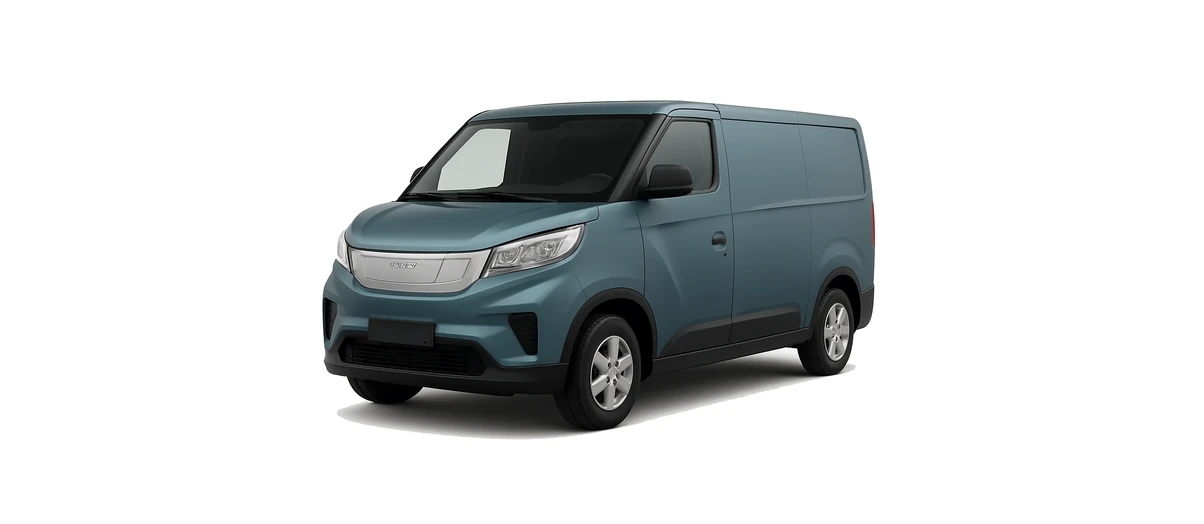
The Maxus eDeliver 3 is a fully electric compact van designed for urban deliveries, trades, local service work and specialist conversions. It is also sold internationally as the EV30 and, in the UK and Ireland, is associated with Maxus / SAIC Maxus and Harris Group distribution. For many operators, the most important charging question is not simply “how fast does it charge?” but “which version do I have?”
That is because UK eDeliver 3 specifications have changed over time. Earlier vans are commonly listed with 35/35.5 kWh or 50.23 kWh batteries and 7.4 kW AC charging. Current or newer UK specification material lists a 50 kWh model with 11 kW three-phase AC charging and 57 kW DC rapid charging. If you are buying used, running a mixed fleet, or ordering cables for several vans, confirming the exact model year and specification is essential.
View Maxus eDeliver 3 Charging Cables
Maxus eDeliver 3 Battery and Charging Specifications
The Maxus eDeliver 3 is a battery electric vehicle, not a plug-in hybrid or range-extender. It uses a Type 2 inlet for AC charging and CCS Combo 2 for DC rapid charging. For everyday UK charging, this means a Type 2 Mode 3 cable is the correct cable type for untethered home, workplace and public AC charge points. For rapid charging, the CCS cable is normally permanently attached to the rapid charger, so you do not usually need to carry your own DC cable.
| Item | Maxus eDeliver 3 information |
|---|---|
| Vehicle type | Fully electric small panel van / chassis cab |
| AC connector | Type 2 |
| DC connector | CCS Combo 2 |
| Current/newer AC charging | Up to 11 kW three-phase, where supported |
| Earlier/legacy AC charging | Commonly listed as 7.4 kW |
| Current/newer DC charging | Up to 57 kW |
| Current/newer rapid charge time | 5-80% in around 45 minutes |
Battery Options
There is an important split between earlier eDeliver 3 models and newer/current UK specification vans. Older UK and Irish dealer material commonly lists two battery sizes: a 35 or 35.5 kWh pack and a 50.23 kWh pack. The available information does not always clearly state whether those figures are gross or usable capacity, so they should be treated as nominal battery capacities rather than confirmed usable energy.
The earlier smaller-battery version is often quoted with a WLTP combined range of around 99 miles, with a higher WLTP city figure of around 141 miles. The earlier 50.23 kWh version is commonly listed with a WLTP combined range of around 151 miles and a city figure of around 213 miles. The 213-mile figure should not be treated as the combined range; it relates to city-style testing conditions.
Newer UK brochure-style specifications list a 50 kWh eDeliver 3. For the SWB panel van, the published combined figure is around 141 miles, with a city figure of around 200 miles. For the LWB chassis cab, range depends more heavily on the fitted body or conversion, with combined figures listed in a broad band of approximately 118-149 miles. This matters because a box body, refrigeration equipment, racking, tools and payload can all affect efficiency.
AC Charging Speed
AC charging is the type of charging used by most home wallboxes, workplace charge points and many slower public chargers. Current/newer eDeliver 3 specifications list 11 kW three-phase AC charging, with a 5-100% charging time of about 5.6 hours. However, this figure requires a suitable three-phase supply and an 11 kW-capable charge point.
Many UK homes and smaller business premises use single-phase electricity. On a typical 7 kW single-phase wallbox, even an 11 kW-capable eDeliver 3 will normally charge at around 7 kW rather than 11 kW. This is still a practical overnight charging speed for many users, particularly if the van returns to base with charge remaining.
Earlier eDeliver 3 vans are widely listed with 7.4 kW AC charging. Older specification material gives approximate full-charge times of around 6 hours for the 35 kWh version and around 8 hours for the 50.23 kWh version. If your van is used, ex-fleet or older stock, do not assume it has the newer 11 kW onboard charger.
DC Rapid Charging Speed
For longer working days or quick top-ups, the eDeliver 3 can use CCS rapid chargers. Current/newer UK specification material lists DC charging at up to 57 kW and quotes a 5-80% charge in around 45 minutes. Older material often refers to charging to 80% in around 45 minutes, but the starting percentage is not always clearly stated, so it is best not to describe that older figure as a 10-80% time.
In real use, rapid charging speed will vary. Battery temperature, state of charge, charger output, site reliability and whether the van is carrying a heavy load can all influence how quickly energy is added. As with most EVs, rapid charging is usually fastest at lower states of charge and slows as the battery fills. For daily fleet use, it is normally more economical and predictable to rely on home or depot AC charging, using rapid charging for operational flexibility rather than as the default.
Range and Efficiency
The most useful range figure for an eDeliver 3 driver depends on model year, battery size, body style and payload. Earlier 35/35.5 kWh vans are best viewed as short-range urban vehicles, while the older 50.23 kWh and newer 50 kWh versions offer more flexibility for delivery rounds, trades and local business use.
As a practical planning figure, many drivers may see around 125 miles in mixed real-world use from a larger-battery eDeliver 3, although conditions can move this up or down. Cold weather, motorway speeds, roof equipment, conversion bodies and payload will reduce efficiency. Stop-start city work can be more favourable, especially compared with high-speed dual carriageway or motorway routes.
For chassis cab conversions, avoid relying on the panel van range figure. A lightweight body and a heavy or aerodynamically blunt body can produce very different results. If your van has a specialist conversion, use the body builder’s information, your own route data and real charging history to set a realistic working range.
Charging at Home
For owner-drivers and small businesses, a dedicated home or depot wallbox is usually the most convenient way to charge the Maxus eDeliver 3. A 7 kW single-phase wallbox is common in the UK and is suitable for regular overnight charging. If your premises has a three-phase supply, an 11 kW charge point may allow newer eDeliver 3 models to use their higher AC charging capability, subject to installation design and electrical capacity.
If you use untethered charge points, choose a Type 2 Mode 3 cable. For the current/newer 11 kW version, a three-phase 11 kW or 22 kW rated Type 2 cable may be appropriate if you want to use three-phase AC chargers. For older 7.4 kW vans, a single-phase Type 2 cable will usually match the vehicle’s onboard charging capability, although a higher-rated cable can still be used where connector compatibility is correct.
A 3-pin portable charger is generally best suited as a backup or occasional charging solution, but can be used regularly if a qualified electrician has confirmed the socket and electrical installation are suitable for sustained EV charging. Standard domestic sockets were not originally designed for repeated high-load charging over many hours, so professional inspection is particularly important at older properties, workshops and shared premises.
Public Charging
For public AC charging, the eDeliver 3 uses Type 2. Some AC posts are tethered, meaning the cable is attached. Many destination, workplace and older public posts are untethered, so you need to bring your own Type 2 cable. Carrying the correct cable is particularly useful for vans, as a charging opportunity during loading, a site visit or a lunch stop can add valuable range.
For public rapid charging, use CCS chargers. These are tethered, so the cable is part of the charger. The eDeliver 3’s peak DC rate is modest compared with some newer passenger EVs, but a 45-minute 5-80% stop on the newer specification can still be useful during a busy day. When choosing rapid chargers, consider van access, bay size and whether the cable will comfortably reach the port when parked.
Vehicle-Specific Features
Current/newer eDeliver 3 specification material lists battery thermal management with liquid cooling and liquid heating. This is relevant for durability and temperature control, although it should not be confused with an unconfirmed preconditioning feature.
Newer specification material also lists V2L exterior function via the charging socket, with an additional discharge cable required. This can be useful for certain worksite or equipment scenarios, but it should be checked against the exact vehicle specification because V2L is not clearly confirmed for all earlier 35/50.23 kWh vans. EPTO high-voltage power take-off is also listed in newer information, which may be relevant for specialist conversions.
Some newer material lists both Mode 2 and Mode 3 charging cables as standard equipment. Used vans may not still have their original cables, so inspect what is included before purchase and check the cable rating, condition and plug type.
Charging Tips
- Confirm the exact model year and charging specification before planning depot charging speeds.
- Do not assume all eDeliver 3 vans have 11 kW AC charging; many earlier UK vans are listed at 7.4 kW.
- Use a Type 2 Mode 3 cable for untethered AC charging.
- Use CCS rapid chargers for DC charging; you do not need to bring a separate rapid charging cable.
- If running a fleet, label cables and vans by charging capability to avoid confusion.
- For chassis cab conversions, base route planning on the converted vehicle’s real-world range rather than the panel van figure.
- Charge at base whenever practical, as depot charging is usually more predictable than relying on public rapid chargers.
Frequently Asked Questions
What charging cable does the Maxus eDeliver 3 use?
For AC charging, the Maxus eDeliver 3 uses a Type 2 cable. For DC rapid charging, it uses CCS Combo 2 chargers with the cable attached to the charger.
Does every Maxus eDeliver 3 charge at 11 kW AC?
No. Current/newer UK specifications list 11 kW three-phase AC charging, but earlier eDeliver 3 vans are commonly listed with 7.4 kW AC charging. Check the vehicle’s exact specification.
How long does it take to charge at home?
On a typical UK 7 kW wallbox, a larger-battery eDeliver 3 will usually charge comfortably overnight. Newer 11 kW models can charge faster only where a suitable three-phase charger and supply are available.
Can the Maxus eDeliver 3 rapid charge?
Yes. It supports CCS rapid charging. Current/newer specifications list up to 57 kW DC and a 5-80% charging time of around 45 minutes.
What range should I expect?
Published combined figures vary from around 99 miles for earlier smaller-battery vans to around 141-151 miles for larger-battery panel vans, depending on version. Real-world range depends on payload, speed, weather and body style.
What This Means for Drivers
The Maxus eDeliver 3 is straightforward to charge once you know which version you are dealing with. For many UK users, the key point is that a 7 kW home or depot wallbox remains highly practical, even if a newer van is technically capable of 11 kW on three-phase AC. A Type 2 cable covers untethered AC charging, while CCS rapid chargers provide faster top-ups when the working day requires it.
If you are buying used or managing several vans, spend a few minutes confirming battery size, onboard AC charging capability and included cables. The difference between an older 7.4 kW van and a newer 11 kW three-phase van affects charging expectations, but both can work well when matched with the right charging routine.
Looking for a Charging Cable for Maxus eDeliver 3?
We offer Maxus eDeliver 3 charging cables for home, workplace and public AC charging, including Type 2 options suitable for different charging setups.
View Maxus eDeliver 3 Charging Cables
Please note that this information is intended as a guide. Charging specifications may change due to model and year of manufacture. For precise information, always refer to your vehicle user manual.

