
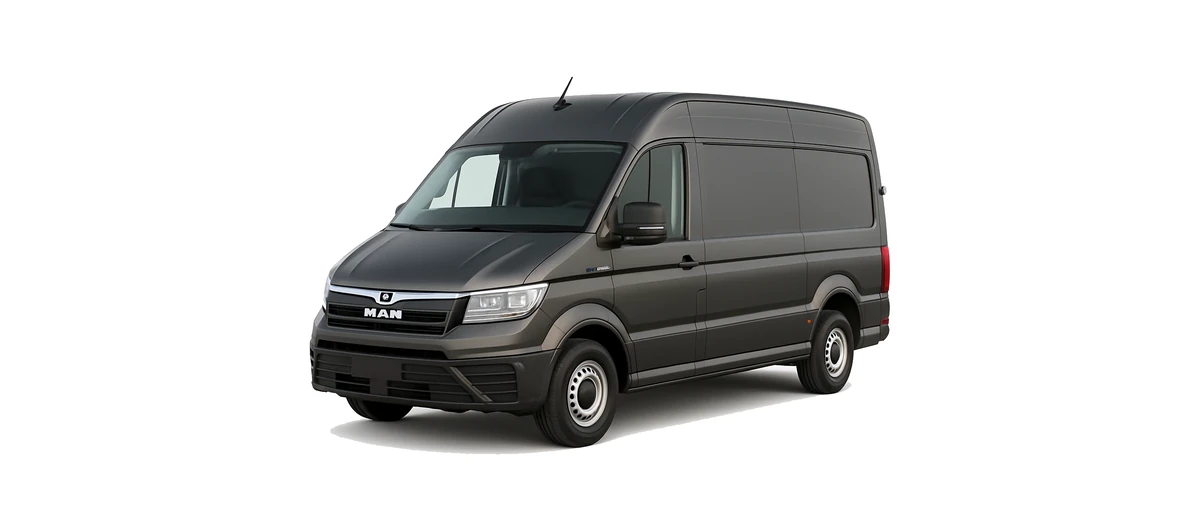
The MAN eTGE is a battery-electric large panel van based on the TGE van platform. In the UK, it is best understood as a used or discontinued electric van rather than a current new-order model, as current MAN TGE van information focuses on diesel powertrains. For operators considering a used eTGE, or fleets already running one, charging is relatively straightforward: the van is designed around dependable overnight AC charging and predictable urban delivery work rather than high-speed long-distance operation.
MAN technical information lists a 35.8 kWh nominal lithium-ion battery, a 100 kW electric motor and a quoted WLTP range of around 110-115 km, which is approximately 68-71 miles. UK MAN press material also described a practical operating range of around 65-70 miles for inner-city delivery use. Those figures make the eTGE a specialist urban van by modern standards, so choosing the right cable and charging routine is important.
MAN eTGE Battery and Charging Specifications
The key point for charging the MAN eTGE is that its onboard AC charging capability is modest and clearly defined. MAN sources support AC charging at up to 7.2 kW and DC rapid charging at up to 40 kW using a CCS connection. Charging-cable sources identify the AC connector as Type 2, while MAN confirms a standard CCS charging socket for DC rapid charging.
For most UK owners and fleet operators, this means a 7 kW single-phase wallbox is a natural match. Higher-powered 11 kW or 22 kW AC equipment may be useful for other vehicles, but it will not make the eTGE charge faster on AC because the van itself is limited to around 7.2 kW. Similarly, ultra-rapid DC chargers may be physically compatible if they use CCS, but the van will only draw power up to its own DC limit.
- Vehicle type: battery-electric large panel van / 3.5-tonne light commercial vehicle
- Battery: 35.8 kWh nominal lithium-ion pack
- AC charging: up to 7.2 kW, single-phase
- AC connector: Type 2, according to charging-cable sources
- DC charging: up to 40 kW
- DC connector: CCS Combo 2
- WLTP range: about 68-71 miles, based on MAN’s 110-115 km figure
- Motor output: 100 kW / 136 hp, with 290 Nm torque
Battery Options
The MAN eTGE was offered with a single battery specification in the available technical data. MAN lists the battery as a 35.8 kWh nominal capacity pack mounted between the chassis rails. Some third-party charging references estimate a lower usable capacity, but because that figure is not confirmed by MAN in the research data, it is better to treat 35.8 kWh as the nominal battery capacity rather than the usable capacity.
That relatively small battery is central to how the eTGE should be used. It was not designed to compete with newer long-range electric vans; instead, it suits short, repeatable urban routes where the vehicle returns to base regularly. For a depot-based operator, that can be a strength: charging can be planned overnight, mileage is predictable, and the van can start each working day with a full battery.
AC Charging Speed
AC charging is the main charging method for most MAN eTGE drivers. MAN states that AC wallbox charging at 7.2 kW can charge the eTGE to 100% in around 5 hours 20 minutes. In practice, this makes an overnight home or depot charge more than sufficient for a full recharge, even if the van returns with a low battery at the end of the day.
For untethered public AC charge points, the eTGE requires a Type 2 charging cable. To access the van’s full AC charging rate, choose a cable rated at least 32 A single-phase, commonly described as a 7.4 kW Type 2 cable. A higher-rated three-phase cable may still work if compatible, but it is not necessary for this vehicle’s AC performance and will not increase the charging speed beyond the onboard limit.
MAN also notes that charging from a normal 230 V socket is possible. However, a 3-pin charger is generally best suited as a backup or occasional charging solution, but can be used regularly if a qualified electrician has confirmed the socket and electrical installation are suitable for sustained EV charging. For a working van, a professionally installed wallbox is usually the safer and more practical option.
DC Rapid Charging Speed
For faster charging away from base, the MAN eTGE uses CCS DC rapid charging at up to around 40 kW. MAN material refers to charging to 80% in about 45 minutes, but the starting state of charge is not clearly defined in the available wording. For that reason, it should not be treated as a confirmed 10-80% charging time.
In real-world use, the eTGE’s DC charging capability is helpful for occasional top-ups during the working day, particularly if a route has overrun or the van needs to complete a second local job. It is not, however, a van that benefits from chasing the highest-power motorway chargers. A 150 kW or 350 kW ultra-rapid unit will not make the eTGE charge at ultra-rapid speeds; the vehicle’s own limit remains the deciding factor.
When planning rapid charging, it is also sensible to consider charger location, dwell time and load. A 40 kW DC session may be useful while drivers take a break or load/unload nearby, but the van’s short range means the best operational strategy is still to start the day fully charged and keep routes predictable.
Range and Efficiency
MAN quotes a WLTP range of 110-115 km, equal to roughly 68-71 miles. UK press material for fleet deliveries described a practical range of around 65-70 miles for inner-city delivery work. Those numbers align with the eTGE’s role as an urban electric van rather than a long-distance delivery vehicle.
As with all electric vans, range will vary with driving conditions. Payload, weather, traffic speed, tyre condition, heating use and route profile can all make a noticeable difference. In winter, or when the van is carrying heavier loads, drivers should leave extra margin rather than planning routes right up to the quoted range figure. A realistic buffer is especially important because the eTGE has a smaller battery than many newer electric vans.
For fleet managers, the most important step is to map daily mileage honestly. If most routes are well within 50-60 miles and the van can return to a depot charger, the eTGE can still be a practical urban workhorse. If routes regularly exceed the quoted range, the van will require careful charging stops or may not be the best fit.
Charging at Home
For owner-drivers, a 7 kW home wallbox is well matched to the MAN eTGE. The van’s 7.2 kW AC limit means a standard single-phase domestic EV charger can provide essentially the full AC charging speed the vehicle can accept. A typical empty-to-full recharge can be completed comfortably overnight based on MAN’s 5 hours 20 minutes wallbox figure.
Home charging is also usually the easiest way to keep costs predictable. Charging overnight on a suitable electricity tariff may reduce running costs compared with relying on public rapid chargers. The key is to ensure the charging schedule matches the vehicle’s working pattern: plug in when the van returns, set any desired off-peak schedule through the charger if available, and check the van is ready before the next shift.
If the eTGE is kept at a business premises, the same principle applies. A 7 kW depot charger per van, or a managed charging setup for multiple vehicles, is often more useful than installing higher-powered AC units that the van cannot fully use. Where several vans share a site, load management can help prevent the electrical supply being overloaded.
Public Charging
On public AC chargers, the MAN eTGE will normally need the driver to bring a Type 2 cable unless the post is tethered. A 32 A single-phase Type 2 cable is the most relevant choice for full AC speed. Public AC charging is best seen as a useful top-up option when parked for several hours rather than a quick turnaround solution.
For rapid charging, use CCS DC chargers with tethered CCS leads. These are more suitable when the van needs a meaningful top-up during the day. Remember that the vehicle is limited to around 40 kW DC, so charger availability and location may matter more than headline charger power.
Because the eTGE has a short WLTP range, public charging should ideally be planned in advance. Drivers should know where compatible CCS chargers are located along the route and should avoid relying on a single charger with no backup nearby. This is particularly important for commercial use where delays can affect deliveries, service calls or collections.
Vehicle-Specific Features
The MAN eTGE uses a 100 kW electric motor producing 290 Nm of torque and a 1-speed electric driveline. The battery is mounted between the chassis rails, helping preserve the van’s working layout. UK MAN press material quoted a payload of 950 kg and a load capacity of 10.7 m3 for the standard wheelbase version, which underlines its intended role as a practical city delivery vehicle.
MAN UK material also quoted a battery warranty of 8 years / 100,000 miles. For used buyers, it is still sensible to check the specific vehicle’s warranty status, service history and battery health where possible. As with any discontinued electric commercial vehicle, condition, charging history and suitability for the intended route are just as important as the headline specification.
Charging Tips
- Choose the right AC cable: a Type 2 cable rated at 32 A single-phase / 7.4 kW is the practical match for the eTGE’s AC charging limit.
- Do not overspend for AC speed: 11 kW or 22 kW AC capability will not make this van charge faster on AC.
- Use CCS for rapid charging: DC charging is the faster public option, but the eTGE is limited to around 40 kW.
- Plan with a winter buffer: cold weather, payload and stop-start work can reduce available range.
- Charge overnight where possible: the eTGE is at its best when it returns to base and starts each day fully charged.
- Check used-van history: confirm charging equipment, service records, warranty position and whether the van’s real-world range suits your routes.
Frequently Asked Questions
Is the MAN eTGE a fully electric van?
Yes. The MAN eTGE is a battery-electric vehicle, not a plug-in hybrid or range-extender van.
What charging cable does the MAN eTGE need?
For untethered AC charging, it uses a Type 2 cable. A 32 A single-phase Type 2 cable is the most suitable choice for accessing the van’s full AC charging rate.
How fast can the MAN eTGE charge at home or at a depot?
MAN supports AC charging at up to 7.2 kW and quotes around 5 hours 20 minutes for a full charge using a suitable wallbox.
Can the MAN eTGE use rapid chargers?
Yes. It can use CCS DC rapid chargers at up to around 40 kW. Higher-powered chargers will not increase the van’s maximum charging rate beyond its own limit.
What is the range of the MAN eTGE?
MAN quotes a WLTP range of 110-115 km, approximately 68-71 miles. UK press material also referred to 65-70 miles for urban delivery use. Real-world range depends on load, weather, driving style and route.
Is the MAN eTGE still available new in the UK?
The available evidence suggests it should be treated as a discontinued or used-market model. Current MAN TGE van information focuses on diesel engines rather than a new electric eTGE option.
What This Means for Drivers
The MAN eTGE is a practical but range-limited electric van. Its charging requirements are simple: a 7 kW wallbox and a suitable Type 2 cable cover normal AC charging, while CCS rapid charging provides occasional faster top-ups. The main ownership question is not whether the van can use the latest high-power charging hardware, but whether its range and charging pattern fit the job.
For predictable city routes, local deliveries, municipal work or depot-based operations, the eTGE can make sense if daily mileage stays comfortably within its range. For longer routes or mixed regional work, careful planning is essential. Treat the van as an urban BEV with a modest battery, build in range buffer, and prioritise reliable overnight charging.
Looking for a Charging Cable for MAN eTGE?
If you need a replacement or spare cable for a MAN eTGE, We sell compatible options for the van’s Type 2 AC charging requirements, including cables suitable for 32 A single-phase charging.
Please note that this information is intended as a guide. Charging specifications may change due to model and year of manufacture. For precise information, always refer to your vehicle user manual.

