
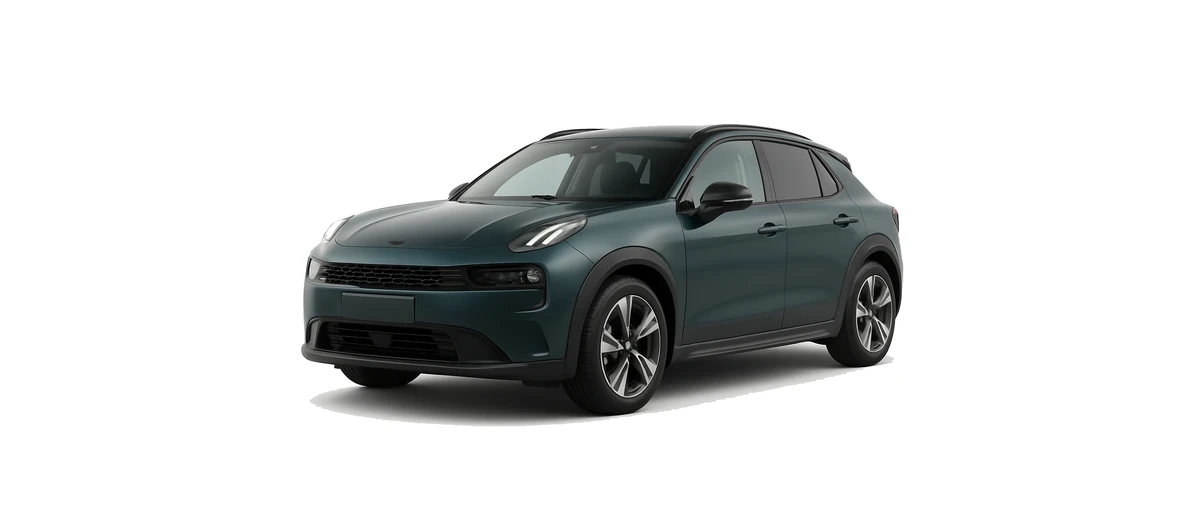
The Lynk & Co 02 is a compact electric crossover coupé/SUV introduced for Europe as Lynk & Co’s first battery-electric vehicle. It is also known as the Z20 in China, but UK and European buyers should be careful not to mix its specifications with Chinese-market data or with other Lynk & Co plug-in hybrid models such as the 01 and 08. The European 02 is a full BEV using a Type 2 connection for AC charging and CCS Combo 2 for DC rapid charging.
For UK drivers, there is an important caveat: at the time of the available research, UK pricing and availability were not clearly confirmed by EV Database, so right-hand-drive availability and final UK specification should be checked before treating the 02 as a normal current UK-market purchase. The charging guidance below is based on the published European MY25 Lynk & Co 02 data, with particular attention to the difference between the Core and More trims.
View Lynk & Co 02 Charging Cables
Lynk & Co 02 Battery and Charging Specifications
The European Lynk & Co 02 uses a 66 kWh battery, with EV Database listing 62 kWh as usable capacity. Both the Core and More trims appear to use the same battery pack, while the main charging difference is on AC charging capability. The Core is listed by Lynk & Co with 11 kW AC charging, while the More is listed with 22 kW AC charging. Both use CCS rapid charging at up to 150 kW and are quoted at around 30 minutes for a 10-80% DC rapid charge.
For cable selection, the key point is that the 02 uses a Type 2 inlet for AC charging. In the UK and Europe, Type 2 is the standard connector used for most home wallboxes and many destination chargers. For rapid charging, the car uses CCS Combo 2, where the charging cable is normally tethered to the rapid charger rather than supplied by the driver.
Battery Options
Current European information points to one main battery size across the Lynk & Co 02 Core and More trims: a 66 kWh nominal pack, with 62 kWh usable according to EV Database. This is a useful battery size for a compact electric crossover, giving enough capacity for regular commuting, local driving and longer motorway journeys with planned rapid charging stops.
Official WLTP range differs slightly by trim. Lynk & Co lists the Core at up to 435 km, which is about 270 miles, while the More is listed at up to 445 km, or about 277 miles. These are WLTP figures, so real-world range will depend on speed, temperature, driving style, tyre choice, terrain and how much heating or air conditioning is used. EV Database gives a real-world estimate of around 221 miles, which is a helpful planning figure for mixed conditions rather than a guaranteed result.
AC Charging Speed
AC charging is where Lynk & Co 02 buyers need to pay the most attention. The Core trim is listed with an 11 kW onboard AC charger. The More trim is listed with a 22 kW onboard AC charger. That sounds like a major difference, but the actual speed you get depends on the charging point and electrical supply as well as the car.
Most UK home charge points are single-phase 7.4 kW wallboxes. On one of these, both the 11 kW Core and the 22 kW More would normally charge at up to the wallbox limit, not at their maximum onboard AC capability. In other words, a More with 22 kW AC charging will not usually charge at 22 kW from a typical UK domestic wallbox.
To use the 22 kW AC capability of the More, you generally need a three-phase AC supply, a 22 kW-capable Type 2 charging point and a suitable 32A three-phase Type 2 cable. This is more common at commercial premises, workplaces, hotels, public destination chargers and some European homes than it is at ordinary UK houses.
For typical UK home charging, a 32A single-phase Type 2 cable is usually the practical choice for a 7.4 kW wallbox. Owners who expect to use three-phase public or workplace AC charging may prefer a three-phase Type 2 cable, especially if they have the More trim and want to make use of 22 kW AC where available.
DC Rapid Charging Speed
The Lynk & Co 02 is quoted with DC rapid charging at up to 150 kW using the CCS Combo 2 connector. Lynk & Co quotes a 10-80% rapid charge time of around 30 minutes. As with all EVs, the peak charging rate is not held from empty to full. Charging is fastest in the lower and middle part of the battery and typically slows as the battery approaches a higher state of charge.
For longer trips, it is usually more efficient to plan rapid charging stops around the 10-80% window rather than charging to 100% on a rapid charger. Charging above 80% can take disproportionately longer, so a shorter stop to 70-80% followed by another stop later may be quicker than waiting for the last portion of the battery.
At a UK public rapid or ultra-rapid charger, you normally do not need your own DC cable. CCS rapid chargers have a tethered cable attached to the unit. Your own Type 2 cable is still important for untethered AC chargers at destinations, workplaces, car parks and some public charging sites.
Range and Efficiency
The headline WLTP range for the Lynk & Co 02 is up to 445 km, or about 277 miles, for the More trim. The Core is listed at up to 435 km, or about 270 miles. These figures are useful for comparing vehicles, but daily range will vary. In winter motorway use, expect less range than the WLTP figure. In milder weather, on slower roads and with efficient driving, the car should get closer to its official rating.
For practical ownership, it is better to think in charging routines rather than always aiming to use the full range. Many EV drivers charge at home or work several times a week and rarely need to run the battery very low. For longer journeys, the 150 kW rapid charging capability and 10-80% charging window are more useful planning tools than the maximum WLTP number.
Charging at Home
For most UK owners, the most convenient way to charge a Lynk & Co 02 will be a dedicated home wallbox. A typical 7.4 kW single-phase wallbox can add a substantial amount of range overnight and is well matched to normal daily use. Because the 02 uses a Type 2 AC inlet, it is compatible with standard Type 2 home charging equipment, assuming the car’s European charging specification is retained in any UK model.
If your wallbox is untethered, you will need a Type 2 charging cable. A 32A single-phase Type 2 cable is sufficient for most 7.4 kW home wallboxes. A three-phase Type 2 cable may be worth considering if you regularly use three-phase workplace or public AC chargers, particularly with the 22 kW-capable More trim.
A 3-pin charger is generally best suited as a backup or occasional charging solution, but can be used regularly if a qualified electrician has confirmed the socket and electrical installation are suitable for sustained EV charging. Domestic sockets were not originally designed with repeated long-duration high-load EV charging as their main purpose, so professional checking is important before relying on one frequently.
Public Charging
Public charging for the Lynk & Co 02 falls into two main categories: AC destination charging and DC rapid charging. AC destination chargers are often found at hotels, workplaces, shopping centres, car parks and leisure locations. Many of these are untethered, so you use your own Type 2 cable. Speeds vary: some are 7 kW single-phase units, while others may offer 11 kW or 22 kW three-phase AC.
With the Core trim, the car’s listed AC limit is 11 kW, so a 22 kW AC post will not necessarily deliver 22 kW to the car. With the More trim, a 22 kW AC post can be more useful, provided the charging point supports it and you have a suitable three-phase Type 2 cable. This is one of the few everyday situations where the More’s higher AC capability may noticeably reduce charging time.
For motorway and long-distance charging, CCS rapid chargers are the main option. The 02’s quoted 150 kW peak is suitable for modern rapid charging networks, though actual speed will depend on charger output, battery temperature, battery state of charge and site conditions. Battery preconditioning is listed as standard, which should help the car prepare the battery for faster charging when the system is used correctly, especially in colder weather.
Vehicle-Specific Features
The Lynk & Co 02 is based on Geely’s SEA2 dedicated EV platform and uses a 400 V architecture. Published European specification confirms Type 2 AC charging and CCS Combo 2 DC charging. EV Database also lists Autocharge support, but not Plug & Charge support, so payment and authentication features may vary by charging network.
Vehicle-to-load, or V2L, is listed as standard by EV Database at up to 3.3 kW via a Type 2 adapter. This can allow the vehicle battery to power suitable external electrical devices, depending on the adapter and operating conditions. V2G and V2H support are not listed, so it should not be described as a vehicle that can feed energy back to a home or grid.
A heat pump is listed as available but not standard equipment. If you are comparing specific vehicles, it is worth checking whether the car has this option, as heat pumps can help reduce heating-related energy use in colder conditions. Battery preconditioning is listed as standard, which is particularly relevant for DC rapid charging performance in winter.
Charging Tips
- Choose the cable around your charging habits. For typical UK home charging, a 32A single-phase Type 2 cable is usually enough. For regular 22 kW AC use, consider a 32A three-phase Type 2 cable.
- Check whether you have Core or More. Core is listed with 11 kW AC charging, while More is listed with 22 kW AC charging.
- Do not expect 22 kW at most UK homes. Most domestic wallboxes are 7.4 kW single-phase, so they will limit the charging speed.
- Use CCS rapid charging for long journeys. Plan stops around the 10-80% window where the quoted 30-minute rapid charge time applies.
- Use battery preconditioning when appropriate. If the navigation and charging system supports it for your chosen charger, preconditioning can help in cold weather.
- Confirm UK specification before purchase. Because UK availability was unclear in the research data, check that any UK car has the same charging equipment and trim specification.
Frequently Asked Questions
What charging cable does the Lynk & Co 02 use?
The European Lynk & Co 02 uses a Type 2 connector for AC charging. For DC rapid charging, it uses CCS Combo 2, where the cable is normally attached to the rapid charger.
Does the Lynk & Co 02 charge at 22 kW AC?
Only some versions are listed with 22 kW AC charging. Lynk & Co lists the Core with 11 kW AC charging and the More with 22 kW AC charging. Even with the More, you need a suitable three-phase 22 kW AC charger and cable to achieve that speed.
Can I charge the Lynk & Co 02 from a normal UK home wallbox?
Yes, based on the European Type 2 specification, it should work with a normal UK Type 2 home wallbox. Most UK home wallboxes are 7.4 kW single-phase, so they will charge below the car’s maximum AC capability.
How long does the Lynk & Co 02 take to rapid charge?
Lynk & Co quotes around 30 minutes for a 10-80% DC rapid charge, with peak DC charging of up to 150 kW. Actual charging time depends on charger power, battery temperature and state of charge.
Is the Lynk & Co 02 available in the UK?
UK-market status should be manually confirmed before publication or purchase. The available research indicates European specification, while EV Database has listed UK pricing and availability as not available.
What This Means for Drivers
The Lynk & Co 02 is straightforward in one sense: it is a full electric vehicle with Type 2 AC charging and CCS rapid charging. The part that needs attention is the difference between Core and More. The battery and rapid charging figures are broadly similar, but AC charging differs significantly, with 11 kW listed for Core and 22 kW listed for More.
For most UK drivers, that difference will matter less at home because a standard domestic wallbox is usually limited to 7.4 kW. It matters more if you have access to three-phase AC charging at work, at public destination chargers or at business premises. In that case, the More trim and a suitable three-phase Type 2 cable may allow faster AC charging when the infrastructure supports it.
Looking for a Charging Cable for Lynk & Co 02?
If you need a compatible cable for a Lynk & Co 02, We offer Type 2 charging cables suitable for home, workplace and public AC charging. Choose a cable based on whether you mainly use a typical 7.4 kW UK wallbox or need three-phase capability for higher-power AC chargers.
View Lynk & Co 02 Charging Cables
Please note that this information is intended as a guide. Charging specifications may change due to model and year of manufacture. For precise information, always refer to your vehicle user manual.

