
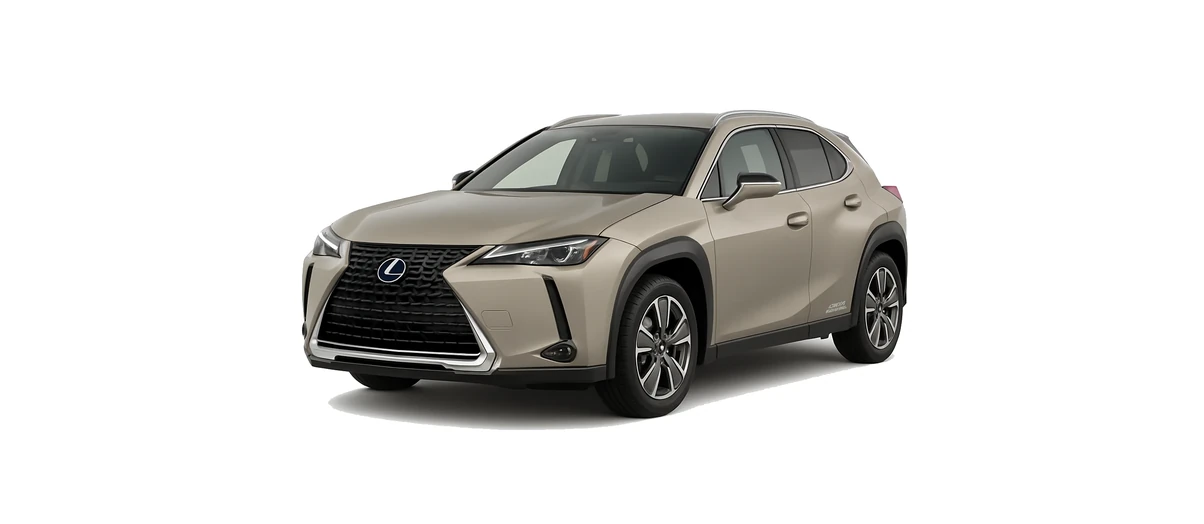
The Lexus UX 300e is the battery-electric version of the Lexus UX compact SUV/crossover. For used buyers in the UK, it is important not to confuse it with the UX 250h or UX 300h self-charging hybrid models, as those are not plug-in vehicles and do not use charging cables. The UX 300e is a full electric vehicle and needs to be charged from an external power source.
Although the UX 300e is now discontinued in the UK, it remains an interesting used EV because it combines Lexus refinement with a compact SUV body style. Its charging set-up, however, is different from many newer electric cars. UK and European UX 300e models use a Type 2 connection for AC charging and CHAdeMO for DC rapid charging, rather than the CCS rapid-charging connector now common across most new UK EVs.
This guide explains the key charging points for the Lexus UX 300e, including the difference between early 54.35 kWh cars and later 72.82 kWh cars, home charging speeds, public charging considerations and the Type 2 cable you are likely to need.
View Lexus UX 300e Charging Cables
Lexus UX 300e Battery and Charging Specifications
The UK-market Lexus UX 300e was sold from 2021 and was removed from sale in late 2025. Across its UK life, there were two main battery contexts: the original model with a 54.35 kWh gross battery, and the updated 2023-on model with a larger 72.82 kWh gross battery.
| Vehicle type | Battery-electric compact SUV / crossover |
|---|---|
| AC charging connector | Type 2 |
| DC rapid charging connector | CHAdeMO |
| Onboard AC charger | 6.6 kW |
| DC rapid charging | Up to around 50 kW |
| Later model WLTP range | Up to 279 miles, depending on wheel size and specification |
The charging ports are split across the rear quarter panels. On UK and European cars, the Type 2 AC charging inlet is on the right side, while the CHAdeMO DC rapid-charging inlet is on the left side.
Battery Options
For used Lexus UX 300e buyers, the battery version is one of the most important details to check. A single range figure should not be applied to every UX 300e, because early and later cars differ substantially.
Early UK UX 300e models, sold from 2021 to around April 2023, use a 54.35 kWh gross battery. Lexus technical data lists WLTP range at 196 miles on 17-inch wheels or 190 miles on 18-inch wheels. EV Database estimates around 45.0 kWh usable capacity and a real-world range of about 145 miles, although actual range will vary with weather, speed, driving style and cabin heating use.
Updated UX 300e models from spring 2023 onwards use a larger 72.82 kWh gross battery. Lexus UK material states that the original 54.3 kWh battery was replaced by a 72.8 kWh pack, increasing WLTP range to up to 279 miles on 17-inch wheels or up to 274 miles on 18-inch wheels. EV Database estimates around 64.0 kWh usable capacity and a real-world range of about 210 miles.
If you are buying used, check the registration date, specification and vehicle paperwork rather than assuming the larger battery is fitted. The 2023 update makes a noticeable difference to range and to how often you need to charge.
AC Charging Speed
The Lexus UX 300e has a 6.6 kW onboard AC charger. This means it is well matched to a typical UK 7 kW home wallbox, but it will not make full use of faster three-phase AC posts. If you plug into an 11 kW or 22 kW AC public charger, the car will still limit the AC charging rate to around 6.6 kW.
Lexus quotes an approximate 32A charging time of around 8 hours 15 minutes for the 54.35 kWh model and around 9 hours 30 minutes for the 72.82 kWh model. Independent estimates for a full 0-100% charge on the later 72.8 kWh car can be longer, at around 11 hours 30 minutes, depending on assumptions and charging conditions.
In everyday use, most owners will not charge from completely empty to completely full. A more typical overnight home charge from, for example, 30% to 80% should be comfortably achievable with a 7 kW wallbox.
DC Rapid Charging Speed
The UX 300e uses CHAdeMO for DC rapid charging, not CCS. This is a key ownership point in the UK because most newer rapid and ultra-rapid chargers are now CCS-focused. Some charging hubs still provide CHAdeMO, but availability varies by operator and location, so route planning matters more than it would in many newer CCS-equipped EVs.
The later UX 300e supports DC charging at up to around 50 kW, with a typical 10-80% rapid charge taking around 80 minutes. That is slower than many modern electric cars, even some with similar battery sizes. The UX 300e is therefore better suited to owners who can charge at home or at regular destinations, rather than drivers who expect frequent long motorway journeys with short rapid-charging stops.
Early 54.3 kWh cars also use CHAdeMO, but rapid-charging times can vary by source and conditions, so it is best to treat any quoted figure as a guide rather than a guarantee.
Range and Efficiency
The range you see from a Lexus UX 300e will depend heavily on which battery version you have. Early cars have official WLTP figures of around 190-196 miles, while later 72.82 kWh cars are rated at up to 274-279 miles depending on wheel size. Real-world driving range is usually lower than WLTP, particularly in cold weather, at motorway speeds or with heavy use of cabin heating.
For planning purposes, the later model’s estimated real-world range of around 210 miles is a useful reference point, but it should not be treated as a fixed promise. Short urban journeys, mild weather and gentle driving may produce better results, while winter motorway use may reduce range noticeably.
The UX 300e was developed on the Lexus/Toyota GA-C platform rather than a dedicated EV-only platform. It is comfortable and refined, but its charging performance is more conservative than many newer electric SUVs designed around higher-voltage rapid charging and CCS infrastructure.
Charging at Home
Home charging is the most convenient way to run a Lexus UX 300e. A dedicated 7 kW home wallbox is the best match for the car’s 6.6 kW onboard charger, allowing you to recover a useful amount of range overnight and start most days with the charge level you need.
You will use a Type 2 charging cable for home wallboxes with an untethered socket, and for many destination chargers. If your wallbox is tethered, the cable is permanently attached to the charger and must have a Type 2 plug for the vehicle end.
The Lexus Link app supports functions such as checking charge status and range, and scheduling AC charging. Scheduled charging can be useful if you have an off-peak electricity tariff, because you can set the car to charge during cheaper overnight periods where available.
A 3-pin portable charger is generally best suited as a backup or occasional charging solution, but can be used regularly if a qualified electrician has confirmed the socket and electrical installation are suitable for sustained EV charging. Domestic sockets were not all installed with long-duration EV loads in mind, so safety and professional checking are important.
Public Charging
For public AC charging, the UX 300e is straightforward: use a Type 2 cable and expect the car to draw up to around 6.6 kW, even if the post is rated higher. This makes AC public charging useful when parked for several hours, such as at hotels, workplaces, car parks or shopping destinations.
For rapid charging, you must look specifically for CHAdeMO availability. A standard CCS rapid charger is not suitable for normal UX 300e charging. Specialist third-party adapter arrangements should not be assumed, and they are not something to rely on for everyday UK public charging.
Before a longer journey, check the charging network app or mapping service to confirm that the site has a working CHAdeMO connector. It is also sensible to identify a backup CHAdeMO location, especially on routes where public rapid-charging provision is limited.
Vehicle-Specific Features
The Lexus UX 300e was Lexus’s first battery-electric production model in the UK and Europe. It brought the brand’s quiet, refined character to an electric compact SUV format, but its charging technology reflects its development period and platform.
- Type 2 AC and CHAdeMO DC: The connector split is the most important charging feature to understand.
- 6.6 kW AC limit: Faster AC posts will not charge the car above the onboard charger’s limit.
- Larger 2023 battery: The move from 54.35 kWh to 72.82 kWh significantly improved range.
- Battery cooling and heating systems: Official UK material refers to battery cooling and heating, but this should not be described as navigation-based rapid-charge preconditioning.
- No towing permitted: Official technical specification does not permit towing.
UK-market information does not support treating the UX 300e as having V2L, V2G or V2H capability, and heat pump or battery preconditioning support should not be assumed for UK cars.
Charging Tips
- Check which battery you have: Early 54.3 kWh and later 72.8 kWh cars have different range and charging expectations.
- Use Type 2 for AC charging: This applies to home wallboxes, workplace chargers and most destination AC posts.
- Plan around CHAdeMO: For rapid charging, filter public charging apps for CHAdeMO connectors before travelling.
- Do not expect modern ultra-rapid speeds: The UX 300e is limited to around 50 kW DC and the later car is typically around 80 minutes for 10-80%.
- Use scheduled charging: The Lexus Link app can help you make use of off-peak home electricity tariffs where available.
- Keep a suitable cable in the car: A Type 2 cable is useful for untethered home, workplace and public AC chargers.
Frequently Asked Questions
Is the Lexus UX 300e a plug-in hybrid?
No. The UX 300e is a battery-electric vehicle. The UX 250h and UX 300h are self-charging hybrids and are not plug-in vehicles.
What charging cable does the Lexus UX 300e use?
For AC charging, the Lexus UX 300e uses a Type 2 connection. A Type 2 cable is the main cable needed for untethered home wallboxes and public AC charging posts.
Can the Lexus UX 300e use CCS rapid chargers?
No, UK and European UX 300e models use CHAdeMO for DC rapid charging. Standard CCS rapid chargers are not the normal connector for this vehicle.
How fast does the Lexus UX 300e charge at home?
The onboard AC charger is rated at 6.6 kW, so a 7 kW home wallbox is a good match. Lexus quotes around 8 hours 15 minutes for the early 54.35 kWh model and around 9 hours 30 minutes for the later 72.82 kWh model at 32A, although real charging times vary.
Which Lexus UX 300e battery is better for used buyers?
The later 72.82 kWh model offers a much longer official range than the early 54.35 kWh car. However, price, condition, mileage and charging needs all matter, so it is worth confirming the battery version before purchase.
What This Means for Drivers
The Lexus UX 300e can work very well for drivers who can charge at home and want a quiet, comfortable electric compact SUV. The later 72.82 kWh version is especially useful because its improved range makes day-to-day ownership easier and reduces reliance on public charging.
The main compromise is rapid charging. CHAdeMO availability is more limited than CCS on the modern UK network, and the UX 300e’s DC charging speed is modest by current standards. If you mostly drive locally, charge overnight and only occasionally take longer trips, this may not be a major issue. If you regularly depend on rapid charging for long-distance travel, it is a point to consider carefully.
For most owners, the practical setup is simple: a 7 kW home wallbox, a good Type 2 cable for AC charging, and careful route planning when CHAdeMO rapid charging is needed.
Looking for a Charging Cable for Lexus UX 300e?
We offer Lexus UX 300e charging cables suitable for Type 2 AC charging at home, work and public destination chargers, helping you keep the right cable available for everyday charging.
View Lexus UX 300e Charging Cables
Please note that this information is intended as a guide. Charging specifications may change due to model and year of manufacture. For precise information, always refer to your vehicle user manual.

