
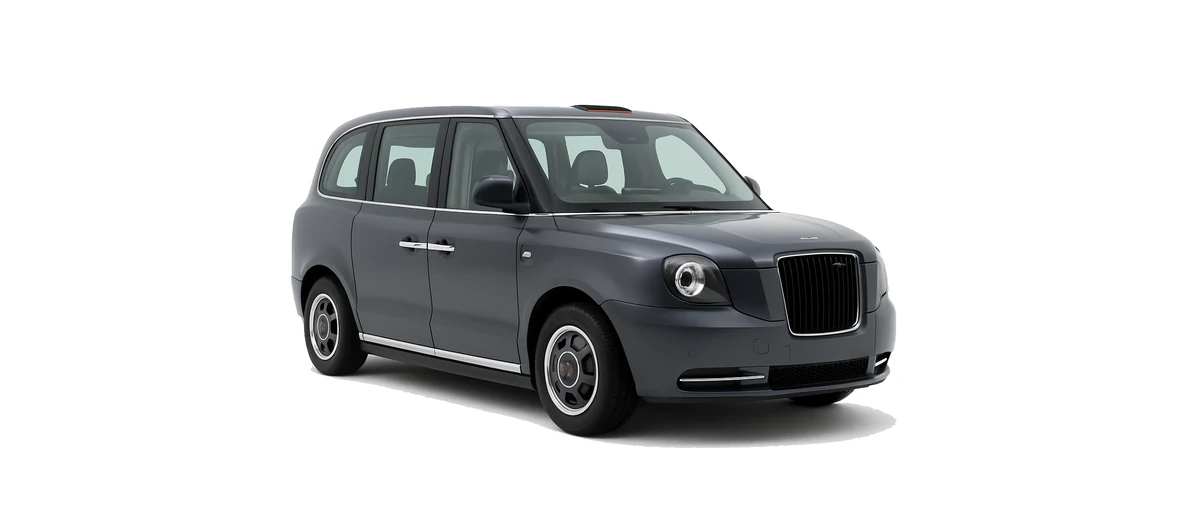
The LEVC TX is a distinctive vehicle in the UK electric market because it is designed first and foremost as a working taxi and passenger-access vehicle. It is also important to understand that it is not a pure battery-electric vehicle. The TX is a range-extended electric vehicle: it has a plug-in lithium-ion drive battery, an electric motor that drives the wheels, and a 1.5-litre petrol range-extender generator for longer duty cycles.
That makes charging strategy slightly different from a conventional EV. For a taxi driver, private-hire operator or fleet manager, the key questions are not just “how fast can it charge?” but also “which trim do I have?”, “which socket is fitted?”, and “how can I keep the battery topped up during a working day?” This guide explains what you need to know about LEVC TX home charging, public charging, range expectations and cable choice in the UK.
LEVC TX Battery and Charging Specifications
The LEVC TX uses LEVC’s e-City range-extender technology on a lightweight bonded aluminium architecture. LEVC states that the electric motor always drives the vehicle, while the petrol engine acts as a generator rather than directly powering the wheels. In everyday urban work, the aim is to use the plug-in battery as much as possible and reserve the range extender for longer shifts, unexpected journeys or when charging is not available.
| Vehicle type | Range-extended electric taxi / passenger-access vehicle |
|---|---|
| Battery | 31 kWh gross, with LEVC TX-specific material stating 24.2 kWh usable |
| Current headline electric range | Up to around 78 miles pure-electric / EAER-style figure, depending on source and conditions |
| AC charging | Type 2; capability depends on trim and model year, with Vista/current higher-spec vehicles described as having upgraded 22 kW AC charging |
| DC rapid charging | CCS rapid charging up to 50 kW; some Vista/configured vehicles may also have CHAdeMO |
Because TX specifications vary by trim, model year and configuration, it is sensible to verify the exact vehicle before buying cables or planning charge-stop timings. This is especially important for Icon/basic models versus Vista models.
Battery Options
The TX battery is generally referenced as a 31 kWh lithium-ion pack. LEVC’s TX-specific technology information states a usable capacity of 24.2 kWh. Some broader LEVC material has referred to different usable-capacity figures for LEVC products, so the TX-specific 24.2 kWh figure is the most relevant, but it should still be treated with a little caution when comparing different model years.
In practical terms, this is a relatively small battery compared with many modern pure EVs. That is not necessarily a weakness for the TX’s intended role. A smaller battery can be replenished quickly during breaks, and the petrol range extender gives operational flexibility when a taxi needs to stay in service. However, for low-emission city operation, regular charging remains essential.
AC Charging Speed
AC charging is where trim differences matter most. The LEVC TX uses Type 2 AC charging, but not every TX should be assumed to have the same maximum AC charging speed. Many UK home chargers are single-phase units rated at up to 7.4 kW, so even if the vehicle is capable of faster AC charging, the home charger may be the limiting factor.
LEVC charging guidance quotes approximately 3 hours 45 minutes for a 7 kW AC charge to 100%, and around 1 hour 15 minutes at 22 kW AC. Current TX Vista information describes upgraded 22 kW AC fast charging, while Icon/basic configurations may have lower AC capability. Before relying on 22 kW AC charging, check the vehicle’s trim, socket configuration and handbook.
For home and workplace charging, the usual cable choice is a Type 2 Mode 3 cable where the charge point is untethered. If your wallbox has its own tethered lead, you will use that lead instead.
DC Rapid Charging Speed
Unlike many plug-in hybrids and range-extended vehicles, the LEVC TX can use DC rapid charging. The core UK/EU rapid-charging connector information is CCS, with charging capability quoted up to 50 kW. LEVC sources refer to rapid charging to around 80% in roughly 25 to 30 minutes, depending on the stated start percentage and source. A precise 10–80% time should not be assumed from those figures.
Some TX Vista or specially configured vehicles may also have an additional CHAdeMO rapid-charging socket. This should not be assumed for every TX. If you are planning routes around CHAdeMO availability, confirm the socket on the vehicle itself first. For most UK public rapid-charging planning, CCS is the main connector to consider.
Range and Efficiency
Current LEVC and dealer material commonly uses a rounded figure of up to 78 miles of pure-electric range, alongside a total flexible range of up to 333 miles when the petrol range extender is included. Older LEVC technical material has also listed 64.5 miles WLTP electric-only range and 78.7 miles WLTP city pure-EV range. For that reason, it is best to treat the 78-mile figure as a headline official electric figure rather than a guaranteed real-world result.
Actual electric range will depend on route, temperature, passenger load, driving style, use of heating or air conditioning, and how much stop-start urban driving the vehicle is doing. The TX is built for urban duty cycles, where opportunity charging can help keep the battery in its most useful operating window throughout the day.
Charging at Home
For many TX drivers, home charging is the foundation of the working day. A dedicated Type 2 wallbox is usually the most convenient and efficient way to begin each shift with a full battery. On a typical UK single-phase 7.4 kW home charger, the TX’s relatively modest battery size means overnight charging should be more than sufficient, and many drivers will not need a full night to replenish the battery.
If you operate a TX from a depot, hotel, airport base or private-hire office, workplace charging can be even more valuable. Vehicles can be topped up between jobs, during driver breaks or while waiting for bookings. Where three-phase electrical supply is available and the vehicle supports it, a 22 kW AC charger may be useful for compatible Vista/current higher-spec vehicles. However, the vehicle, cable and charge point all need to support the higher rate.
A 3-pin charger is generally best suited as a backup or occasional charging solution, but can be used regularly if a qualified electrician has confirmed the socket and electrical installation are suitable for sustained EV charging. For a working taxi, a dedicated wallbox is normally the more robust option.
Public Charging
Public charging is especially relevant for the LEVC TX because short, planned charging stops can support a full working day in urban service. A rapid CCS charger can add a useful amount of charge during a rest break, while destination chargers at ranks, car parks, hotels, hospitals, council sites and transport hubs may help reduce petrol range-extender use.
When using public AC chargers, remember that the TX will only charge at the lowest capability among the vehicle, the cable and the charge point. A 22 kW post will not deliver 22 kW to a vehicle or configuration that cannot accept that rate. Likewise, a 7 kW charger will charge at around 7 kW even if the vehicle is capable of more.
For rapid charging, use CCS where available unless you have confirmed that your particular TX has CHAdeMO and that a suitable CHAdeMO charger is available. CHAdeMO coverage varies by location, and some networks have reduced the emphasis on new CHAdeMO installations, so CCS is generally the safer planning assumption.
Vehicle-Specific Features
The most important TX-specific feature is its range-extender layout. The petrol engine is there to generate electricity, while the electric motor drives the wheels. This gives drivers flexibility, but it should not be treated as a reason to avoid plugging in. The financial and emissions benefits of the TX are strongest when the battery is charged regularly and used for as much city driving as possible.
The TX is also purpose-built for taxi and passenger-access use, with accessibility equipment such as wheelchair access depending on trim and specification. This working-vehicle focus is why charging speed, socket type and reliability matter so much: a charging plan has to fit around shifts, passenger demand and local infrastructure.
Charging Tips
- Confirm your trim: Icon/basic and Vista specifications can differ, particularly for AC charging speed and rapid-charging sockets.
- Use Type 2 for AC charging: A Type 2 Mode 3 cable is the standard choice for untethered home, workplace and public AC chargers.
- Plan around CCS rapid charging: CCS is the core rapid-charging connector to rely on unless your vehicle is confirmed to have CHAdeMO.
- Use opportunity charging: Short top-ups during breaks can be very effective because the TX battery is relatively small.
- Do not rely unnecessarily on the range extender: For low-emission city operation, regular plug-in charging should be part of the daily routine.
- Check cable rating: If you want to use 22 kW AC where supported, make sure your Type 2 cable is three-phase and appropriately rated.
Frequently Asked Questions
Is the LEVC TX a pure electric vehicle?
No. The LEVC TX is a range-extended electric vehicle. It has a plug-in battery and electric drive motor, but it also has a petrol range-extender generator for longer journeys or demanding duty cycles.
What charging cable does the LEVC TX use?
For AC charging, the LEVC TX uses a Type 2 connection. For untethered chargers, you will need a Type 2 Mode 3 charging cable. Rapid charging is generally via CCS, while some Vista or configured vehicles may also have CHAdeMO.
Can every LEVC TX charge at 22 kW AC?
No. Current Vista information refers to upgraded 22 kW AC charging, but Icon/basic configurations may have lower AC charging capability. Always check the exact vehicle specification before assuming 22 kW charging.
How quickly can the LEVC TX rapid charge?
LEVC guidance refers to charging to around 80% in approximately 25 to 30 minutes, depending on the source and the starting percentage. The TX supports DC rapid charging at up to 50 kW, but actual speed will depend on battery state of charge, charger output and conditions.
What is the electric range of the LEVC TX?
Current UK material commonly quotes up to around 78 miles of pure-electric range, while older technical data lists different WLTP electric-only and city figures. Real-world range will vary with route, load, weather and driving style.
What This Means for Drivers
The LEVC TX is best understood as a working electric taxi with a safety net, rather than as a conventional pure EV. Its plug-in battery is large enough for meaningful urban electric operation, while its range extender helps reduce downtime anxiety during long or unpredictable shifts. To get the most from it, drivers should charge at home or depot whenever possible, use opportunity charging during the day, and confirm the vehicle’s exact charging specification before planning around 22 kW AC or CHAdeMO.
For most UK drivers, a Type 2 cable for AC charging and awareness of CCS rapid-charging availability will cover the majority of use cases. Vista and other higher-spec vehicles may offer additional flexibility, but the details should be checked vehicle by vehicle.
Looking for a Charging Cable for LEVC TX?
If you need a suitable cable for home, workplace or public AC charging, We offer LEVC TX charging cables, including Type 2 options for UK charge points.
Please note that this information is intended as a guide. Charging specifications may change due to model and year of manufacture. For precise information, always refer to your vehicle user manual.

