
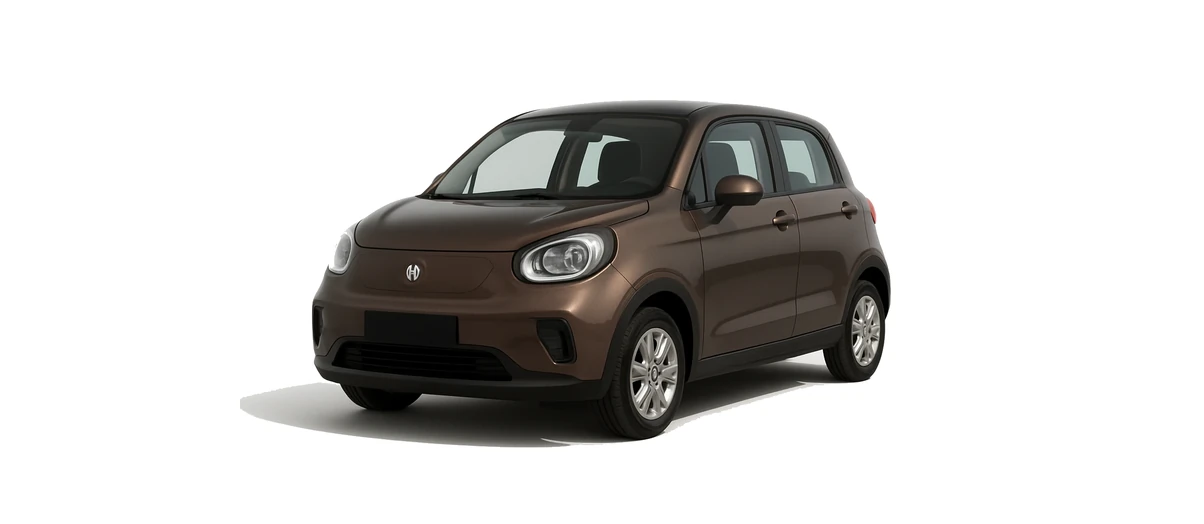
The Leapmotor T03 is a compact all-electric city hatchback aimed at drivers who want a simple, low-cost EV for urban and suburban use. In the UK, the T03 is sold as a fully electric A-segment five-door hatchback with a 37.3 kWh battery and a WLTP combined range of up to 165 miles. Its charging requirements are straightforward: Type 2 for AC charging and CCS2 for DC rapid charging.
This guide explains what UK Leapmotor T03 owners need to know about home charging, public charging, rapid charging expectations and choosing the right cable. The key point is that the T03 is best matched with a normal 7 kW home wallbox, because the car’s onboard AC charger is limited to 6.6 kW. It can also use CCS rapid chargers, but its modest rapid-charging capability means it is better viewed as an occasional long-distance support option rather than the main way to run the car day to day.
View Leapmotor T03 Charging Cables
Leapmotor T03 Battery and Charging Specifications
UK-market Leapmotor T03 data refers to the current single-battery version unless otherwise stated. Some global or non-UK references may mention other T03 battery sizes or range figures, but those should not be applied to the current UK car.
| Vehicle | Leapmotor T03 |
|---|---|
| Vehicle type | Battery electric vehicle, five-door city hatchback |
| Battery capacity | 37.3 kWh gross; around 36.0 kWh usable according to EV Database UK |
| Official WLTP range | Up to 165 miles |
| Estimated real-world range | Around 135 miles, depending on conditions and driving style |
| AC charging connector | Type 2 |
| DC rapid charging connector | CCS2 |
| Maximum AC charging rate | 6.6 kW |
| Maximum DC charging rate | About 48 kW |
Battery Options
For the UK market, the Leapmotor T03 is listed with a single 37.3 kWh battery version. EV Database UK gives the usable capacity as approximately 36.0 kWh. That is a relatively modest battery by modern EV standards, but it is well suited to the car’s role as an efficient city car for commuting, local journeys, school runs and short-to-medium regional trips.
The compact battery also helps keep charging times manageable at home. Even though the T03 does not have a high-powered AC onboard charger, its battery size means an overnight charge on a dedicated wallbox is generally sufficient to refill the car for the next day.
AC Charging Speed
The Leapmotor T03 uses a Type 2 socket for AC charging and has a 6.6 kW onboard charger. This means that a standard UK 7 kW home wallbox is a very good match. The wallbox may be capable of delivering around 7 kW, but the vehicle will take power at up to its own limit of 6.6 kW.
On a suitable 7 kW home charge point, a low-to-full charge is estimated at around 6 hours 30 minutes. In real life, many owners will not regularly charge from empty to full. If you plug in with 30%, 40% or 50% remaining, the top-up will be shorter and can often be completed comfortably overnight.
Using an 11 kW or 22 kW public AC post will not make the T03 charge at 11 kW or 22 kW, because the limiting factor is the car’s onboard 6.6 kW AC charger. For cable choice, a good-quality Type 2 cable suitable for 7 kW charging is normally the practical option for untethered home chargers and public AC posts.
DC Rapid Charging Speed
For rapid charging, the Leapmotor T03 uses the CCS2 connector. UK press material and independent UK data list the maximum DC charging power at around 48 kW. That is adequate for useful top-ups, but it is not in the same class as EVs designed for frequent high-speed motorway charging.
There are two rapid-charging figures worth separating clearly. Leapmotor’s UK material quotes a 30% to 80% DC charge time of around 36 minutes. EV Database UK and RAC data quote around 53 minutes for the more common 10% to 80% rapid-charging window. The 10% to 80% figure takes longer because it covers a larger portion of the battery and includes the lower-charge area at the beginning of the session.
As with all EVs, the actual rapid-charging speed will vary with battery temperature, state of charge, charger output, charger reliability and how busy the site is. The T03’s modest DC limit means there is little benefit in seeking out the most powerful ultra-rapid chargers unless they are the most convenient option available; the car will still charge only up to its own supported rate.
Range and Efficiency
The official WLTP combined range for the UK Leapmotor T03 is up to 165 miles. A more realistic everyday estimate is around 135 miles, although this will depend heavily on driving conditions. City driving at moderate speeds is likely to be kinder to range than cold-weather motorway use, where higher speeds and cabin heating demand can reduce efficiency.
For many urban drivers, the important question is not whether the car can cover its full WLTP figure every day, but whether it can cover a normal daily routine without frequent charging. If your typical day is 20 to 50 miles, the T03 can be topped up every few days or kept on a simple overnight charging routine. If your regular journeys are closer to the car’s full real-world range, planning charging stops becomes more important.
Charging at Home
Home charging is likely to be the most convenient and cost-effective way to run a Leapmotor T03. A dedicated 7 kW wallbox is well matched to the car’s 6.6 kW onboard AC charger, and it allows the battery to be replenished overnight without needing to visit public chargers for routine use.
If your home charger is untethered, you will need a Type 2 charging cable. A 32 amp single-phase Type 2 cable is commonly used for 7 kW charging and is appropriate for the T03’s AC charging capability. A three-phase cable can still be physically compatible if it is Type 2, but it will not increase the car’s AC charging speed beyond the vehicle’s 6.6 kW limit.
The UK specification material lists Type 2 Mode 2 and Type 2 Mode 3 charging cables as supplied or standard equipment. In practical terms, Mode 3 is the cable type used with wallboxes and public AC charging posts, while Mode 2 refers to charging from a domestic socket using an in-cable control unit.
A 3-pin domestic charger is generally best suited as a backup or occasional charging solution, but can be used regularly if a qualified electrician has confirmed the socket and electrical installation are suitable for sustained EV charging. For most owners, a dedicated wallbox remains the better long-term solution because it is faster, safer and more convenient for repeated charging.
Public Charging
When using public chargers, the Leapmotor T03 can use Type 2 AC charging posts and CCS rapid chargers. On public AC posts, the charging speed will still be limited by the car’s 6.6 kW onboard charger. This makes AC charging useful when the car will be parked for several hours, such as at work, in a town centre, at a hotel or in a long-stay car park.
For shorter stops, CCS rapid charging is the better option. A 10% to 80% session of around 53 minutes is a reasonable expectation based on independent UK data, while a 30% to 80% top-up may take around 36 minutes according to manufacturer material. That can be useful for occasional longer journeys, but the T03 is not primarily designed around rapid back-to-back motorway charging.
Because the car’s battery is relatively small, it is worth thinking in terms of useful miles added rather than simply headline charging power. A coffee-stop rapid charge can add a meaningful amount of range, but if long motorway trips are a frequent part of your driving, you will need to plan stops carefully and allow more time than drivers of faster-charging EVs.
Vehicle-Specific Features
UK specification material for the Leapmotor T03 lists regenerative braking, scheduled charging through the Leapmotor app, online navigation and over-the-air update functionality. Scheduled charging is particularly useful for owners with an off-peak electricity tariff, as it can help you set the car to charge during cheaper overnight periods.
Regenerative braking can help recover energy during slowing and stop-start urban driving, which suits the T03’s city-car character. It will not replace charging, but it can improve efficiency in the kind of driving where the car is most likely to be used.
Charging Tips
- Use a 7 kW home wallbox where possible. It is the best match for the T03’s 6.6 kW AC charging limit.
- Do not pay extra expecting faster AC charging from 11 kW or 22 kW posts. The vehicle will still be limited by its onboard charger.
- Use CCS rapid charging for longer journeys and occasional top-ups. The 48 kW DC limit is useful but not intended for ultra-fast long-distance charging patterns.
- Plan around the right rapid-charge figure. Around 36 minutes refers to 30% to 80%; around 53 minutes is a more typical 10% to 80% estimate.
- Keep a Type 2 cable in the car. It gives you flexibility for untethered home chargers and many public AC posts.
- Use scheduled charging if you have a suitable tariff. Overnight off-peak charging can significantly reduce running costs.
Frequently Asked Questions
What charging connector does the Leapmotor T03 use?
The Leapmotor T03 uses a Type 2 connector for AC charging and a CCS2 connector for DC rapid charging.
How fast does the Leapmotor T03 charge at home?
The T03 has a 6.6 kW onboard AC charger. On a suitable 7 kW home wallbox, a low-to-full charge is estimated at about 6 hours 30 minutes.
Can the Leapmotor T03 charge at 11 kW or 22 kW AC?
No. Even if connected to an 11 kW or 22 kW AC post, the T03 is limited by its 6.6 kW onboard charger.
How long does rapid charging take?
Manufacturer UK material quotes around 36 minutes for 30% to 80% DC charging. For the more common 10% to 80% window, independent UK data gives an estimate of around 53 minutes.
Is the Leapmotor T03 a hybrid or plug-in hybrid?
No. The UK-market Leapmotor T03 is a fully electric battery electric vehicle.
What cable should I use for public AC charging?
Use a Type 2 charging cable. For the T03, a cable suitable for 7 kW single-phase charging is normally sufficient because the car’s AC charging rate is limited to 6.6 kW.
What This Means for Drivers
The Leapmotor T03 is at its best when treated as a simple, efficient electric city car. Its 37.3 kWh battery and 165-mile WLTP range make sense for everyday local driving, while its 6.6 kW AC charging limit pairs neatly with a standard UK 7 kW home wallbox. For many owners, plugging in overnight will be the easiest way to keep the car ready without relying heavily on public infrastructure.
Public charging is still useful, especially Type 2 AC charging when parked for several hours and CCS rapid charging on occasional longer trips. However, with a maximum DC rate of about 48 kW, the T03 is not a car to choose for frequent high-speed motorway charging. If your driving is mostly urban and suburban, its charging setup is simple and practical. If you regularly cover long distances, careful route planning and realistic charging-time expectations will matter more.
Looking for a Charging Cable for Leapmotor T03?
We offer compatible Leapmotor T03 charging cables for home and public Type 2 AC charging, helping you choose a cable that suits the car’s 6.6 kW charging capability and your preferred charging setup.
View Leapmotor T03 Charging Cables
Please note that this information is intended as a guide. Charging specifications may change due to model and year of manufacture. For precise information, always refer to your vehicle user manual.

