
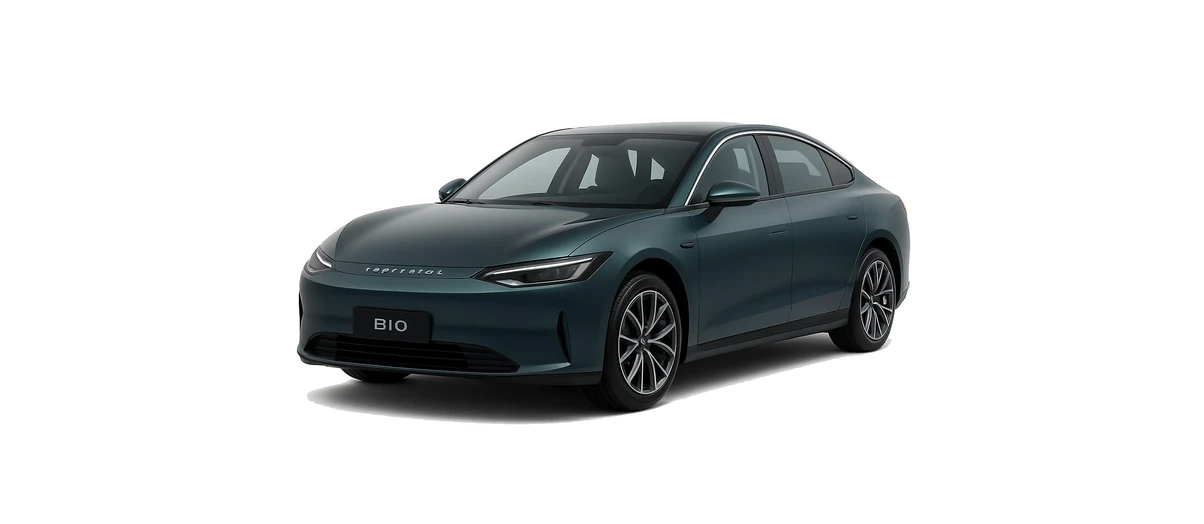
The Leapmotor B10 is a new C-segment SUV arriving in the UK with an important distinction for charging: the current UK-market B10 covered in this guide is the all-electric BEV, while Leapmotor has also announced a B10 Hybrid EV range-extender version for UK ordering and first deliveries in summer 2026. Those two models share the B10 name, but they have very different batteries, electric ranges and charging needs.
For the UK all-electric Leapmotor B10 BEV, the key charging points are straightforward: it uses a Type 2 connector for AC charging, a CCS Combo 2 connector for DC rapid charging, and is listed with an 11 kW AC onboard charger. The UK BEV uses a 67.1 kWh battery and offers up to 270 miles of WLTP range, with real-world range likely to vary depending on speed, temperature, terrain and driving style.
View Leapmotor B10 Charging Cables
Leapmotor B10 Battery and Charging Specifications
The UK-market Leapmotor B10 BEV is a rear-wheel-drive battery-electric SUV with a 160 kW rear-mounted motor and a 67.1 kWh battery. EV Database estimates usable battery capacity at around 65 kWh. For charging, the B10 BEV supports Type 2 AC charging at up to 11 kW and CCS rapid charging at up to 168 kW.
In practical UK ownership, the most relevant figures are often not the maximums, but the speeds you will actually see day to day. Many UK home wallboxes are 7.4 kW single-phase units, so even though the car can accept up to 11 kW AC, a typical home charge point will usually be limited to around 7.4 kW by the property supply and charger. The 11 kW AC capability becomes useful where a compatible three-phase AC supply is available, such as some workplaces, commercial sites or three-phase homes.
- Vehicle: Leapmotor B10 BEV
- Battery: 67.1 kWh gross, with around 65 kWh usable estimated
- WLTP range: Up to 270 miles
- Estimated real-world range: Around 220 miles, depending on conditions
- AC charging: Type 2, up to 11 kW
- DC rapid charging: CCS Combo 2, up to 168 kW
- Rapid charging guide: 30-80% in about 20 minutes officially; 10-80% is typically estimated at around 26-30 minutes
Battery Options
For the current UK all-electric B10, UK press information points to a single 67.1 kWh battery, paired with the BEV’s rear-wheel-drive powertrain. This is the model that most UK B10 charging-cable advice currently applies to.
However, the B10 name will also be used for an announced B10 Hybrid EV range-extender model. That version is not the same as the full BEV. The Hybrid EV has an 18.8 kWh battery, an electric-only WLTP range of up to 50 miles, and a petrol generator used as part of the range-extender system. Because of this, you should not apply the BEV’s 67.1 kWh battery size, 270-mile WLTP range or BEV charging times to the Hybrid EV without checking the exact model you own or are ordering.
If you are choosing a cable, the connector type may still be similar for AC charging, but the battery size and charging routine can be very different. A BEV owner is more likely to rely on overnight home charging and rapid charging for long journeys, while a range-extender owner may do shorter electric top-ups more frequently.
AC Charging Speed
The Leapmotor B10 BEV supports up to 11 kW AC charging through its Type 2 inlet. This is useful because Type 2 is the standard connector for most UK home wallboxes and many public destination chargers.
On an 11 kW three-phase AC charger, a 0-100% charge is estimated at around seven hours. On a more common 7.4 kW single-phase UK home wallbox, a full charge from empty is more likely to take around 10 hours 30 minutes. In normal use, you will rarely arrive home at 0%, so typical overnight top-ups will often be much shorter than a full 0-100% session.
For cable selection, a Type 2 to Type 2 cable is the right choice for UK home and public AC charging where the charge point has a socket rather than a tethered lead. A 32A single-phase Type 2 cable is suitable for typical 7.4 kW UK wallboxes. If you regularly use three-phase AC charging and want to make use of the B10’s 11 kW AC capability, a compatible three-phase Type 2 cable is the more appropriate option.
DC Rapid Charging Speed
For long-distance travel, the Leapmotor B10 BEV uses CCS Combo 2 rapid charging. The car is listed with a maximum DC charging rate of up to 168 kW, provided the charger, battery state of charge and battery temperature allow it.
Leapmotor’s UK press information quotes a 30-80% DC charging time of about 20 minutes. A broader 10-80% rapid charge is more commonly estimated at around 26-30 minutes, depending on the charger and conditions. This is an important distinction: a 30-80% figure is not the same as a 10-80% figure, because charging from a lower state of charge and charging above 80% can alter the total stop time.
As with most EVs, the fastest charging will usually happen in the middle of the battery’s state-of-charge window. Above around 80%, charging speeds often taper significantly to protect the battery, so on motorway journeys it is normally quicker to stop charging at around 80% and continue driving, rather than waiting for 100% unless you genuinely need the extra range.
Range and Efficiency
The UK Leapmotor B10 BEV is listed with up to 270 miles of WLTP range from its 67.1 kWh battery. WLTP figures are useful for comparing vehicles, but real-world range is affected by driving speed, weather, load, tyre condition, route profile and use of heating or air conditioning.
EV Database estimates a real-world range of around 220 miles for the 67.1 kWh B10 BEV. In warmer weather and mixed driving, some drivers may do better; in winter, at motorway speeds or with a fully loaded car, range can be lower. The B10 is listed with a standard heat pump, which can help improve cabin-heating efficiency compared with relying only on resistive heating, particularly in colder conditions.
For planning, it is sensible to think in usable journey legs rather than absolute maximum range. For example, on a long motorway trip, planning charging stops around a comfortable 10-80% window gives you a practical buffer and avoids relying on the last few percent of the battery.
Charging at Home
Home charging is likely to be the most convenient and cost-effective way to run a Leapmotor B10 BEV. If you have off-street parking, a dedicated 7.4 kW wallbox will usually be the best fit for a typical UK single-phase domestic supply. It can add a substantial amount of range overnight and allows you to schedule charging for off-peak electricity tariffs if your energy provider supports them.
Because the B10 BEV can accept up to 11 kW AC, owners with access to a three-phase supply may be able to charge faster with a suitable three-phase wallbox. However, it is important not to assume that 11 kW is available at most UK homes. The majority of domestic installations are single-phase, meaning real home charging speed will commonly be capped around 7.4 kW.
A 3-pin domestic charging lead is generally best suited as a backup or occasional charging solution, but can be used regularly if a qualified electrician has confirmed the socket and electrical installation are suitable for sustained EV charging. Standard domestic sockets were not primarily designed for repeated high-load EV charging over many hours, so electrical safety checks are important.
Public Charging
Public charging for the Leapmotor B10 BEV falls into two main categories: AC destination charging and DC rapid charging. AC chargers are common at hotels, workplaces, car parks and shopping destinations. Many of these are untethered, so you will need your own Type 2 to Type 2 cable. The car will charge at up to its 11 kW AC limit if the charger and supply can provide it, but many AC posts may deliver 7 kW or 22 kW to compatible vehicles. The B10 will not take 22 kW AC; it is limited by its onboard charger to 11 kW.
DC rapid chargers are better for motorway and long-distance use. These units have tethered CCS cables, so you do not need your own cable for rapid charging. For the B10 BEV, a high-power CCS charger capable of more than 150 kW gives the car the best chance of reaching its peak rate, although actual speed will still vary.
EV Database indicates that the B10 supports Autocharge, but not Plug & Charge. Availability and network support can vary, so it is still sensible to have the relevant charging apps, RFID cards or contactless payment options ready before longer trips.
Vehicle-Specific Features
The Leapmotor B10 BEV is built on Leapmotor’s LEAP 3.5 architecture and uses Cell-to-Chassis battery integration. For owners, the most visible charging-related details are the Type 2 and CCS charging arrangement, the 11 kW AC limit and the strong 168 kW DC rapid charging capability.
Two confirmed features are particularly relevant for everyday EV use. First, the B10 BEV is listed with a standard heat pump, which can support more efficient cabin heating in colder weather. Secondly, Vehicle-to-Load capability is confirmed, meaning the car can provide power to external electrical equipment when used with the correct compatible accessories and within the vehicle’s limits.
As the B10 is a new UK model and the Hybrid EV range-extender has also been announced, it is worth checking the latest UK specification for the exact vehicle you are buying. Charging figures, battery size and equipment can differ between BEV and range-extender versions.
Charging Tips
- Choose the right AC cable: For most UK owners, a Type 2 to Type 2 cable is the key cable for home and public AC charging.
- Match the cable to your charging use: A 32A single-phase cable is suitable for typical 7.4 kW UK wallboxes. Consider a three-phase cable if you regularly use 11 kW AC charging.
- Do not expect 11 kW at every home: The car can accept 11 kW AC, but most UK domestic wallboxes are 7.4 kW single-phase.
- Use CCS for long trips: Rapid and ultra-rapid CCS chargers are the right choice when you need a quick stop on a longer journey.
- Stop around 80% on journeys: Charging speed usually slows above 80%, so several shorter stops can be quicker than waiting for 100%.
- Check whether you have the BEV or Hybrid EV: The announced B10 Hybrid EV has a much smaller battery and different charging pattern.
Frequently Asked Questions
What charging cable does the Leapmotor B10 use?
The Leapmotor B10 BEV uses a Type 2 connector for AC charging. For UK home wallboxes and untethered public AC chargers, you will usually need a Type 2 to Type 2 charging cable.
Can the Leapmotor B10 charge at 22 kW AC?
No. The B10 BEV is listed with an 11 kW AC onboard charger. Even if you plug into a 22 kW AC post, the car will be limited to its own maximum AC charging rate.
How long does the Leapmotor B10 take to charge at home?
On a typical 7.4 kW UK home wallbox, a full charge from empty is likely to take around 10 hours 30 minutes. On an 11 kW three-phase AC charger, a full charge is estimated at around seven hours. Normal top-ups are usually shorter because most drivers do not arrive home with an empty battery.
How fast does the Leapmotor B10 rapid charge?
The B10 BEV supports CCS rapid charging at up to 168 kW. Leapmotor quotes around 20 minutes for 30-80% DC charging, while a wider 10-80% stop is more typically estimated at around 26-30 minutes depending on conditions.
Is the Leapmotor B10 Hybrid EV the same as the BEV?
No. The all-electric B10 BEV uses a 67.1 kWh battery, while the announced B10 Hybrid EV range-extender has an 18.8 kWh battery and a petrol generator. Charging times, range and day-to-day charging habits should be considered separately.
What This Means for Drivers
For UK drivers, the Leapmotor B10 BEV should be simple to live with from a charging perspective. At home, it fits neatly into the standard Type 2 wallbox ecosystem, with most owners likely to charge at around 7.4 kW overnight. Where three-phase AC is available, the car’s 11 kW capability can reduce charging time, but this should be seen as an added benefit rather than the norm for UK homes.
On longer journeys, the B10 BEV’s 168 kW CCS rapid charging capability is competitive for a family SUV, especially if you plan stops around the efficient 10-80% window. The key is to separate the current BEV figures from the announced B10 Hybrid EV range-extender, because the two versions have different batteries and different usage patterns.
Looking for a Charging Cable for Leapmotor B10?
If you are choosing a cable for the Leapmotor B10 BEV, a Type 2 to Type 2 cable is the essential option for UK home and public AC charging, with 32A single-phase suitable for typical 7.4 kW wallboxes and three-phase worth considering if you regularly use 11 kW AC charging.
View Leapmotor B10 Charging Cables
Please note that this information is intended as a guide. Charging specifications may change due to model and year of manufacture. For precise information, always refer to your vehicle user manual.

